Skip to content
Being named an executor in a will is a true honor. It means someone trusted you, above all others, to carry out their final wishes. But alongside that honor comes a heavy weight of legal responsibility, especially here in Texas. We understand this role often arrives during a time of grief, and our goal is to offer clear, compassionate guidance to help you navigate this complex process.
Your Role as Executor: What It Really Means for Texas Families
When a loved one passes away, the grief can be overwhelming. If you've been named the executor of their will, you're suddenly handed a complex legal role during an already emotional time. The best way to think of yourself is as the captain of a ship. You're responsible for steering the estate through the legal waters of Texas probate court to its final, intended destination, ensuring your loved one's legacy is honored.
Your core duties are all laid out in the Texas Estates Code, and they demand organization, complete transparency, and a deep sense of commitment. This is a journey with significant emotional and financial challenges, but with the right support, you can fulfill this important role with confidence.
Understanding Your Fiduciary Duty
At the very heart of your role is a legal concept known as fiduciary duty. This isn't just a suggestion; it's the highest standard of care recognized by the law. It means you are legally required to act solely in the best interests of the estate and its beneficiaries—not your own.
Simply put, a key part of an executor's duties is to put the estate's obligations first. You must place the interests of creditors and beneficiaries ahead of your own, making sure every single action you take is transparent and legally sound.
This legally binding responsibility involves a long list of tasks that can stretch out over many months, and sometimes even years. Your first big step is usually submitting the will for probate. This kicks off the legal process where a court, such as a Harris County Probate Court, validates the will and officially grants you the authority to act.
From there, you’ll begin the work of gathering assets, paying off debts in a specific legal order (starting with funeral expenses and administration costs), and finally, distributing what's left to the heirs. You can learn more about the executor's top duties and legal obligations to see exactly how this process unfolds.
To give you a clearer picture, let's break down the main areas of responsibility.
The Executor's Core Responsibilities at a Glance
This table provides a quick summary of the primary duties you'll be handling. Think of it as your high-level roadmap for the journey ahead.
| Duty Category | Key Actions | Texas Estates Code Reference (Example) |
|---|---|---|
| Probate Administration | File the will with the probate court; obtain Letters Testamentary. | § 256.001 |
| Asset Management | Identify, locate, and secure all estate assets (property, bank accounts, etc.). | § 351.101 |
| Debt & Expense Payment | Notify creditors; pay valid debts, taxes, and funeral expenses. | § 355.001 |
| Beneficiary Distribution | Distribute the remaining assets to the beneficiaries as outlined in the will. | § 360.002 |
| Record Keeping & Reporting | Maintain meticulous records; file inventories and accountings with the court. | § 351.052 |
Each of these categories involves numerous smaller steps, strict deadlines, and specific legal requirements mandated by Texas law.
This journey can feel daunting, whether you're dealing with a probate court in Harris County or Williamson County. The Law Office of Bryan Fagan is here to provide clarity and compassionate guidance. If you're facing the responsibilities of an executor and need help, schedule a free consultation with our team to discuss your next steps.
Navigating the First 90 Days of Texas Probate
The first three months after a loved one passes are almost always the toughest for an executor. You’re navigating grief while suddenly being hit with a wave of administrative tasks and hard legal deadlines. Having a clear, step-by-step roadmap is your best friend during this time, helping you meet your legal duties and protect the estate. How you handle this initial phase really sets the tone for the entire probate process.
Your very first job is to find the original, signed will. This document is the cornerstone of everything you're about to do. Once you have it, your next priority is to secure the deceased's assets to prevent any loss, theft, or damage. This means protecting physical property like a house or car and getting in touch with banks and other financial institutions to lock down accounts.
Taking the First Legal Steps
With the will in hand, your next move should be calling an experienced Texas probate attorney. It might feel like just another expense, but bringing in legal counsel early is one of the smartest things you can do to protect both yourself and the estate. A good attorney makes sure every step you take is in line with the Texas Estates Code, which helps you avoid mistakes that could make you personally liable.
Your lawyer will guide you through filing the will and an application for probate with the right Texas court. For example, if your loved one lived in Houston, you'd likely file this at a Harris County Probate Court. This application is a formal request for the court to recognize the will as valid and officially name you as the executor. You can get a much deeper look into this crucial step by reading our guide on how to probate a will in Texas.
After filing, the court will set a date for a hearing, which you'll need to attend. As long as there are no issues, the judge will sign an order that admits the will to probate and appoints you as executor. This is a huge milestone, but you don't have official power just yet.
Obtaining Your Official Authority
Following the hearing, you have to take an oath of office, where you swear to faithfully carry out your duties. The court might also require you to post a bond. Think of a bond as an insurance policy that protects the estate’s beneficiaries and creditors from any potential mistakes or mismanagement on your part.
Once you’ve checked these boxes, the court clerk issues what are called Letters Testamentary.
Letters Testamentary aren't actual letters in the mail. They're an official, one-page certificate from the court. This document is your golden ticket—it is the legal proof of your authority to act for the estate. You'll need certified copies of this for banks, insurance companies, and basically anyone you need to deal with on the estate's behalf.
This infographic gives a simple, high-level view of the major phases of your duties, which all kick off with these first steps.
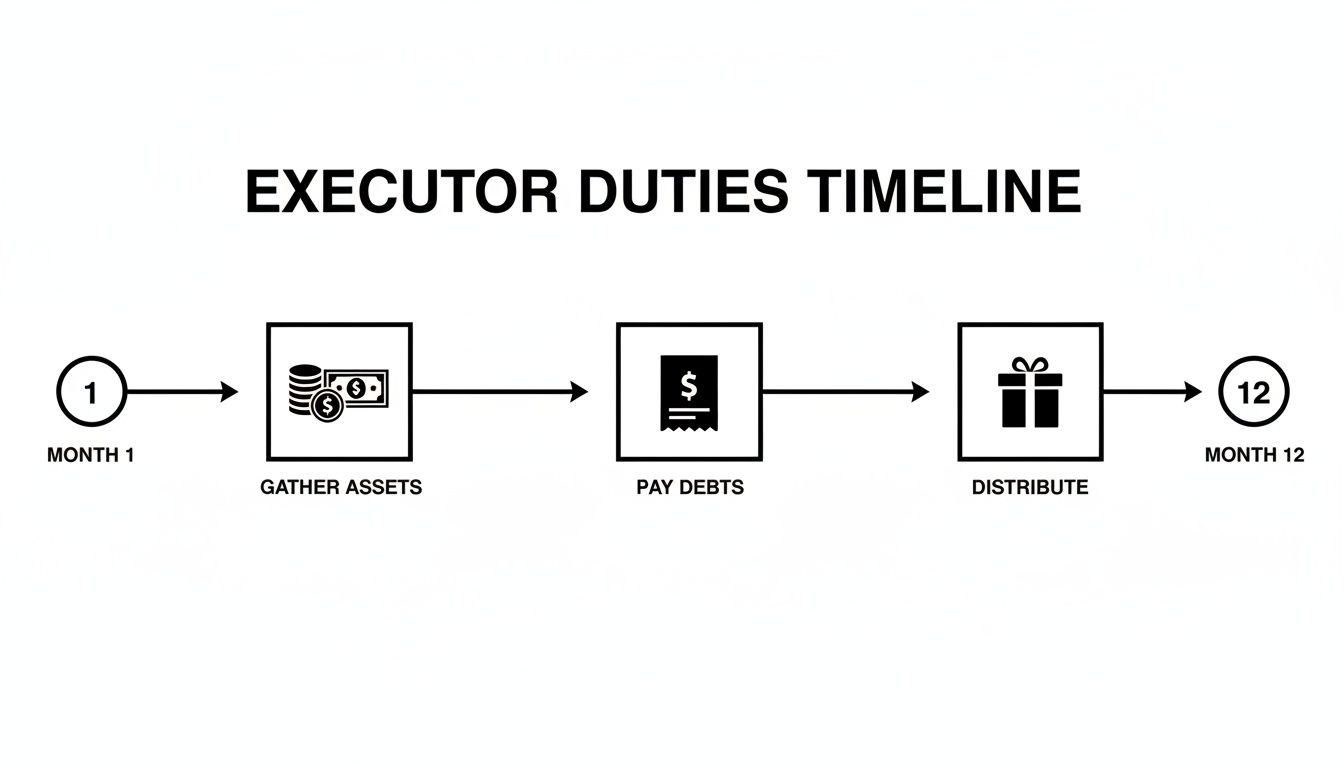
As you can see, the journey boils down to three core phases: gathering the assets, paying off debts, and then, finally, distributing what's left to the rightful heirs.
Your Immediate Responsibilities with Letters Testamentary
Once you have your Letters Testamentary, the real work starts. The first 90 days are all about establishing control and being transparent. Here are the key tasks you need to tackle right away:
- Open an Estate Bank Account: This is absolutely non-negotiable. You must open a new checking account in the name of the estate. This keeps estate funds completely separate from your own money, which is a critical part of your fiduciary duty. All estate income goes in, and all bills and expenses get paid out of this account.
- Notify Beneficiaries: Texas law is clear on this—you must formally notify all beneficiaries named in the will within 60 days of the will being probated.
- Give Notice to Creditors: You are also required to publish a general notice to creditors in a local newspaper. This officially starts the clock on a legal timeline for them to come forward and make any claims against the estate.
The first 90 days are intense, but if you follow a structured approach and lean on professional guidance, you can handle these duties with confidence. Understanding what are the duties of a will executor is all about taking one deliberate, legally-sound step at a time. The compassionate attorneys at The Law Office of Bryan Fagan are here to guide you through each one. Schedule a free consultation with us today for personalized support.
Managing the Estate’s Assets and Debts
Once you have the Letters Testamentary in hand, your role as executor shifts from legal paperwork to hands-on management. This is where your fiduciary duty really kicks in. You are now the official protector and manager of everything your loved one owned, a major responsibility that demands meticulous organization and a commitment to always acting in the estate's best interest.
This phase is all about gathering, protecting, and inventorying every single asset. Think of it as conducting a comprehensive audit of a person's life—you're now in charge of their bank accounts, real estate, cars, investments, and even personal belongings. Knowing the difference between what has to go through probate and what doesn't is critical. For a clearer picture, you can learn more about probate and non-probate assets in our detailed guide.

Gathering and Protecting Estate Assets
Your first practical job is to take control of all the assets to safeguard their value. This isn't a passive role; it requires you to be proactive to prevent any loss or damage.
Here are some of the immediate actions you'll need to take:
- Consolidate Finances: Close the deceased's personal bank accounts and move the funds into a new, dedicated bank account for the estate.
- Secure Real Estate: This means changing the locks on any properties, making sure the insurance policies are up-to-date and paid, and arranging for any necessary upkeep like lawn care or repairs.
- Appraise Valuables: For assets like real estate, vehicles, jewelry, or collectibles, you’ll need to get professional appraisals to figure out their fair market value. This is absolutely essential for the estate inventory you have to file with the court.
Under the Texas Estates Code, Title 3, Subtitle G, you have a legal duty to manage estate assets prudently. This means you must treat the estate’s property with the same care you would your own—or even greater. Negligence can lead to personal liability, making this one of the most serious duties of a will executor.
Handling Debts and Notifying Creditors
Before a single beneficiary sees a dime, you have to deal with the estate's debts. Texas law has a specific, formal process for this to make sure all creditors get a fair chance to be paid.
One of your first official acts is to publish a "Notice to Creditors" in a local newspaper. This notice, usually handled by your probate attorney, formally announces that the estate is in administration and gives an address where creditors can send their claims.
From there, you have to handle claims based on a legal priority system. Not all debts are created equal in the eyes of the court. The payment order is strictly defined:
- Funeral expenses and costs of the deceased's last illness.
- Expenses of administration, which includes court costs and your attorney’s fees.
- Secured debts, like a mortgage on the deceased’s home.
- Child support obligations.
- Taxes owed to the state.
- Other claims, such as credit card bills or personal loans.
You have to follow this order perfectly. Paying a lower-priority debt, like a credit card bill, before a higher-priority one, like funeral expenses, could make you personally responsible for the unpaid higher-priority debt. It’s a legal minefield where having professional guidance is truly invaluable.
The process of managing assets and debts is often the longest and most complex part of an executor’s job. It requires patience, diligence, and a deep respect for your fiduciary duty.
Filing the Estate Inventory and Final Taxes
Once you've secured the estate's assets and notified all the creditors, your role as executor shifts into a phase where precision and deadlines are everything. This is where you'll create a detailed report for the probate court and handle the deceased's final tax obligations. These aren't just boxes to check; they're a fundamental part of your fiduciary duty, ensuring total transparency for both the court and the beneficiaries.
The Inventory, Appraisement, and List of Claims
In Texas, the law requires you to file a specific document with the court called the Inventory, Appraisement, and List of Claims. Think of it as a complete financial snapshot of the estate on the exact day your loved one passed away. This isn't just a list—it's a sworn affidavit, meaning you are legally vouching for its complete accuracy.
Under the Texas Estates Code § 309.051, this inventory generally must be filed within 90 days of your official appointment as executor. While a court can grant an extension, that deadline really underscores how quickly you need to get moving on this. The document is broken down into three critical parts:
- A complete inventory of all real property (like houses or land) located in Texas.
- A complete inventory of all personal property, no matter where it's located.
- A list of all claims the estate has against others (essentially, any money owed to the deceased).
Every single item must be valued at its fair market value as of the date of death. This is precisely why professional appraisals for assets like real estate, vehicles, or valuable collectibles are so critical. For larger or more complex estates, tools like AI Photo Estate Inventory solutions can be a game-changer in streamlining this intensive process.
To keep these critical filings straight, here's a quick look at the key documents and their typical deadlines in a Texas probate case.
| Executor's Filing Checklist Deadlines and Documents | ||
|---|---|---|
| Document/Filing | Typical Deadline in Texas | Purpose |
| Application to Probate Will | Within 4 years of death | To officially start the probate process and validate the will. |
| Oath of Executor | Within 20 days of appointment | A sworn statement to faithfully perform all duties. |
| Inventory, Appraisement, and List of Claims | Within 90 days of appointment | To provide a detailed, sworn accounting of all estate assets and claims. |
| Notice to Creditors | Varies; must be published and sent to secured creditors | To formally notify anyone owed money by the deceased so they can file a claim. |
| Final Personal Income Tax Return (Form 1040) | April 15th of the year after death | To settle the deceased's final personal tax liability. |
| Estate Income Tax Return (Form 1041) | Varies; depends on the estate's tax year | To report and pay taxes on any income the estate earns after death. |
This table is a good starting point, but remember that every estate is different. Working with a probate attorney ensures you never miss a critical deadline that could put you or the estate at risk.
Navigating Final Tax Obligations
Beyond the court inventory, settling the deceased's tax obligations with both Texas and the IRS is one of the most important duties of a will executor. You absolutely cannot afford to overlook this. Failing to file and pay taxes can lead to steep penalties and interest, and you could be held personally responsible for those costs.
Your primary tax duties will fall into two main areas:
- Final Personal Income Tax Return (Form 1040): You're responsible for filing one last income tax return for the deceased. This covers the period from January 1st of the year they died up to their date of death.
- Estate Income Tax Return (Form 1041): If the estate itself starts generating income after the person passes away—maybe from rental property, stock dividends, or interest from a savings account—you have to file a separate tax return just for the estate.
This is an area where even the most careful executor can easily get tripped up. Bringing a CPA or tax professional on board is a smart move. They will make sure every deduction is claimed, all income is reported accurately, and every deadline is met, shielding both you and the estate from expensive mistakes.
Understanding Federal Estate Taxes
Many people hear the words "death tax" and immediately start to worry, but the truth is very few estates in Texas will ever owe federal estate taxes. The federal government has a very high exemption amount—for 2024, it’s a whopping $13.61 million per person. An estate only has to pay federal estate tax if its total value is more than this massive number.
Even if an estate is nowhere near the federal exemption limit, you might still need to file a federal estate tax return (Form 706). This is sometimes done for strategic planning, like establishing a higher cost basis for inherited assets or to transfer a deceased spouse's unused exemption to the surviving spouse—a move called "portability."
Getting the inventory right and filing the final taxes are non-negotiable legal duties. They require a sharp eye for detail and a proactive mindset. The attorneys at The Law Office of Bryan Fagan have extensive experience guiding executors through these challenging financial responsibilities. For clear, personalized advice on your specific situation, schedule a free consultation with our team.
Distributing Assets and Closing the Estate
You've reached the final leg of the journey. This is the moment everything has been building towards: fulfilling your loved one's final wishes and distributing their legacy. But you can't jump the gun. This crucial step can only happen after every single legitimate debt, expense, and tax bill has been paid in full.
This last phase brings a real sense of closure, not just for you but for everyone involved. It’s where all your hard work pays off, ensuring each beneficiary gets exactly what the will intended for them.

Making the Final Distributions to Beneficiaries
Before a single piece of property changes hands, you must be absolutely certain that all the estate’s financial obligations are covered. Handing out assets too early can land you in serious hot water. Imagine distributing an inheritance only to find out later that a huge tax bill is due—you could be on the hook for that debt personally.
Once you’re confident all debts are cleared, you can finally start distributing the assets according to the will. This isn't a casual process; it demands precision and clear communication.
- Cash Bequests: These are usually the most straightforward. You'll simply write checks from the estate's bank account.
- Specific Personal Items: This could be anything from grandma's wedding ring to a piece of furniture. Your job is to make sure the right item goes to the right person.
- Real Estate: Transferring property involves preparing and filing a new deed to officially move ownership to the beneficiary.
No matter where you are in the world, the core duties of an executor boil down to three main tasks: gathering assets, paying creditors, and distributing what's left. Executors are also required to give beneficiaries formal accounting reports that break down every asset, transaction, and the final amount available for distribution. This transparency is key. You can learn more about the extensive fiduciary and administrative standards required of an executor and how they apply globally.
The Importance of Receipts and Releases
Here's a tip from the trenches: never hand over an asset without getting a signed receipt and release form. This simple piece of paper is one of the most powerful tools you have to protect yourself.
A signed receipt is your official proof that a beneficiary has received their rightful inheritance. By signing, they acknowledge they got what was coming to them and often release you, the executor, from any further liability regarding their share. This document is your shield against future complaints.
Don't skip this step. It's a non-negotiable part of protecting both yourself and the integrity of the process. File these signed receipts away with all the other critical estate records.
Formally Closing the Estate
With all assets distributed and signed receipts in hand, you're ready to formally close the estate with the probate court. This doesn't happen automatically. You or your attorney must file specific paperwork to officially bring the probate case to an end.
In Texas, the closing process depends on whether the estate was handled through an independent or dependent administration. Thankfully, independent administrations are very common here, which makes things simpler. You'll likely just need to file a closing report or an affidavit to finalize everything.
Once the court signs off on your final filing and closes the case, your duties as executor are officially over. This legal conclusion releases you from your responsibilities and provides finality for everyone. It’s the end of a long, often demanding journey—one you’ve navigated with diligence and care.
If you’re nearing this final stage and want to ensure everything goes smoothly, The Law Office of Bryan Fagan is here to help. Schedule a free consultation with our probate attorneys to get the support you need to cross the finish line.
Knowing When to Ask for Professional Guidance
While many of an executor's duties are straightforward, some situations are immediate red flags, signaling it’s time to bring in legal expertise. Serving as an executor doesn't mean you have to go it alone, especially when the stakes are high and personal liability is a real risk.
Recognizing when to call a professional is one of the most important parts of your role. Hiring a lawyer isn’t a sign of failure; it’s a smart, proactive move to protect yourself, the estate, and the beneficiaries from what could be very costly mistakes.
When to Consult a Probate Attorney
Some scenarios can spiral into complex, contentious messes that are nearly impossible to handle without legal counsel. If you find yourself facing any of the following, it’s time to seek professional guidance:
- A Contested Will: If a family member decides to challenge the will’s validity, you need immediate legal intervention to defend the estate. This isn't a DIY situation.
- Beneficiary Disputes: When heirs can't agree on how assets should be distributed or they start questioning your actions as executor, an attorney can mediate and ensure you’re fulfilling your duties by the book.
- An Insolvent Estate: If the estate owes more in debts than it has in assets, you have to follow a very strict legal order for paying creditors. One wrong move here could make you personally liable for the difference.
- Complex Assets: Managing things like a family business, multiple real estate holdings, or complicated investment portfolios goes far beyond simple administration. These require specialized knowledge to handle correctly.
As you get closer to the final distribution and closing of the estate, you'll also be overseeing physical tasks. Using an ultimate estate cleanout checklist can be a massive help in keeping things organized.
Asking for help is a sign of strength and responsibility. The duties of a will executor are demanding, and you deserve the peace of mind that comes from knowing you’re doing everything right. For personalized advice, consider consulting with the best probate attorney in Dallas to guide you through your next steps.
At The Law Office of Bryan Fagan, we understand the emotional and financial weight you're carrying. Schedule a free consultation with us for clear, compassionate guidance tailored to your specific situation.
A Few Common Questions About an Executor's Duties
When you’re named an executor, it’s natural to have questions. It's a role that mixes legal responsibility with the very personal process of grieving. Here are some clear, straightforward answers to the most common concerns we hear from Texas families, designed to give you a bit more confidence as you step into these responsibilities.
Can an Executor Be Paid for Their Work in Texas?
Yes, absolutely. The Texas Estates Code understands that this role is a significant commitment of time and energy, so it allows for reasonable compensation. If the will doesn't specify a particular payment, state law generally permits a commission of five percent of the cash that flows through the estate.
But be careful—calculating this fee correctly isn't always as simple as it sounds. It’s always a good idea to discuss compensation with your probate attorney. They can make sure the amount is fair, compliant with Texas law, and transparent to all the beneficiaries.
What Happens if an Executor Makes a Mistake?
Executors are held to a very high legal standard known as a fiduciary duty. This means you must act with the utmost good faith. Even simple, honest mistakes—like paying a credit card bill before a priority claim or distributing assets before all taxes are settled—can lead to serious trouble.
If your mistake causes the estate to lose money, you could be held personally liable for that loss. This is one of the biggest reasons why Texas law usually requires an executor to be represented by an attorney. It’s not just about procedure; it’s about protecting you from costly errors and ensuring every duty is handled correctly.
An executor's role is not just administrative; it's a position of profound trust. A simple oversight can lead to significant personal financial risk, reinforcing the importance of professional legal guidance throughout the probate process.
How Long Does an Executor Have to Settle an Estate in Texas?
Every estate has its own unique rhythm. A straightforward probate in Texas can often be wrapped up in under a year. However, the law requires the process to stay open for at least six months. This gives creditors enough time to come forward and file their claims against the estate.
Of course, things can get complicated. If you need to sell real estate, navigate disputes between beneficiaries, or deal with complex tax issues, the timeline can easily stretch to 18 months or even longer.
Do I Need to Hire a Lawyer to Be an Executor in Texas?
In almost every situation, the answer is yes. Texas probate courts require an executor to have legal representation. Why? Because you aren't just acting for yourself. You are legally acting on behalf of others—the estate’s beneficiaries and its creditors.
Think of a probate attorney as more than just someone who files paperwork. They are your guide and your shield. They make sure you hit every legal deadline, navigate the court's complex rules correctly, and are protected from personal liability. This professional partnership is really essential to doing the job right.
Navigating the duties of an executor can feel overwhelming, but you don't have to do it alone. The compassionate attorneys at The Law Office of Bryan Fagan, PLLC are here to provide the clear guidance and legal support you need. Schedule a free, no-obligation consultation with our team today to ensure you are meeting your responsibilities with confidence and care. Learn more at https://texasguardianshiplawyer.net.