Skip to content
When a loved one can no longer manage their own affairs, Texas families often find themselves navigating a confusing legal landscape. The terminology alone can be a major hurdle, and we understand how overwhelming that can feel. Many people use "guardian" and "conservator" interchangeably, but in Texas, that's a critical mistake. Understanding the difference is the first, most important step you can take to protect your family member.
The core issue is simple: Texas law does not use the term 'conservator' for incapacitated adults. What other states call a "conservator"—someone who manages finances—we call a Guardian of the Estate. Meanwhile, the person handling healthcare and personal needs is known as a Guardian of the Person. Making this distinction is vital as you begin this journey.
Guardian vs Conservator: A Texas Legal Guide
When a family member can no longer make crucial decisions, you're thrust into the world of Texas guardianship law. It's a journey filled with both emotional and legal challenges. We believe that empowering you with clear, straightforward knowledge is the best way to help you protect your loved one effectively. Getting the vocabulary right from the start is an essential first step.

The framework for these appointments is clearly laid out in Title 3, Subtitle G of the Texas Estates Code. Instead of a single "conservator" role, our state divides the responsibilities between two distinct types of guardians to fully cover an incapacitated person’s needs:
- Guardian of the Person: This person is in charge of the ward's physical and emotional well-being. They make compassionate decisions about medical treatments, where the ward lives, and their day-to-day personal care.
- Guardian of the Estate: This is the Texas equivalent of a conservator. This individual serves as a fiduciary, tasked with the heavy responsibility of managing the ward’s property, finances, investments, and all other assets.
Grasping this fundamental distinction is the key to seeking the right legal protection for your family member. A probate court, whether in Harris County, Dallas County, or elsewhere in Texas, will only appoint a guardian after seeing clear proof of necessity and understanding the specific needs of the person in question. This process is designed to protect your loved one, not just impose a legal structure.
Guardian of the Person vs Guardian of the Estate at a Glance
For families weighing their options, seeing the roles side-by-side often provides instant clarity. This table breaks down the primary functions and legal authority of the two main guardianship roles under the Texas Estates Code.
| Key Aspect | Guardian of the Person | Guardian of the Estate (The Texas Conservator Role) |
|---|---|---|
| Primary Focus | Personal well-being, healthcare, and daily living decisions. | Financial management, asset protection, and property matters. |
| Key Responsibilities | Consenting to medical treatment, choosing a residence, and ensuring personal care. | Paying bills, managing bank accounts, filing taxes, and investing assets. |
| Legal Authority | Makes decisions regarding the ward’s physical and emotional needs. | Makes decisions regarding the ward's money, property, and investments. |
| Fiduciary Duty | Acts in the ward's best personal interest. | Has a strict legal duty to manage finances prudently and avoid conflicts of interest. |
| Court Reporting | Must file an annual report on the ward's condition and well-being. | Must file a detailed inventory of assets and annual financial accountings for court approval. |
Choosing which path to take is a significant responsibility, and you don't have to do it alone. At The Law Office of Bryan Fagan, we provide the compassionate, clear guidance that Texas families need during these difficult times. If you're considering Guardianship for a loved one, schedule a free consultation with us today to understand your next steps.
Clarifying the Legal Roles and Responsibilities
To truly understand the difference between a conservator and a guardian in Texas, you have to look at where these roles come from legally. They aren't just job titles; they are distinct appointments with specific duties and powers spelled out in the Texas Estates Code. For families trying to protect a vulnerable loved one, understanding these legal lines is the first critical step toward peace of mind.
The biggest distinction boils down to what they control. A Guardian of the Person makes decisions about a person's life—their personal, medical, and daily well-being. What other states call a "conservator"—a role focused strictly on money and property—is known in Texas as a Guardian of the Estate. You can find more insights about this core legal difference to see how the terminology shifts from state to state.
Guardian of the Person: Personal Welfare Decisions
A Guardian of the Person is completely focused on the personal and physical well-being of the incapacitated individual, who is legally called the "ward." Think of this as a protective role, making sure the ward's health, safety, and daily needs are handled with dignity and care.
Their authority comes directly from a Texas court, laid out in Title 3, Subtitle G of the Texas Estates Code, giving them the power to make crucial life decisions. These responsibilities typically include:
- Healthcare Choices: Giving consent for medical, psychiatric, and surgical treatments.
- Living Arrangements: Deciding where the ward will live, whether that’s at home, with another family member, or in a residential care facility.
- Daily Care: Overseeing the fundamentals like nutrition, clothing, and personal safety.
This is a deeply personal job that requires a huge amount of empathy. The Guardian of the Person essentially steps into the ward's shoes to make the choices they can no longer make for themselves, always with the ward's best interest at the forefront.
Guardian of the Estate: Financial Fiduciary Duties
On the other hand, a Guardian of the Estate is a fiduciary whose sole responsibility is managing the ward's financial life. This is the Texas version of what many people know as a "conservator." Their duties are strictly financial and are held to a very high legal standard to protect your loved one.
A Guardian of the Estate has to protect, manage, and preserve the ward's property and assets. It’s a major responsibility that involves a wide range of tasks, like:
- Taking control of and creating an inventory of all assets.
- Paying bills, debts, and other financial obligations.
- Managing bank accounts, investments, and any real estate.
- Filing tax returns for the ward.
One of the key differences here is the intense court oversight. A Guardian of the Estate in Texas must post a bond—which acts like an insurance policy—and file detailed annual accountings with the probate court. This system ensures every financial move is transparent and protects the ward from being taken advantage of.
A Practical Scenario: Separating the Roles
Let’s imagine a woman named Sarah, whose mother, Mary, has advanced Alzheimer's. Mary can no longer make good medical decisions or handle her own finances. This is a situation many families face, and it can be heartbreaking. Sarah is deeply compassionate and knows her mother’s healthcare needs inside and out, but she finds the financial side of things overwhelming.
Her brother, David, is a sharp accountant who lives nearby. He’s great with numbers but has a demanding job that keeps him from being able to manage his mother's daily care.
In a situation like this, a Harris County Probate Court might appoint:
- Sarah as the Guardian of the Person: She can talk to the doctors, make decisions about Mary's care facility, and make sure her mom is comfortable and safe.
- David as the Guardian of the Estate: He can take over managing Mary’s retirement accounts, use her funds to pay the nursing home bills, file her taxes, and handle selling her house to cover care costs—all under the watchful eye of the court.
Separating the duties this way allows each sibling to use their strengths to give Mary complete protection. It also creates a natural system of checks and balances, which is often what’s best for the ward. This scenario is a perfect example of why Texas law makes this distinction—it allows for practical, tailored solutions that fit a family's real-world circumstances.
Understanding these roles is just the first step in what can be a complex journey. For personalized guidance on your family’s specific needs, from Probate to Estate Planning, our team is here to help. Schedule a free consultation with The Law Office of Bryan Fagan today to gain clarity and support.
A Detailed Comparison of Powers and Duties
To truly understand the difference between a guardian of the person and a guardian of the estate—which is what Texas calls a conservator—you have to look past the titles. It’s all about their day-to-day responsibilities. Each role is handed a specific set of court-ordered powers and duties, all designed to wrap your loved one in a blanket of protection. These aren't just abstract decision-making jobs; they involve concrete actions that shape the ward's entire life.

The authority for these roles comes directly from a Texas probate court, like the one here in Harris County. It's laid out in a legal document called "Letters of Guardianship." Think of these letters as the official proof that a guardian has the power to act for the ward. They spell out exactly what a guardian can and can't do, making sure every action is in the ward's best interest and follows the court’s strict orders.
Powers of a Guardian of the Person
A Guardian of the Person is all about the ward's personal and physical well-being. Their job is to make sure the ward is living a life of safety, comfort, and dignity.
This is a deeply personal role that demands compassion and a real effort to honor the ward’s known wishes. Some of the key powers and duties include:
- Medical Decision-Making: This means consenting to medical, psychiatric, and surgical treatments. It could be as simple as approving a flu shot or as life-altering as authorizing a major surgery.
- Residential Choices: They decide where the ward will live. This involves weighing the options—like keeping them at home with support, finding a good assisted living facility, or selecting a nursing home that fits their specific needs.
- Daily Care and Supervision: This is about ensuring the ward has proper food, clothing, and personal care. It often means coordinating with a team of caregivers, social workers, and other professionals. When you're managing someone's day-to-day life, understanding care at home services is crucial for making sure they have everything they need to thrive.
- Social and Emotional Well-being: A good guardian also encourages social events, hobbies, and other personal activities to maintain the ward's quality of life.
Every year, the Guardian of the Person has to file an "Annual Report on the Condition and Well-Being of the Ward" with the court. This report gives the judge a clear picture of the ward's current health, living situation, and any big changes from the past year.
Duties of a Guardian of the Estate
A Guardian of the Estate is a fiduciary. That’s a legal term with a lot of weight behind it. It means they have a strict, legally-enforceable duty to manage the ward’s finances with complete care and transparency. The Texas Estates Code is incredibly strict about this role to protect the ward from being taken advantage of financially.
The responsibilities are purely financial and demand a high level of record-keeping. Key duties include:
- Asset Management: They take legal control of all the ward's property—bank accounts, real estate, cars, investments, you name it.
- Inventory and Appraisement: Shortly after being appointed, they must file a sworn "Inventory, Appraisement, and List of Claims" that lists every single asset the ward owns and what it's worth.
- Financial Transactions: They handle everything from paying the monthly bills to managing income from Social Security or pensions.
- Court Approval for Major Actions: This is a big one. They can't just sell a house or liquidate a stock portfolio on a whim. They must get permission from the probate court first. This judicial oversight is a critical protection for the ward.
A key difference between the two roles is the level of financial accountability. The Guardian of the Estate must file a detailed Annual Accounting with the court, documenting every single dollar that came in and went out of the ward's estate. This report is audited by the court to ensure every transaction was appropriate and for the ward's benefit.
Because this financial responsibility is so immense, the court almost always requires the Guardian of the Estate to post a bond. This bond is basically an insurance policy for the ward's assets. If the guardian ever mismanaged or stole money, the bonding company would step in and reimburse the estate. You can dive deeper into these obligations by reading about the guardian's roles in managing the ward's finances under Texas law.
At the end of the day, while both roles are absolutely vital, their daily jobs are worlds apart. One guardian looks after the person—their health and their heart. The other protects their financial security. Figuring out which type of guardianship is needed, or if you need both, is a critical step. We can help you navigate that decision. Schedule a free consultation with The Law Office of Bryan Fagan for compassionate, clear-eyed guidance on this important journey.
The Texas Court Process for Appointment
Facing the court system can feel like the most daunting part of establishing a guardianship, especially when your family is already in the middle of a crisis. Getting a clear picture of the process, from the first step to the last, can bring a sense of control and confidence. The path to appointing a guardian in Texas—whether you're in Harris County, Travis County, or anywhere else—is a very structured legal journey, designed to protect the proposed ward at every single turn.
It doesn't start with a dramatic courtroom scene, but with a foundational legal document. The first real step is filing an Application for Appointment of Guardian with the proper probate court. Think of this application as a detailed petition that explains exactly why a guardianship is needed and who you believe should fill that critical role.
The Initial Filing and Medical Evidence
Your application must be backed up by solid proof of incapacity. The single most important piece of evidence is a Certificate of Medical Examination, which has to be completed by a licensed Texas physician. This isn't just a simple doctor's note; it's a formal report based on an examination done within the last 120 days, giving the court a professional medical opinion on the proposed ward's physical and mental state.
The physician’s report details the nature and severity of the incapacity and explains precisely how it impacts the person's ability to handle their own health or financial decisions. This medical evidence is truly the cornerstone of the case. Without it, the court simply can't move forward.
The Ad Litem and Court Investigator Roles
Once the application is on file, the court immediately puts safeguards in place for the proposed ward. A judge will appoint an attorney ad litem, who is an independent lawyer with one job: to represent the proposed ward’s best interests. This attorney will meet with the individual, explain what's happening in terms they can understand, and be their advocate in court.
The role of the attorney ad litem is a crucial check and balance in the system. They are the eyes and ears of the court, ensuring the proposed ward’s voice is heard and that their rights are not violated during the process.
Depending on the county, the court might also bring in a court investigator. This person acts as a neutral third party, conducting an impartial review of the whole situation. They'll visit the proposed ward, talk to family members, and assess whether the person applying to be guardian is a suitable choice, summarizing their findings in a report for the judge.
The Court Hearing and Final Appointment
The whole process leads to a formal court hearing. Here, the judge will review all the evidence that has been gathered: the application, the doctor's report, and the reports from the attorney ad litem and court investigator. The person applying to be guardian will have to testify and prove with clear and convincing evidence that the proposed ward is incapacitated and that guardianship is the least restrictive way to help them, as required by the Texas Estates Code.
If the judge is convinced that a guardianship is necessary, they will sign an order appointing the guardian. This order will clearly state whether the appointment is for a Guardian of the Person, a Guardian of the Estate, or both.
Finally, the newly appointed guardian has to take an oath and, if they're a Guardian of the Estate, post a bond. This bond is an insurance policy that protects the ward's assets from being mismanaged. Only after these final steps are done will the court issue the official Letters of Guardianship—the legal documents that give the guardian the authority to act.
This process is detailed and deliberate for a very good reason—it ensures that one of the most significant legal interventions in a person's life is handled with the utmost care. For personalized guidance through each of these steps, we invite you to schedule a free consultation with The Law Office of Bryan Fagan to get the support your family deserves.
Choosing the Right Option for Your Family
Deciding whether a loved one needs a Guardian of the Person, a Guardian of the Estate, or even both is a deeply personal process. There's no one-size-fits-all answer; it all boils down to the specific challenges your family member is facing. Making the right call means taking a hard, honest look at their unique situation to pinpoint exactly where they need support.
To help you get started, this visual guide can clarify which path might make the most sense based on your loved one’s primary needs.
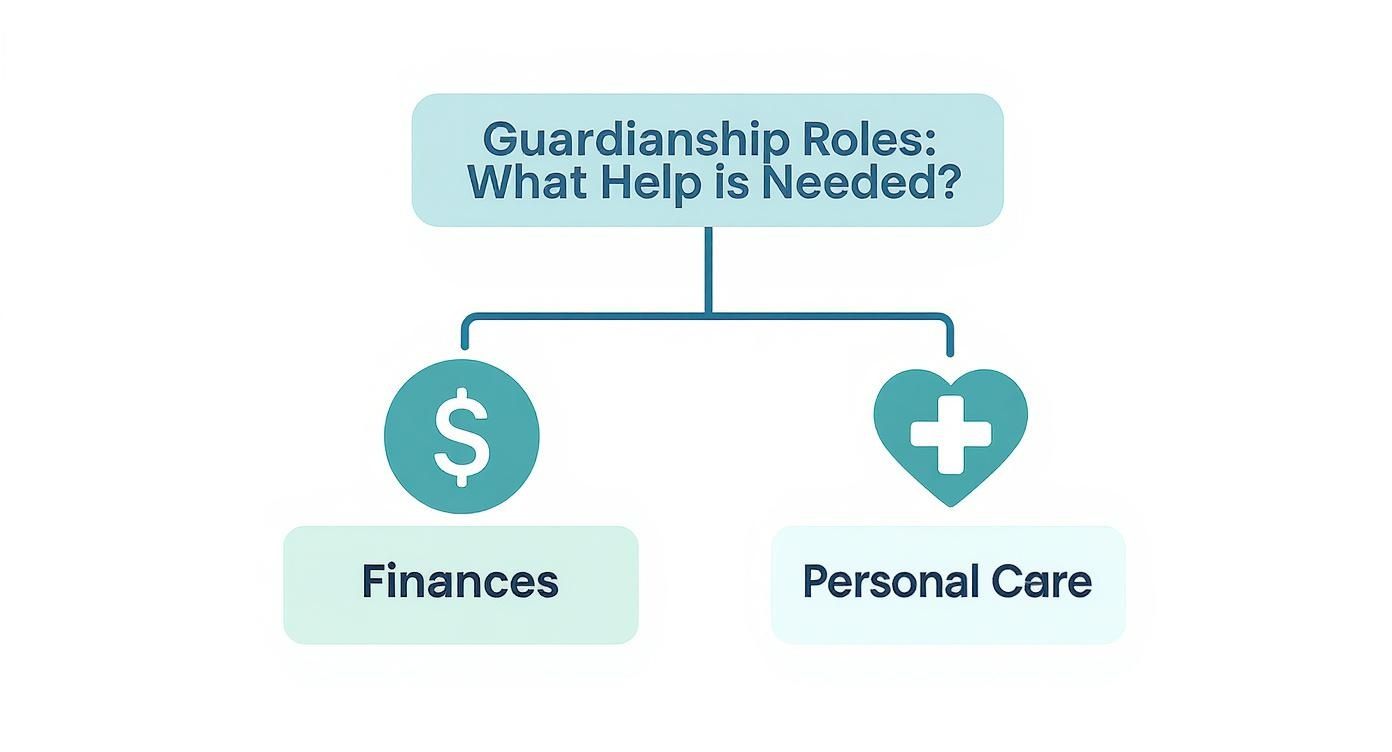
This tool cuts through the legal jargon and gets to the heart of the matter, guiding you toward the right solution by focusing on the type of help your loved one truly requires.
Scenario One: Guardian of the Person Only
Let's imagine a man named Robert who suffered a major stroke. It left him physically incapacitated and unable to speak clearly. His mind, however, is still as sharp as ever. Robert can still manage his own finances, using assistive technology to pay bills and keep an eye on his investments.
In a situation like this, a Guardian of the Estate would be inappropriate and overly restrictive. Robert doesn't need anyone managing his money. What he does need is a Guardian of the Person—perhaps his wife or daughter—to make critical healthcare decisions, consent to medical treatments, and be his voice with doctors now that he can't speak for himself.
Scenario Two: Guardian of the Estate Only
Now, think about an elderly woman named Eleanor. She's physically spry, has an active social life, and is perfectly capable of handling her daily routine. But her family has started noticing some troubling signs of cognitive decline, specifically around her finances. She's fallen victim to scams, forgotten to pay important bills, and can no longer balance a checkbook.
Eleanor doesn't need a Guardian of the Person; she can take care of herself just fine. The right solution here is a Guardian of the Estate. A court in her Texas county could appoint her son to take over her financial matters, protecting her from exploitation and ensuring her assets are used for her care, all while she maintains her personal independence.
The core principle a Texas court follows is using the least restrictive alternative possible. A judge will only grant the specific authority that is absolutely necessary to protect an incapacitated person, preserving as much of their autonomy as they can.
When Both Roles Are Necessary
Of course, many situations demand a more comprehensive approach, especially those involving progressive conditions like advanced Alzheimer's or dementia. When a person can no longer make sound decisions about either their personal well-being or their finances, a court may appoint a guardian to handle both roles.
This brings up a crucial question: should one person wear both hats?
- Appointing One Person: This is quite common, particularly when a spouse or a single adult child is the main caregiver. It can streamline decision-making.
- Splitting the Responsibilities: On the other hand, appointing one person as Guardian of the Person and another as Guardian of the Estate (like siblings with different strengths) can create a natural system of checks and balances. It lets family members play to their strengths—one might be more nurturing and hands-on, while the other is more financially savvy.
It’s also critical to remember that guardianship is a major legal step. Sometimes, other tools are a better fit. Taking a moment to understand the difference between guardianship vs. a power of attorney is a smart move that can help you see if less restrictive options are available for your family.
Every family's situation is different, and these decisions carry a heavy emotional weight. If you're trying to figure out the best path forward for someone you love, you don't have to do it alone. Schedule a free consultation with The Law Office of Bryan Fagan for compassionate, clear guidance tailored to your family's needs.
Getting the Legal Guidance Your Family Deserves
Deciding between a Guardian of the Person and a Guardian of the Estate carries enormous, life-altering weight for your loved one. This isn't just about filling out legal forms; it's a profound commitment you're making to protect their dignity, well-being, and everything they've worked for during a deeply vulnerable time.
Here at The Law Office of Bryan Fagan, we've sat with countless families shouldering this responsibility. We know the emotional toll and financial stress it brings, and we understand that every family's story is different. We are committed to guiding you through this with clarity and care, ensuring you feel supported every step of the way.
Exploring All Your Options
Our first step, always, is to listen. We help Texas families walk through every available option, including less restrictive alternatives that might be a better fit for your situation. These can often include:
- Durable Power of Attorney: This lets you appoint a trusted agent to handle financial matters without needing to go to court.
- Medical Power of Attorney: This tool designates someone to make crucial healthcare decisions if your loved one becomes unable to.
- Supported Decision-Making Agreements: These powerful agreements allow an individual with disabilities to get help from advisors they trust while still holding onto their rights.
We believe in arming you with knowledge. When you understand the full range of choices—from Estate Planning tools to formal Guardianship proceedings—you can move forward confidently, knowing you’ve made a decision that truly serves your loved one's best interests.
Deciding on guardianship is one of the most significant choices a family can make. It requires a delicate balance of legal precision and human compassion to ensure a loved one's autonomy is respected while providing necessary protection.
Our experienced attorneys are here to provide not just legal representation but genuine, empathetic guidance. We'll be with you at every stage, from the initial application in a Harris County Probate court to the ongoing duties required under the Texas Estates Code.
We know how overwhelming this journey can feel. If you're standing at this crossroads, unsure of which path is right for your family, you don’t have to figure it out alone. We invite you to schedule a free consultation to get the clarity and support you need to protect what matters most.
Common Questions We Hear About Texas Guardianship
When you’re worried about a loved one, the legal process can feel overwhelming. Families often come to us with many questions, trying to make sense of a confusing system during an already stressful time. Let's clear up some of the most common points of confusion we see with Texas families.
Does Texas Use the Term "Conservator" for Adults?
No, and this is probably the biggest source of mix-ups for families. In Texas, when we talk about managing an incapacitated adult's finances, the correct legal term is Guardian of the Estate. The word "conservator" is almost exclusively used in family law cases, like divorces involving children, and falls under the Texas Family Code, not the Estates Code that governs adult guardianship.
Can One Person Serve in Both Guardian Roles?
Absolutely. In fact, it's quite common for a Texas court to appoint one qualified person—often a spouse or an adult child—to act as both the Guardian of the Person and the Guardian of the Estate. As long as the judge believes it's in the ward's best interest, combining these roles can make decision-making much more straightforward.
Are There Alternatives to Guardianship in Texas?
Yes, and Texas courts require you to explore them first. A judge won't grant a guardianship if a less restrictive option is available that can adequately protect your loved one. Before heading to court, families should always look into:
- Durable Power of Attorney: This document lets a designated person manage financial matters.
- Medical Power of Attorney: This allows someone to make healthcare decisions.
- Supported Decision-Making Agreements: A powerful option that lets an individual get help from trusted advisors without surrendering their legal rights.
An experienced guardianship attorney can help you assess if these alternatives are a workable solution for your family.
Is a Bond Always Required for a Guardian of the Estate?
Yes, in almost every single case. A probate court in Texas, whether it’s in Harris County or elsewhere, will require the Guardian of the Estate to post a bond. Think of it as an insurance policy that protects the ward's assets from being mismanaged or mishandled. This requirement is one of the key safeguards built into Texas law to protect vulnerable adults.
The financial duties of a Guardian of the Estate are serious and come with a level of scrutiny that doesn't apply to a Guardian of the Person. The bond requirement is there to reinforce this high standard of accountability.
Figuring out the difference between a conservator and a guardian is just the start. At The Law Office of Bryan Fagan, PLLC, we help Texas families find the right path to protect their loved ones with dignity and respect. If you're trying to figure out your next steps, schedule a free, confidential consultation with our team today. We’re here to bring clarity and support to your family's unique situation.