Skip to content
When you begin researching legal guardianship for a loved one, you'll likely find many online "sample" or "template" letters. It's a common misunderstanding that guardianship can be established with a simple, signed document. Let's be clear: in Texas, a legally binding guardianship is created only through a court order. A letter you write yourself, even if notarized, has no legal authority with banks, hospitals, or any other official institution.
They will turn you away, and they would be legally right to do so. Navigating this process is an act of love, but it requires understanding the correct legal steps to truly protect the person you care about.
What Are Official Letters of Guardianship?
When a Texas family recognizes a loved one can no longer make safe decisions for themselves, the idea of "guardianship" arises. It’s a formal legal process designed to protect incapacitated individuals, but it's often surrounded by confusion. One of the biggest points of misunderstanding is the official document that grants a guardian their authority.
This document is officially called "Letters of Guardianship." This is not a letter you draft at your kitchen table. It is a one-page certificate issued by a probate court judge after a full legal proceeding has concluded. Think of it as a court-certified license proving you have the legal right to act on behalf of another person, who is then known as the "ward."
The Power of a Court Order
Without this specific, court-issued document, you have no legal standing to manage a loved one's affairs. We understand the urgency families feel, but trying to use a handwritten letter will only lead to rejection by institutions legally obligated to protect their clients' privacy and assets.
A probate court in Texas, such as the Harris County Probate Court, will only issue Letters of Guardianship after a thorough process. This isn't a quick signature; it involves:
- Filing a formal application with the court.
- Presenting medical evidence of the proposed ward’s incapacity.
- Notifying all relevant family members of the proceeding.
- A court hearing where a judge determines if guardianship is necessary and in the ward's best interest.
This rigorous process exists for a vital reason—it protects the ward’s rights and ensures the person appointed as guardian is suitable for the immense responsibility. The official Letters will specify the exact powers you’ve been granted, whether for personal and medical decisions (Guardian of the Person) or for handling financial matters (Guardian of the Estate).
According to the Texas Estates Code, Title 3, Subtitle G, a court must find by clear and convincing evidence that an adult is incapacitated before a guardian can be appointed. This high legal standard protects individual liberties and prevents guardianships from being created unnecessarily.
Understanding this distinction is the single most critical first step. A sample letter might help you organize your thoughts for a court petition, but it's the court’s final order that grants you legal power. For a deeper dive into this official document, you can learn more about what Letters of Guardianship are and how they work in practice.
The difference between a letter you might write and the official document from a court is the difference between asking for permission and having the legal authority to act.
Key Differences Between a Request Letter and Official Court Letters of Guardianship
| Feature | Your 'Sample' or 'Request' Letter | Official 'Letters of Guardianship' (Court Order) |
|---|---|---|
| Legal Authority | None. It is a personal request with no legal standing. | Legally binding. It is a court order that institutions must recognize. |
| Origin | Drafted by a private individual (you, a family member). | Issued by a Texas probate court judge after a full legal proceeding. |
| Purpose | Expresses your intent or wish to become a guardian. | Grants specific legal powers to manage a ward’s affairs. |
| Acceptance | Will be rejected by banks, hospitals, and other official entities. | Must be accepted by all institutions as proof of your authority. |
| Process | Simply written and signed, maybe notarized. | Requires filing a court application, a hearing, and a judge's ruling. |
| Protection | Offers no legal protection for the ward or the writer. | Provides court-supervised protection for the ward’s rights and assets. |
As you can see, there's no comparison. A letter found online can be a starting point for your thoughts, but the Letters of Guardianship from the court are the finish line.
Navigating this process can feel overwhelming, especially during an emotional time. You don't have to do it alone. For personalized guidance on your family’s unique situation, schedule a free consultation with our experienced attorneys today.
Anatomy of a Texas Guardianship Petition
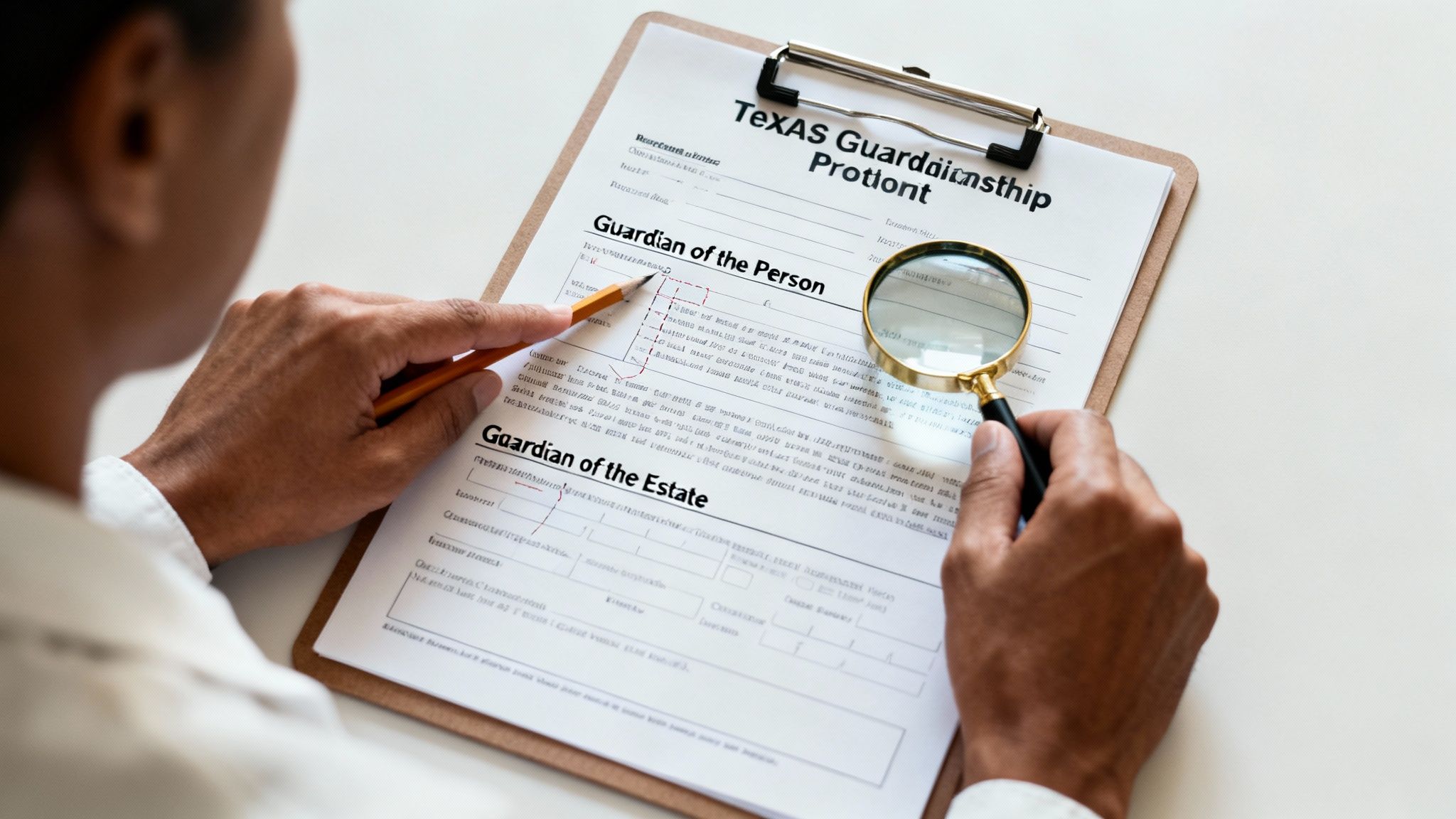
Before a Texas probate court will issue official “Letters of Guardianship,” you must begin the process by filing a formal application, often called a petition. While many people search for a "letter of legal guardianship sample," the court petition is the true foundational document where structure and accuracy are paramount. This application is your formal request to the court, and it must contain specific, accurate information to be considered.
Filing this petition isn't just paperwork; it's the first step in a legal process that will fundamentally affect your loved one's rights. The Texas Estates Code, specifically in Title 3, Subtitle G, outlines exactly what this document must contain. Missing even one required detail can cause frustrating delays in a situation that is often incredibly time-sensitive. We understand the weight this responsibility places on families and want to demystify this critical document so you feel empowered, not intimidated.
Key Components of the Application
A Texas guardianship petition is a detailed legal document that introduces the court to you, your loved one (the "proposed ward"), and the reasons why a guardianship is necessary. The court expects complete transparency and accuracy from the start.
Here are the essential pieces of information a court in Texas, like the Travis County Probate Court, will require:
- Applicant Information: This includes your full name, address, and your relationship to the proposed ward.
- Proposed Ward’s Information: The court needs the proposed ward’s name, date of birth, current address, and county of residence.
- A Statement of Incapacity: You must provide a clear, factual explanation of why you believe the proposed ward is incapacitated and can no longer manage their own affairs.
- Type of Guardianship Requested: Be specific. Are you asking to be a Guardian of the Person (for healthcare and personal decisions), a Guardian of the Estate (for financial matters), or both?
- List of Relatives: You must list the names and addresses of the proposed ward’s closest relatives, as they have a legal right to be notified about the case.
- Inventory of Assets (for Guardian of the Estate): This is a general description and estimated value of the proposed ward's property.
Think of the petition as the opening argument you're making to the judge. Each section builds a complete picture of the situation, justifying why court intervention is the right and necessary step to protect your loved one.
Guardian of the Person vs. Guardian of the Estate
It’s crucial to understand the difference between the two main types of guardianship. Let's walk through a common scenario to see how it plays out.
Imagine Sarah, an adult child in Austin, is caring for her father, John, whose dementia is worsening. John has started missing doctor's appointments, forgetting medication, and recently fell victim to a financial scam. Sarah needs legal authority to step in and protect him.
- Guardian of the Person: To manage John's healthcare, Sarah would seek this type of guardianship. It would give her the power to consent to medical treatments, choose his doctors, and decide on the safest place for him to live.
- Guardian of the Estate: Sarah would also need to be appointed Guardian of the Estate to handle John's finances. This authority would allow her to pay his bills from his bank account, shield his retirement savings from more scams, and manage his property.
In many situations like Sarah's, applying for a full guardianship of both the person and the estate is the only way to provide comprehensive protection. The petition must clearly state which powers you are requesting. For a deeper dive into the legal paperwork involved, take a look at our guide on guardianship petitions and legal procedures.
A Crucial Takeaway: A guardianship is not a "one-size-fits-all" solution. The court's goal is to implement the least restrictive alternative that still protects the ward. Your petition should reflect this by requesting only the powers absolutely necessary for your loved one's specific situation. Sometimes, alternatives like a durable power of attorney may be more appropriate.
The details you provide in your petition lay the groundwork for the entire case. Getting it right from the beginning is essential. Because every family’s circumstances are unique, a generic "letter of legal guardianship sample" can only take you so far. For guidance tailored to your specific needs, please schedule a free consultation with our compassionate legal team. We are here to help you protect the ones you love.
Gathering the Information for Your Guardianship Application
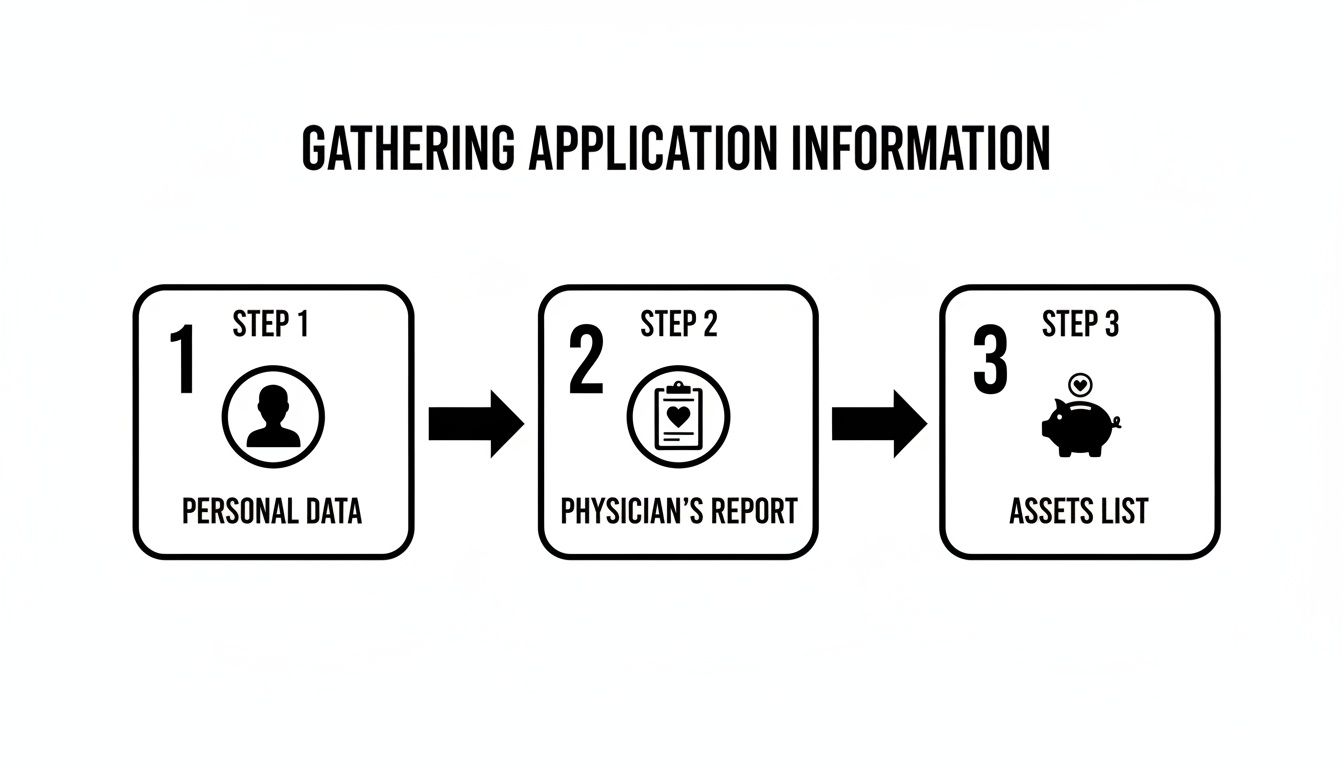
A successful guardianship petition is built on a solid foundation of accurate and complete information. Before you file anything with the court, the first and most critical step is gathering all the necessary details. We know this can feel like an emotional scavenger hunt, but getting organized from the start can save you from frustrating and costly delays.
Think of it this way: the court in Bexar County or Harris County needs a complete and honest picture of your loved one’s life. Incomplete or inaccurate information is one of the most common reasons applications get stalled. Our goal is to make this data-gathering stage as straightforward as possible, recognizing the emotional weight this process puts on families.
Essential Personal and Family Details
First, you'll need to compile the fundamental information about the person you're seeking to protect, who the court refers to as the "proposed ward."
- Full Legal Name and Address: Include any aliases or former names they’ve used.
- Date and Place of Birth: This is essential for establishing jurisdiction and confirming their identity.
- A List of All Relatives: Under the Texas Estates Code, certain relatives must be formally notified of the guardianship proceeding. This is not optional. It includes the proposed ward's spouse, parents, siblings, and any adult children. You'll need their full names and current addresses.
Failing to notify a required family member is a serious procedural mistake that can bring your entire case to a halt. When in doubt, it’s always better to be overly inclusive.
The Cornerstone Medical Evidence
The single most important document you’ll need is a certificate from a physician. This isn't just a simple doctor's note; it's a specific legal form, officially called a "Certificate of Medical Examination." It has a deadline—it must be completed within 120 days of filing your application.
This certificate provides the court with a professional medical opinion on the proposed ward's physical and mental condition. Critically, it must explicitly state the nature and degree of their incapacity and explain why a guardianship is necessary to protect their health and safety.
Financial Information for Guardianship of the Estate
If your loved one needs help managing their finances, you’ll also need to prepare a preliminary inventory of their assets. This doesn't need to be a forensic-level accounting at this stage, but it must be a comprehensive and good-faith estimate of their financial situation.
You will need to pull together a list of:
- Real estate properties they own.
- Bank accounts, retirement funds, and any investments.
- Vehicles, valuable personal property, and any sources of income like pensions or Social Security.
This information gives the court a clear picture of the scope of the proposed ward’s estate and helps the judge determine the appropriate level of oversight required. As you start pulling these forms and evidence together, a general guide on preparing an application packet can be a huge help in making sure all the pieces are complete and properly organized.
A Note on Transparency: We can't stress this enough: it is absolutely critical to be truthful and complete in your application. Attempting to hide assets or omitting family members will be discovered by the court-appointed investigator and will severely damage your credibility with the judge.
This responsibility is a long-term commitment. Gathering all this information is often the most difficult first step. If you need help ensuring your application is complete and accurate, schedule a free consultation with The Law Office of Bryan Fagan. We're here to guide you with compassion and clarity.
Navigating the Texas Court Process for Guardianship
Submitting the application is a huge first step, but it’s just the starting line of the legal journey. The court process that follows can feel intimidating. Knowing what to expect at each stage, however, can ease your anxiety and help you prepare. Once your application is filed with a Texas probate court, a structured series of events begins, all designed to protect your loved one's rights.
This is not a rubber-stamp approval. The court-supervised process is intentionally thorough to ensure guardianship is granted only when absolutely necessary. A judge in Tarrant County, for instance, won’t consider granting a guardianship until they've verified that every legal requirement has been met. It's all about making sure the decision is truly in the best interest of the person who needs protection.
The Role of the Attorney Ad Litem
One of the first things the court does is appoint an independent attorney known as an attorney ad litem. This person is crucial to the process. They don't work for you or the court; their sole job is to represent your loved one, the proposed ward. It’s a critical safeguard built into Texas law.
You can expect the attorney ad litem to:
- Meet with the proposed ward in person to explain what’s happening in a way they can understand.
- Interview you, other family members, and doctors or caregivers.
- Carefully review all the medical evidence you provided.
- File a formal report with the court giving their professional recommendation on whether guardianship is needed and if you are the appropriate person for the role.
Preparing for the Court Hearing
Everything leads up to a formal court hearing. This is where the judge will hear testimony, review evidence, and make a final decision. The judge will likely have questions for you—they’ll want to understand your motivations, your relationship with the proposed ward, and your plan for their care.
This is your opportunity to speak from the heart, clearly and honestly, about why you believe your loved one can no longer make safe decisions for themselves. Presenting your case with both compassion and clarity is key. To get a better feel for the courtroom environment, it’s a good idea to understand what to expect at a Texas guardianship hearing before your court date arrives.
The court process is demanding, but it exists to protect the most vulnerable among us. If you're facing this journey, you don’t have to do it alone. The Law Office of Bryan Fagan is here to provide the support and legal guidance you need. Schedule a free consultation today to discuss your family’s situation.
How to Use Your Official Letters of Guardianship

After the emotional court process, the moment a judge signs the guardianship order can feel like a massive weight has been lifted. Shortly after, the court clerk will issue your official Letters of Guardianship. This single-page document is the proof of your authority. But in many ways, receiving it is where your real work as a guardian begins.
Now, you must present this document to every institution that manages your loved one's affairs—banks, doctors, care facilities, and government agencies like Social Security. We understand this can feel just as intimidating as the court case itself, but being prepared and confident makes all the difference.
Presenting Your Authority Correctly
When you go to a bank or a doctor’s office, you must bring a certified copy of your Letters of Guardianship. A simple photocopy will be rejected. You can get multiple certified copies from the county clerk’s office where the guardianship was granted, and it's wise to get several at once.
Be ready to provide:
- Your own government-issued photo ID.
- The ward’s personal identification information (like their Social Security number or date of birth).
- A copy of the court order that officially appointed you.
A bit of advice from experience: be patient but firm. Large national banks have seen these documents many times. But a clerk at a small credit union or a new receptionist at a clinic might be unfamiliar with them. If you meet resistance, calmly explain that it's a court order and ask to speak with a manager or someone in their legal compliance department.
Understanding Your Powers and Limits
Your Letters of Guardianship are powerful, but they are not a blank check. Your authority is strictly defined by the judge’s order and the Texas Estates Code. You might be a Guardian of the Person, a Guardian of the Estate, or both—and the distinction is critical.
It's crucial to re-read your court order and understand the specific powers you were granted—and any limitations the court imposed. Acting outside the scope of your authority, even with good intentions, can lead to serious legal consequences, including your removal as guardian.
For example, as a Guardian of the Person, you can make medical decisions, but you cannot sell the ward’s house without specific court permission. Likewise, a Guardian of the Estate must manage finances with an incredibly high standard of care, which includes filing detailed annual accountings with the court. Fulfilling these duties protects both your loved one and you.
Navigating the responsibilities of a guardian is an ongoing commitment that requires diligence and care. If you have questions about exercising your duties or run into roadblocks with institutions, our team at The Law Office of Bryan Fagan is here to help. Schedule a free consultation for personalized guidance on your new role.
When a Sample Letter Isn't Enough
Online guides and sample guardianship letters are helpful for getting your bearings. Think of them as a basic map of the Texas guardianship process. But just as you wouldn't use a tourist map to navigate a treacherous mountain pass, some family situations are far too complex to handle without an experienced legal guide.
Knowing when to seek professional help is one of the most important steps you can take. Trying to go it alone when the stakes are high can lead to heartbreaking delays, fractured family relationships, and unintended outcomes in court.
Red Flags That Mean You Need an Attorney
Certain scenarios instantly raise the legal complexity and signal it's time to consult with a Texas guardianship lawyer. If you find yourself in any of these situations, seeking legal advice should be your next move.
- Family Disputes Arise. This is a major red flag. If a sibling or another relative is contesting the guardianship or challenging who should be guardian, you are no longer just filing paperwork. You're in a contested legal battle. A Harris County probate judge will have to weigh evidence from all sides, and representing yourself puts you at a serious disadvantage.
- Your Loved One Objects. When the person you're trying to help does not want a guardian, their rights are the court's top priority. The judge will appoint an "attorney ad litem" whose sole job is to fiercely defend your loved one's wishes. You will need your own strong advocate to present clear and convincing evidence of why the guardianship is necessary for their safety.
- The Estate is Complex. Does your loved one own a business, have significant investments, or own multiple properties? The financial stakes are incredibly high. Managing a complex estate means you must strictly follow the fiduciary duties outlined in the Texas Estates Code. A single misstep, even an innocent one, can lead to serious legal trouble.
It is important to remember: Guardianship isn't always the only or best solution. A compassionate attorney will help you explore less restrictive alternatives first, like a supported decision-making agreement or activating a durable power of attorney. These options can often provide the necessary support while preserving more of your loved one's independence.
The legal system also provides a crucial safety net in other areas of family protection. For instance, permanent, stable homes are created through guardianship for about 10% of the 184,095 children and teens who exit the foster care system each year. You can find more on these important foster care and adoption statistics and see the life-changing impact.
Navigating these emotional and legal waters requires a partner who is both compassionate and deeply knowledgeable. At The Law Office of Bryan Fagan, our commitment is to guide Texas families through these challenges with clarity and care. We invite you to schedule a free, no-obligation consultation with our team to discuss your family's unique situation. Visit us at https://texasguardianshiplawyer.net to get started.