Skip to content
When a loved one with a disability can no longer make critical decisions for themselves, the idea of legal guardianship can feel overwhelming. It's a path often filled with complex emotions, but at its heart, guardianship in Texas is designed as a protective measure—a safety net when it's needed most. We understand the emotional and financial challenges you're facing. This process is not about taking away freedom; it’s about providing a legal tool established by a Texas court to ensure your loved one's well-being is safeguarded.
What is Guardianship for an Adult with Disabilities?
The word 'guardianship' itself can sound heavy. It’s natural to worry about what this step means for your loved one’s independence. The Texas legal system understands this and approaches the process with incredible care. Courts here view guardianship as a profound step, one that should only be taken when absolutely necessary to protect a vulnerable person.
Think of a guardian as a dedicated legal advocate, appointed by a court to act in your loved one’s best interest. The objective is never to take control but to provide compassionate, structured support. The entire process is governed by the Texas Estates Code, specifically Title 3, Subtitle G, which lays out the rules to ensure every decision puts the individual first.
Two Key Roles in Texas Guardianship
Life is complicated, and a person might need help in one area but not another. Texas law recognizes this, so guardianship is often split into two distinct roles to provide the right kind of support where it's actually needed.
- Guardian of the Person: This person is responsible for personal and medical decisions. Think of them as the point person for healthcare choices, deciding where the individual will live, and managing their daily care and safety.
- Guardian of the Estate: This role is all about the finances. The Guardian of the Estate manages the individual's money—paying bills, protecting assets, handling income, and making sure their financial life is secure from fraud or mismanagement.
A court, such as a Harris County Probate Court, might appoint one person to handle both roles or split the duties between two different people. It all comes down to the family's unique situation and what truly serves the best interests of the person needing help, who is known in court as the "proposed ward."
To make these roles clearer, here’s a simple breakdown of their responsibilities.
Key Differences in Texas Adult Guardianship Roles
This table outlines the distinct responsibilities for each type of guardian as defined by Texas law.
| Type of Guardianship | Primary Responsibilities | Governed By |
|---|---|---|
| Guardian of the Person | Makes decisions about healthcare, living arrangements, personal care, and general well-being. | Texas Estates Code, Chapter 1151 |
| Guardian of the Estate | Manages financial assets, property, income, and debts; files accountings with the court. | Texas Estates Code, Chapter 1151 |
Ultimately, the court's goal is to create a support structure that is tailored to the individual's specific needs, whether that involves personal care, financial management, or both.
A Measure of Last Resort
This is a critical point to understand: Texas courts consider a full guardianship to be the absolute last resort. The law has a strong preference for using the "least restrictive alternative" available. This means preserving as much of an individual's autonomy and independence as possible.
Before a judge will even consider granting a guardianship, they must see convincing evidence that less intrusive options, like a Power of Attorney or a supported decision-making agreement, just aren't enough to meet the person's needs. This high bar ensures that an individual’s rights are fiercely protected, and a court will only step in when clear medical evidence proves a person is truly incapacitated.
The core principle of Texas guardianship law is protection, not restriction. The court's primary objective is to create a safe and supportive legal structure that honors the dignity and well-being of the individual at every step.
Beyond the legalities, a huge part of supporting someone under guardianship is ensuring their environment is built for their success. This can mean practical things, and learning more about topics like creating a welcoming and accessible environment for people with disabilities can offer some really valuable insights.
At The Law Office of Bryan Fagan, we know you're facing emotional and financial challenges. If you're trying to figure out the best path forward, please contact us for a free consultation. We’re here to provide clear, compassionate guidance.
The Step-by-Step Process to Establish Guardianship in Texas
Realizing a loved one needs a guardian is a heavy emotional weight. The next step is figuring out how to navigate the legal system to get them the protection they need. The Texas court system can seem complex from the outside, but establishing guardianship for an adult with disabilities follows a clear, predictable path.
Knowing what to expect can take a lot of the anxiety out of the process, empowering you to move forward with confidence. The journey starts long before you step into a courthouse; it begins with honest conversations and a clear-eyed look at your loved one’s daily challenges.
Filing the Application for Guardianship
The whole process kicks off when you file an Application for Appointment of Permanent Guardian with the proper probate court. This is usually the court in the county where your loved one—the "proposed ward"—lives, whether that's Dallas County, Bexar County, or anywhere else in Texas.
This application is more than just paperwork; it’s the foundation of your case. You’ll need to provide specific details, including:
- The proposed ward’s full name, birthdate, and current address.
- A clear explanation of why a guardianship is needed, detailing the nature of their disability.
- The specific type of guardianship you’re asking for (Guardian of the Person, Guardian of the Estate, or both).
- Information about the person you're proposing to serve as the guardian.
Essentially, this document is your formal request to the court, laying out exactly why your loved one is incapacitated and requires a guardian's legal protection.
The Critical Role of Medical Evidence
Medical evidence is the bedrock of any guardianship case. The Texas Estates Code requires you to submit a physician's letter or a certificate of medical examination (CME) to the court. This isn't just a suggestion—it's a mandatory piece of evidence.
A doctor must have examined the proposed ward within the last 120 days before you file. Their report has to detail the nature, degree, and severity of the person’s incapacity. This document provides the objective, expert opinion that a judge leans on heavily to determine if someone truly lacks the capacity to manage their own affairs. You can get a deeper understanding of what the court looks for by reading our guide on proving incapacity in Texas courts. It's often the single most important document in the entire file.
Court-Appointed Advocate: The Attorney Ad Litem
Once you've filed the application, the court appoints an Attorney Ad Litem. This is an independent lawyer whose only job is to look out for the best interests of the proposed ward. Think of them as your loved one's dedicated advocate throughout the legal proceedings.
The Attorney Ad Litem will meet privately with your loved one to explain what’s happening in a way they can understand and inform them of their legal rights. From there, they conduct their own investigation and write a report for the judge, giving their professional opinion on whether a guardianship is truly necessary and if you are a suitable choice for a guardian. This system provides a crucial check and balance, making sure the proposed ward's voice is heard.
A Real-World Example: Let's say a family in Dallas is seeking guardianship for their 22-year-old son who has a severe developmental disability. They file the application with the Dallas County Probate Court. The judge then appoints an Attorney Ad Litem. This attorney visits the son, speaks with him and the family, and confirms his needs. He then reports back to the judge that guardianship is indeed the least restrictive and most appropriate way to ensure the young man's long-term care and safety.
This flowchart shows how the duties for a Guardian of the Person and a Guardian of the Estate differ, even though they both start with the same court process.
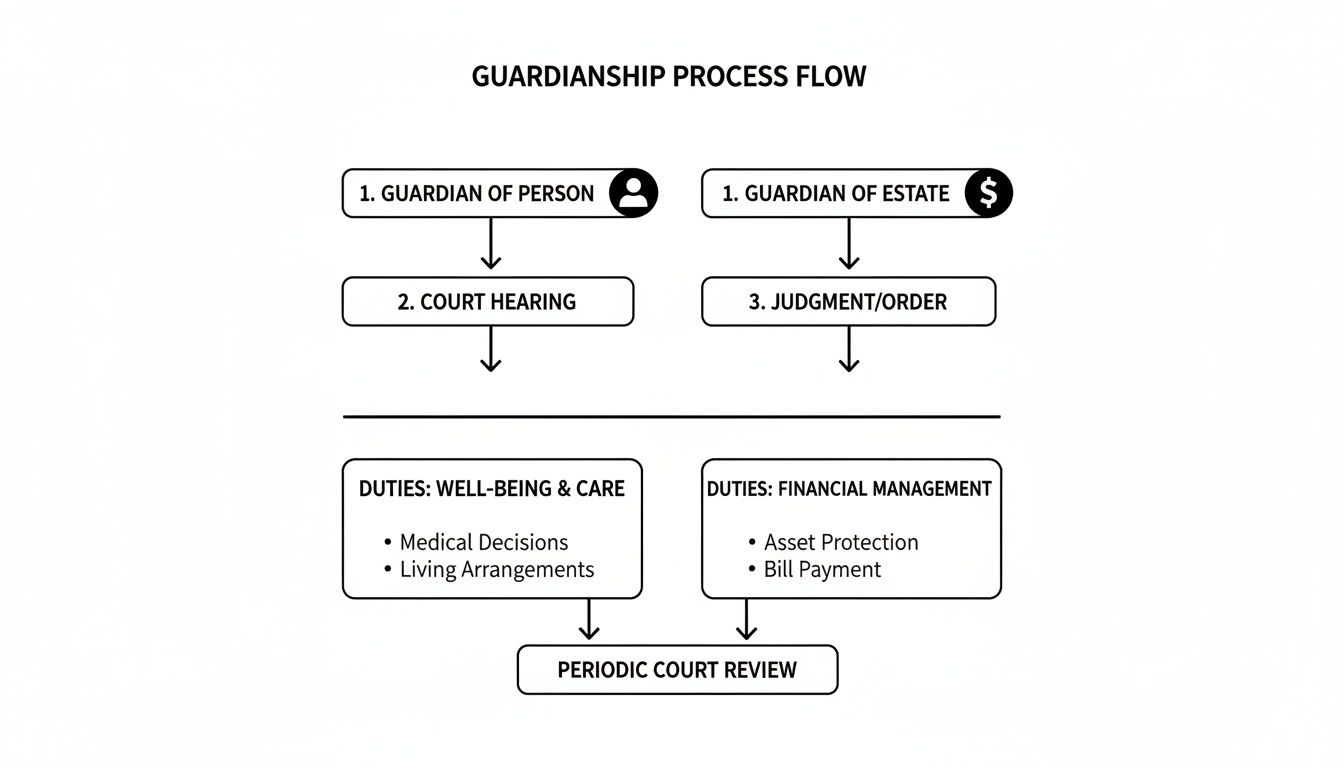
As you can see, one path focuses entirely on personal well-being, while the other is dedicated to managing financial security.
The Guardianship Hearing
The whole process culminates in the court hearing. This is where the judge pulls everything together and makes a final decision. They'll review your application, the doctor’s report, and the Attorney Ad Litem’s findings. You’ll also need to testify and explain, in your own words, why you believe guardianship is necessary.
To approve the guardianship, the judge must be convinced by "clear and convincing evidence" that your loved one is incapacitated and that appointing you as guardian is in their best interest. If the judge agrees, they will sign an order making it official and issue Letters of Guardianship. This is the legal document that grants you the authority to act on your loved one's behalf.
Trying to manage all of this on your own can be incredibly stressful. At The Law Office of Bryan Fagan, we walk Texas families through every single step. Schedule a free consultation with us today to talk about your situation and get the clear, compassionate advice you deserve.
Navigating Emergency and Temporary Guardianships
Sometimes, a crisis hits without any warning. A sudden medical emergency or the discovery that someone is taking advantage of a loved one can create an immediate and dangerous situation. In these moments, the standard guardianship process isn't fast enough. That’s precisely where a Temporary Guardianship becomes an essential lifeline.
When there's strong evidence that a person or their financial estate is in immediate jeopardy, a Texas probate court can grant a temporary guardianship. Think of it as a legal first responder. This is a short-term, emergency measure designed to stabilize a crisis and keep your loved one safe while you move forward with a permanent guardianship application.

When is a Temporary Guardianship Necessary?
A judge, whether in the Travis County Probate Court or elsewhere in Texas, won't grant this emergency power lightly. The purpose is to prevent imminent, serious harm.
Picture this: An elderly parent in San Antonio suffers a major stroke. They're hospitalized and unable to communicate. A distant relative with a shaky financial past suddenly appears and starts trying to access their bank accounts. This is a textbook emergency. A temporary guardianship can immediately freeze those assets and grant someone the authority to make critical medical decisions, protecting the parent from both financial ruin and further harm.
Other common situations that call for this include:
- Sudden Medical Crisis: A car accident or sudden illness leaves an adult incapacitated and unable to consent to life-saving medical care.
- Risk of Physical Harm: An individual is found in a dangerous living situation and needs to be moved to a safer environment right away.
- Threat of Financial Exploitation: Someone is actively trying to scam or steal from a vulnerable adult, and their assets need to be protected now.
How the Temporary Guardianship Process Works
Because time is of the essence, the process for getting a temporary guardianship is fast-tracked. Your attorney will file an application that clearly lays out the emergency and provides solid evidence of the immediate danger. The court can hold a hearing much more quickly than it would for a permanent guardianship.
Under the Texas Estates Code, Title 3, Subtitle G, a temporary guardianship is typically granted for a maximum of 60 days. This gives everyone—the family, the court, and the court-appointed Attorney Ad Litem—enough breathing room to complete the more thorough process of establishing a permanent guardianship.
It’s critical to remember that even in an emergency, the court’s primary focus is on protecting the individual's rights. They will still look for less restrictive alternatives if a viable one exists. The burden of proof is high; you must present clear and convincing evidence of a genuine, immediate need for intervention.
The complexities of any guardianship are significant, and keeping these arrangements on track is a challenge across the country. For example, data shows that while many states require annual reports to prevent abuse, compliance can be a real problem. In fact, Texas has shown a 33% deficiency rate in these required reports. This really underscores how important it is to have diligent legal support to make sure every duty is met. You can discover more insights from the National Center for State Courts on these national trends and challenges.
If your loved one is facing an immediate crisis, you don't have to figure this out on your own. The Law Office of Bryan Fagan is here to act swiftly to protect your family. Contact us for a free consultation to discuss your urgent needs and see how we can help.
Exploring Powerful Alternatives to Guardianship
While guardianship is a powerful legal tool, Texas courts view it as a last resort. The law is designed to protect an individual's freedom and autonomy as much as possible.
Before a judge in any Texas county, from Harris to Travis, will consider a full guardianship, the law requires you to explore "less restrictive alternatives." These are not just legal formalities; they are powerful tools designed to provide targeted support without stripping a person of their fundamental rights.
Financial and Healthcare Powers of Attorney
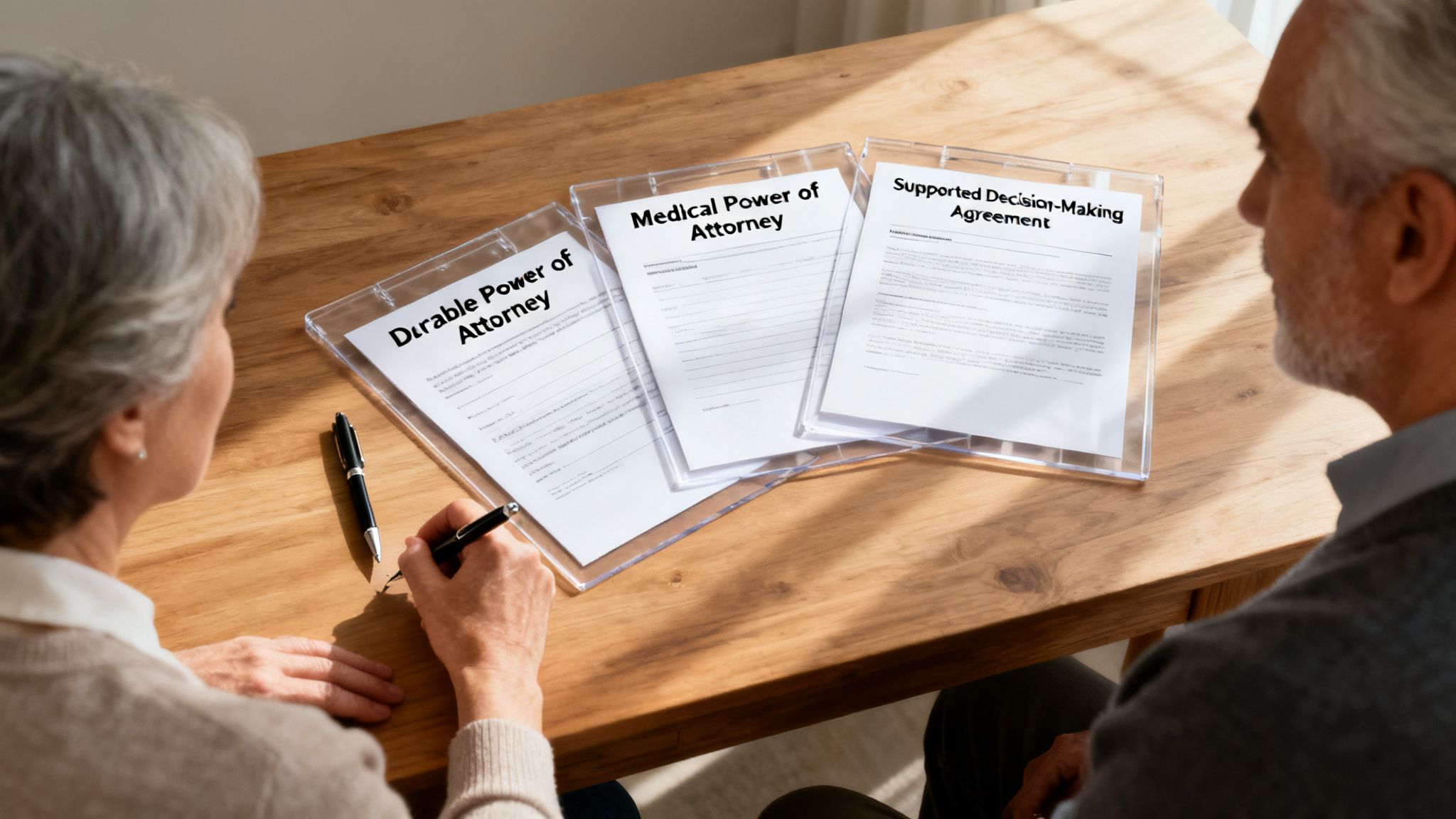
Two of the most common and effective alternatives are the Durable Power of Attorney and the Medical Power of Attorney. They let an individual (the "principal") hand-pick a trusted person (the "agent") to make decisions for them if they ever become unable to do so themselves.
Durable Power of Attorney: This document is all about the finances. It gives an agent the power to manage bank accounts, pay bills, handle property, and take care of other financial tasks. It's a proactive move that can completely avoid the need for a court-appointed Guardian of the Estate.
Medical Power of Attorney: This covers healthcare. The chosen agent can talk with doctors, consent to treatments, and make critical care choices based on what they know the person would want. This is often paired with a Living Will or a Directive to Physicians for a more complete plan.
The biggest difference between these and a guardianship is who's in control. With powers of attorney, your loved one makes the choice while they still have capacity, giving them a direct say in their future. Guardianship is a solution imposed by a court after capacity is lost.
Supported Decision-Making Agreements
A more recent and empowering option recognized in Texas is the Supported Decision-Making Agreement. This approach is a fantastic fit for adults with disabilities who can make their own choices but just need some help understanding information, weighing the options, and communicating their final decision.
With this agreement, the individual formally appoints trusted "supporters"—like family, friends, or professionals—to help them. The key is that the final decision always remains with the individual, preserving their legal right to self-determination.
For example, a young adult with a developmental disability could use a supporter to help them walk through a lease agreement or understand the pros and cons of a medical procedure. The supporter's job is to explain and advise, but the individual makes the final call. This fosters independence and builds valuable life skills, which is a big reason why Texas law strongly encourages it. To dig deeper into these options, you can find more information by exploring alternatives to guardianship for adults with disabilities.
To help clarify the differences, here’s a quick comparison of how these tools stack up against a full guardianship.
Guardianship vs Less Restrictive Alternatives
| Legal Tool | Decision-Making Authority | Court Oversight | Best For… |
|---|---|---|---|
| Full Guardianship | Guardian makes all decisions for the Ward. | High and continuous; annual reports and court approval required. | Individuals who are fully incapacitated and unable to make any safe decisions for themselves. |
| Power of Attorney | Agent makes decisions only if the Principal is incapacitated. | Minimal; court involved only if there's a dispute or abuse. | Individuals who have capacity now and want to plan for potential future incapacity. |
| Supported Decision-Making | The individual retains all decision-making authority. | None; it's a private agreement not filed with a court. | Individuals who can make decisions but need help processing information and communicating. |
As you can see, the goal is to find the tool that provides just the right amount of support without being overly restrictive. It requires a careful and honest assessment of your loved one's abilities.
Deciding between these powerful tools can be tough, especially when you're already dealing with so much. The team at the Law Office of Bryan Fagan is here to help you find the clearest path forward. Schedule a free consultation with us today to discuss your family’s unique needs and create a plan that provides both protection and peace of mind.
The Rights and Duties of a Texas Guardian
Taking on the role of a guardian is a profound responsibility. When a Texas court appoints you, you officially become a fiduciary. It’s a legal term that means you are entrusted with the duty to act solely for another person's benefit. For you, this means every single decision must be made with the absolute best interest of your loved one—now legally known as the "ward"—in mind.
The courts don't take this commitment lightly. You are legally and ethically bound to put the ward's well-being, safety, and financial security above everything else. The role demands integrity, careful attention to detail, and deep compassion as you step into the position of your loved one’s primary advocate and protector.
Core Responsibilities Under the Texas Estates Code
The Texas Estates Code, specifically Title 3, Subtitle G, lays out a guardian's duties in black and white. These are legal requirements designed to create a system of accountability and shield the ward from harm.
Your key duties will include:
- Managing Finances Prudently: If you're a Guardian of the Estate, you must handle the ward’s money and property with care. This means paying bills on time, investing assets wisely, and protecting their property from any kind of loss.
- Providing for Personal Care: As a Guardian of the Person, your focus is on making sure the ward has a safe place to live, gets the right medical care, and has their daily needs met—from meals to personal hygiene.
- Respecting the Ward’s Wishes: Whenever possible, you must consider the ward’s own values and preferences when making decisions. The goal is to preserve their dignity and as much of their autonomy as you can.
The Duty to Report to the Court
One of your most critical jobs as a guardian is filing regular reports with the court, such as a Harris County Probate Court. This is how the legal system ensures you’re living up to your obligations.
You’ll be required to file an Annual Report on the Condition and Well-Being of the Ward. If you’re also managing their money as a Guardian of the Estate, you'll need to submit an Annual Account that details every financial transaction. These documents create a transparent record of your actions and are vital for accountability. For a more detailed look into managing a ward's finances, you might be interested in our guide on how guardianship interacts with Social Security benefits.
A guardian's role is built on a foundation of trust and transparency. Your legal duties are designed to protect the ward, and strict compliance with court reporting is the primary way that protection is monitored and enforced.
It’s hard to overstate how important this oversight is. The reality is stark: in Texas, elder abuse has surged dramatically. The Department of Family and Protective Services documented over 83,000 cases in 2023, a shocking 38% increase from the year before. This alarming rise in exploitation underscores why a guardian’s protective duties are so incredibly important. To learn more about this issue, you can read AARP Texas's report on key protections.
Understanding these significant responsibilities is the first step. If you are considering this role, The Law Office of Bryan Fagan is here to provide the clarity you need. Schedule a free consultation with us today to discuss the duties involved in legal guardianship for adults with disabilities in Texas.
Handling Guardianship Disputes and Modifications
In the world of guardianship, where family and deep personal feelings are involved, things can get complicated. A loved one’s needs might change, or family members might not see eye-to-eye on what’s best. These aren't just legal issues; they're human ones. Whether you’re questioning who the court appointed as guardian, need to adjust the current arrangement, or believe the guardianship is no longer necessary, you need to know how the system works.
Why Guardianships Get Complicated
Most of the time, disputes pop up because everyone genuinely cares. But different ideas about what "caring" looks like can lead to serious conflict that only a judge can sort out. Having a sharp attorney on your side is essential when you're walking into a probate court, whether it's in Harris County or somewhere else in Texas.
Here are some of the most common friction points:
- Who Should Be Guardian? It's common for two or more family members to each feel they are the right person for the job. This leads to a contested hearing where the court has to make the tough call.
- Clashing Over Care Decisions. One person might think Mom needs to be in a nursing home, while another insists she can stay at home with help. These disagreements can quickly escalate.
- Allegations of Wrongdoing. In the toughest cases, someone might suspect the guardian isn't doing their job right. This could mean they're neglecting their duties, misusing money, or financially exploiting the person they're supposed to protect.
Making Changes: How to Modify or End a Guardianship
A guardianship isn't set in stone. The Texas Estates Code has built-in flexibility, allowing for changes when the situation calls for it. The goal is always to do what’s in the best interest of the person under guardianship (the "ward").
A modification might be necessary if the ward's condition changes. For instance, if their health declines, the guardian might need more authority. On the flip side, if the person makes a significant recovery, some of their rights could be restored, making the guardianship less restrictive.
Termination is the legal term for ending the guardianship entirely. This can happen if the ward recovers enough to handle their own personal and financial affairs again. To do this, you must go back to court with fresh medical evidence proving they are no longer incapacitated.
The Critical Need for Compliance
One of the biggest red flags for a court—and a frequent cause of disputes—is when a guardian fails to comply with their reporting duties. The annual reports they file are the court's main window into the ward's life, ensuring they're safe and their money is being handled properly.
This isn't just a minor issue; it's a huge problem. A recent statewide review by the Texas Office of Court Administration looked at cases across 146 counties and found something alarming: 33% of guardianships were missing at least one legally required report. This isn't just a filing error; it creates a blind spot where neglect or abuse can hide. During that review, officials flagged 387 cases for potential abuse, fraud, or other serious concerns. You can read the full report on Texas guardianship compliance here.
A guardian who fails to file their reports isn't just late on paperwork—they are failing their legal and moral duty. This is a serious breach that can get them removed by the court and, more importantly, can leave a vulnerable person unprotected.
If you’re worried about a guardianship, feel that something needs to change, or are stuck in the middle of a family disagreement, you don’t have to figure it out on your own. These situations are emotionally draining and legally complex. The Law Office of Bryan Fagan has the experience to help you protect the person you care about. Reach out and schedule a free consultation with us to talk through your options with clarity and compassion.
Common Questions About Adult Guardianship in Texas
When you start looking into legal guardianship for an adult with disabilities in Texas, a lot of questions pop up. It’s a complex area of law, and it’s natural to feel a bit overwhelmed. Let's walk through some of the most common questions we hear from families just like yours.
How Much Does Guardianship Cost?
This is usually the first question on everyone's mind, and the honest answer is: it depends. The total cost can swing quite a bit based on how complex your family's situation is. You'll have standard expenses like court filing fees and the fee for the court-appointed Attorney Ad Litem. Then there are your own attorney’s fees.
For a straightforward case where everyone is in agreement, you might be looking at a few thousand dollars. But if the guardianship is contested or involves complicated family dynamics, the costs can climb significantly.
How Long Does the Process Take?
Patience is key here. Even for an uncontested guardianship in a Texas court, like those in Harris or Bexar County, the process isn't instant. A realistic timeline is about two to four months from the day you file the application to the final hearing.
This window gives the court enough time to appoint an Attorney Ad Litem to represent your loved one, for that attorney to do their own independent investigation, and to make sure all the legally required notices are properly served to all interested parties.
Can a Guardian Be Removed or Changed?
Absolutely. A guardianship isn't set in stone forever. A judge can remove a guardian if they aren't performing their duties, are mismanaging the person's finances, or simply can no longer serve for health or other reasons.
If circumstances change, another family member can petition the court to modify the guardianship or appoint a successor guardian to take over.
The court's number one job is to protect the ward. If there's any reason to believe a guardian isn't acting in the ward's best interest, the Texas Estates Code lays out a clear path for their removal and replacement. The ward's safety always comes first.
What Happens If I Don’t File the Annual Report?
Filing the annual reports is not optional—it's a serious legal duty. Missing this deadline is a major violation of your responsibilities as a guardian.
The court can issue a notice demanding you appear and explain why, hold you in contempt, hit you with fines, or even remove you as guardian. Consistent and transparent reporting is how you maintain the court's trust and prove you are protecting your loved one's well-being. It’s non-negotiable.
Your loved one’s future is too important to leave to chance. The compassionate attorneys at The Law Office of Bryan Fagan, PLLC have helped countless families navigate this process, and we're here to answer your questions and guide you every step of the way.
Schedule your free, no-obligation consultation today to get the personalized legal support your family deserves. Visit us at our Texas Guardianship Law website to learn more.