Skip to content
When you’re planning an estate or stepping in to manage a loved one’s affairs, one of the first and most critical things to understand is the difference between probate and nonprobate assets. It’s a distinction that can feel a little technical, but we know that with clear guidance, Texas families can navigate this with confidence.
Simply put, probate assets are those that must pass through the court system to be legally transferred to the new owner. Nonprobate assets, on the other hand, are designed to skip the courthouse altogether and go directly to a pre-named person or entity. This classification is the deciding factor in whether a court, like the Harris County Probate Court, gets involved in overseeing how an asset is distributed.
Sorting Your Estate: Probate vs. Nonprobate Assets
Navigating an estate can feel overwhelming, especially when you’re already dealing with a difficult emotional time. A helpful way to think about it is to imagine all of a person’s belongings being sorted into two different boxes.
One box is sealed shut and can only be opened by a judge. The judge’s job is to look inside, follow the instructions in the will (or the law, if there’s no will), and make sure every item goes to its rightful heir. This is the probate box.
The other box already has delivery tags attached to each item inside. These tags have specific names and addresses on them, allowing each item to be sent directly to its new owner without any need for a judge’s approval. This is the nonprobate box.
Grasping this simple idea is the first step toward creating a solid Estate Plan that brings peace of mind. Probate is the formal, court-supervised process of validating a will, settling debts, and distributing property. Because nonprobate assets have those “special delivery tags” already in place, they get to bypass that entire process.
The Key Distinction Between Asset Types
What determines which box an asset goes into? It all comes down to how the asset is owned or titled. This is the crucial part: it’s not something you can change in a will. The ownership structure is set up when the bank account is opened, the life insurance policy is purchased, or the deed to the house is signed.
This infographic gives you a quick visual for how to classify your assets.
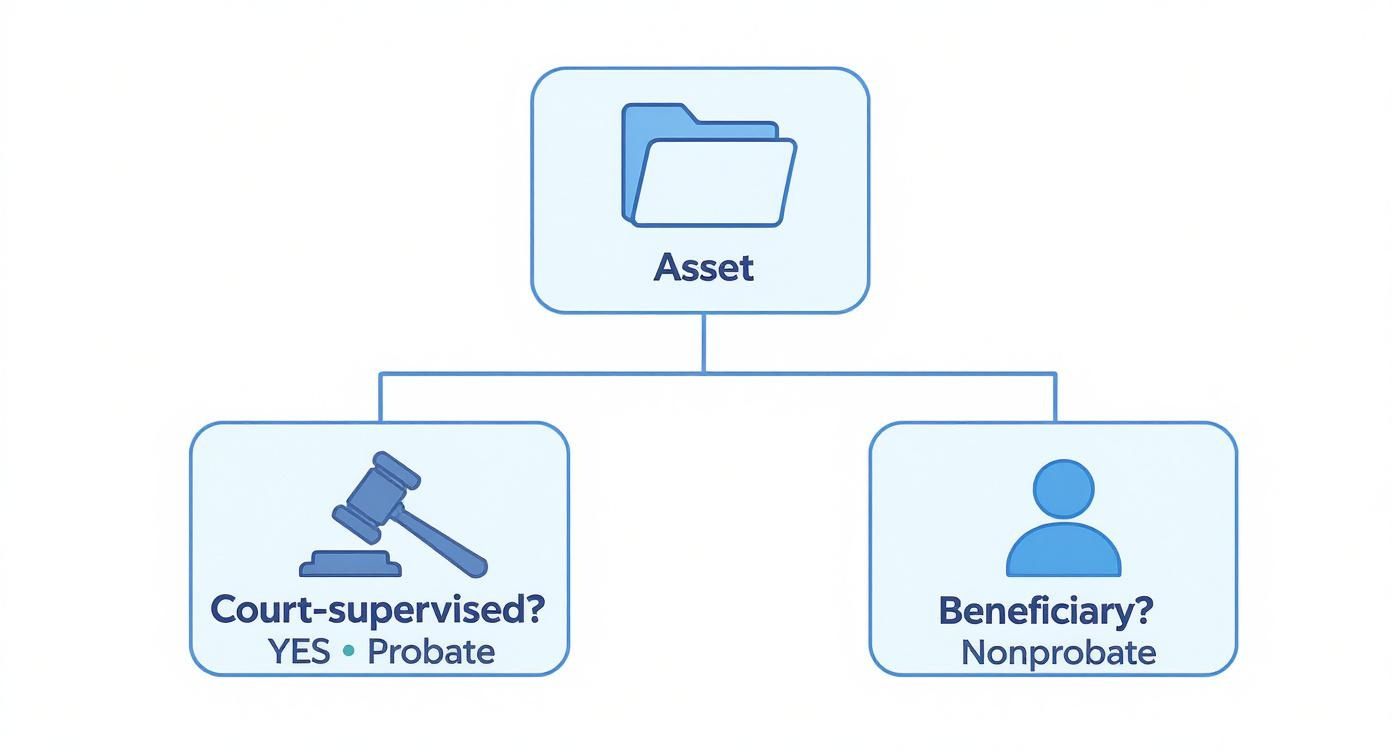
As the chart makes clear, the single biggest factor that lets an asset avoid the court system is having a designated beneficiary or a right of survivorship attached to it.
Here’s a simple table to help you keep things straight.
Quick Guide to Asset Classification in Texas
This summary table contrasts the key features of probate and nonprobate assets, giving Texas families an at-a-glance understanding of how they work.
| Characteristic | Probate Assets | Nonprobate Assets |
|---|---|---|
| Transfer Method | Distributed through the court-supervised probate process. | Transfers automatically to a designated beneficiary. |
| Governing Document | Controlled by the terms of a valid will (or state law). | Controlled by beneficiary designations or titling. |
| Court Involvement | Required. A judge oversees the distribution. | Not required. Bypasses the court system entirely. |
| Common Examples | – Property owned solely by the decedent – Cars titled in the decedent’s name alone – Personal belongings (jewelry, furniture) | – Life insurance policies – Retirement accounts (401k, IRA) – Bank accounts with “Payable on Death” (POD) |
Understanding these differences is the foundation of effective estate planning.
This distinction is crucial for both Estate Planning and Guardianship matters. The specific rules governing how assets are managed and transferred are detailed throughout our state’s laws. You can learn more about the statutes in our overview of the Texas Estates Code.
Having this knowledge empowers you to build a plan that truly protects your loved ones and honors your wishes with as little stress and delay as possible. We know families face real emotional and financial challenges during these times, and our goal is to provide clarity and compassionate guidance every step of the way.
Navigating the Texas Probate Process

When an asset doesn’t have a direct “delivery tag” like a beneficiary designation, it falls into a category we call probate assets. This simply means it has to go through a formal, court-supervised legal process before it can be passed on to the rightful heirs.
We know this can sound intimidating, but the system is really designed for protection.
Think about a family home here in Travis County that’s titled only in one person’s name. Or consider a personal checking account at a local bank without a “Payable on Death” (POD) designation. When the owner passes away, there’s no automatic way to transfer ownership. This is exactly where the probate court steps in to fill that gap.
Why Probate is a Necessary Safeguard
The main job of the probate court is to validate the deceased person’s will and oversee the legal transfer of their property. As laid out in the Texas Estates Code, this process makes sure all debts are settled, taxes are paid, and potential fraud is prevented before any inheritance is distributed to family members.
While many people see probate as a burden, it’s actually a critical, orderly procedure for closing out someone’s final affairs. It’s particularly important for creating a clear and legal chain of title for assets like real estate, which is absolutely essential for any future sales or transfers.
Probate has always been a major part of estate administration. In fact, the Trusts & Estates industry, which includes these services, is a massive sector in the United States, projected to generate $290.1 billion in revenue in 2025. This number really highlights how many families will find themselves navigating this court-managed process. You can learn more about the scale of the Trusts & Estates industry from IBISWorld.
The probate process, while sometimes lengthy and emotionally taxing, is fundamentally a system of checks and balances. It is designed to protect the final wishes of the deceased and the legal rights of heirs and creditors alike, providing a final, authoritative settlement of the estate.
The Executor’s Role in the Process
During probate, the court will appoint an executor (if one is named in the will) or an administrator to manage the estate. This person is responsible for gathering all the probate assets, paying off the final bills, and then distributing whatever remains according to the will or state law.
The responsibilities of this role are significant and legally defined. This fiduciary duty is a central part of the probate journey, requiring careful attention to detail and strict adherence to court timelines. To get a better handle on these duties, you can explore our guide that explains in detail what an executor does in Texas.
Our firm is here to guide families through each step. We’ll help you understand the purpose of the process while acknowledging the emotional and financial strain it can create.
How Nonprobate Assets Create a Direct Path

While probate assets have to get a permission slip from a judge before they can be distributed, nonprobate assets take a much more direct route to your loved ones. Think of it like having a pre-paid express pass that lets you skip all the traffic and lines at the courthouse.
These assets operate based on contracts you’ve already set up with financial institutions, completely separate from your will. This is a critical point to understand. For instance, your life insurance policy or your 401(k) retirement account includes a beneficiary designation form. That form is a binding legal contract that forces the company to pay the funds directly to the specific person you named. Your will has absolutely no say in the matter.
Common Examples of Nonprobate Assets in Texas
Many standard financial tools are designed for this kind of direct transfer. They give families faster access to funds and cut down on the administrative headaches during an already painful time.
Here are a few of the most common ones you’ll see in Texas:
- Life Insurance Policies: The death benefit is paid straight to the beneficiaries named in the policy.
- Retirement Accounts (IRAs, 401(k)s): Just like life insurance, these funds are transferred directly to your designated beneficiaries, bypassing probate court entirely.
- Payable on Death (POD) Bank Accounts: When you pass away, the bank is contractually obligated to pay the money in the account directly to the person you designated.
- Property Held in a Living Trust: Any assets titled in the name of a trust are handled by your chosen successor trustee. They are distributed according to the rules you laid out in the trust, keeping everything private and out of court. Our guide on whether you should put your house in a trust digs much deeper into this powerful strategy.
The core idea behind any nonprobate asset is that it’s self-executing. The legal instructions for the transfer are already baked in, creating a clear, contractual roadmap that gives families certainty and speed when they need it most.
The Critical Importance of Keeping Designations Current
This direct-path system works like a charm, but there’s a catch: it only works if the information is up to date. An outdated beneficiary designation can trigger unintended and truly heartbreaking outcomes for a family.
Imagine this all-too-common scenario: A man names his spouse as the beneficiary on his sizable retirement account. Years down the road, they divorce and he remarries, but he never gets around to updating that old beneficiary form. When he passes away, the financial institution is legally bound by that original contract. They have no choice but to pay the entire account to his ex-wife, leaving his current wife and children with nothing from that asset.
This happens far more often than you’d think. While so many of us rely on these tools, a simple oversight like an outdated form can divert your legacy to the wrong person, causing immense emotional pain and financial hardship. Discover more insights about beneficiary designations on offitkurman.com. Taking a few minutes to regularly review these forms is one of the most powerful and loving things you can do to protect your family.
How Asset Types Impact Texas Guardianships
When a family member you love can no longer manage their own affairs, the court might appoint a guardian to step in and make decisions. It’s a profound responsibility, and in this new role, understanding the difference between probate and nonprobate assets is suddenly mission-critical.
The type of asset directly shapes a guardian’s authority—what they can and can’t legally access to provide care. A guardian’s power isn’t absolute; it’s carefully defined and limited by the court and Texas law. For families navigating this tough situation, knowing these boundaries is the key to helping your loved one while staying on the right side of your legal duties.
Accessing Funds for Care: A Tale of Two Asset Types
A guardian of the estate, appointed by a Texas court like the Bexar County Probate Court, has the authority to manage the incapacitated person’s probate assets. This means they can step in to use these funds for the person’s care and well-being, but only those specific assets.
- Probate Assets in a Guardianship: Think of things like a personal checking account or a car titled only in the incapacitated person’s name. A guardian can typically access these funds or sell these items to pay for medical bills, housing, and daily needs—all under the watchful eye of the court.
- Nonprobate Assets in a Guardianship: This is where a guardian’s authority usually hits a wall. Assets held in a living trust or retirement accounts with named beneficiaries are considered nonprobate. A guardian generally has no power over these without getting separate and specific legal authority, because those assets are governed by the rules of the trust or the beneficiary designation.
Let’s make this real. Imagine a son is appointed guardian for his mother. He can use her social security checks and the money in her personal savings account (probate assets) to pay for her nursing home. But if there’s a shortfall, he might be shocked to learn he can’t touch the funds in her trust (a nonprobate asset). That money is controlled by the successor trustee she named in the trust document, not by the guardian.
Under the Texas Estates Code, specifically Title 3, Subtitle G, a guardian has a fiduciary duty to prudently manage the ward’s estate. However, this power is generally restricted to probate assets unless the court grants additional orders to modify a trust or another nonprobate arrangement.
This distinction brings a critical point into focus: while a Guardianship offers vital protections, it can also create administrative headaches. The guardian has to meticulously report every transaction involving probate assets to the court. It’s a system designed to protect the incapacitated person, but for families, it can feel overwhelming.
A More Flexible Alternative Through Planning
This is where proactive Estate Planning becomes an incredible act of love. By putting tools like a Revocable Living Trust and a Durable Power of Attorney in place before a crisis, you can name a trusted person to manage all your assets—both probate and nonprobate—if you become incapacitated. This is a common alternative to guardianship.
This approach gives your chosen agent more flexibility and privacy, often avoiding the constant court supervision that comes with a guardianship. It keeps decision-making in the hands of the people you trust, honoring your wishes and lifting a tremendous burden from your loved ones.
If you are facing the possibility of guardianship or want to plan ahead to protect your family, we understand the emotional weight of these decisions. Schedule a free, no-obligation consultation with us to talk through your family’s unique situation and find the most compassionate path forward.
Practical Estate Planning Strategies for Texans

Knowing the difference between probate and nonprobate assets is the first step, but putting that knowledge into practice is how you actually protect your family. A thoughtful Estate Plan is an act of genuine care, giving your loved ones clarity and security when they need it most. By strategically structuring what you own, you can ensure your final wishes are carried out efficiently and privately.
This forward-thinking approach is becoming more common as modern estates grow in complexity. The global estate administration market, which handles both types of assets, was valued at $14.18 billion in 2024 and is projected to hit $15.77 billion in 2025. It’s clear that families are increasingly seeking professional guidance to manage their legacies. Read the full market forecast on natlawreview.com.
Build Your Plan with Powerful Tools
Several powerful tools can help you control how your assets are managed and passed on. The main goal is simple: move as many assets as possible from the probate column over to the nonprobate column. Doing so creates a direct, seamless path for your beneficiaries, free from court delays.
One of the most effective strategies is establishing a Revocable Living Trust. Think of a trust as a private container you create to hold your most significant assets, like your home in Harris County or your investment portfolio. While you’re alive, you control everything inside it. After you pass, the successor trustee you chose distributes those assets according to your rules—completely outside of court supervision.
A well-funded trust is the cornerstone of many estate plans. It offers maximum control, privacy, and flexibility, often helping families avoid both probate and the potential need for a court-supervised guardianship.
Another simple yet crucial tool is the strategic use of beneficiary designations. You can add a Payable on Death (POD) designation to bank accounts or a Transfer on Death (TOD) designation to investment accounts. This simple paperwork acts like a direct delivery instruction, ensuring those funds go straight to your chosen person and bypass probate entirely.
Actionable Steps for Texas Families
Getting started doesn’t have to be overwhelming. You can begin with a few manageable steps to build a solid plan that reflects your wishes and protects your loved ones from unnecessary legal hurdles.
- Create a Detailed Asset Inventory: You can’t plan for what you don’t know you have. Make a comprehensive list of everything you own—real estate, bank accounts, retirement funds, vehicles, and personal property—and note how each item is titled.
- Review Beneficiary Designations Annually: Life happens. A marriage, divorce, or the birth of a child should be an immediate trigger to review and update the beneficiaries listed on your life insurance, IRAs, and 401(k)s.
- Consider Tax Implications: As you build your plan, it’s vital to consider the potential tax impact on your beneficiaries. A basic understanding inheritance tax can help you structure your estate to minimize their financial burden.
- Consult an Experienced Attorney: A knowledgeable attorney is the key to tying everything together. They will ensure your will, trust, and beneficiary designations all work in harmony to achieve your goals.
Taking these steps provides a clear roadmap for your family’s future. The Law Office of Bryan Fagan is here to offer compassionate, professional guidance. Schedule a free, no-obligation consultation today to discuss how we can help you build a plan that delivers true peace of mind.
Common Questions About Texas Asset Planning
When you start digging into the details of estate planning, a lot of questions pop up. It’s completely normal. To help you find your footing, we’ve put together some of the most common questions Texas families ask us about probate and nonprobate assets. Our goal here is to give you clear, straightforward answers that help you feel confident in the decisions you make for your family.
Does a Will Help My Assets Avoid Probate in Texas?
This is probably the most common misconception we see, and it’s an easy one to make. In Texas, a will doesn’t sidestep probate—it’s actually your instruction manual for the probate court. Think of it as the script you’ve written for the judge to follow when distributing your assets.
What actually keeps an asset out of court isn’t your will, but how that asset is legally titled. Things like beneficiary designations on a 401(k) or putting your home into a trust—those are the tools that create a direct pipeline for your assets to your loved ones, completely separate from the court system.
What Happens If I Only Have Nonprobate Assets?
If you’ve managed to structure your entire estate with nonprobate assets—maybe all your bank accounts are Payable on Death (POD), your retirement plans all have named beneficiaries, and your house is titled in a living trust—then your family might get to skip the formal probate process altogether.
This is a huge win. It can save your loved ones a tremendous amount of time, money, and stress during an already difficult period. But there’s a catch: this strategy demands perfection. If even one small bank account or an old car title gets overlooked and isn’t properly structured, that single asset will likely have to go through probate.
The key to a probate-free estate is meticulous planning. A single outdated beneficiary form or an asset accidentally left out of a trust can force your family into the court system you intended to help them avoid.
How Do Debts Get Paid If All My Assets Are Nonprobate?
This is a fantastic question. Just because your assets bypass probate doesn’t mean your debts disappear. Your estate is still on the hook for any final bills, and creditors can make claims against the nonprobate assets your beneficiaries received.
A well-thought-out estate plan anticipates this. For instance, a properly drafted living trust will include instructions for your successor trustee to use trust funds to pay off final expenses and settle any legitimate debts. This creates an organized process and shields your beneficiaries from having to deal with creditors directly. It’s all about planning ahead to handle these obligations smoothly.
Can I Change a Beneficiary on a Nonprobate Asset?
Yes, absolutely—and you should make a habit of reviewing them. For most probate and nonprobate assets like life insurance policies, 401(k)s, and IRAs, changing a beneficiary is as simple as filling out a new form with the financial institution.
We always recommend clients review their designations every few years, and especially after any major life event, such as:
- Marriage or divorce
- The birth or adoption of a child
- The death of a named beneficiary
Keeping these forms up to date is one of the simplest yet most powerful things you can do. It ensures your assets go exactly where you want them to go, protecting your family’s future and giving you true peace of mind.
Understanding the difference between probate and nonprobate assets is fundamental to protecting your family’s future. At the Law Office of Bryan Fagan, PLLC, we provide compassionate, clear guidance to help you build a plan that honors your wishes. Schedule a free, no-obligation consultation with our experienced Texas attorneys today. Let us help you find the right path forward.