Skip to content
When a loved one passes away in Texas without a will, figuring out how to manage their estate can feel completely overwhelming. An Affidavit of Heirship can be an incredibly useful tool in this situation. It acts as a formal legal roadmap, officially identifying the rightful heirs to the property.
Think of it as a legally recognized family tree. This document allows for the transfer of property, especially real estate, without the time and expense of going through a formal probate court process.
A Compassionate Path for Texas Families
Losing a family member is hard enough. The legal steps that follow can add a significant amount of stress when you're already grieving. When your loved one dies "intestate"—which just means they didn't have a will—you might feel lost about what to do with their property, particularly the family home. An Affidavit of Heirship offers a more direct path forward in these specific situations.
This legal instrument is a sworn statement of facts about the deceased person’s family history, which identifies who the legal heirs are according to Texas law. To get a better sense of what this type of document is, you can look into the general legal principles of an affidavit, which is at its core a sworn statement. In Texas, this specific type of affidavit serves a vital purpose for families trying to settle an estate.
What Does an Heirship Affidavit Accomplish?
Instead of getting tied up in a potentially long and expensive probate proceeding, maybe in a place like the Harris County Probate Court, this document can establish a clear chain of title for real property. It's essentially a declaration that accomplishes several key goals:
- Identifies All Heirs: It formally lists every single person who is legally entitled to inherit under Texas succession laws.
- Avoids Formal Probate: For estates that are fairly straightforward and consist mainly of real estate, it can be a great alternative to a full court administration.
- Transfers Property Title: Once it’s filed in the county property records, it serves as evidence of the heirs' ownership. This allows them to sell, refinance, or manage the property.
This document provides a much simpler way forward, offering both emotional and financial relief during a really difficult time. It’s a powerful tool designed to simplify how an estate is settled, but it's crucial to understand when it's the right choice for your family's unique situation.
Navigating the Texas Estates Code can be complex, and making sure an affidavit is prepared correctly is absolutely vital. If your family is facing this situation, understanding all your options is the first step. For personalized guidance on whether an Affidavit of Heirship is the right move for you, schedule a free consultation with our team.
When to Use an Affidavit of Heirship in Texas
Figuring out the right legal path after a loved one passes away can be overwhelming. For many Texas families, the Affidavit of Heirship offers a simpler, faster alternative to the complexities of formal probate court. It’s most effective when a person dies without a will (also known as dying intestate), the estate's main asset is a piece of real estate, and all the heirs are on the same page about what should happen next.
In these straightforward situations, an affidavit can be a breath of fresh air. It serves as a legal tool to formally identify the rightful heirs and transfer property ownership without the time and expense of a court proceeding. Think of it as a way to clear up the title to a property when there's no will to provide directions.
Ideal Scenarios for an Heirship Affidavit
An Affidavit of Heirship isn't a one-size-fits-all solution, but it works beautifully under the right conditions. Families in counties like Harris, Fort Bend, and Montgomery often find it’s the perfect tool to avoid a formal probate hearing.
It’s likely the right choice if your situation checks these boxes:
- No Will Exists: The person who passed away didn't leave a valid will to spell out who gets their property.
- Real Estate is the Primary Asset: The biggest asset in the estate is a house or land. You can learn more about the differences between probate and non-probate assets in our detailed guide.
- All Heirs Agree: Every single legal heir has been identified, is reachable, and is in complete agreement about how to handle the property. There can't be any disputes.
- No Outstanding Debts: The estate has very few debts, or at least no creditors that would object to the property transfer.
For example, imagine a family in Houston whose parents passed away without a will, leaving only the family home. If all the adult children agree to sell the house and split the proceeds, an heirship affidavit can make that happen smoothly, saving them time and money during an already difficult time.
When these conditions are met, the affidavit acts as a bridge, cleanly transferring the property title to the heirs.
However, it's critical to know when this path isn't appropriate. If there's any disagreement among the heirs, if the estate has significant debts, or if there are other complex assets involved, a more formal probate administration is almost always necessary to protect everyone's interests. Getting some professional guidance can help your family figure out the best course of action.
Essential Requirements for a Valid Affidavit
For an Affidavit of Heirship to be legally effective in Texas, it has to follow a specific set of rules. You can't just jot down a list of family members and call it a day. The document must be carefully prepared to create a rock-solid legal record that title companies and courts, like the Fort Bend County Probate Court, will actually recognize.
The whole process kicks off with some serious information gathering. This means digging into the deceased person’s complete family history, their marital status (including dates of all marriages and divorces), and putting together a full list of every living relative legally entitled to inherit. The goal is to paint a crystal-clear picture of who the heirs are according to the law.
Key Legal Steps and Filings
Crafting a valid affidavit isn't just about filling out a form; it involves several non-negotiable steps. These requirements are in place to shut down any possibility of fraud and make sure the property title is transferred correctly and legally. Getting even a minor detail wrong can lead to major headaches down the road.
This chart breaks down the key situations where an heirship affidavit is the right tool for the job.
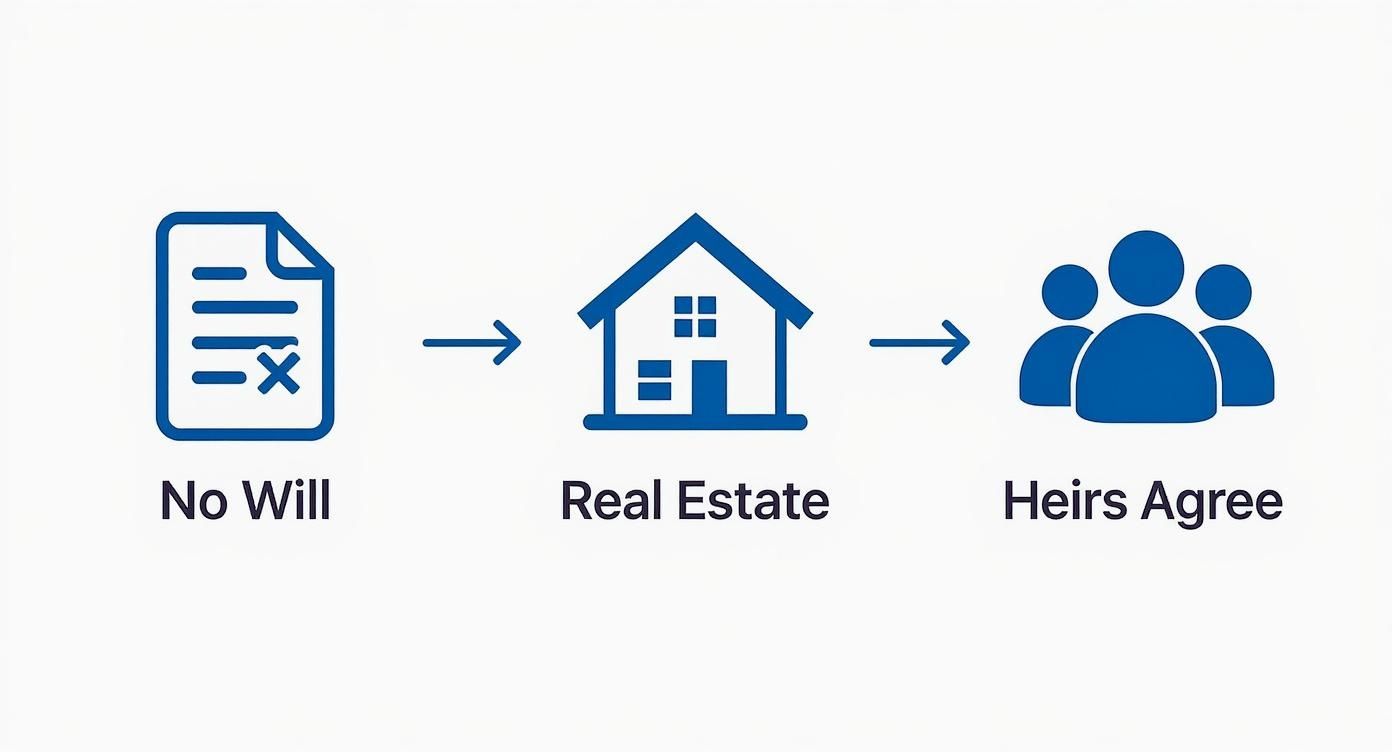
As you can see, an affidavit is a great fit when there’s no will, real estate is the main asset, and all the heirs are on the same page. Making sure your situation checks these boxes is the first critical step.
One of the most important rules revolves around who signs the document. The affidavit must be signed by two disinterested witnesses—these are people who knew the deceased well but have absolutely no financial stake in the estate. You can get a deeper understanding of the legal framework for these documents by reviewing the Texas Estates Code.
This isn’t just a formality. The sworn statements from these witnesses corroborate the family history, adding a layer of credibility that helps protect against false claims and gives legal weight to the document.
Finally, the affidavit has to be sworn to in front of a notary public. Then, to officially establish a clear chain of title for the property, it must be filed in the public records of the county where the real estate is located, such as Montgomery County. This final filing makes it part of the official public record, cementing the transfer of ownership to the rightful heirs.
Affidavit of Heirship vs Formal Probate
To help you decide if an affidavit is the right path, it’s helpful to see how it stacks up against the more traditional probate process.
| Feature | Affidavit of Heirship | Formal Probate |
|---|---|---|
| Court Involvement | Minimal; no court administration required. | Extensive; requires court hearings and supervision. |
| Timeframe | Fast, often completed in weeks. | Slow, can take months or even years. |
| Cost | Relatively inexpensive; lower legal fees. | Can be very expensive with court costs and attorney fees. |
| Creditor Claims | Doesn't cut off creditor claims. | Provides a formal process to handle and cut off creditor claims. |
| Ideal Situation | Simple estates with no will and cooperative heirs. | Complex estates, disputes among heirs, or significant debts. |
| Title Transfer | Creates a presumption of title, but not as secure as probate. | Provides clear, court-ordered title transfer. |
While an Affidavit of Heirship offers a quicker and cheaper alternative, formal probate provides a more definitive and secure transfer of title, especially for complex estates.
Navigating these requirements can be tricky, and a single mistake can cause significant delays or even invalidate the document. To make sure your affidavit is prepared correctly and meets all Texas legal standards, schedule a free consultation with our experienced team for personalized guidance.
Understanding the Role of Disinterested Witnesses

One of the most critical pieces of a valid Affidavit of Heirship is getting testimony from disinterested witnesses. The term "disinterested" can be a little misleading. It doesn't mean they were uninterested in the person who passed away; it means they have no financial stake in the outcome—they won't benefit from the estate in any way.
Who Qualifies as a Witness
So, who can actually serve as a witness? In Texas, a disinterested witness is someone who personally knew the deceased and their family history but stands to inherit absolutely nothing. The Texas Estates Code is clear: these witnesses must be credible and have zero financial stake in how the property gets divided. Their job is to simply provide an unbiased confirmation of the family tree.
Think of people who saw the family's life unfold over the years. Good examples often include:
- A longtime family friend who knew the deceased for decades.
- A neighbor who was familiar with the family’s day-to-day life.
- A former coworker or fellow church member who knew the person well.
On the other hand, a direct heir—like a child, spouse, or even a sibling who might inherit—cannot be a disinterested witness. It’s a classic conflict of interest, since they have a direct financial reason to want the affidavit to go through.
The sworn statements from these witnesses are the bedrock of the affidavit. They corroborate the family story you’re presenting, adding a vital layer of authenticity that helps prevent fraud or honest mistakes.
This testimony gives everyone involved, from a probate court in Harris or Montgomery County to a title company reviewing the property transfer, the confidence that the assets are going to the right people.
It’s a requirement that really underscores how important it is to get every detail just right. For compassionate and precise legal help with your Estate Planning needs, schedule a free consultation with our team.
Limitations and Potential Roadblocks
While an Affidavit of Heirship is a fantastic, time-saving tool, it's not a magic wand. It's vital to go into this process with your eyes open, fully aware of its limitations. Knowing the potential roadblocks ahead of time will help your family make the most informed decision.
Here's the big one: not every institution is required to accept an affidavit as ironclad proof of ownership.
For example, some banks or title companies might still dig in their heels and insist on formal letters testamentary from a probate court. This is especially common with high-value assets. Their internal policies often demand the certainty that only a court order can provide before they'll transfer funds or insure a property's title.
Navigating Common Challenges
Even after you've successfully filed the affidavit, you're not entirely in the clear. What seems like a straightforward path can get complicated fast if unexpected issues pop up.
Here are a few common complications that can derail the process:
- Discovery of Unknown Heirs: If a long-lost cousin or a previously unknown child suddenly appears, they can contest the affidavit and potentially invalidate the whole thing.
- Family Disputes: Unfortunately, disagreements among heirs can bubble to the surface after the affidavit is filed. This can ignite legal battles that pull everyone into court.
- Significant Debts: The process gets much trickier if the deceased had substantial debts. Creditors have a right to be paid, and their claims must be handled properly before any assets can be distributed to the heirs.
The affidavit of heirship is most crucial in situations where probate would be a long, drawn-out affair. Formal probate in the U.S. can take months or even over a year, but an affidavit helps bypass that headache for simpler estates, saving families incredible amounts of time and money when a person dies without a will.
Recognizing these potential roadblocks really underscores why getting professional guidance is so important. A knowledgeable attorney can help you figure out if this is the right tool for your situation, especially if you're also wondering, "Do I have to have a will?" for your own estate plan.
For help navigating these complexities, schedule a free consultation with our team.
Common Questions About Heirship Affidavits
When you're dealing with a loved one's estate, practical questions about cost, timelines, and potential roadblocks are bound to come up. It's completely normal. Understanding these real-world aspects of an Affidavit of Heirship can make the entire process feel much more manageable. We've put together some straightforward answers to the questions we hear most often from Texas families.
Our goal is to give you the clarity you need to move forward with confidence, handling your family's affairs with the care they deserve. Let's dive into the details.
How Much Does an Affidavit of Heirship Cost?
One of the biggest reliefs for families is that an heirship affidavit is almost always significantly less expensive than formal probate. But it isn't free. Your main costs will be the attorney's fees for preparing the document and the county clerk's filing fees.
The final price tag really depends on how complex your family situation is. If we need to do a lot of digging to track down all the heirs or find two qualified disinterested witnesses, the legal fees might go up. Even with that, it's still a far more affordable route than navigating the full probate court system.
Can an Affidavit of Heirship Be Contested?
Yes, and this is a critical point to understand. An Affidavit of Heirship can absolutely be challenged. Someone might come forward claiming they were an heir who was left out, or a creditor could appear with a valid claim against the estate. When that happens, they have the right to contest the affidavit in court.
A successful challenge can render the entire affidavit void. If this happens, the estate will likely have to go through a formal probate administration in a court, like the Harris County Probate Court, to sort out the dispute under a judge's supervision.
How Long Does the Process Take?
Another major advantage is the speed. The timeline for an Affidavit of Heirship is dramatically shorter than formal probate. While every family's situation is unique, you're typically looking at a matter of weeks, not the months or even years that probate can take.
The core steps are pretty straightforward:
- Gathering Information: This involves collecting all the necessary details about the family history and the property.
- Finding Witnesses: We'll need to locate two disinterested witnesses who knew the deceased and can swear to the family facts.
- Drafting and Signing: An attorney will draft the legal document, which then needs to be signed by the heirs and witnesses in front of a notary.
- Filing: The final, notarized affidavit is filed with the county clerk in the county where the property is located.
Because you get to skip the crowded court dockets and formal hearings, the affidavit process gives families a much quicker path to resolution during a difficult time.
Getting the details right on an Affidavit of Heirship is crucial to protecting your family’s interests and property. At the Law Office of Bryan Fagan, PLLC, our compassionate attorneys are here to guide you through every step. Schedule a free consultation today to discuss your situation and find the best path forward for your family.