Skip to content
When you’re a parent or caregiver for someone with a disability, the future can feel like a heavy weight. The question that keeps so many of us up at night is a simple but profound one: “What happens to my loved one when I’m no longer able to care for them?”
Special needs planning is the answer to that question. It's more than just a stack of legal documents; it's a comprehensive strategy you put in place to ensure your family member is cared for, supported, and secure for their entire life. Think of it as building a strong, reliable bridge from the care you provide today to a future where they can thrive, even without you. At The Law Office of Bryan Fagan, our mission is to guide Texas families through this journey with clarity and care.
Why Special Needs Planning Is Essential for Texas Families
Instead of a generic estate plan, special needs planning is like designing a custom-built home. Every decision—from the financial foundation to the day-to-day support structure—is tailored to your loved one’s unique needs, protecting their quality of life and giving you peace of mind. We understand the emotional and financial challenges you face, and we're here to help you transform uncertainty into a clear, actionable plan.
Building a Blueprint for a Secure Life
A solid special needs plan ties together several crucial areas, making sure no part of your loved one's future is left to chance. It goes far beyond just leaving an inheritance and addresses the practical realities of their daily life.
The primary goals are to:
- Protect Eligibility for Public Benefits: Many essential programs, like Medicaid and Supplemental Security Income (SSI), have strict income and asset limits. A direct inheritance can accidentally disqualify your loved one from the very services they depend on for healthcare and daily living expenses.
- Provide Financial Security: The plan ensures funds are available for supplemental needs that government benefits don’t cover—things like specialized therapies, education, recreation, or a down payment on a home—without putting their benefits at risk.
- Ensure a High Quality of Life: You can outline your wishes for everything from living arrangements and personal care to social activities, creating a clear roadmap for future caregivers to follow your guidance.
- Create Peace of Mind: There is immense comfort in knowing you have a resilient plan in place. It frees you to stop worrying about the “what ifs” and focus on enjoying your time together now.
This forward-thinking approach isn't just about managing assets; it's about preserving dignity, promoting independence, and ensuring your loved one can live their best possible life, no matter what the future holds.
Ultimately, special needs planning is the framework that supports your loved one long after you’re able to provide that care yourself. At The Law Office of Bryan Fagan, we guide Texas families through this journey with clarity and compassion. If you are ready to build a secure future for your loved one, schedule a free consultation with our team today.
Your Core Legal Toolkit For Building a Secure Future
When you start building a special needs plan, you’re really just assembling a set of legal tools, each designed for a specific job. Think of it like a builder’s toolkit—you wouldn't use a hammer to cut wood, and you wouldn't use a will when what you really need is a trust. Each legal document has a distinct role to play in constructing a secure future for your loved one.
Let's demystify these essential instruments so you can feel confident you’re making the right choices.
The Cornerstone: The Special Needs Trust (SNT)
The absolute cornerstone of almost every special needs plan is the Special Needs Trust (SNT). This is a powerful legal vehicle designed specifically to hold assets for a person with a disability without disrupting their eligibility for vital government benefits like SSI and Medicaid.
It acts like a protective financial shield. The money in the trust allows you to provide for all the "extras"—the supplemental needs like therapy, education, or recreation—that public benefits simply don't cover.
In Texas, we primarily work with two types of SNTs, and the right one for your family depends entirely on where the money comes from.
- First-Party SNT: This trust is funded with the disabled individual's own money. This is common when someone receives a personal injury settlement or a direct inheritance. It’s a crucial tool for protecting assets they already own or are about to receive.
- Third-Party SNT: This is the go-to for most families. Parents, grandparents, or other relatives fund this trust with their assets. Legally, these funds never belong to the beneficiary, so they can’t be counted against their benefit eligibility limits. It’s a clean and effective way to provide long-term support.
Imagine a family in Harris County with an adult son on SSI. His grandparents want to leave him $50,000 in their will. If that money goes directly to him, it pushes him over the asset limit, and his benefits stop. But if they direct that same inheritance into a Third-Party SNT, a trustee can manage the funds to greatly enhance his quality of life without disrupting his essential support system. This hypothetical scenario shows how a simple legal tool can prevent a financial crisis.
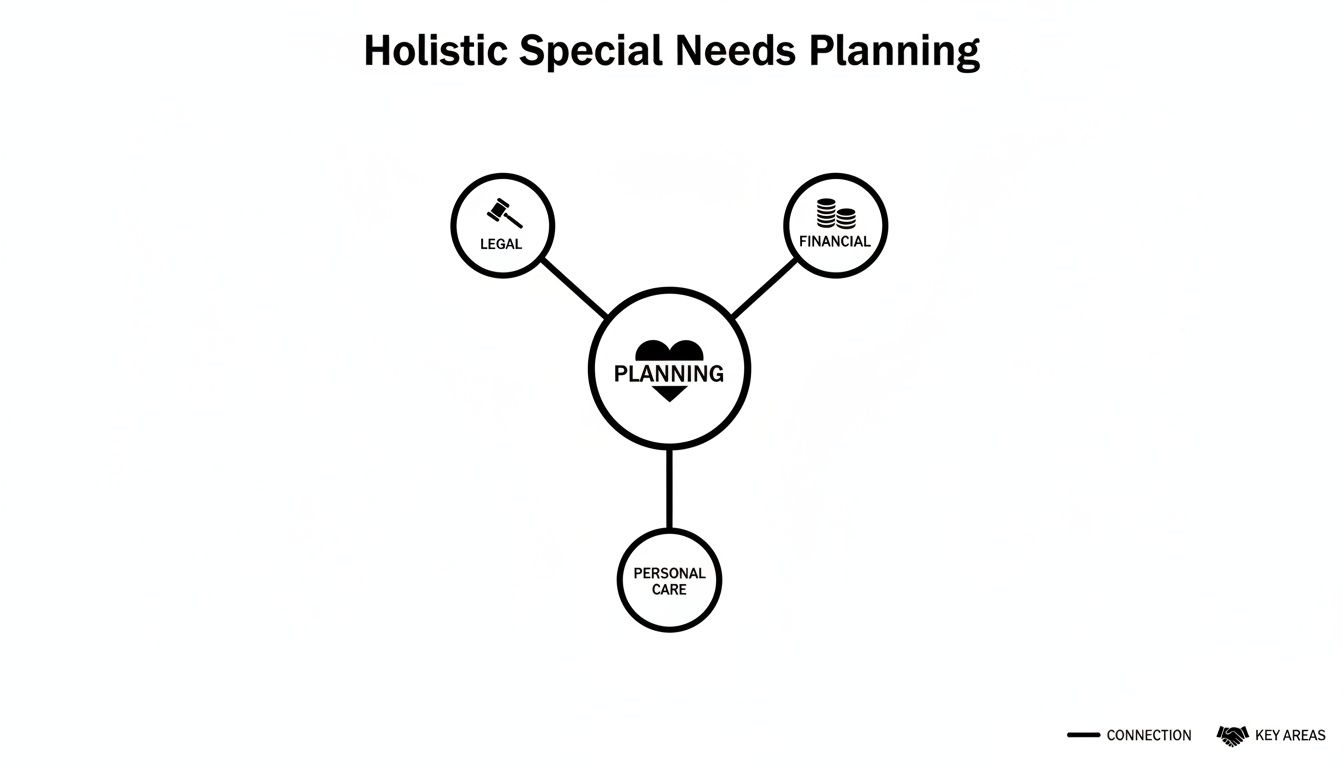
As you can see, a truly complete plan addresses not just the legal documents, but also the financial strategy and the hands-on personal care your loved one will need down the road.
Integrating Other Key Legal Documents
While the SNT is central, it doesn't work in a vacuum. It functions best as part of a connected system of legal documents that create a comprehensive safety net. For a deeper dive, you can learn more about these core estate planning documents and how they function together in Texas.
A good special needs plan is more than a trust; it’s a symphony of legal instruments working together to protect every facet of your loved one’s life—from their financial security to their daily care and medical decisions.
Here’s a quick look at the other essential tools in your toolkit.
| Legal Tool | Primary Purpose | Best For |
|---|---|---|
| Special Needs Trust | Holds assets to supplement, not replace, government benefits without causing disqualification. | Families who want to provide financially for a loved one with a disability while preserving their eligibility for public assistance like SSI and Medicaid. |
| Last Will and Testament | Officially directs your assets into the SNT upon your passing, naming guardians for minor children. | Every parent, but especially critical for ensuring an inheritance correctly funds the SNT instead of going directly to the individual. |
| Powers of Attorney | Allows a trusted agent to make financial (Durable POA) and healthcare (Medical POA) decisions. | Adults with disabilities who have the legal capacity to sign documents, potentially avoiding the need for a court-appointed guardian. |
| Guardianship | A court-supervised process to appoint a decision-maker for an adult who lacks capacity. | Individuals who cannot make their own safe decisions about their personal care or finances upon reaching age 18. |
Let's break these down a bit more:
Last Will and Testament: Your will is the document you use to officially "pour" assets into the SNT. Without a will that correctly funds the trust, any inheritance could go straight to your loved one, undoing all your careful planning in an instant.
Powers of Attorney: For an adult who has the capacity to sign legal documents, this is a fantastic, less restrictive alternative to guardianship. A Durable Power of Attorney for finances and a Medical Power of Attorney for healthcare allows a trusted agent to step in and make decisions when needed.
Advance Directives (Living Will): This document clearly outlines your loved one's wishes for end-of-life medical care, ensuring their preferences are respected if they are ever unable to communicate them.
Guardianship: If your loved one is unable to make their own decisions when they reach adulthood, establishing a guardianship may be necessary. As outlined in the Texas Estates Code, Title 3, Subtitle G, a court can appoint a guardian to manage their personal and/or financial affairs. This is a common step for many families navigating the transition to adulthood.
Finally, a key part of your legal strategy involves knowing your rights within the school system. Strong Special Education Advocacy, including mastering IEPs and 504s, is a critical piece of planning for your loved one's future independence.
Protecting Public Benefits and Financial Independence
For so many families we work with in Texas, government benefits like Supplemental Security Income (SSI) and Medicaid aren't just a helping hand—they are the absolute bedrock of their loved one's daily life and healthcare. These programs are vital, but they come with incredibly strict financial rules.
It’s a common fear, and a valid one: a well-meaning gift or a direct inheritance can accidentally push a person over the asset limit. That limit is typically just $2,000. Crossing it can trigger a sudden, devastating loss of benefits. This is a nightmare scenario, but it's one you can completely avoid with the right strategy. The goal isn’t to hide money; it’s about structuring it correctly so it supplements, rather than replaces, this essential government support.
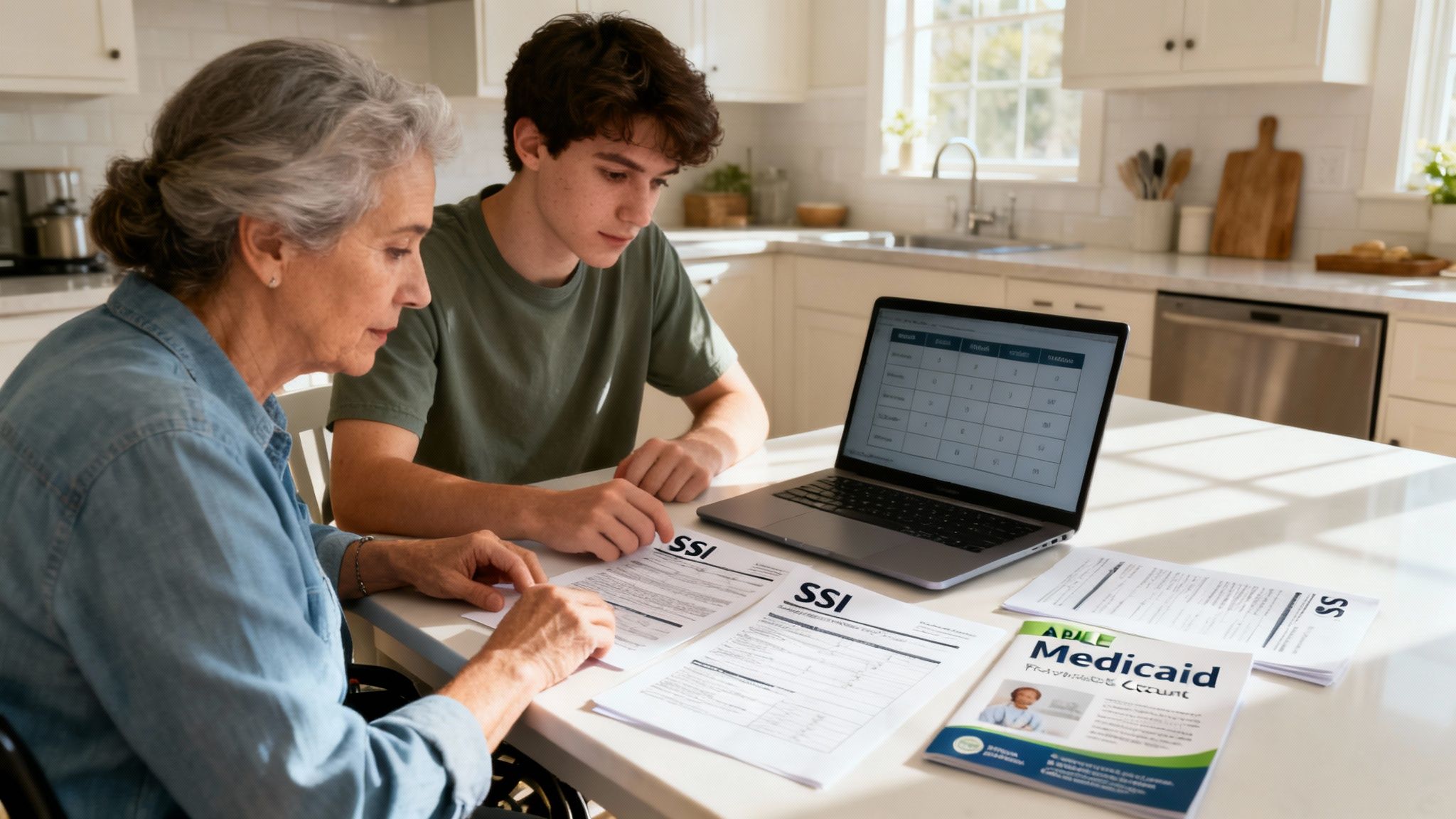
This challenge is universal. Globally, an estimated 1.3 billion people live with a significant disability, which just underscores how critical careful financial planning is for families everywhere. For us here in Texas, understanding how to navigate the rules of these programs is the key to building a secure future.
The Crucial Turning Point at Age 18
Let’s walk through a common situation. Imagine a family in Dallas with a son, Alex, who is about to turn 18. Up until his 18th birthday, the family’s income and assets were factored into his eligibility for certain benefits. But the day he turns 18, the government suddenly sees him as an independent adult. From that point on, only his personal income and assets are counted for SSI.
This is a critical moment. If a grandparent set up a $5,000 savings bond in Alex’s name years ago, that thoughtful gift could now disqualify him from his monthly SSI payments. Worse, in Texas, that often means losing the Medicaid coverage that comes right along with it.
This is exactly why a special needs plan is so important. It ensures that any funds meant for Alex are held safely in a Special Needs Trust (SNT), not in his own name.
By planning ahead, Alex’s family ensures his transition to adulthood strengthens his support system instead of threatening it. They protect his access to essential medical care and income while still being able to provide for his quality of life.
ABLE Accounts: A Powerful Tool for Daily Independence
While a Special Needs Trust is perfect for long-term security and handling larger expenses, a newer tool has emerged that is fantastic for managing day-to-day finances: the ABLE (Achieving a Better Life Experience) Account.
Think of an ABLE account like a special, tax-advantaged savings and checking account designed just for individuals with disabilities.
These accounts allow someone to save money—far beyond the typical $2,000 limit—without it counting against their eligibility for benefits. That money can then be used for "qualified disability expenses," which is a very broad category.
It covers a wide range of things that improve health, independence, or quality of life, such as:
- Education and tutoring
- Housing and transportation
- Assistive technology and personal support services
- Healthcare and wellness
Knowing what public benefits cover is a big part of the puzzle. For instance, understanding what is considered durable medical equipment (DME) helps a family plan for adaptive devices that could be paid for with funds from an ABLE account.
How SNTs and ABLE Accounts Work Together
A Special Needs Trust and an ABLE Account aren't an either/or choice. In fact, they work best as partners, providing both long-term security and daily financial freedom.
Here’s a simple breakdown of how they complement each other:
| Feature | Special Needs Trust (SNT) | ABLE Account |
|---|---|---|
| Primary Use | Long-term financial security, major expenses like vehicles, vacations, or non-covered therapies. | Daily living expenses, promoting independence and managing personal funds. |
| Control | Managed by a trustee on behalf of the beneficiary. | Managed by the individual with a disability (if capable) or their representative. |
| Flexibility | Extremely flexible spending, guided by the trust document and the trustee's discretion. | Funds must be used for "qualified disability expenses" to maintain tax advantages. |
| Best For | Holding inheritances, settlement funds, and significant assets to protect benefit eligibility. | Empowering the individual with day-to-day financial control and saving for short-term goals. |
Using both tools creates a powerful system. A family can direct a large inheritance into an SNT for lifetime management. From there, the trustee can make regular distributions into the ABLE account. This gives the individual the independence to buy groceries, pay for a class, or just manage their own spending money without ever jeopardizing their core benefits. It’s a strategy that perfectly balances protection with autonomy.
For families here in Texas, it's also important to understand the landscape of local support systems. You can learn more about Medicaid Waiver Programs in our guide.
Navigating Guardianship for an Adult with Special Needs
The moment a child with a disability turns 18, the legal landscape shifts dramatically. Overnight, they are viewed by the law as a fully independent adult. This means parents automatically lose the legal authority to make critical decisions about their child's healthcare, finances, and personal safety—even if their child simply can't make those decisions alone.
This transition can be jarring for families, but it's a common milestone in special needs planning. For many, guardianship becomes the essential legal tool to ensure their loved one remains protected. It isn't about taking away freedom; it's about providing a carefully constructed safety net that preserves as much independence as possible.
Understanding Guardianship in Texas
In Texas, guardianship is a formal legal process overseen by a probate court, like those in Bexar or Harris County. The court’s job is to appoint a responsible person—the guardian—to make decisions for an adult who has been legally determined to be incapacitated.
This entire process is laid out in Title 3, Subtitle G of the Texas Estates Code, which sets a high bar for protecting the rights of the person who may need a guardian. The goal is never to take control, but to provide support exactly where it's needed.
The need for this kind of planning is more widespread than you might think. As of fall 2023, the number of students eligible for services under the Individuals with Disabilities Education Act (IDEA) hit 7,892,433. For Texas families, this national figure is a powerful reminder of how many are navigating the transition to adulthood and considering tools like guardianship. You can find more details on these trends and discover more insights about special education student numbers on K12Dive.com.
The court always looks for the least restrictive option, carefully tailoring the guardian's powers to the individual's specific needs.
The Two Types of Guardianship
Guardianship in Texas isn't a one-size-fits-all solution. The court can appoint a guardian to oversee very specific areas of a person's life, creating a plan that matches their unique abilities.
There are two main types you'll encounter:
- Guardian of the Person: This guardian handles personal and medical decisions. Think of them as the point person for deciding where the individual lives, what medical treatments they receive, and overseeing their daily care and well-being.
- Guardian of the Estate: This guardian is all about the finances. They are responsible for paying bills, managing property, and protecting the person’s assets from being mismanaged or falling prey to fraud.
A court can appoint one person to handle both roles or split the duties. For instance, a parent might be the perfect choice for guardian of the person, while a family member with a strong financial background could serve as guardian of the estate.
The Texas Guardianship Process: Practical Steps
Getting a guardianship established is a formal court procedure, and it demands close attention to every legal detail. It can be an emotional journey, so knowing the steps ahead of time can make all the difference. If you want a deeper dive, our guide breaks down the steps for obtaining guardianship of an adult child in Texas.
Here’s a bird’s-eye view of what the process looks like:
- Filing an Application: It starts when a concerned person files an "Application for Appointment of a Guardian" with the probate court in the county where the proposed ward lives.
- Physician's Evaluation: The court requires a recent letter or certificate from a doctor. This document needs to detail the person's condition and state whether they lack the capacity to make their own decisions.
- Court-Appointed Attorney: To ensure the proposed ward's rights are front and center, the court will appoint an attorney ad litem to represent their best interests throughout the case.
- Hearing: Finally, a court hearing is held. The judge reviews all the evidence, including the doctor’s letter and any testimony, to decide if a guardianship is truly necessary and who is the right person to be appointed.
- After the Hearing: Once appointed, a guardian has ongoing responsibilities, including filing annual reports with the court to ensure they are fulfilling their duties.
While guardianship is a powerful tool, Texas law strongly encourages exploring less restrictive alternatives first. Options like supported decision-making agreements or powers of attorney should always be considered, as the primary goal is to maximize your loved one's autonomy.
Facing the possibility of guardianship can feel overwhelming, but you don’t have to figure it out on your own. For personalized guidance on whether this is the right step for your family, please schedule a free consultation with our compassionate team at The Law Office of Bryan Fagan.
Avoiding Common and Costly Planning Mistakes
Good intentions are at the heart of every family’s effort to provide for a loved one with a disability. The problem is, some of the most well-meaning actions can accidentally trigger devastating financial consequences. When it comes to special needs planning, small details have a huge impact, and knowing what not to do is just as important as setting up the right legal tools.

Let's walk through the most frequent pitfalls we see Texas families stumble into. More importantly, we’ll give you clear, actionable ways to sidestep them and keep your loved one’s future secure.
The Mistake of Direct Inheritance
This is the big one. The most common and damaging error is leaving money or property directly to an individual with a disability in a standard will. A sudden inheritance, even a modest one, can push them over the strict $2,000 asset limit, immediately disqualifying them from SSI and Medicaid.
Picture this: A grandmother in Austin lovingly leaves her grandson $25,000 in her will. While it was an act of pure love, this gift kicks him off the Medicaid waiver program that pays for his daily in-home care. That inheritance gets eaten up fast by medical bills that were previously covered, leaving him with nothing. Now, the family has to reapply for benefits—a long, stressful, and entirely avoidable ordeal.
- The Solution: Instead of leaving assets directly to your loved one, use your will to direct any inheritance into a properly drafted Third-Party Special Needs Trust. This ensures the funds are managed by a trustee to supplement, not replace, their essential government benefits, protecting both their financial future and their quality of life.
Choosing the Wrong Trustee
Picking the right person to manage a Special Needs Trust (SNT) is a massive decision. Naming someone who is well-intentioned but unprepared for the job can create a cascade of problems down the road. This role demands financial savvy, a deep understanding of complex public benefit rules, and the backbone to make tough decisions.
An unprepared sibling, for instance, might make an improper distribution from the trust, accidentally violating SSI rules and jeopardizing benefits. They might also struggle with saying "no" to requests that aren't in the beneficiary's long-term best interest.
The trustee must be a firm yet compassionate advocate, capable of balancing the beneficiary's immediate wants with their long-term needs while strictly following complex legal and financial regulations.
- The Solution: Think carefully about who you name. It could be a trusted family member who is organized and willing to learn, a professional trustee like a bank's trust department, or even a combination of both. Crucially, always name a successor trustee in case your first choice is unable to serve.
Failing to Fund the Trust
Drafting a Special Needs Trust is a vital first step, but the trust document itself is just an empty container. It only becomes a powerful tool once you actually fund it. Far too many families create the trust but forget the final, critical step of linking their assets to it.
This mistake often happens with life insurance policies or retirement accounts. If you list your child as the direct beneficiary instead of naming the trust, the money will go straight to them upon your passing. This creates the exact same benefit eligibility crisis as a direct inheritance from a will.
- The Solution: Do a thorough review of all your financial accounts and beneficiary designations. Work with your attorney and financial advisor to ensure that assets are properly titled in the name of the trust or that the trust is named as the beneficiary where appropriate. This is the step that makes sure your plan actually works when it matters most.
The need for this kind of careful planning is only growing. Projections for 2025 show that nearly one in seven students worldwide has a learning disability, with a huge number going undiagnosed. These learning disability statistics from Crown Counseling highlight the expanding need for families to create structured, lifelong support systems.
If you are ready to sidestep these common mistakes and build a secure plan, our team is here to help. Schedule a free consultation with The Law Office of Bryan Fagan for personalized guidance.
Assembling Your Team and Taking the First Step
It’s easy to feel overwhelmed when you think about creating a special needs plan. It feels like a monumental task, but the good news is you don’t have to figure it all out on your own. The key is to turn all this knowledge into action by putting together a team of professionals who will walk this path with you.
Building this support system is probably the most empowering step you can take. When you have the right people in your corner, a process that once felt impossibly complex starts to feel manageable—and even hopeful.
Your Professional Partners in Planning
A truly solid special needs plan isn't a DIY project; it's built by a team. Each professional brings a unique and critical skill set to the table, and when they work together, they create a plan that’s both legally sound and deeply personal to your family’s reality.
Your core team will usually include these key players:
- A Qualified Special Needs Planning Attorney: Think of this person as your legal architect. An attorney who lives and breathes this area of law will draft the essential documents, like the Special Needs Trust and will. They'll make sure everything complies with Texas law and, most importantly, protects your loved one’s eligibility for crucial benefits.
- A Financial Advisor: This is the professional who helps you figure out how to actually fund the trust. They can take a hard look at your assets, recommend smart investment strategies, and show you how to use tools like life insurance to make sure the plan is financially sustainable for a lifetime.
- A Care Manager or Advocate: This person brings invaluable, on-the-ground insight into your loved one’s day-to-day life. They are instrumental in helping create the Letter of Intent, identifying community resources you may not know about, and providing a practical, real-world perspective on future care needs.
When you bring legal, financial, and care-focused expertise together, you’re building a 360-degree support system. This team approach is what transforms your worries into a concrete, effective plan that can stand the test of time.
This guide has walked you through the core strategies for building a secure future, from setting up a Special Needs Trust and protecting public benefits to navigating the guardianship process here in Texas. But the single most important step is the one you decide to take right now.
With deep experience serving families across Texas—from Houston and Dallas to Austin and San Antonio—our firm is ready to provide the compassionate, practical guidance you deserve. Let us help you turn your concerns into a resilient plan that brings you peace of mind.
Schedule a free, no-obligation consultation with The Law Office of Bryan Fagan today to discuss your family’s unique circumstances and begin building a secure future for your loved one.
Frequently Asked Questions About Texas Special Needs Planning
When you start digging into special needs planning, it's natural for a lot of questions to pop up. We hear them from Texas families all the time. Here are some of the most common ones, with clear, straightforward answers to help you feel confident about your next steps.
When Is the Best Time to Start Special Needs Planning?
Honestly, the best time to start is as soon as you know about your loved one's disability. Getting an early start gives you the most breathing room and peace of mind. It allows you to build up financial resources and get the right legal protections in place without the stress of a crisis looming over you.
But let's be clear: it is never too late to begin. Whether your child is still young or you're caring for an adult, the most important thing you can do is take action now to protect their future.
Can I Be the Trustee of My Child's Special Needs Trust?
Yes, and many parents do serve as the initial trustee. The key, however, is to plan for who comes next by naming a successor trustee—someone who can step in when you're no longer able to manage the trust. This ensures there's no gap in support or disruption for your child.
Many families also bring in a professional trustee, like a bank's trust department, or another trusted family member to either serve alongside them or take over later. An experienced attorney can walk you through the pros and cons of each option to find the right fit for your family.
The most important quality in a trustee is the ability to manage funds responsibly while always advocating for your loved one's best interests, strictly adhering to public benefit rules.
What Is a Letter of Intent and Why Is It So Important?
A Letter of Intent (LOI) is a guide you create for future guardians and trustees, and it’s one of the most powerful tools in your plan. It’s not a legally binding document like a will, but think of it as a detailed roadmap to your loved one's life—their needs, routines, hopes, and dreams.
This document is where you can share all the personal details a future caregiver would need to know, including things like:
- Daily routines and favorite activities
- Medical history and contact info for doctors and therapists
- Dietary needs, preferences, and allergies
- Your deepest hopes for their future happiness and fulfillment
The LOI provides the human touch, giving caregivers the insight they need to make decisions that truly honor your loved one's unique personality and your family's values.
How Much Does It Cost to Set Up a Special Needs Trust?
The cost can vary, depending on how complex your family's finances are and the specific type of trust you need. While it is an investment, the cost of getting it done right is a fraction of the potential loss of lifelong government benefits or the financial chaos that can result from a lack of planning.
We know that managing expenses is a real-world concern for every family. That’s why we offer a consultation to discuss your specific situation and give you a clear, transparent picture of the process and any associated legal fees.
At The Law Office of Bryan Fagan, we are dedicated to helping Texas families build secure, lasting plans for their loved ones. If you have more questions or are ready to take the next step, we invite you to schedule a free consultation with our experienced and compassionate team.