Skip to content
Placing your house in a trust is one of the most thoughtful legal steps you can take to ensure it passes directly to your loved ones, completely avoiding the public and often lengthy Texas probate court process. This proactive step keeps control of your most valuable asset within your family, providing peace of mind and preserving your legacy for the next generation. It’s a compassionate choice for Texas homeowners who want a smooth, private transition for their family.
Why Thoughtful Texas Families Put Their Homes in Trusts
For many Texas families, a home is more than just a financial asset; it's the heart of the family, filled with a lifetime of memories. The last thing anyone wants is for that legacy to get entangled in a complicated and impersonal court system during a time of grief.
When a home is titled only in an individual's name, it typically must go through probate when they pass away. Under the Texas Estates Code, probate is the court-supervised process of validating a will and distributing assets. While necessary in some cases, it can be time-consuming, expensive, and public.

By putting your house into a trust, you’re creating a private plan for your property that the courts don't need to oversee. This offers several key advantages that resonate deeply with families across Texas.
The Power of Avoiding Probate
Probate in Texas can be straightforward, but it is rarely quick. Even a simple case can take several months. If disputes arise between family members, it can drag on for much longer, racking up legal fees and emotional stress. During this period, your family may be unable to sell or manage the property. A trust bypasses this entirely, allowing for a seamless transition.
Imagine a family in Harris County whose father passed away with only a will. His home, although clearly intended for his children, was tied up in the Harris County Probate Court for nine months. The family couldn’t make decisions about the property or access its value until the court gave its approval. Had the home been in a trust, the successor trustee could have managed or distributed the asset according to his wishes almost immediately, easing the family's burden.
Maintaining Family Privacy and Control
Probate proceedings are a matter of public record. This means that details about your assets, including your home's value and who inherits it, become accessible to anyone. For many families, this public exposure feels like an invasion of privacy during an already difficult and emotional time.
A trust is a private agreement. It allows your home to be transferred discreetly, shielding your family’s affairs from public scrutiny and keeping sensitive financial information confidential. This privacy is a significant reason why so many families choose this path for their estate planning.
Furthermore, a trust ensures your wishes are carried out exactly as you specified, without the potential for court intervention or the challenges that can arise during probate. You maintain control, even after you're gone.
Understanding the broader scope of estate management is key to appreciating why this is such a common strategy. It's about creating a seamless plan that protects both your assets and your loved ones.
Ready to explore how a trust can provide this security for your family's home? The attorneys at The Law Office of Bryan Fagan are here to help. Schedule a free consultation to discuss your unique situation and learn how to safeguard your legacy.
Choosing the Right Trust for Your Texas Home
When you decide to put your house into a trust, you’ve reached a critical decision point. This isn't a one-size-fits-all situation; the right choice depends entirely on what you want to achieve for your family. Are you looking for flexibility, long-term asset protection, or a way to plan for potential healthcare needs? For Texas homeowners, the decision usually comes down to two paths: a revocable trust or an irrevocable one.
Here’s a simple way to think about it: a revocable trust is like a personal safe in your home office. You hold the key and know the combination. You can put things in, take things out, or even decide you don't need the safe anymore. An irrevocable trust, on the other hand, is more like placing your assets in a bank's safety deposit box. Once you put something inside and close the door, accessing it again is a much more formal process.
Both are incredibly useful estate planning tools, but they serve very different purposes. Let's explore them so you can see which one aligns with your family’s goals.
The Revocable Living Trust: Flexibility and Control
The revocable living trust is, by far, the most popular choice for Texas families whose primary goal is to keep their home out of probate court. As the name implies, this trust is revocable—you can change it, add to it, or cancel it entirely as long as you are alive and have the capacity to do so.
Typically, you (the grantor) will also name yourself as the trustee. This is a key point because it means you keep complete control over your property. You can sell the house, refinance the mortgage, or even take the house back out of the trust if your circumstances change. Your day-to-day life with the home doesn't change at all.
For example, a couple in Dallas places their home into a revocable trust. Five years later, they decide to downsize and move to the Hill Country. Because they are the trustees, they simply sell the house just as they would have before. It’s that seamless. The primary purpose here is to ensure the home passes directly to your children or other beneficiaries after you're gone, avoiding the delays and costs of probate in counties like Travis or Bexar.
The Irrevocable Trust: Asset Protection and Long-Term Goals
An irrevocable trust is a more permanent arrangement. Once you transfer your home into this type of trust, you cannot easily undo it. You are officially giving up direct control, and the trust operates as its own separate legal entity.
Why would anyone choose such a restrictive option? The primary reasons are advanced asset protection and strategic long-term planning, especially when it comes to qualifying for government benefits like Medicaid.
An irrevocable trust can be designed to shield your home from the reach of future creditors or lawsuits. Because the property is no longer legally titled in your name, it's protected. This can be a critical strategy for individuals in high-liability professions or for those planning for future long-term care costs.
Imagine a family in Harris County whose elderly parent anticipates needing nursing home care in the future. By moving the home into a specialized irrevocable trust well in advance (the Medicaid look-back period is typically five years), the home is no longer considered a countable asset for eligibility purposes. This strategy can preserve the family home for the next generation, rather than it being sold to cover care expenses.
Understanding the differences between these two is absolutely essential. For a more detailed look, you can explore our full article on setting up a living trust in Texas.
Revocable vs. Irrevocable Trusts for Your Texas Home
To help you see the differences at a glance, here’s a straightforward comparison. This table breaks down how each trust type handles the key issues that matter most to Texas families when deciding how to protect their property.
| Feature | Revocable Living Trust | Irrevocable Trust |
|---|---|---|
| Control Over Home | You keep full control to sell, refinance, or modify. | Control is handed over to the trustee; changes are hard or impossible. |
| Primary Purpose | Avoiding probate and ensuring a private transfer of assets. | Asset protection, Medicaid planning, and advanced estate tax strategies. |
| Flexibility to Change | You can amend or completely revoke it at any time. | Cannot be easily changed or revoked once it's created. |
| Asset Protection | Offers no protection from your personal creditors or lawsuits. | Provides strong protection from future creditors and lawsuits. |
Choosing between a revocable and irrevocable trust is a major decision that shapes your control, your family’s financial future, and your legacy. The compassionate attorneys at The Law Office of Bryan Fagan can walk you through these options, helping you select the trust that provides the right protection for your Texas home. Schedule a free consultation with us today to gain clarity and confidence in your estate plan.
The Process for Transferring Your Home into a Trust
Once you've decided on the right type of trust for your family, the next step is the legal process of actually moving your home into it. This isn't a verbal agreement; it requires a formal, legal transfer of the property's title. Getting this step right is essential—it's what makes the trust effective.
Putting your house in a trust is a wise decision, but an improperly prepared or recorded deed can unfortunately make the entire effort invalid. Let's walk through the necessary steps to ensure your Texas home is securely placed under the protection of your trust.
Drafting the Correct Deed
The foundation of any real estate transfer in Texas is the deed. This is the official document that moves ownership from you, the individual, to you in your new role as the trustee of your trust. While several types of deeds exist, two are most common for this purpose.
- General Warranty Deed: This deed provides the strongest protection for the new owner (in this case, your trust). It guarantees that the title is free of any claims or liens, not just during your ownership but throughout the property's entire history.
- Special Warranty Deed: This is another popular and practical choice. With a Special Warranty Deed, you are only guaranteeing the title against claims that arose while you owned the property. It doesn't make promises about previous owners.
For most families moving a home into their own revocable living trust, a Special Warranty Deed is perfectly sufficient. The most important thing is having a qualified attorney draft the deed to ensure it meets every Texas legal requirement.
This decision on the deed comes after you've made the foundational choice between a revocable trust (which you control) and an irrevocable trust (which offers more protection).
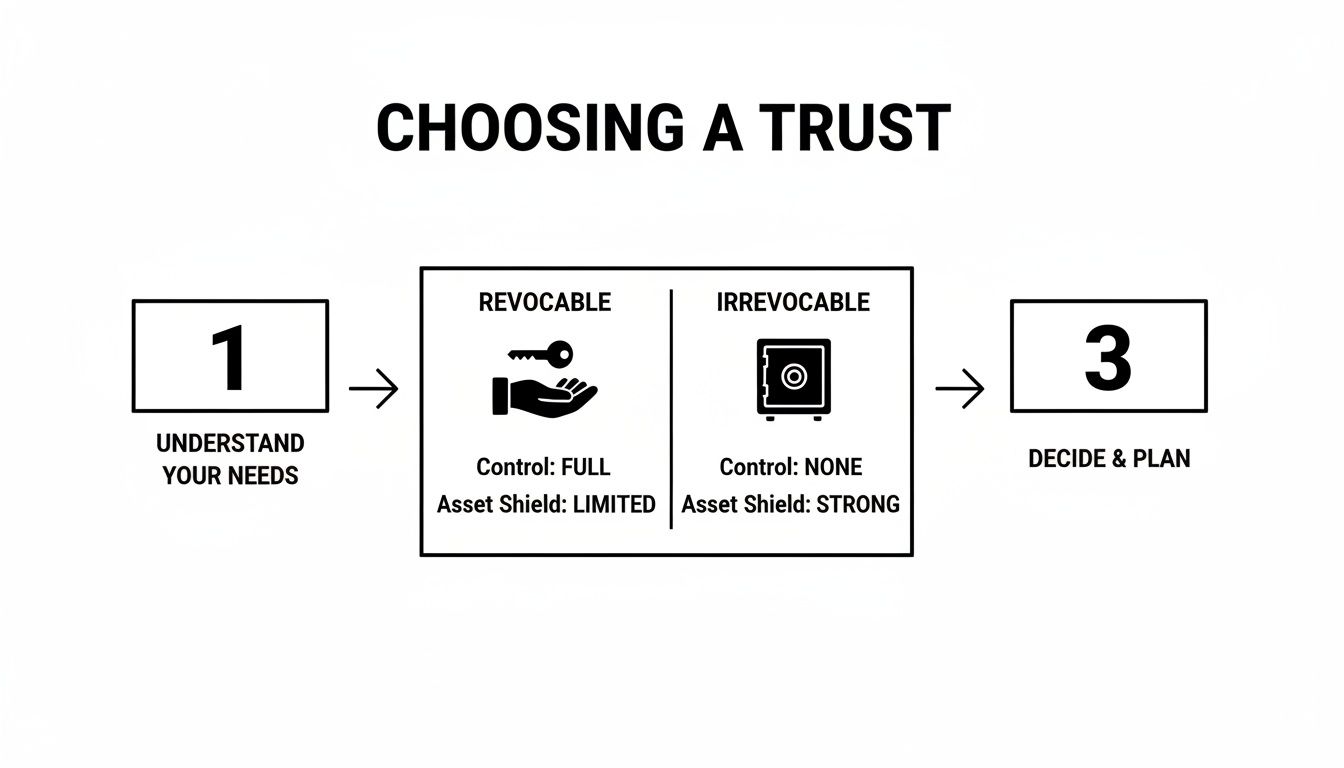
As the image shows, a revocable trust essentially gives you the "key" to your assets, whereas an irrevocable trust functions more like a permanent "vault."
Getting the Details Exactly Right
A deed is a legal document where precision is critical. A simple typo or omission can create significant title problems later on, potentially forcing your family into a costly court process to resolve the issue.
Here are the details that must be perfect:
- The Grantor: That's you, the current owner. Your name must be listed exactly as it appears on the most recent deed to the property.
- The Grantee: This is your trust. The name must be written out precisely as it is in your trust agreement, including the date it was created. For example: "John Smith, Trustee of the Smith Family Revocable Living Trust dated January 15, 2024."
- The Legal Description: This isn't the mailing address. It's the formal property description found on your current deed, often including lot numbers, block numbers, and subdivision names. It must be copied verbatim.
We often see well-intentioned mistakes, like people abbreviating the trust's name or getting the date wrong on the deed. An error like that can create a "cloud on title," a legal term for an issue that makes ownership unclear. That cloud can prevent a future sale or refinance of the home.
Signing, Notarizing, and Recording the Deed
Once the deed has been drafted and carefully reviewed for accuracy, the final steps make the transfer official and legally binding.
First, you must sign the deed in front of a notary public. The notary verifies your identity, witnesses your signature, and then adds their official seal and signature to the document. In Texas, a deed is not valid unless it is properly notarized.
The final, crucial step is to record the deed with the county clerk’s office in the county where your property is located. Whether you're in Harris County, Bexar County, or anywhere else in Texas, this filing officially notifies the public that your trust now owns your home. The clerk’s office will stamp the deed, assign it a document number, and add it to the permanent county property records. Only then is the process truly complete.
Navigating the specifics of preparing and recording a deed can feel overwhelming. The compassionate attorneys at The Law Office of Bryan Fagan are here to guide you through every step with clarity and care. Schedule a free consultation to ensure your home is properly and securely transferred to your trust.
Navigating Mortgages, Homestead Rights, and Insurance
Transferring your home into a trust is a powerful estate planning strategy, but it often brings up practical, day-to-day questions. We understand the concerns families have: "What will my mortgage company say?", "Will I lose my Texas homestead protections?", and "What do I need to do about my homeowner's insurance?".
These are exactly the right questions to ask. Let’s address them directly to provide you with clarity and peace of mind.
Your Mortgage and the Garn-St Germain Act
One of the biggest worries homeowners have is that transferring their property's title will trigger the "due-on-sale" clause in their mortgage. This is the clause that allows a lender to demand the entire loan balance be paid immediately upon transfer of the property.
Fortunately, a federal law protects you: the Garn-St Germain Depository Institutions Act of 1982. This law specifically prohibits lenders from enforcing the due-on-sale clause when you transfer your home into a revocable living trust, as long as you remain a beneficiary of the trust and continue to occupy the residence.
This protection means you can move forward with your estate plan with confidence, without needing special permission from your lender or going through the hassle and expense of refinancing.
Preserving Your Valuable Texas Homestead Rights
In Texas, our homestead rights are among the strongest in the nation. They provide two significant benefits:
- Protection From Creditors: Your primary residence is shielded from being seized to pay off most types of debt.
- Property Tax Exemptions: The homestead exemption significantly lowers your annual property tax bill.
Losing these protections would be a major financial blow. The good news is that you don't have to. When you transfer your home into a properly drafted revocable living trust—where you are both the creator (grantor) and the primary beneficiary—Texas law allows those homestead protections to pass through the trust to you. You keep the same creditor protections and property tax breaks.
It is absolutely critical, however, that the trust is drafted correctly and that you file any necessary updated forms with your local county appraisal district to notify them of the change in title. This ensures your homestead exemption remains in place without interruption.
This is where professional guidance can save you from major headaches. While the law supports you, the county appraisal district needs the correct paperwork to keep your records straight. This process is different from other transfer methods, such as a Lady Bird Deed guide, which has its own set of rules.
Keeping Your Homeowners Insurance Intact
The final piece of this puzzle is your homeowners insurance. Your current policy likely lists you, as an individual, as the insured party. Once the trust becomes the legal owner of the home, you must update your policy to reflect this change.
If you skip this step, you could create a dangerous gap in your coverage. In the event of a fire or a major liability claim, your insurance company could argue that the legal owner of the property—the trust—was not a named insured on the policy and potentially deny the claim.
Fortunately, the solution is simple. You just need to contact your insurance agent.
Your Insurance To-Do List:
- Call Your Agent: Inform them you've transferred your home into your revocable living trust.
- Make the Request: Ask to have the trust added as an "additional insured" on your policy. This is a common request.
- Provide Documentation: They will likely need a copy of the new, recorded deed or a Certificate of Trust to process the change.
- Get Written Confirmation: Do not rely on a verbal confirmation. Make sure you receive an updated policy declarations page that clearly lists both you and your trust as insured parties.
Taking care of this small administrative task ensures your most valuable asset remains fully protected, giving you complete peace of mind.
The Ongoing Life of Your Trust Beyond the Deed
Deeding your house into your trust is a significant accomplishment, but it's not the final step. A trust is not a "set it and forget it" document; it is a living plan that may need occasional attention over the years to ensure it works as intended when your family needs it most.
Once the house is safely in the trust, it's time to look ahead. The next steps are just as important: ensuring the trust is fully "funded" with your other key assets and, critically, choosing the right person to take over when you are no longer able to. This is what makes your entire estate plan work together to protect your legacy.

Fully Funding Your Trust
While your home is likely your most valuable asset, a trust that only holds the house can create future complications. The process of transferring other assets—like bank accounts, brokerage accounts, or business interests—into the trust is called funding. A fully funded trust consolidates your important assets into one organized plan that can be managed privately and without court intervention.
This is a step you should not skip. Any significant assets still titled in your individual name will most likely have to go through the public, costly, and time-consuming probate process. You went through the effort to avoid probate for your house; it makes sense to extend that same protection to the rest of your estate. To better understand how this works, read our guide on non-probate assets in Texas.
Selecting Your Successor Trustee
As the creator and initial trustee of your living trust, you are in complete control. But what happens if you pass away or become incapacitated and can't manage your affairs? Someone must step in to manage the trust assets and distribute them according to your instructions. That person is your successor trustee.
This is one of the most important decisions in your estate plan. It is a role that demands significant responsibility, integrity, and diligence.
Your successor trustee is a fiduciary. This legal term means they are legally and ethically bound to act in the best interests of your beneficiaries, setting aside their own personal interests.
When considering who to choose, think about these qualities:
- Trustworthiness: Is this person fundamentally honest and reliable?
- Financial Competence: They don't need to be a financial expert, but are they organized and capable of managing finances, paying bills, and keeping good records?
- Impartiality: If you have multiple beneficiaries, can this person treat everyone fairly and follow your instructions, even if family dynamics become challenging?
- Willingness: Have you asked them if they are willing and able to take on this important role?
Many people choose a responsible adult child, a sibling, or another close relative. Another option is to name a professional trustee, such as a bank's trust department or a trust company. This can be an excellent choice for complex estates or to prevent potential conflicts among family members.
Keeping Your Plan Organized and Accessible
Once your trust is created and funded, the final act of care for your family is to keep everything organized. When the time comes, your successor trustee will need to find all important documents without undue stress.
Consider creating a binder or a secure digital folder that includes:
- The original, signed trust agreement.
- A copy of the recorded deed showing the house is in the trust.
- A clear list of all other assets held by the trust, with account numbers.
- Contact information for your estate planning attorney, CPA, and financial advisor.
Ensure your successor trustee knows where this information is located. This simple step can save your loved ones from a great deal of stress during an already emotional time. If the trust ever needs to sell the property, knowing how to price a home for sale accurately will be critical, and having organized records will make the process much smoother.
Common Questions We Hear About Putting a House in a Trust
Making the decision to put your home into a trust is significant, and it's natural to have questions. Families across Texas often face the same practical concerns. Based on our experience helping families with their estate planning, we've gathered the most common questions to provide you with clear, straightforward answers.
Will Putting My House in a Trust Affect My Property Taxes in Texas?
For a revocable living trust, the answer is almost always no. Texas law is designed to allow your valuable homestead exemption for property taxes to pass through the trust to you. You are still considered the owner for tax purposes, so you keep your tax breaks.
The situation can be more complex with an irrevocable trust. It is essential to work with an experienced estate planning attorney to ensure the correct paperwork is filed with your local county appraisal district—whether in Harris County, Travis County, or elsewhere—to preserve your exemption.
Can I Still Sell My House If It’s in a Revocable Trust?
Yes, absolutely. As the trustee of your own revocable living trust, you retain full control. You have the authority to sell the property, refinance it, or even take it out of the trust if you change your mind.
The process of selling is nearly identical to selling a home you own individually. The only difference is that at closing, you will sign the documents as "John Doe, Trustee" instead of just "John Doe." This flexibility is a primary reason revocable trusts are so popular with homeowners.
A common misconception is that a trust complicates your life. With a revocable trust, your day-to-day relationship with your home doesn't change—you simply gain powerful protection from the probate court process.
Does a Trust Protect My Home from Medicaid Recovery?
This is where the type of trust you choose is critical. A standard revocable living trust does not protect your home from the Texas Medicaid Estate Recovery Program (MERP). Because you retain the power to revoke the trust, the state still considers the house your asset for recovery purposes.
For that kind of protection, you generally need a specially designed Irrevocable Trust. This is an advanced planning tool that must be established well in advance—typically at least five years—before you might need long-term care. This is a complex area of law, and professional legal guidance is essential to avoid costly mistakes.
How Much Does It Cost to Put a House in a Trust in Texas?
The cost involves two main parts: creating the trust document itself and then preparing and filing the deed to transfer the property. The trust agreement is the more complex component, as it is tailored to your family’s specific needs. The deed preparation and county recording fees are more standard but equally critical to get right.
While DIY options may seem tempting to save money, a single error in the trust or the deed can render the entire plan ineffective. Such a mistake could ultimately cost your family far more in probate court fees and legal battles. Investing in professional legal services is the only way to ensure your home and your family are truly protected.
Understanding the details of putting your house in a trust can feel complex, but you don't have to navigate it alone. The team at The Law Office of Bryan Fagan, PLLC is here to answer your questions and guide you through the process with clarity and compassion. We can help you build a plan that secures your family's future and provides you with peace of mind. Contact us now to schedule a free, no-obligation consultation and get started.