Skip to content
In Texas, establishing a guardianship is a significant legal step to protect a vulnerable loved one. However, it's a measure designed to provide support, not to be a life sentence. A guardianship is intended to end when it is no longer legally necessary. This can happen when a minor turns 18, an incapacitated adult regains their ability to make decisions, or, sadly, when the person under guardianship (the "ward") passes away. Understanding that ending a guardianship is a formal court process is the first step toward restoring a person's precious independence.
Understanding How Guardianship Ends in Texas
Many families we work with initially see guardianship as a final, permanent arrangement. While it is a serious legal commitment, it's crucial to view it as a protective shield, not a permanent state. The Texas Estates Code, specifically Title 3, Subtitle G, provides clear, specific paths for bringing a guardianship to a close when the circumstances that created the need for it have changed.
Ending a guardianship isn't a sign of failure—far from it. More often than not, it marks a positive milestone. It might mean a loved one has recovered from a serious illness, a young person has successfully stepped into adulthood, or the protective oversight is simply no longer required. When you understand the process, it stops being an intimidating legal task and becomes a way to honor your loved one's autonomy and dignity.
The Core Principle: Is It Still Necessary?
The entire legal basis for ending a guardianship boils down to one critical question: Is it still necessary? Texas law is firm on this point: a guardianship should only last as long as it is absolutely needed to protect the ward.
Courts across Texas, from the Harris County Probate Court to probate courts in smaller counties, are tasked with ensuring this powerful legal tool doesn’t needlessly strip away a person's fundamental rights. This reflects a modern, compassionate view of guardianship—seeing it less as a permanent solution and more as a temporary intervention used only when all other, less restrictive alternatives have been exhausted. This focus on restoring rights is a cornerstone of Texas guardianship law, championed by advocates who believe guardianship should always be a last resort.
A Quick Look at the Termination Process
So, when does guardianship end? The process begins by identifying the specific legal reasons for its conclusion. While we'll dive deeper into these, the main triggers for termination are:
- A Minor Reaches Adulthood: The guardianship for a minor automatically ends when they celebrate their 18th birthday.
- Restoration of Capacity: The ward is once again able to make their own decisions, a fact that must be proven to the court with strong medical evidence.
- The Ward's Passing: The guardianship itself terminates, and the guardian’s duties shift to the final task of closing out the ward's estate.
- No Longer Necessary: The original problem that required the guardianship is gone. For example, a settlement fund that was being managed for a ward has been fully paid out.
Each of these scenarios requires a formal return to court to legally close the guardianship. It's a structured process with clear steps, giving families a predictable path forward. Thinking about a guardianship exit strategy from the very beginning can make this eventual transition much smoother and less stressful.
The table below gives a quick summary of the primary legal grounds for ending a guardianship in Texas.
Primary Reasons a Texas Guardianship Can End
| Reason for Termination | Description | Relevant Texas Estates Code Section (Example) |
|---|---|---|
| Minor Reaches Majority | The guardianship for a minor automatically terminates when the ward turns 18 years old. | Sec. 1202.001(a)(1) |
| Restoration of Capacity | The court finds, based on clear and convincing evidence, that the ward has regained the capacity to manage their own affairs. | Sec. 1202.051 |
| Death of the Ward | The guardianship terminates upon the death of the person under guardianship. The guardian then must file a final accounting. | Sec. 1203.001 |
| No Longer Necessary | The court determines the guardianship is no longer needed to protect the ward or their estate, even if incapacity continues. | Sec. 1202.151 |
| Settlement of Estate | For a guardianship of the estate, it can end when the estate is fully administered, settled, and closed. | Sec. 1202.001(b)(1) |
This is just a starting point, of course. Every family's situation is unique, and the path to termination will depend on your specific circumstances.
At The Law Office of Bryan Fagan, we understand these decisions carry a significant emotional and financial weight. If you believe the guardianship for your loved one may no longer be needed, we are here to help you understand your options. Schedule a free consultation with our team to discuss your family’s situation and receive clear, compassionate advice.
The Legal Triggers for Ending a Guardianship
While establishing a guardianship is a major legal undertaking, it is not designed to be a life sentence. The entire legal framework is built with an endpoint in mind. The Texas Estates Code is very clear about the specific situations that require a guardianship to terminate. For families, knowing what these legal triggers are is the first step toward restoring a loved one's independence when the time is right.
Thinking about ending a guardianship can feel just as emotionally complex as starting one. It often marks a major life transition—a child becoming an adult, a loved one recovering their health, or the difficult process of closing an estate after a loss. To fully grasp what's involved, it helps to understand the legal landscape, including understanding the key differences between power of attorney and guardianship. Each reason for termination has its own unique process and set of rules.
When the Ward Passes Away
The most absolute reason for a guardianship to end is the death of the ward. The moment the individual passes away, the guardian's legal authority to make personal and medical decisions for them ceases. The law automatically terminates the guardianship at that very instant, as outlined in Texas Estates Code § 1203.001.
However, this does not mean the guardian's work is finished. While they can no longer act on behalf of the person, they have one final duty to perform for the court and the estate.
Guardian's Final Duties: After the ward's death, the guardian’s role shifts. They are required by law to file a final accounting with the court, which is a detailed report of every financial transaction since the last update. Their primary duty becomes safeguarding the ward’s property until an executor or administrator is officially appointed through the Probate process.
For example, imagine you were the guardian managing your elderly mother’s finances. After she passes away, you cannot continue paying her bills from her account as you did before. Your legal role has changed. You must secure her assets, prepare a final report for the probate court, and transfer control of the assets to the estate's executor once they are appointed.
When a Minor Ward Turns Eighteen
For any minor under a guardianship, their 18th birthday is a profound legal milestone. In Texas, this is the age of majority, and the guardianship of the person automatically terminates by law (Texas Estates Code § 1202.001). The court’s reasoning is straightforward: the person is now a legal adult, fully empowered to make their own choices and direct their own life.
The wrap-up process is usually quite clear:
- File a Final Account: The guardian prepares and submits a final accounting of the minor's estate, transparently showing how all funds were managed.
- Request Discharge: Once the court approves the accounting, the guardian asks to be formally released from their duties.
- Transfer Assets: All property and remaining funds are then turned over directly to the new 18-year-old adult.
This is a vital transition to independence, and closing the guardianship correctly ensures there are no unresolved issues or questions about how the minor’s assets were handled.
When Capacity Is Restored
This is perhaps the most rewarding reason to end a guardianship: the ward gets better. This is legally known as the restoration of capacity. Life is unpredictable, and someone who was incapacitated from a traumatic brain injury, a serious illness, or a mental health crisis can make a remarkable recovery.
Under Texas Estates Code § 1202.051, the ward themselves—or anyone else concerned with their welfare—can ask the court to dissolve the guardianship. To be successful, they must prove with "clear and convincing evidence" that the person is no longer incapacitated.
Proving restored capacity almost always depends on solid medical evidence. The most powerful tool is a new letter or evaluation from a physician confirming that the individual can once again:
- Provide for their own food, clothing, and shelter.
- Manage their finances responsibly.
- Make sound decisions about their medical care.
Imagine someone who required a guardian after a serious car accident during a long, difficult recovery. A year later, after extensive therapy, their doctor confirms they've made a full cognitive recovery. That doctor's expert opinion is the key that can unlock the courthouse doors and terminate the Guardianship, giving them their legal life back.
When the Guardianship Is No Longer Necessary
Sometimes, a guardianship can end simply because it’s no longer needed, even if the ward is still technically incapacitated. The court will look at the original reason the guardianship was created. Has that purpose been fulfilled? Does that need still exist?
For instance, a guardianship of the estate might have been established solely to manage a lawsuit settlement for a person with disabilities. If those funds have since been spent down for their care or transferred into a special needs trust, the guardianship has served its purpose. In fact, proactive Estate Planning can often create financial structures that prevent the need for a long-term guardianship in the first place.
If you believe your family’s situation fits one of these legal scenarios, the next step is to understand the court process. The attorneys at The Law Office of Bryan Fagan offer a free consultation to help you weigh your options and give you clear, compassionate advice on how to move forward.
Navigating the Court Process to Terminate a Guardianship
Ending a guardianship isn't as simple as deciding it's no longer needed. It requires a formal court order to legally restore a person's rights. The process, while structured, can feel overwhelming when you're navigating it for the first time. Let's walk through each practical step, from filing the initial paperwork to receiving that final order from a Texas probate court.
Knowing the legal roadmap ahead can replace anxiety with confidence, making the experience as smooth and dignified as possible for your loved one.
This chart gives you a bird's-eye view of the three most common ways a guardianship comes to an end in Texas.
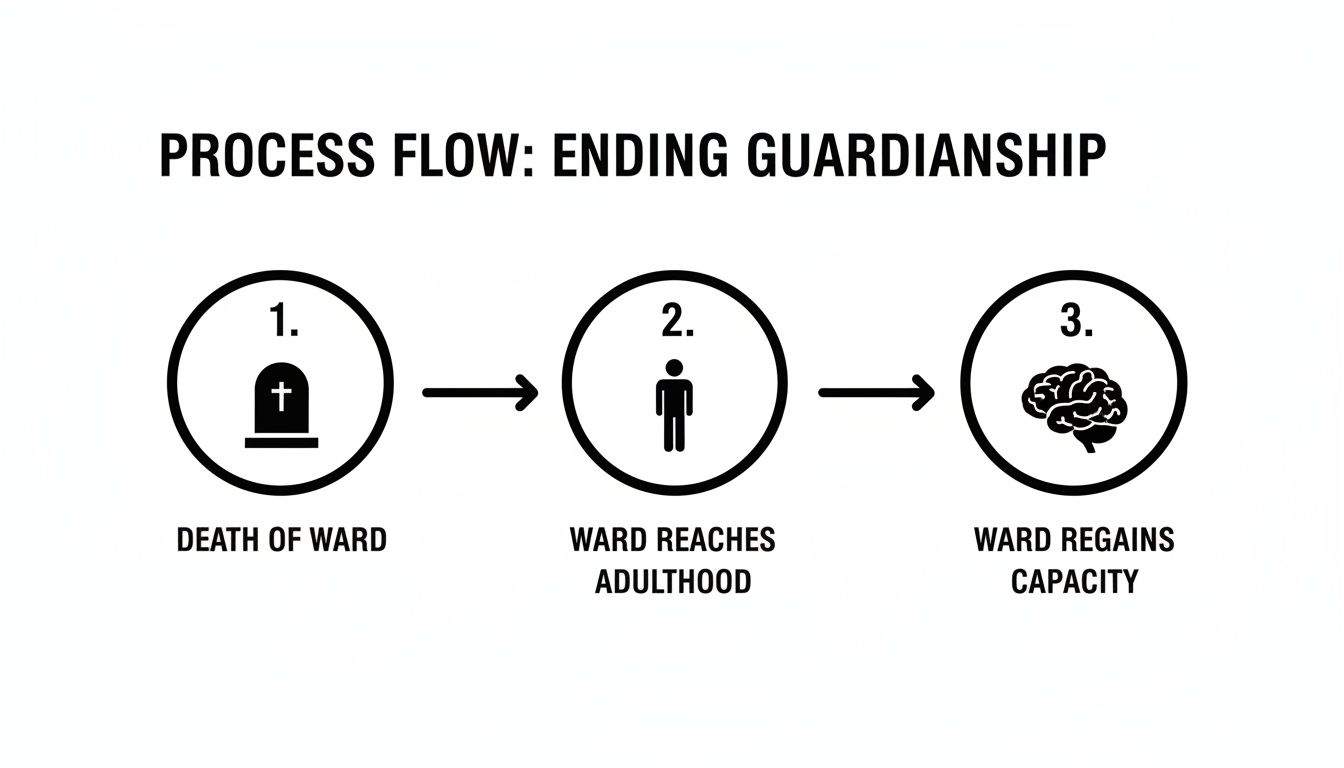
As you can see, the end of a guardianship is always triggered by a major life event—death, turning 18, or recovery. Each one requires a specific legal response to officially close the case.
Filing the Motion to Terminate Guardianship
The first official step is to file a Motion to Terminate Guardianship. This document is filed with the exact same court that originally established the guardianship, such as the Harris County Probate Court or the Bexar County Probate Court. This motion is a formal request to the judge, clearly explaining why the guardianship should end.
Your motion must be precise. It needs to state the legal grounds for termination—whether it’s because a minor is now 18, the ward has regained capacity, or the ward has passed away. This document sets the stage for the entire legal process that follows.
The Importance of Providing Notice
Once the motion is filed, Texas law is very strict about notifying all "interested persons." This isn't just a formality; it's a critical step that ensures the process is transparent and everyone has a chance to be heard.
So, who is an "interested person"? It typically includes:
- The Ward: The person who is under the guardianship.
- The Guardian: If they are not the one who filed the motion.
- Close Family Members: Spouses, parents, and any adult children.
- Anyone Else the Court Names: This could include other relatives or agencies involved in the ward's care.
Proper notice gives everyone with a stake in the outcome an opportunity to attend the hearing and share their perspective with the judge.
Gathering and Presenting Evidence
A judge will not terminate a guardianship based on a request alone. You must support your motion with solid proof, and the type of evidence required depends entirely on why you're asking for the termination.
Key Takeaway: The burden of proof rests on the person asking to end the guardianship. You must present "clear and convincing evidence" that the legal requirements for termination have been met.
For instance, if you're arguing for a restoration of capacity, the single most important piece of evidence is a recent, detailed letter from a physician. This is not a simple note; it must be a thorough evaluation clearly stating that the individual can now manage their own personal and financial affairs. Without that strong medical backing, a court is highly unlikely to restore the ward’s rights.
What to Expect at the Court Hearing
The court hearing is where the judge considers all the information to make a final decision. It is a formal proceeding where the person asking for the termination—the petitioner—presents their case. The ward is required to be present unless the court agrees they have a valid reason not to attend.
During the hearing, the judge will likely:
- Hear testimony from the petitioner, the ward, and any other interested parties.
- Review all submitted evidence, especially medical reports.
- Ask questions to get a complete understanding of the ward's current abilities.
The judge's primary responsibility is, and always will be, the ward's best interest. They need to be fully convinced that ending the guardianship is the right and safe decision. This is why having an experienced guardianship attorney to present your case clearly and professionally can make all the difference. For more on the final steps, you can read our guide on how to discharge a guardian in Texas.
The Final Order and Closing the Case
If the judge is convinced that the guardianship should end, they will sign a court order that makes it official. This order is the legal key that restores all rights to the former ward, empowering them to make their own decisions again.
The order also provides the guardian with their final instructions, such as filing a final report with the court and transferring any remaining assets back to the ward.
Navigating the court process to determine "when does guardianship end" can be complex. The legal requirements are strict, and a small misstep can lead to delays or even a denial. At The Law Office of Bryan Fagan, we guide families through this process with clarity and care every day. Schedule a free consultation to talk about your case and get the professional support you need.
Terminating Guardianship for Minors and Young Adults
Guardianships for minors operate differently than those for adults. They are not based on a person’s long-term incapacity; instead, they are designed to provide a stable, protective environment for a child until they are legally old enough to make their own decisions. Knowing when and how these guardianships end is key to ensuring a young person’s transition into adulthood is both smooth and legally secure.
The Milestone: A Minor Turns 18
The most common way a minor's guardianship ends is simple: they turn 18. Under Texas Estates Code § 1202.001, the guardianship automatically terminates by law the moment the child becomes a legal adult. At that point, the guardian's legal authority to make decisions about their life, health, and finances is extinguished.
However, reaching this birthday is not the final step in the legal process. The guardian still has important tasks to complete to officially close the case with the court.
Final Steps to Close the Guardianship
Even though the guardianship legally ends on the ward’s 18th birthday, the guardian must formally conclude their duties. This is a crucial step that protects the guardian from future legal claims and ensures the young adult receives a clean, clear transfer of any assets they are owed.
Here's what that process typically involves:
- Filing a Final Account: The guardian must prepare and submit one last detailed financial report. This final accounting shows all income, expenses, and transactions handled for the minor's estate since the previous report was filed.
- Transferring Assets: Any property, money, or other assets held in the guardianship must be legally turned over to the now 18-year-old.
- Requesting a Discharge: After the court reviews and approves the final accounting and receives confirmation that all assets have been transferred, the guardian can then ask the court to be formally discharged from their duties.
Following these steps provides a transparent and final conclusion, leaving no doubt about how the minor’s assets were managed with care.
What if Support Is Still Needed After 18?
Of course, life isn't always that straightforward. What happens if a guardianship was established for a minor with significant disabilities who will still need support after turning 18? In these situations, the minor guardianship still ends, but the need for protection does not.
The family must be proactive and petition the court to establish a new adult guardianship. This is not an automatic rollover; it is an entirely new legal case. It requires fresh medical evidence proving the young adult meets the legal standard of incapacity as an adult. Planning for this transition is critical to avoid any gap in care, and our attorneys can walk you through how to transition from guardianship to independence in Texas.
When a Guardianship Fulfills Its Purpose Early
Sometimes, a guardianship of the estate is created for a very specific reason, like managing a large settlement from a personal injury lawsuit. Once those funds have been spent on the minor's care and education as the court directed, or moved into a more permanent financial tool like a special needs trust, the guardianship may have served its purpose.
In these cases, a guardian can ask the court to terminate the guardianship because it’s no longer necessary, even if the child isn't 18 yet. A court in a jurisdiction like Montgomery County will carefully review the situation to make sure the money was handled correctly and that ending the guardianship is truly in the child’s best interests.
This kind of proactive legal planning is incredibly important. Data on youth aging out of foster care shows the heartbreaking results of legal delays. In fiscal year 2023, 15,590 youth aged out of the system, often without a permanent family or support system, because essential legal steps like guardianship or adoption weren't completed in time. Discover more insights about these foster care statistics.
Navigating the end of a minor’s guardianship requires both legal precision and a compassionate touch. Whether you're celebrating a child’s newfound independence or planning for their ongoing care, The Law Office of Bryan Fagan is here to provide the guidance you need. Schedule a free consultation with us today to discuss your family’s next steps.
Life After Guardianship: A Practical Checklist

The moment a judge’s final order terminates a guardianship is one of immense relief. It’s the official answer to the question, "when does guardianship end?" But while it is certainly a time for celebration, this legal milestone is more of a starting line than a finish line.
For both the person who served as guardian and the individual whose rights are now fully restored, a new chapter with a new set of responsibilities begins. Handling this transition with care ensures a smooth handoff and truly empowers the individual in their reclaimed independence.
The Guardian’s Final Duties: A Checklist
If you have been serving as a guardian, your job isn’t quite over when the judge signs the order. Texas law outlines several final, critical steps to formally close out the guardianship. Think of it as your final report card to the court, proving you were a responsible steward to the very end.
This final push is what protects you from any future liability. Your last responsibilities include:
- Preparing the Final Account: This is your most important final document. It’s a complete financial report detailing every bit of income, every expense, and every transaction that has occurred since your last annual accounting was filed. Transparency and accuracy are essential.
- Transferring All Assets: Every piece of property—from bank accounts and investments to personal belongings—must be legally transferred back into the former ward’s name. This creates a clean break and hands back full control.
- Obtaining a Receipt: Once you've transferred the assets, get a signed receipt from the former ward confirming they have received everything. This is a simple but powerful piece of evidence for the court.
- Filing for Discharge: After the court approves your final account and sees that all property has been returned, you file one last motion asking to be formally discharged as guardian. This final court order is what officially releases you from all your duties and legal responsibilities.
Completing these tasks meticulously is non-negotiable. A proper discharge from a Harris County Probate Court, for instance, is your legal shield against any future claims that you mismanaged the estate.
Reclaiming Independence: A Checklist for the Former Ward
For the person whose rights have just been restored, life after guardianship is about taking back the reins, one step at a time. This process is incredibly empowering, but it can also feel a little overwhelming. A clear plan makes all the difference in navigating the practical side of things.
Here are the key steps to reclaiming your autonomy:
- Regain Access to Financial Accounts: Take a certified copy of the court order to all your banks and financial institutions. This is the proof they need to remove the guardian's name and restore your sole access to every account.
- Notify Government Agencies: This is a big one. You need to formally inform agencies like the Social Security Administration (SSA) and the Department of Veterans Affairs (VA) that the guardianship is over. This step ensures that any benefits are sent directly to you, not to a former representative payee.
- Update Medical Records: Provide copies of the termination order to all of your doctors, hospitals, and healthcare providers. This lets them know you are once again the only person in charge of your own medical decisions.
- Create New Powers of Attorney: This is a brilliant, proactive step to protect your future. By creating new medical and financial powers of attorney, you get to choose who can make decisions for you if you ever need help again. This simple act of forward-thinking Estate Planning can help you avoid ever needing another court-ordered Guardianship.
The transition from guardianship to independence is not just a legal process; it's a deeply personal journey. Supporting your loved one's newfound autonomy with patience and encouragement is just as important as handling the paperwork.
Supporting Your Loved One’s New Beginning
The end of a guardianship brings a major emotional shift for everyone involved. The former ward may feel a whirlwind of excitement mixed with anxiety about managing their own life again. The former guardian might find themselves worrying about how their loved one will handle these new responsibilities.
The key here is open communication and mutual respect. Offer support without overstepping, and make a point to celebrate the milestones of their regained independence. This compassionate approach helps the whole family move forward, turning a closed legal chapter into a truly hopeful future. If you need help navigating this final phase, our team is here to help.
Common Questions About Ending a Guardianship in Texas
Closing the chapter on a guardianship brings many questions to the surface. It’s a path that involves specific legal steps, but it’s also an emotional journey for everyone involved. To bring some clarity, we’ve put together answers to the most common questions Texas families ask when it’s time to end a guardianship.
Can the Ward Start the Process to End Their Own Guardianship?
Yes, absolutely. The person under the guardianship, legally known as the "ward," has every right to petition the court to end it. The Texas Estates Code specifically empowers them to take the initiative in regaining their legal independence.
To begin the process, the ward files a motion with the same court that originally established the guardianship. The core of their argument must be that they have recovered the ability to handle their own affairs.
By far, the most powerful tool in their arsenal is a fresh, detailed letter from their physician. This medical evaluation needs to state, in no uncertain terms, that the ward is once again capable of making sound decisions about their own health, finances, and day-to-day life. A judge will give this medical opinion significant weight when deciding the case.
How Long Does It Take to End a Guardianship?
Ending a guardianship is a process that requires patience. A realistic timeline is usually several months, though this can vary depending on a few key factors.
First, the court’s own schedule is a huge factor. Busy dockets in places like Dallas County or Bexar County can mean a longer wait for a hearing date. The complexity of the case also matters. A straightforward termination where the guardian and ward agree will conclude much faster than one where a family member objects.
Here's a rough breakdown of what to expect:
- Filing and Notice: It can take a few weeks just to draft the motion and properly serve legal notice to all required parties.
- Court Scheduling: This is often the longest wait. It can take anywhere from one to three months, sometimes more, to get a hearing date on the judge's calendar.
- Hearing and Order: After your hearing, it might be another few weeks before the judge signs the final order making it official.
- Final Accounting: The guardian's job isn't done. They must prepare and file a final accounting, which the court must approve before the case is officially closed for good.
Because of these moving parts, it’s wise to begin the process as soon as you believe the legal grounds for termination have been met.
What if a Family Member Objects to the Termination?
Family disagreements can arise during this process. If an "interested party"—like one of the ward’s adult children or a sibling—objects to ending the guardianship, the case becomes a contested hearing. This changes the situation significantly, turning the process into something that feels more like a formal trial.
When a termination is contested, the stakes are much higher. Both sides will need to present evidence, call witnesses to testify, and follow strict rules of evidence. The judge will not take any shortcuts.
In a contested hearing, the person asking to end the guardianship has the burden of proving that it's no longer necessary. The family member who objects gets their chance to present their own evidence and argue why the guardianship should remain in place. These hearings can become legally complicated and emotionally charged, which is why having an experienced Guardianship attorney becomes absolutely essential to advocate for the ward's best interests.
Does the Guardian Get Compensated for Closing the Guardianship?
Yes, they do. Texas law recognizes that wrapping up a guardianship is real work that requires time and skill. According to the Texas Estates Code, a guardian has the right to request reasonable compensation from the ward’s estate to cover the work involved in these final administrative steps.
This isn't just signing a form or two. The work often includes:
- Preparing and filing the comprehensive final account.
- Tracking down and organizing all necessary financial records.
- Working with an attorney to draft the final court filings.
- Coordinating the legal transfer of every asset back to the former ward.
The guardian must submit a formal request for these fees to the court. A judge will then review it to ensure the amount is fair and justified for the work required to properly and legally close the guardianship estate.
The journey to end a guardianship is a significant step toward restoring autonomy and closing an important chapter. The process can be intricate, but you don't have to navigate it alone. At The Law Office of Bryan Fagan, PLLC, we provide the compassionate, professional guidance Texas families need to move forward with confidence. If you're wondering when does guardianship end for your loved one, schedule a free consultation with our experienced team today to get the clear answers and support you deserve.