Skip to content
When someone trusts you to manage their assets for the benefit of others, Texas law doesn't just expect you to do a good job—it holds you to the highest possible standard of care. This serious obligation is known as the fiduciary responsibility of a trustee. At its core, it means you must always act with complete loyalty, prudence, and good faith. We understand this is a role built on absolute trust and unwavering integrity, and the weight of that can feel heavy.
What a Trustee's Fiduciary Duty Really Means in Texas
Stepping into the world of trusts, whether as a newly appointed trustee or a concerned beneficiary, can feel overwhelming. The legal language is dense, and the emotional and financial challenges families face are real. But the central idea is actually quite simple: a trustee is a steward, not an owner.
Think of it like being given the keys to a cherished family legacy. Your job isn't just to keep things safe; it's to manage everything wisely for the very people the trust was created to protect—the beneficiaries. This role goes far beyond simple bookkeeping. It demands a deep commitment to putting the needs of others entirely before your own.
This isn't just a moral suggestion; it's the law. The rules are laid out in the Texas Trust Code, found in Title 9 of the Texas Property Code. This statute clearly defines the duties and expectations for anyone serving as a trustee in our state, from those managing a trust for a loved one with special needs to those overseeing a complex family inheritance.
The Three Pillars of a Trustee's Duty
The entire responsibility of a trustee stands on three foundational principles. Getting a handle on these pillars is the essential first step for anyone involved with a trust, from a trustee in a Harris County probate court to a beneficiary in Dallas County.
- The Duty of Loyalty: You must act solely in the best interests of the beneficiaries. Even a hint of self-dealing—using your position for personal gain—is strictly forbidden. Your interests don't even get a seat at the table.
- The Duty of Prudence: You're required to manage the trust's assets with the same skill and caution a sensible person would use to handle their own affairs. This means making sound investment decisions and protecting the trust from unnecessary risks.
- The Duty of Impartiality: If there's more than one beneficiary, you can't play favorites. You have to balance their potentially competing interests fairly and equitably, even when it's emotionally difficult.
This framework helps visualize how a trustee acts as a central steward, constantly balancing these core duties.
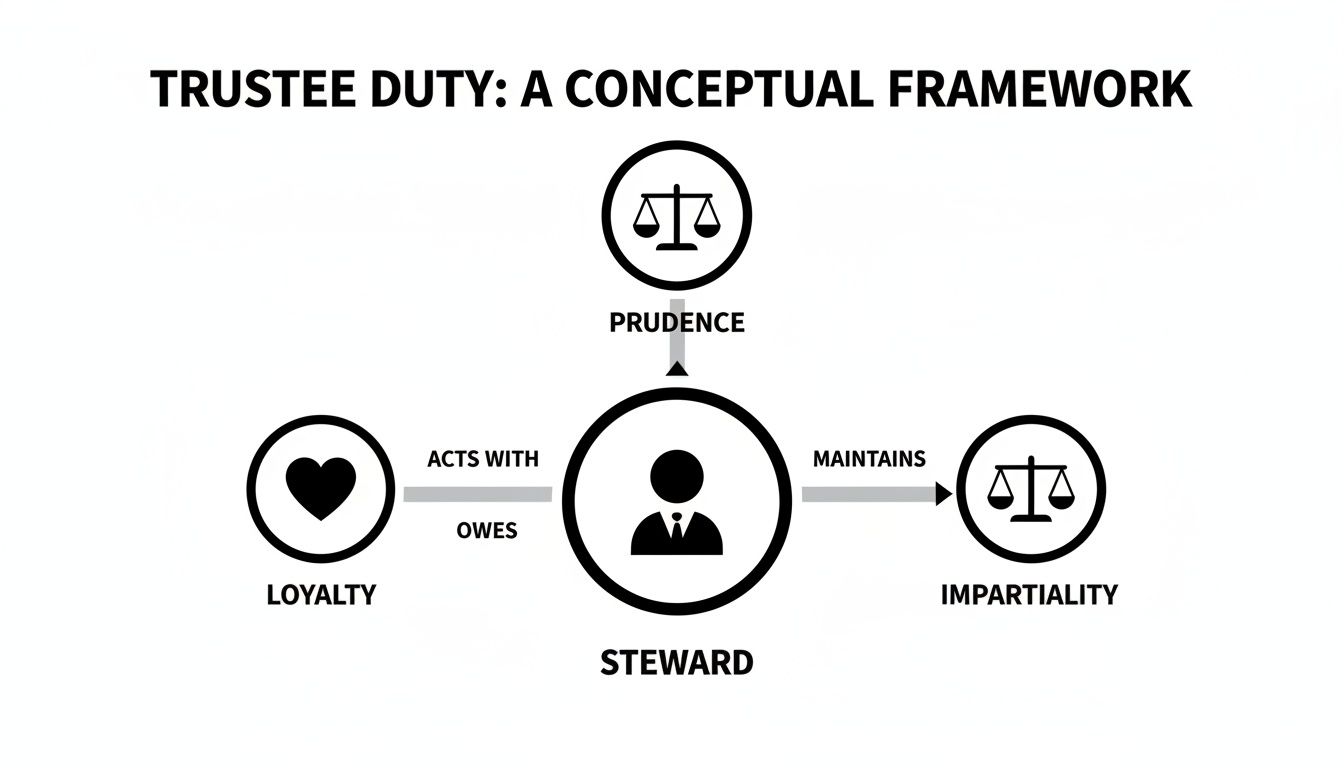
Each of these duties is a non-negotiable commitment. Together, they ensure every decision serves the trust's ultimate purpose and protects the people it was designed to help.
To help you keep these critical responsibilities straight, here’s a quick summary table.
Core Fiduciary Duties at a Glance
This table breaks down the primary responsibilities a trustee must uphold under Texas law, offering a clear, simple reference for the concepts we’ve just discussed.
| Fiduciary Duty | What It Means in Plain English | Why It Matters to Beneficiaries |
|---|---|---|
| Loyalty | The trustee must act only for the beneficiaries, never for personal gain. | Protects your inheritance from being misused or stolen by the trustee. |
| Prudence | The trustee must manage assets carefully, like a cautious and sensible person. | Ensures the trust's investments are sound and not exposed to foolish risks. |
| Impartiality | The trustee must treat all beneficiaries fairly and not favor one over another. | Guarantees you are treated equitably, especially in trusts with multiple heirs. |
| Accounting | The trustee must keep detailed records and report them to the beneficiaries. | Gives you transparency and the ability to see how your money is being managed. |
| Enforce Claims | The trustee must take action to collect debts owed to the trust. | Maximizes the assets in the trust, ensuring you receive what you're entitled to. |
| Defend the Trust | The trustee must legally defend the trust against any challenges or lawsuits. | Protects the trust's assets from outside threats and legal attacks. |
Understanding these duties is the first step, but applying them correctly is where things can get complicated.
At The Law Office of Bryan Fagan, we understand the emotional and financial weight that comes with these roles. Whether you are a trustee trying to do the right thing or a beneficiary worried about your rights, knowing this framework is essential.
If you have questions about your role or how a trust is being managed, our team is here to bring clarity to your situation. We invite you to schedule a free consultation to discuss the specifics with our experienced attorneys.
The Cornerstone Duties of Loyalty and Prudence
While a trustee has a whole list of responsibilities, two duties really form the bedrock of the entire role: the Duty of Loyalty and the Duty of Prudence. Getting a firm grip on these non-negotiable principles is critical, whether you're the one managing the trust or a beneficiary relying on that management. Think of them as the moral and legal compass guiding every single decision a trustee makes.

You can think of these duties as two sides of the same coin. Loyalty dictates why a trustee acts—it must be solely for the beneficiaries. Prudence, on the other hand, dictates how they act—with care, skill, and sound judgment. Together, they are meant to ensure the trust is managed with both integrity and wisdom.
The Unwavering Duty of Loyalty
The Duty of Loyalty is the most fundamental rule in the trustee playbook. It’s simple but absolute: you must act exclusively in the best interests of the beneficiaries. Period. Your own personal interests, or the interests of anyone else, have to be completely walled off from your decision-making.
This means a trustee can never, ever engage in self-dealing or put themselves in a position where their personal agenda could even slightly conflict with their duties. The law is incredibly strict on this point, and for good reason—it’s the ultimate safeguard against a trustee misusing their power.
A trustee’s duty of loyalty is absolute. This isn't just about avoiding obvious theft; it’s about sidestepping any situation where your personal benefit could even potentially color a decision about the trust. This principle is what protects the very heart of the trust relationship.
For example, let's say a trustee in Harris County is managing a trust that owns a valuable piece of real estate. A textbook breach of loyalty would be selling that property to their own sibling for a price well below fair market value. Even if they try to rationalize it as a "good deal for the family," they've used their position to benefit a relative at the direct expense of the trust beneficiaries. That's a clear violation.
Managing Assets with the Duty of Prudence
While loyalty is all about motive, the Duty of Prudence is about action and judgment. It requires a trustee to manage the trust's assets with the same care, skill, and caution that a reasonably sensible person would use when managing their own money.
Here in Texas, this concept is largely defined by the "Prudent Investor Rule." This rule doesn't demand that a trustee be a Wall Street wizard or generate spectacular, high-risk returns. What it demands is responsible and sound management.
A prudent trustee is expected to:
- Diversify Investments: You can't put all the trust's eggs in one basket. Spreading investments across different asset types is key to minimizing risk.
- Assess Risk and Return: Every investment decision must be appropriate for the trust's specific goals, its timeline, and the needs of the beneficiaries.
- Avoid Speculation: This means steering clear of overly risky or speculative ventures that could jeopardize the trust's principal.
- Document Decisions: It's vital to keep detailed records explaining why certain investment choices were made.
This duty isn't stuck in the past, either; it evolves with modern investment practices. For instance, many trustees now consider Environmental, Social, and Governance (ESG) factors when making investment decisions. A landmark UK case actually affirmed that integrating ESG considerations can be part of a prudent strategy. The result? It led to a staggering 40% reduction in breach claims among trusts that adopted this approach. You can discover more insights about trustees and ESG investing from Walkers Global. This just goes to show that prudence isn't static—it adapts to what responsible, contemporary financial stewardship looks like.
Ultimately, a failure to act with either loyalty or prudence can have severe consequences, from being held personally liable for financial losses to being removed by a probate court. These cornerstone duties are what elevate someone from a simple asset manager to a true fiduciary—a trusted steward of a family’s legacy.
If you have concerns about how a trust is being managed or need guidance on fulfilling your duties properly, it's vital to seek professional advice. At The Law Office of Bryan Fagan, we help both trustees and beneficiaries understand and uphold these critical responsibilities. We encourage you to schedule a free consultation to get the clear, compassionate guidance your family deserves.
Balancing Interests with the Duty of Impartiality
Of all the responsibilities a trustee has, the Duty of Impartiality might be the trickiest. It’s a legal tightrope walk. This duty forces a trustee to be a fair and neutral referee, especially when the people benefiting from the trust have different—and often competing—needs. It demands sharp judgment, open communication, and absolute fairness.

This duty snaps into focus in very common family scenarios. Just imagine a trust set up to provide for a surviving spouse for life. After that spouse passes away, whatever is left goes to the kids. Right away, you can see the conflict.
Navigating Competing Beneficiary Needs
The surviving spouse is the "income beneficiary," so they need the trust to generate as much cash flow as possible right now. But the kids are the "remainder beneficiaries," and their interest is in having the trustee preserve and grow the trust's principal for their future inheritance. How on earth does a trustee balance these two valid but opposing goals?
- For the Income Beneficiary: The trustee might gravitate toward investments that pay high dividends or interest, like certain bonds or utility stocks. This strategy helps meet the immediate duty to provide for the spouse.
- For the Remainder Beneficiaries: At the same time, the trustee has to invest for long-term growth. This could mean putting a portion of the funds into growth stocks that might not pay much now but are expected to appreciate significantly over time.
A trustee who goes all-in on high-risk growth stocks is ignoring the spouse's current needs. On the flip side, a trustee who only buys low-growth, high-income bonds could shortchange the children’s inheritance down the road. True impartiality means finding a prudent, balanced strategy that serves both parties fairly, just as the Texas Trust Code demands.
A trustee must administer the trust impartially, based on what is fair and reasonable to all beneficiaries. This doesn’t mean treating everyone identically, but it does mean not favoring one beneficiary’s interests over another's. Every decision must be made with this balance in mind.
The Critical Role of Documentation and Communication
Because the duty of impartiality can feel so subjective, meticulous record-keeping is a trustee's absolute best friend. Every investment choice, every distribution payment, and the logic behind it needs to be clearly written down. This creates a transparent paper trail that can be a lifesaver if a trustee’s judgment is ever challenged in a Harris County or Dallas County Probate Court.
A great first step is for the trustee to create an Investment Policy Statement (IPS). This document formally lays out the trust's investment goals, risk tolerance, and the specific strategy for balancing income generation with principal growth. Sharing this with the beneficiaries can proactively manage their expectations and head off misunderstandings before they start.
Clear communication is just as vital. A trustee who takes the time to explain their strategy and keep beneficiaries in the loop is far less likely to face suspicion or hostility. When families understand why certain decisions are being made, they're more likely to see the trustee as a fair steward instead of an adversary. It can prevent costly family disputes from ever getting off the ground.
At The Law Office of Bryan Fagan, we guide trustees through these complex situations, helping them establish fair strategies and communicate them effectively. If you are a trustee struggling to balance competing interests or a beneficiary who feels your needs are being overlooked, we can help. Schedule a free consultation to ensure the trust is managed with the fairness and care your family deserves.
Why Transparency Isn't Just Good Practice—It's the Law
A trustee's entire role is built on a foundation of trust. Without it, the whole structure falls apart. That's precisely why Texas law makes transparency a non-negotiable part of the job through two critical legal obligations: the Duty to Account and the Duty to Inform.
These duties aren't just friendly suggestions. They are legally enforceable rights that ensure beneficiaries are never left in the dark about how their inheritance is being managed. Think of them as a built-in check and balance, giving families peace of mind and the power to hold a trustee accountable.
The Beneficiary's Right to an Accounting
Under the Texas Trust Code, every beneficiary has the legal right to demand a formal accounting from their trustee. This isn't just a quick verbal update or a simple spreadsheet; it's a comprehensive, detailed financial report that lays bare every single transaction and the current state of the trust's assets.
An accounting tells the trust's complete financial story, with no skipped chapters. A proper one has to include:
- All Trust Property: A full inventory of every asset that has come into the trustee’s hands.
- All Disbursements: A detailed log of every payment made—who got paid, when, and why.
- All Receipts: A record of all money or property the trust has received.
- Current Assets: A snapshot of all property currently being managed, including its location and condition.
- Liabilities: Any debts or financial obligations the trust owes.
This level of detail is what allows beneficiaries to see exactly where the money is going, question any strange expenses, and verify that the trust is being run the way it was intended.
A Fort Bend County Story
Let's imagine a scenario playing out right here in Fort Bend County. Two siblings, Sarah and Tom, are the beneficiaries of their father's trust. For the last year, their trustee has been cagey about expenses, and the distributions they've received seem a lot smaller than they expected. Sarah’s gut tells her something is off.
She decides to exercise her legal right. She sends a formal, written demand to the trustee for a full accounting covering the previous 12 months. The trustee is now legally obligated to provide a sworn, detailed statement that checks every box on the list above. If the trustee drags their feet, refuses, or sends back an incomplete report, Sarah can go straight to the Fort Bend County Probate Court to force their hand and even ask the judge to have them removed.
This example shows just how powerful the law is in empowering beneficiaries. You don't have to just sit back and worry; you can demand transparency and take real action.
The duty to account is the bedrock of trustee accountability. It prevents a trustee from operating in secrecy and gives beneficiaries the evidence they need to ensure their interests are being protected. Without it, the fiduciary relationship is one of blind faith rather than verifiable trust.
The Ongoing Duty to Keep Beneficiaries Informed
Beyond the formal accounting, a trustee has a broader, continuous Duty to Inform. This means they can't just sit back and wait for you to ask questions. They have a proactive responsibility to keep beneficiaries reasonably updated about the trust’s administration and any major events.
Good communication isn't just good customer service—it's a legal requirement. A trustee shouldn't wait for a crisis to share important news. If the trust gets involved in a lawsuit, or if a major asset like the family home is about to be sold, the trustee has a duty to let the beneficiaries know in a timely manner. This open line of communication builds confidence and can stop small misunderstandings from spiraling into expensive, painful legal fights.
At The Law Office of Bryan Fagan, we understand how stressful it is when communication breaks down and you're worried about your family's legacy. Whether you're a beneficiary struggling to get answers or a trustee who needs clear guidance on your legal obligations, we're here to help. Schedule a free consultation to get straightforward, compassionate advice.
When a Trustee Breaks Fiduciary Duty
Discovering that a trusted family member or professional might be failing in their duties is a deeply painful experience. The feelings of betrayal and anxiety can be overwhelming, but it's critical to know that Texas law provides clear pathways for beneficiaries to protect their rightful inheritance. Understanding what a breach of trust looks like—and what steps to take—is the first move toward restoring accountability.
A breach of fiduciary duty happens when a trustee violates one of their core legal obligations: loyalty, prudence, impartiality, or transparency. This isn’t always about outright theft. More often, it’s the result of negligence, playing favorites, or a serious conflict of interest. These failures can cause significant financial harm to the trust and chip away at the very foundation of your family's legacy.
Common Examples of Trustee Misconduct
Spotting a breach isn’t always simple, but certain actions are major red flags. If you're a beneficiary and you see any of these behaviors, it may be time to get legal guidance.
- Commingling Assets: This is when a trustee mixes their personal funds with the trust's money, like depositing trust income into their own bank account. This is a severe breach because it destroys financial transparency and is often a short step away from misusing funds.
- Improper Investments: A trustee who makes reckless, speculative investments or fails to diversify is violating the duty of prudence. A classic example? Putting all the trust's money into a single, high-risk "hot stock."
- Self-Dealing: This happens when a trustee uses their position for personal gain. Think of them selling trust property to themselves at a suspiciously low price or hiring their own company to do work for the trust and charging inflated rates.
- Favoritism Among Beneficiaries: If a trustee consistently makes distributions to one beneficiary while ignoring the legitimate needs of another, they are violating their duty to be impartial.
Fiduciary liability is a serious matter with massive financial consequences. Looking at the broader U.S. financial landscape, litigation over these breaches can be dramatic. In 2022, for example, lawsuits against retirement plan fiduciaries peaked when they were accused of failing to negotiate better fees, leading to estimated participant losses of $5-10 billion annually. This shows just how costly a failure to act prudently can be. You can learn more about the trends in fiduciary liability from WTWCo.
Severe Consequences for a Breach in Texas
Texas probate courts do not take breaches of fiduciary duty lightly. The law provides strong remedies to protect beneficiaries and punish wrongdoing. A trustee found to have broken their promises can face a range of severe penalties.
When a trustee fails in their duty, they aren't just making a mistake—they are breaking a sacred, legally-binding promise. The Texas Estates Code empowers probate courts to hold them personally accountable for any harm they cause to the trust and its beneficiaries.
The consequences can include:
- Personal Financial Liability: The court can order the trustee to personally repay any financial losses the trust suffered because of their actions. This is often called a "surcharge."
- Forced Removal: A judge in a Harris County or Travis County Probate Court can immediately remove the trustee and appoint someone new to take over.
- Loss of Compensation: The court can deny the trustee any payment for their services, forcing them to forfeit all the fees they may have earned.
What to Do If You Suspect a Breach
If you believe a trustee is mismanaging a trust, it’s crucial to act methodically, not emotionally. Taking the right steps will help you gather the information you need to protect your interests.
First, make a formal, written request for a full accounting. This is your right under the Texas Trust Code. This document should give you a detailed breakdown of all assets, income, and expenses.
If the accounting reveals questionable transactions—or if the trustee flat-out refuses to provide it—your next step is to consult with an attorney experienced in fiduciary litigation. An attorney can help you understand your options, which might include filing a lawsuit to force an accounting, remove the trustee, and recover damages. The legal process can be complex, and knowing when and how a trust can be sued is vital for protecting your rights.
At The Law Office of Bryan Fagan, we understand the emotional and financial toll these disputes take on families. If you are concerned about how a trust is being managed, we are here to provide the clear, compassionate guidance you need to move forward. Schedule a free consultation with our team to discuss your situation and learn how we can help protect your family’s legacy.
A Practical Checklist for Texas Trustees
Knowing the theory behind a trustee’s fiduciary duties is one thing, but actually putting it all into practice is where the rubber meets the road. To help you translate these heavy legal concepts into clear, actionable steps, we’ve put together a practical checklist.
Think of this as a roadmap. It’s designed to guide trustees in meeting their obligations with integrity, and it also shows beneficiaries what diligent, transparent management should really look like. Following these steps is your best defense against accusations of a breach. It builds a foundation of trust and proves your commitment to the high standard of care Texas law demands.
Initial Setup and Organization
How you start matters. Getting organized from day one sets the stage for long-term success and makes compliance feel a lot less overwhelming. These first steps create the structure you need for transparent and effective trust management.
- Create a Detailed Asset Inventory: Your first job is to get your arms around everything the trust owns. Make a complete, written list of every piece of property, every account, and every investment, along with its estimated value. Take control of these assets.
- Establish a Dedicated Trust Bank Account: This is non-negotiable. Never, ever mix trust funds with your own money. Open a separate bank account titled in the name of the trust to handle all income and expenses. This one simple move is critical for avoiding commingling—a serious breach of your duties.
- Develop an Investment Policy Statement (IPS): You shouldn't be winging it with investments. Work with a financial advisor to create a formal IPS. This document spells out the investment strategy, risk tolerance, and goals, ensuring you meet the duty of prudence while fairly balancing the needs of all beneficiaries.
A well-documented process is a trustee's greatest asset. By meticulously recording every decision and transaction from day one, you build a clear and defensible record that proves your commitment to acting in the beneficiaries' best interests.
Ongoing Management and Communication
Once the trust is set up and organized, your role shifts to diligent, day-to-day management. Consistency and clear communication are what keep the trust running smoothly and prevent misunderstandings down the line.
- Maintain Meticulous Records: Keep detailed records of every single transaction—every dollar that comes in and every dollar that goes out. This means hanging on to receipts, invoices, and bank statements, which are essential for creating the legally required accountings.
- Establish a Regular Communication Schedule: Don't wait for beneficiaries to come to you with questions. Proactively communicate with them. A quarterly email update or a semi-annual letter goes a long way in keeping them informed about the trust’s performance and any major decisions. This simple habit prevents suspicion and builds a positive relationship.
- Handle Complex Assets Properly: Some trusts hold specialized assets that come with their own set of rules. For example, a special needs trust in Texas requires careful management to protect the beneficiary’s eligibility for government benefits. Make sure you understand these unique requirements and follow them to the letter.
Navigating the responsibilities of a trustee can feel isolating, but you don't have to do it alone. If you have questions about your duties or if you're a beneficiary with concerns about how a trust is being managed, The Law Office of Bryan Fagan is here to provide clarity and support. Schedule a free consultation today to get personalized guidance from our experienced team.
Frequently Asked Questions About Trustee Duties

When you're dealing with the details of trust administration, it’s only natural for practical questions to pop up. Let's walk through some of the most common concerns we hear from trustees and beneficiaries here in Texas, breaking them down into clear, straightforward answers.
Can a Trustee in Texas Be Paid for Their Services?
Absolutely. The Texas Trust Code is clear that trustees are entitled to reasonable compensation for their work. There’s no magic number here; "reasonable" really depends on the situation. The court will look at factors like how complex the trust is, the value of the assets involved, and how much time and effort the trustee is putting in.
The key is that the fees must be fair and justifiable. If a beneficiary feels the compensation is out of line, they have every right to challenge it in probate court. To head off any disputes, my advice to trustees is always the same: keep meticulous records of your time and the specific tasks you’ve handled. Documentation is your best friend.
What Is the Difference Between a Trustee and an Executor?
It's easy to get these two roles mixed up, as both are fiduciaries, but their jobs are quite different in scope and timing.
- An executor is named in a will and their role is to wrap up a deceased person's estate during the probate process. Think of it as a temporary, project-based job: pay the final bills, gather the assets, and distribute them to the heirs. Once that’s done, their duties are over.
- A trustee, on the other hand, is in it for the long haul. Appointed by a trust document, a trustee manages assets for beneficiaries over a much longer period—often for years, sometimes even for decades. Their fiduciary responsibility is an ongoing commitment dictated by the specific rules laid out in the trust.
How Can I Remove a Trustee in Texas?
If you're a beneficiary and you have good reason to believe a trustee is failing in their duties, you aren't stuck. You can petition a Texas probate court to have them removed. This isn't something you can do on a whim, though. You'll need to present clear evidence of a breach, such as mismanaging funds, self-dealing, or consistently refusing to provide an accounting.
The court will weigh the evidence and decide if removing the trustee is truly in the best interests of all the beneficiaries. This is a serious legal step, so it’s vital to understand what's involved. It's helpful to learn about the general process for how a trust can be contested, as it can give you some valuable context. Given the complexities, getting advice from an experienced attorney is the best way to protect your inheritance and navigate the process effectively.
Handling the fiduciary responsibilities of a trustee can feel overwhelming, but you don't have to figure it out on your own. Whether you're a trustee needing clear guidance or a beneficiary worried about your rights, The Law Office of Bryan Fagan, PLLC is here to help. Schedule a free, no-obligation consultation with our compassionate legal team today by visiting us at https://texasguardianshiplawyer.net.