Skip to content
Yes, a trust can be contested in Texas, but it's rarely a straightforward path. While trusts are powerful Estate Planning tools designed to keep family matters private and out of court, they are not completely immune to legal challenges. When there are legitimate reasons to believe a trust does not reflect the true wishes of the person who created it, Texas law provides a way for families to seek justice.
Understanding When a Trust Can Be Challenged
When a loved one passes away and the contents of their trust are revealed, it can be a deeply emotional and confusing time. You might discover changes you never anticipated, leaving you with more questions than answers and a profound sense of unease. We understand that this is a difficult journey for any family.
If you have a gut feeling that a trust was created under questionable circumstances—perhaps due to manipulation from another person or a sharp decline in your loved one's mental clarity—it’s critical to know that you have legal options.

Challenging a trust means you are asking a court to invalidate all or part of the document. This is a serious step, and it cannot be based on disappointment alone. Texas law, specifically the Texas Estates Code, requires that you bring forward specific, evidence-based legal arguments for your claim.
The Real Purpose of a Trust Contest
At its core, a trust contest is about ensuring the final wishes of the person who created the trust (often called the "settlor" or "grantor") are truly honored. It’s a vital safeguard in our legal system, designed to protect vulnerable individuals from exploitation and to correct genuine mistakes or instances of fraud.
The process itself can be complex and emotionally draining, often unfolding in specialized venues like the Harris County Probate Courts. Before you start down this path, it helps to understand the basic landscape.
Overview of Contesting a Trust in Texas
This table summarizes the key components you'll encounter when challenging a trust in Texas, from the common reasons people file a contest to the legal standards they have to meet.
| Element of Trust Contest | Key Considerations in Texas |
|---|---|
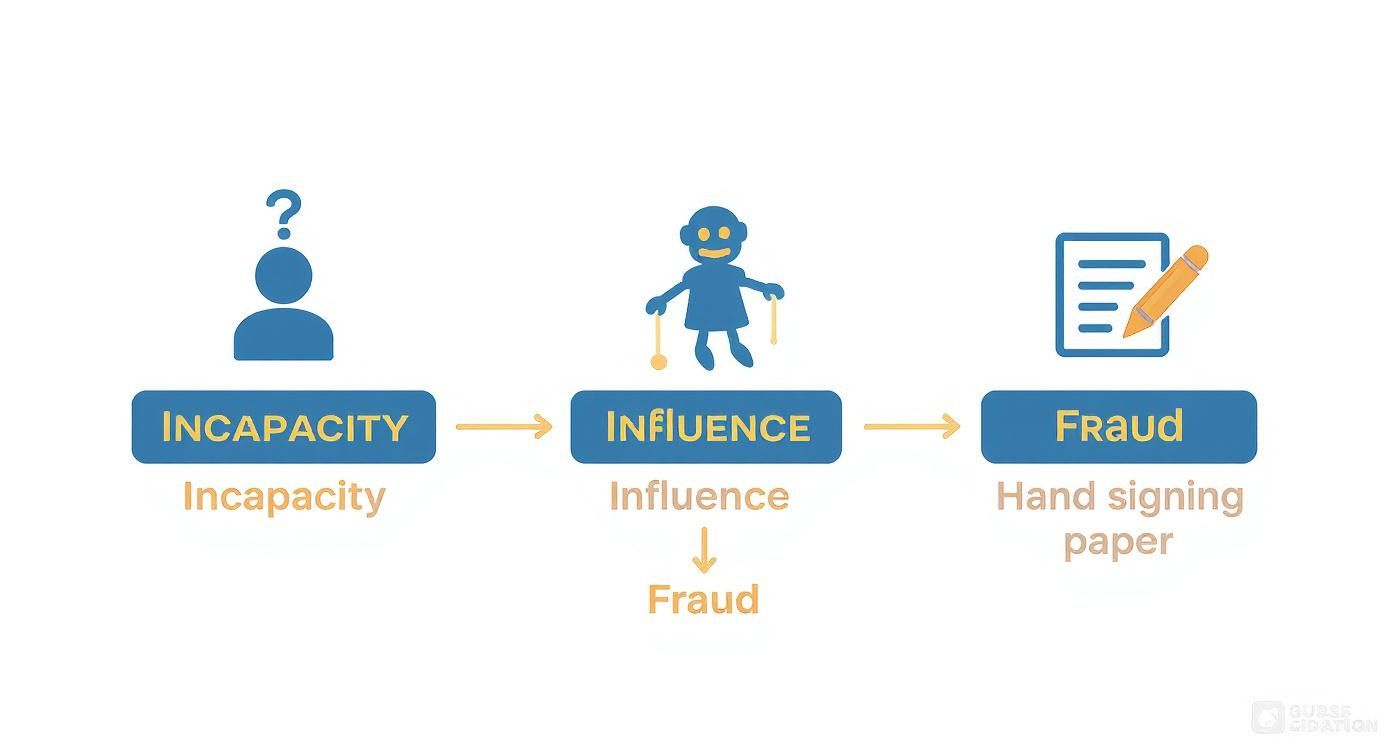
| Common Reasons for Contest | Lack of mental capacity, undue influence, fraud, or the document being improperly signed and witnessed. |
| Who Can File? | An "interested person," which is usually a named beneficiary or a legal heir who would inherit if the trust were invalid. |
| Burden of Proof | The person contesting the trust has the responsibility of providing clear and convincing evidence to support their claim. |
| Legal Venue | Lawsuits are typically filed in the probate court of the county where the settlor lived, such as a Harris County Probate Court. |
Understanding these core components is the first step. At The Law Office of Bryan Fagan, we recognize the emotional and financial weight these situations carry. We're here to offer the clarity and compassionate guidance your family deserves. For personalized advice on your specific circumstances, we invite you to schedule a free consultation with our experienced team.
Who Has the Right to Challenge a Texas Trust?
Not just anyone can walk into a courtroom and question a trust. Before a lawsuit can even begin, the person bringing the challenge must prove they have a legal right to be heard. This critical concept is known as “standing,” and in Texas, it’s the very first hurdle you must clear.

Without standing, a court, like a Montgomery County Probate Court, will dismiss your case—no matter how compelling your evidence might seem. Getting this step right is vital, as it can save your family a world of emotional and financial strain.
Defining an "Interested Person"
So, who qualifies? The Texas Estates Code, Title 3, defines who has standing as an “interested person.” This isn’t a vague idea; it means someone with a direct, personal financial stake in the outcome of the trust. Put simply, if the trust is thrown out, this person must stand to gain something tangible.
This usually includes a few key groups:
- Current Beneficiaries: Anyone named in the current trust who feels their share was unfairly reduced or eliminated has a clear interest.
- Previous Beneficiaries: If you were included in an older version of the trust but were later removed, you likely have standing to argue that the change was improper.
- Legal Heirs: Children, spouses, and other relatives who would inherit under Texas intestacy laws if there were no trust or will at all almost always have standing.
The first step in this process often involves correctly establishing legal next of kin, because you must show the court how you would be financially affected if the trust is set aside.
A Practical Scenario: Understanding Standing
Let's look at a hypothetical scenario to see how this works in real life.
Imagine an elderly father in Houston with a long-standing trust that divides his estate equally among his three children. After a sudden illness, he requires a new live-in caregiver. A few months later, the father passes away. His children are devastated to learn the trust was changed just weeks before his death, leaving nearly the entire estate to the new caregiver and disinheriting them.
In this heartbreaking situation, the three children absolutely have standing to contest the trust. They are both previous beneficiaries and the man's legal heirs. Their direct financial interest is clear—if they successfully invalidate the new trust, they would inherit the estate as originally planned. They have every right to ask a Harris County court to investigate whether their father was mentally competent or if he was pressured into making that change.
Figuring out if you are an "interested person" is the foundational first step. If you suspect a loved one’s trust was improperly altered, confirming your legal standing is the first conversation you should have with an experienced Probate attorney.
Understanding the Legal Grounds for a Trust Contest
When you discover a trust doesn't reflect your loved one's true wishes, it's natural to feel that something is deeply unfair. But in the eyes of a Texas court, feeling hurt or disappointed isn’t enough to overturn a legal document. To formally contest a trust, your challenge must be built on specific, legally recognized grounds.
Think of it as building a case—you need a solid legal foundation, not just a feeling that something went wrong. Texas law, especially the Texas Estates Code, lays out four main reasons a trust can be successfully challenged. Understanding these is the first critical step to determining if you have a realistic path forward.
Lack of Capacity
For a trust to be legally valid, the person who created it—the settlor—must have had the required mental capacity at the very moment they signed the document. This doesn’t mean they needed to be in perfect health. It simply means they had to be clear on a few key things.
This legal standard is called testamentary capacity. The law is specific about what the settlor needed to understand:
- The Action: They were aware they were signing a trust that would distribute their property after their death.
- Their Property: They had a basic understanding of what they owned—their house, bank accounts, major investments, etc.
- Their Beneficiaries: They knew who they were leaving their property to and understood their relationship to them.
Proving a lack of capacity often involves showing how a condition like dementia, Alzheimer's disease, or even the effects of powerful medications prevented them from meeting this standard.
Undue Influence
This is one of the most common reasons for a trust contest, but it is also one of the most difficult to prove. Undue influence occurs when someone in a position of power or trust—like a caregiver or a dominant family member—manipulates the settlor into creating or changing a trust for their own benefit.
This goes beyond simply offering advice or helping an elderly parent. It crosses a line into coercion, where the settlor's own free will is so completely overpowered that the trust ends up reflecting the influencer's wishes, not their own.
A Scenario of Undue Influence
Imagine an elderly widow in Fort Bend County who depends entirely on one of her three children for everything—daily care, rides to the doctor, and companionship. This child begins isolating her from the other siblings, screening her calls, and speaking negatively about them. Just before she passes away, the widow suddenly changes her trust, leaving her entire estate to the caregiver child. The other two children could argue undue influence, claiming their mother's decision wasn't made freely but was the result of relentless pressure and manipulation.
Texas courts will look for tell-tale signs like the settlor's isolation, a sudden and unnatural shift in the estate plan, or a beneficiary who was deeply involved in getting the new trust drafted and signed.
Fraud or Forgery
Fraud in a trust contest always involves deception. There are generally two ways this occurs:
- Fraud in the Execution: This is when the settlor is tricked into signing the trust document. For example, they might have been told they were signing a routine medical form when it was actually an amendment to their trust.
- Fraud in the Inducement: This happens when a beneficiary lies to the settlor to persuade them to change the trust. A classic example is one sibling falsely telling a parent that another sibling has a gambling problem, tricking the parent into disinheriting that child.
Forgery is an even more direct type of fraud. It is simply when someone fakes the settlor’s signature on the trust document without their knowledge. This can often be proven with the help of a handwriting expert. Understanding the responsibilities of trust administration, like those related to selling a house in a trust after death and trustee duties, can help highlight situations where a legal challenge might be necessary.
Improper Execution
In Texas, every legal document has rules for how it must be signed and witnessed to be valid. A trust is no different. While the rules for a trust can be more flexible than for a will, some formalities are essential.
For example, the trust must be in writing and signed by the settlor. If it wasn't signed, or if a required notarization was skipped, the entire document could be invalidated. These "technicality" arguments can be effective because they focus on clear errors in how the document was created. Properly managing and titling assets is a primary reason people go through the trouble of putting a house into a trust in the first place.
Navigating these legal standards is both complex and emotionally draining, and the burden of proof rests on the person challenging the trust. If you believe one of these situations has occurred in your family, your first step should be to discuss the details with a legal professional who knows this area of law.
The Road Ahead: What a Texas Trust Contest Actually Looks Like
Knowing you have solid grounds to challenge a trust is one thing; understanding the legal journey ahead is another. The process of trust litigation isn't a quick sprint. It's a formal, structured process with distinct phases, and getting a clear picture of that roadmap can help ease some of the anxiety and uncertainty your family may be feeling.
For most families, this journey begins with a confidential, compassionate conversation with an experienced probate attorney. This is your chance to share your story, present any evidence you've gathered, and get a professional's honest perspective on your case's strengths and weaknesses. It’s a vital first step for gaining clarity and deciding if this is the right path for you.
Filing the Lawsuit and Watching the Clock
If you and your lawyer agree to move forward, the next step is filing a formal petition with the appropriate Texas court. This often means going to a specialized venue, like a Harris County or Collin County Probate Court, that deals specifically with these disputes. This legal document officially starts the lawsuit. It lays out who you are, why you have the right to challenge the trust (your legal standing), and the specific reasons you believe the trust is invalid.
But here is where things get urgent: the statute of limitations. This isn't a suggestion; it's a firm deadline set by Texas law.
In most situations, you have only two years from the date the person who created the trust (the settlor) passed away to file your contest. If you miss that window, your right to challenge the trust is gone forever, no matter how compelling your evidence might be.
This strict timeline means that acting quickly is essential to protect your rights.
The Discovery Phase: Uncovering the Facts
Once the lawsuit is filed, the "discovery" phase begins. This is usually the longest part of the process. It's where both sides work to gather the evidence they need to build their case. Think of it as a methodical, fact-finding mission.
Discovery typically involves a few key tools:
- Written Interrogatories: These are formal, written questions that the other side must answer under oath.
- Requests for Production: This is a formal demand for relevant documents, such as medical records, bank statements, notes from the drafting attorney, and older versions of the trust.
- Depositions: This is sworn testimony taken outside of court. Key witnesses—like beneficiaries, caregivers, doctors, or the lawyer who wrote the trust—are questioned by attorneys. The testimony is recorded and can be used as evidence later.
The evidence gathered during discovery is aimed at proving—or disproving—the claims of incapacity, undue influence, or fraud. It is the foundation of the entire legal argument.
The details of this process can be overwhelming for families. You can learn more about the specifics of when a trust can be sued in our detailed guide.
Mediation and Trial: The Final Stages
Before a case goes to trial, Texas courts almost always require the parties to try mediation. This is a guided negotiation session led by a neutral third-party mediator. The goal is to find common ground and reach a settlement that everyone can accept, avoiding the significant cost, time, and emotional drain of a trial. Many trust disputes are successfully resolved at this stage.
If mediation is unsuccessful, the case proceeds to trial. At this point, both sides present their evidence and arguments to a judge (and sometimes a jury). After hearing all the testimony, the judge will issue a final, binding decision on the trust's validity. A trial is the culmination of a long journey that requires meticulous preparation and skilled legal representation.
The path to contesting a trust is complicated and lined with procedural and emotional hurdles. Having a compassionate legal expert to guide you can make all the difference.
What to Know About "No-Contest" Clauses
As families explore how to contest a trust, they often encounter a powerful and intimidating roadblock: the no-contest clause. Also known as an in terrorem clause, its purpose is to discourage lawsuits by threatening to completely disinherit any beneficiary who challenges the trust.
Seeing this language can make you feel like your hands are tied, especially when you have legitimate concerns about fraud or undue influence. However, it is critical to understand that in Texas, these clauses are not an absolute barrier to justice.
The "Good Faith and Just Cause" Exception
Thankfully, the Texas Estates Code provides a crucial safeguard for beneficiaries with a valid reason to be suspicious. A no-contest clause is not enforceable if you bring your challenge with “just cause” and in “good faith.” This legal standard is designed to protect people who have a reasonable, evidence-based belief that something is genuinely wrong with the trust.
This means the court will look at the evidence you have before you file the lawsuit. If you can show you had a solid reason to believe the trust was invalid, you can proceed with your contest without automatically forfeiting your inheritance—even if you do not ultimately win the case.
How This Exception Works in a Real-World Scenario
Imagine a daughter is set to inherit $50,000 from her mother's trust, while her brother, who was their mother's primary caregiver, is set to receive the rest of the $1 million estate. The daughter then discovers emails that strongly suggest her brother manipulated their ailing mother into changing the trust.
The trust has a no-contest clause, and she is afraid of losing her $50,000 if she files a lawsuit. Under Texas law, however, because she has strong evidence of undue influence (the emails), she can likely proceed with her challenge in "good faith" and with "just cause," protecting her from the clause's penalty.
Making an Informed Decision
This legal protection is essential. It ensures that legitimate concerns can be heard in court without the chilling effect of a disinheritance threat. It strikes a balance, allowing the person who created the trust to deter frivolous lawsuits while still leaving the door open for valid challenges in places like the Dallas County Probate Courts.
Understanding this nuance is vital. The high costs and challenges of trust litigation are why careful Estate Planning is so important and why these clauses are included—to prevent meritless challenges.
If a no-contest clause is causing you to hesitate, the most important step you can take is to have a frank conversation with an attorney. By carefully evaluating your evidence, we can help you understand whether your claim meets the "good faith" standard, empowering you to make a confident, informed decision about protecting your loved one’s true legacy.
Exploring Alternatives to a Trust Lawsuit
The thought of a long, drawn-out court battle can cause any family anxiety. The emotional toll and financial cost of litigation can create even deeper divides when what you really need is healing. The good news is that a full-blown lawsuit isn't your only option when you have serious questions about a trust. Texas law encourages families to find less combative, more cooperative solutions that can often save both relationships and resources.

These alternatives put the power back in your family’s hands. They offer a private, faster way to find a resolution, steering clear of the public and uncertain nature of a trial in a Bexar County Probate Court. By focusing on finding common ground, many families can work through their disagreements without the crushing weight of a lawsuit.
The Power of Mediation
Before a trust contest goes to trial, most Texas judges will order the parties to try mediation. This is a structured negotiation led by a neutral third party—often a retired judge or a seasoned attorney. The mediator’s role is not to pick a winner or loser but to help everyone communicate clearly and explore compromises.
Mediation provides a confidential space for family members to voice their concerns without judgment. It allows for creative problem-solving that a court cannot order, like reallocating specific meaningful assets or adjusting distributions in a way that feels more equitable to everyone involved.
Crafting a Family Settlement Agreement
When mediation is successful, the result is often a Family Settlement Agreement (FSA). This is a powerful, legally binding contract signed by all interested parties that can modify the trust's terms. The Texas Estates Code strongly favors FSAs because they represent a family’s private decision to resolve its own disputes.
An FSA can be a compassionate and practical tool. It allows a family to honor their loved one's general intentions while correcting what they collectively agree is an unfair or problematic provision, all without a judge's intervention.
This agreement can be used to redistribute property, clarify confusing language, or even appoint a new trustee. To make these negotiations productive, it's helpful to know how different types of property are handled. You can learn more by reviewing information on probate and non-probate assets. Ultimately, an FSA delivers certainty and closure, allowing your family to move forward together.
While these alternatives are often the best path, they require cooperation from everyone involved. If you believe a collaborative approach could work for your family, or if you need to prepare for court-ordered mediation, we are here to help. Schedule a free consultation to discuss how we can guide you toward a peaceful resolution.
Common Questions About Contesting a Trust
When a family is facing a trust dispute, a flood of questions usually follows. It's a stressful time, and getting clear answers is the first step toward finding a path forward. Here are some of the most common concerns we hear from Texas families, with straightforward answers to help you understand what this process involves.
How Long Do I Have to Contest a Trust in Texas?
This is one of the most critical questions, and the answer is simple: time is limited. In most cases, the statute of limitations to challenge a trust in Texas is a firm two years from the date the trust's creator (the settlor) passed away.
However, this is not always a strict rule. Certain situations, like if fraud was involved and only discovered later, can sometimes extend the timeline. Missing this deadline means you permanently lose your right to bring a claim, so it is essential to speak with an attorney right away to determine the exact timeframe for your specific case.
What Kind of Evidence Do I Need to Win?
Winning a trust contest comes down to credible, powerful evidence. The person bringing the challenge has the burden of proving their case, and Texas courts set a high bar. You cannot proceed on feelings alone; you need to build a compelling argument.
The kind of evidence that makes a difference often includes:
- Medical Records: These are invaluable. A physician's notes, diagnoses, or cognitive assessments showing a loved one's mental state was compromised when they signed the trust can be very persuasive.
- Witness Testimony: Statements from people who were present—friends, family, neighbors, or caregivers—can paint a vivid picture for the court. They can speak to a loved one's declining mental state or describe firsthand the manipulation or pressure they witnessed.
- Financial Records: Financial records can tell a story. Bank statements, property transfer records, or unusual transaction histories can often reveal suspicious activity that points to undue influence or fraud.
- Personal Communications: Sometimes the proof is in writing. Emails, text messages, or handwritten letters that show someone was being deceived, coerced, or controlled can be key to a case.
Is Contesting a Trust Expensive?
It is true that trust litigation can be a significant financial undertaking. There are attorney fees, court filing costs, and often expenses for hiring expert witnesses, like medical experts. However, you should not let the fear of cost prevent you from exploring your options.
Many reputable probate law firms, including ours, offer a free initial consultation. This is your chance to lay out the facts of your case and get an honest assessment of its strengths and weaknesses without any financial commitment. In cases where the evidence is particularly strong, an attorney might agree to take the case on a contingency fee basis, which means you only pay legal fees if you win your case. Always have a clear, upfront conversation about all potential costs and payment structures before moving forward.
Carrying the weight of uncertainty about a loved one's trust is a heavy burden, but you don't have to face it alone. The experienced attorneys at The Law Office of Bryan Fagan, PLLC are here to offer the clear guidance and compassionate support your family needs during this difficult time. Schedule a free, no-obligation consultation today to understand your legal options and protect your loved one’s true wishes.