Skip to content
When your family is navigating the path to guardianship for a loved one, the legal landscape can feel complicated and even a little intimidating. One of the first and most important legal requirements you'll likely encounter is the guardianship bond. In Texas, this bond is a crucial financial safeguard that the court puts in place to protect the assets of a vulnerable person. We understand that this process is often born from a place of love and concern, and our goal is to guide you with clarity and care.
If a guardian is appointed to manage someone's finances, Texas law almost always requires them to get a bond before they can officially take charge.
What Is a Guardianship Bond and Why Does Texas Require One?

Let's demystify this. The guardianship bond requirement in Texas can feel like just another hurdle, but its purpose is simple and sound: to protect your loved one. It’s natural to have questions, and our goal is to give you clear, straightforward answers that empower you to act in their best interest.
A Financial Safety Net
The easiest way to understand a guardianship bond is to think of it as a special kind of insurance policy—a financial safety net—for the person under guardianship (the "ward"). It's a formal agreement between three parties: the guardian, the court, and a surety company that issues the bond.
This bond guarantees that if a guardian ever mismanages, makes a serious error, or wrongfully takes the ward’s money, there’s a way to recover those funds. The surety company would step in to repay the estate, ensuring your loved one is made financially whole.
It's important to know this requirement isn't personal. It's not a reflection of the court's trust in you. Instead, it’s a standard, impartial safeguard that Texas courts, like the Harris County Probate Courts, rely on to protect vulnerable citizens. The legal basis for this is spelled out in the Texas Estates Code, Title 3, Subtitle G, which details a guardian's duties.
Why the Bond Is Crucial
The need for this protection is very real. As of August 31, 2017, there were over 50,000 active guardianships across Texas. Thousands more are filed each year, a trend driven by our aging population and a greater awareness of issues like elder financial abuse. This sheer volume is exactly why courts are so strict about protecting a ward's assets.
Grasping the guardianship bond requirement in Texas is one of the first steps toward managing your role with confidence. This is especially true if you're appointed as a Guardian of the Estate, the person directly responsible for all financial matters.
We understand that the financial and emotional challenges of guardianship are immense. Our mission at The Law Office of Bryan Fagan is to guide Texas families through this process with clarity and care, ensuring your loved one's best interests are always protected.
Posting a bond is a key part of a guardian’s fiduciary duty. It’s the moment you formally accept the responsibility to act honestly and carefully with someone else's property. For a deeper dive into this topic, you can review our guide on understanding the bonding requirement for guardians in Texas.
For families in Harris County, Bexar County, or anywhere else in Texas, being told you need to secure a bond can seem daunting. But viewing it as the essential shield it is helps clarify its true purpose. If you have questions about your specific situation, please schedule a free consultation with our team. We can help you understand your obligations and prepare for the road ahead.
Guardianship of the Estate vs. Guardianship of the Person

When people hear the word "guardian," they often imagine a single, all-encompassing role. But in Texas, the law is much more specific. A court doesn't just grant one-size-fits-all authority; instead, it carves out two very distinct roles, each with its own set of responsibilities.
This distinction is the key to understanding what a court will expect from you, especially when it comes to guardianship bonds. The two main types are the Guardian of the Person and the Guardian of the Estate. While it's common for one person to serve in both capacities, a judge can also split these duties between two different people.
Guardian of the Person: The Caretaker
Think of the Guardian of the Person as the primary caretaker. This role is all about managing the ward’s physical and emotional well-being, focusing on personal, non-financial decisions.
Their responsibilities generally include:
- Healthcare Decisions: Choosing doctors, consenting to medical treatments, and overseeing care plans.
- Living Arrangements: Deciding where the ward will live, whether it’s at home, with family, or in a long-term care facility.
- Daily Needs: Making sure the ward has proper food, clothing, and personal care.
- Social Well-Being: Arranging social activities, education, and other forms of personal enrichment.
Because a Guardian of the Person isn't managing bank accounts or property, the risk of financial mismanagement is incredibly low. For this reason, the guardianship bond requirement is often waived entirely or set at a very small, nominal amount.
Guardian of the Estate: The Financial Manager
By contrast, the Guardian of the Estate is appointed to run the ward’s entire financial world. This role comes with significant power over the ward’s money and property, which means it also comes with a high degree of accountability.
Their core duties involve:
- Managing Assets: Taking control of everything from bank accounts and investments to real estate.
- Paying Bills: Ensuring all of the ward's expenses are paid correctly and on time.
- Collecting Income: Handling income sources like Social Security checks, pensions, or rent payments.
- Filing Taxes: Preparing and filing the ward's annual income tax returns.
Since this role involves direct control over assets, a substantial bond is almost always required. The court calculates the bond amount to protect the full value of the ward's estate, creating a critical financial backstop in case anything goes wrong.
The dual structure of guardianship in Texas—distinguishing between guardians of the person and guardians of the estate—reflects a nuanced legal framework that balances protection with practical necessity, a core principle of Title 3, Subtitle G of the Texas Estates Code.
This entire framework is laid out in the Texas Estates Code. Under Texas Estates Code Section 1105.151, a Guardian of the Estate must post a bond before the court will issue their official Letters of Guardianship, unless a very rare exception applies. You can find more details about these statutory rules in the Texas Estates Code.
On the other hand, for a Guardian of the Person with no financial control, courts frequently find that a corporate surety bond isn't necessary. If a bond is required at all, it's often a small personal bond of just a few hundred dollars paid directly to the court clerk.
For families in Harris County, Travis County, and across the state, this distinction is vital. If you're seeking a guardianship simply to make healthcare choices for a parent with dementia, you’ll likely face a minimal bond, if any. But if you also need to manage their life savings, you must be prepared to obtain and pay for a significant surety bond. Understanding these roles from the start helps you plan for the costs and responsibilities ahead, making the entire process more predictable.
How Texas Courts Calculate the Guardianship Bond Amount
When families start the guardianship process, one of the first and most pressing questions is always about the cost. Understanding the guardianship bond requirement in Texas can feel overwhelming, but the way courts calculate the amount isn't a mystery.
It’s a straightforward formula designed with one goal in mind: to fully protect your loved one’s assets. Think of the bond as a financial safety net, sized perfectly to cover the liquid assets the guardian will be responsible for managing.
The Basic Bond Calculation Formula
Judges in Harris County Probate Courts and across Texas don't just pick a number out of thin air. They follow a standard calculation outlined in Section 1105.152 of the Texas Estates Code.
The bond amount must be large enough to cover the total value of the ward’s personal estate, plus one full year of their expected income.
Here’s a simple breakdown of what that includes:
- Value of Personal Property: This covers all liquid assets, like cash sitting in bank accounts, stocks, bonds, and mutual funds. It also accounts for the value of tangible personal items, such as jewelry, art, or other valuable collectibles.
- One Year of Gross Income: This is the total amount of money the ward is projected to receive over a 12-month period. This often includes Social Security benefits, pension payments, annuity checks, and any other form of regular income.
It's important to note that the value of real estate, like the ward's home, is not typically included in this initial bond calculation. That’s because a guardian can’t just sell real estate; they need specific and separate court approval, which acts as its own layer of protection.
A Practical Example of Bond Calculation
Let's see how this plays out in a real-world scenario. Imagine Maria has just been appointed as the Guardian of the Estate for her father, who is living with dementia.
Here’s a look at her father's finances:
- Savings Account: $50,000
- Personal Belongings (estimated value): $5,000
- Annual Social Security Income: $24,000 ($2,000 per month)
A Texas judge would calculate the required bond amount like this:
($50,000 + $5,000) + $24,000 = $79,000
In this situation, the court would most likely order Maria to secure a guardianship bond for $79,000. Remember, Maria doesn’t have to pay this entire amount. Instead, she will pay an annual premium to a surety company, which is usually a small percentage (often 1-2%) of the total bond amount.
Knowing this formula helps you prepare. You can take a preliminary inventory of your loved one’s assets and income to get a realistic estimate of the bond you’ll need, which helps you avoid surprises in court. For many families, these financial duties are a major source of stress, so getting a clear picture early on is a huge relief. To better understand the complete financial picture, you can learn more about the costs associated with guardianship in Texas and what to expect.
At The Law Office of Bryan Fagan, we guide families through these calculations every day. If you have questions about your specific circumstances or need help preparing for the financial side of guardianship, schedule a free consultation with our team. We are here to bring clarity and support to your family.
Why Bonds Are Critical for Guardian Accountability
When a Texas court tells you to post a bond, it’s easy to feel like they don’t trust you. We've seen that look on our clients’ faces countless times. But let us set the record straight: it's not personal.
The guardianship bond requirement in Texas isn't about second-guessing your character. It’s a standard, essential safeguard—think of it as a financial safety net—put in place to protect the person you’ve stepped up to care for. It's the court's way of ensuring there's a backstop if things go wrong.
The Bond as a Financial Backstop
A bond acts as the last line of defense for the ward’s estate, guaranteeing that funds are available to cover any losses from financial mistakes or, in the worst-case scenario, outright theft. This requirement is directly tied to a guardian’s duty to file annual reports and accountings with the court, which are detailed breakdowns of every dollar spent and every decision made.
Unfortunately, keeping up with these reports is a real problem in Texas. A study by the Texas Office of Court Administration was eye-opening. It found that a staggering 39 percent of guardianship cases were non-compliant. More specifically, 27 percent were missing their required annual reports, and a shocking 41 percent never filed the necessary annual accounts. You can dig into the details in the official guardianship compliance findings report.
This is precisely why the bond is so important. If a guardian disappears, stops filing reports, or an accounting shows questionable spending, the court has a direct way to act. A concerned family member—or the court itself—can make a claim against that bond to recover any misused or stolen money.
It’s this mechanism that transforms a guardian’s personal promise into a legally enforceable, financially-backed obligation. It ensures there's a clear path to making the ward financially whole again.
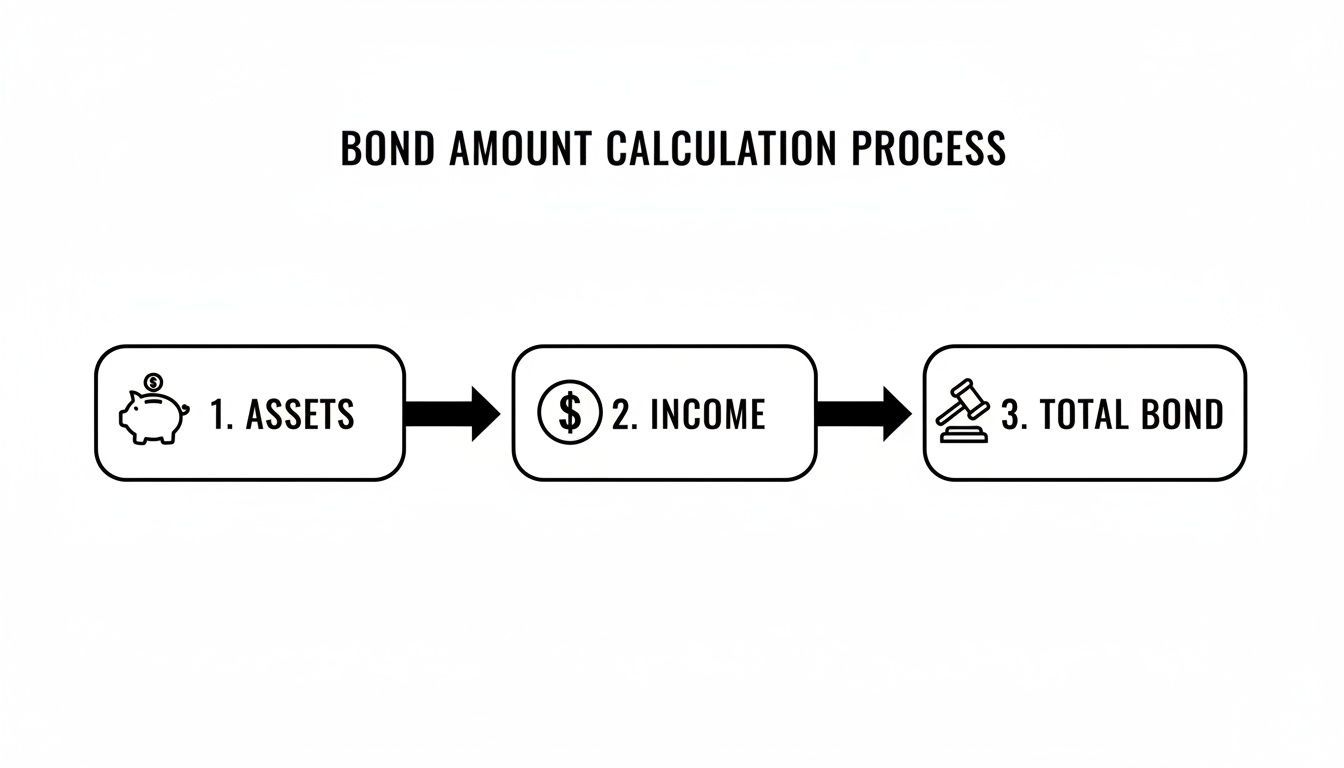
Here's a simple visual of how the court determines the bond amount. It’s a straightforward calculation designed to cover all the ward's liquid assets plus their expected income for one year.
Connecting the Bond to Fiduciary Duty
When you become a guardian, you take on the role of a fiduciary. It’s a legal term with a lot of weight. It means you are legally and ethically bound to act solely in the best interests of the ward. The bond is there to add real teeth to that duty.
Any failure to act properly can have serious consequences, and the bond is often the first line of defense. You can learn more about the fallout in our article on what constitutes a breach of fiduciary duty for a guardian in Texas.
Actions that could easily trigger a claim against your bond include:
- Failing to file the Annual Report, leaving the court in the dark about the ward’s well-being.
- Neglecting to submit the Annual Accounting, which effectively hides how you’re managing the ward’s money.
- Using the ward’s funds for your own personal expenses—even for small, seemingly harmless things.
- Making risky investments that aren't appropriate for protecting someone else's estate.
Once you see the bond as an essential safeguard instead of a burden, its purpose becomes clear. It’s not there to make your life harder; it’s there to give everyone—the court, the family, and especially the ward—peace of mind. It guarantees a financial remedy is always in place, no matter what happens down the road.
How to Get, Reduce, or Waive a Guardianship Bond

When a judge orders you to secure a guardianship bond, the path forward can seem confusing. Where do you even begin? What will it cost? And perhaps most importantly, is there any way to lower the amount or avoid it completely? We know these are major worries for families navigating this process.
The good news is, you have options. While the guardianship bond requirement in Texas is a serious matter, getting a bond is a standard procedure. Better still, certain legal strategies can sometimes reduce the financial burden or even eliminate the need for a bond, saving your loved one's estate a considerable annual expense.
The Process of Obtaining a Surety Bond
For most families, satisfying the court’s order means getting a surety bond from a specialized bonding company. It’s important to understand this isn't a loan; you won't be paying the entire bond amount. Instead, you pay an annual fee, called a premium, in exchange for the surety company's financial guarantee.
The journey to get bonded usually follows these steps:
- Application: You’ll start by filling out an application with a surety company, providing your personal and financial details along with information about the guardianship case.
- Credit and Background Check: The surety company will then run a credit and background check. They’re evaluating you as a financial risk—essentially, they want to see if you are trustworthy and stable.
- Approval and Premium: If approved, the company will offer you a quote for the annual premium. This is typically 1-2% of the total bond amount. For a $100,000 bond, for instance, you could expect to pay between $1,000 and $2,000 each year.
A difficult credit history or a past criminal record can make it very hard, sometimes impossible, to get approved for a bond. If you run into this roadblock, you need to talk to a guardianship attorney right away. There may be other paths forward, like appointing a co-guardian who has a stronger financial profile.
Can the Guardianship Bond Be Reduced or Waived?
While getting a bond waived is uncommon for a Guardian of the Estate, it’s not out of the question. Texas law does offer a few specific ways to lower or do away with this expense, but you have to make a very persuasive argument to the judge. This is where having a strategic legal guide is absolutely essential.
The most powerful and frequently used strategy involves placing limits on your access to the ward’s money.
The whole point of a bond is to protect the assets that a guardian controls. If you can prove to the court that those assets are already protected through another secure method, the judge has the discretion to agree that a large bond is no longer needed.
This brings us to a very effective tool: the court-restricted account.
Using a Restricted Account to Avoid a Bond
Under Texas Estates Code, Section 1105.154, a judge can choose to waive the bond requirement entirely. This can happen if the guardian deposits all of the ward's cash and securities into a special bank account that is restricted by court order.
What does "restricted" mean? It means the money can only be taken out with a specific, written order from the judge. Because the funds are effectively locked down and out of your direct day-to-day control, the risk of mismanagement plummets to virtually zero.
Example Scenario:
A family in Bexar County needs a guardianship for their mother, who has dementia. She has $200,000 in her savings account. A bond for that amount would cost them thousands of dollars every single year.
Their attorney helps them petition the court. They ask for permission to deposit the full $200,000 into a court-restricted bank account. The judge agrees. Since the guardian can't access the funds without court permission, the judge waives the bond requirement completely.
This one move saves the mother's estate a significant annual expense while keeping her assets fully protected. It’s a win-win solution that balances security with cost-effectiveness, but it requires precise legal filings and a clear, compelling presentation to the court.
Navigating these options requires a solid grasp of local probate court rules and procedures, whether you're in Harris County or any other part of Texas. An experienced attorney can help you determine if a restricted account or another bond-reduction strategy is the right fit for your family's unique situation. For help with your Probate or Estate Planning needs, we are here to provide clear guidance.
Taking the Next Step in Your Texas Guardianship Journey
The Texas guardianship process can feel like a heavy weight, especially when your primary focus is on caring for a loved one. Now that we’ve walked through the details of the guardianship bond requirement in Texas, let's pull it all together into a clear path forward. Knowing what comes next can help you approach this journey with confidence.
At its heart, the guardianship bond is a straightforward concept. It’s a safety net for your loved one’s assets. The court decides if a bond is needed and how large it should be based on your role as guardian and the value of the ward’s liquid assets and income.
A Checklist to Get You Started
Feeling prepared can make a world of difference and dramatically reduce the stress of this process. Getting organized ahead of time doesn’t just help you; it shows the court you’re serious and ready to take on your duties responsibly.
Here’s a simple checklist to help you gather your thoughts and documents:
- Inventory All Assets: Start by making a detailed list of your loved one's financial assets. Be sure to include cash in bank accounts, stocks, bonds, and any valuable personal property. This inventory is the starting point for calculating the bond.
- Pinpoint the Guardianship Type: Do you need to be a Guardian of the Person to make healthcare decisions, a Guardian of the Estate to manage finances, or both? The answer will directly shape the bond requirements you’ll face.
- Review Your Financial Standing: Before applying for a surety bond, take an honest look at your own credit and financial history. Bonding companies will review your financial profile before they approve you, so it's good to know where you stand.
We Are Here to Guide You
We know that this is more than a legal procedure; it’s a deeply personal and often emotional journey. The weight of becoming a guardian is immense, and the financial side of things can feel overwhelming. At The Law Office of Bryan Fagan, our commitment is to provide compassionate guidance every step of the way, making sure you feel supported and informed.
This process can be challenging, but you don’t have to face it alone. We see our mission as translating complex legal requirements into practical, understandable steps. This frees you up to focus on what matters most—your family.
For families in Harris, Dallas, Travis, or Bexar counties who need advice tailored to their unique circumstances, the path forward begins with a simple conversation. Once we understand your specific situation, we can explain how the guardianship bond requirement in Texas applies to you and map out the most effective strategies for your family.
Don’t let legal complexities add to your family’s burden. We invite you to schedule a free consultation with our team. Let us help you navigate the path to guardianship with clarity and care, ensuring your loved one gets the protection they deserve.
Frequently Asked Questions About Texas Guardianship Bonds
Even when you understand the basics of a guardianship bond, a lot of specific questions can pop up as you move through the process. The guardianship bond requirement in Texas has its own set of rules and exceptions, so it's only natural to wonder how it all applies to your family's situation. Here are the answers to some of the most common questions we hear.
What If I Can't Qualify for a Surety Bond?
This is a serious and very common concern. If a surety company turns down your bond application because of credit issues or other financial red flags, it can bring the entire guardianship process to a halt.
Don't panic—you may still have options. One practical solution is to propose a co-guardianship with another family member or a trusted friend who can qualify for the bond. The court’s number one priority is protecting the ward. As long as a qualified, bonded individual is officially in place, this kind of arrangement often gets the green light.
How Is the Annual Bond Cost Calculated?
The cost of a guardianship bond isn’t just a one-time fee; it’s an ongoing expense. You’ll need to pay an annual premium to the surety company to keep the bond active for as long as you serve as guardian.
This premium is calculated as a small percentage of the total bond amount, usually somewhere between 0.5% and 2% per year. For a $100,000 bond, for example, you could expect to pay anywhere from $500 to $2,000 each year. The good news is that this is considered a legitimate expense of the guardianship and can be paid from the ward's estate, not out of your own pocket.
It’s crucial to remember that the bond premium is a recurring cost. This is exactly why looking into bond reduction strategies, like setting up a restricted bank account for the ward's funds, can lead to significant long-term savings for your loved one’s estate.
How Does a Family Member Make a Claim?
If a family member or another interested party suspects the guardian is mismanaging money or abusing their position, they have a direct path to take action. The first step is to petition the probate court.
They will need to present evidence showing that the guardian has mishandled funds or otherwise violated their legal duties. If the judge agrees the claim has merit, they can order the surety company to pay back the estate for any documented losses, up to the full amount of the bond. This process creates a powerful safety net and a clear way to hold a guardian accountable.
Do Guardianships for Minors Also Require Bonds?
Yes, they absolutely do, especially when the minor has a significant financial estate. This situation often arises when a child receives a large legal settlement from a personal injury lawsuit or inherits a substantial amount of money.
The court will appoint a Guardian of the Estate specifically to manage these funds until the child legally becomes an adult. Just like with an adult ward, a bond is required to protect the minor’s assets from being misused, ensuring the money is kept safe for their future.
At The Law Office of Bryan Fagan, PLLC, we understand that navigating the complexities of Texas guardianship law is a significant responsibility. If you have more questions or need personalized guidance on your family’s situation, schedule a free consultation with our team.