Skip to content
A Texas guardian isn't personally liable for the ward's debts just because the court appointed them. That protection can change if the guardian signs a personal guarantee, mixes funds, mishandles an authorized claim, or fails to follow a court order when guardianship funds are available.
A daughter may leave a probate hearing with letters of guardianship, then return home to find medical invoices, credit card statements, and collection notices waiting on the kitchen table. Her first fear is often simple: “Did I just become responsible for all of this?” The answer is usually no, but the details matter.
Texas guardianship separates the ward's financial obligations from the guardian's private finances. At the same time, a guardian of the estate has serious fiduciary duties. The guardian must manage the ward's property carefully, follow the court's instructions, preserve records, and avoid acting as though the ward's estate belongs to the guardian.
What Texas Law Actually Says About Guardian Liability
The general rule is reassuring. Appointment alone doesn't make a Texas guardian personally responsible for the ward's debts. Texas law states that a person isn't liable to a third party solely because that person has been appointed guardian of a ward. The rule applies whether the debt involves medical care, housing, credit, or another obligation of the ward's estate. Texas guardianship law under the Estates Code provides the starting point for understanding that separation.
Consider a parent appointed guardian of an adult child's estate. The child had medical bills before the appointment. The parent may need to identify those bills, review them, and address valid claims through the guardianship estate. The parent's personal checking account, however, doesn't become a payment source merely because the parent accepted the appointment.
Practical rule: The ward's debt generally follows the ward's estate. It doesn't automatically follow the guardian home.
The reason for this structure is straightforward. A guardian of the estate acts in a fiduciary role. The guardian manages property that belongs to the ward, rather than receiving ownership of that property. Texas law gives the guardian authority to possess and manage the ward's property, collect debts and claims owed to the ward, and handle legal matters for the estate. That authority doesn't turn the guardian into the ward's personal debtor.
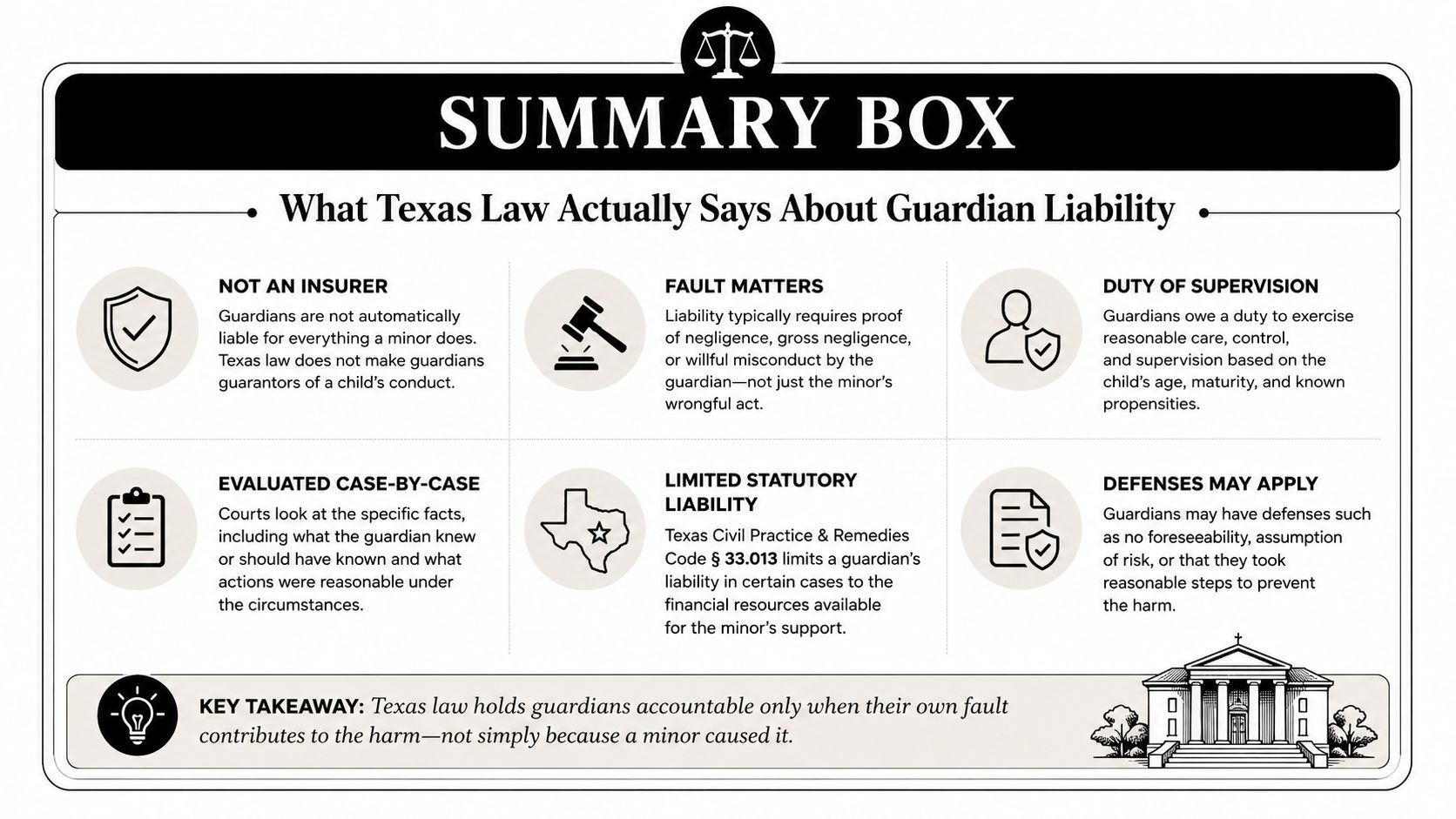
The important qualification is the guardian's own conduct. A guardian may create personal exposure by signing an agreement in an individual capacity, using estate property improperly, paying a claim without authority, or ignoring a court-ordered payment when estate funds are available. The rest of the analysis depends less on the label “guardian” and more on what the guardian signed, did, or failed to do.
The Estates Code Foundation Behind the General Rule
Texas Estates Code Chapter 1164 contains the core protection. It says a person isn't liable to a third party solely because the person was appointed guardian. In plain English, a creditor can't treat the guardian as a guarantor merely because the guardian now manages the ward's affairs.
That rule also fits with the guardian of the estate's defined powers. Texas Estates Code Section 1151.101 allows the guardian to possess and manage the ward's property, collect “all debts, rentals, or claims” due to the ward, enforce obligations in the ward's favor, and bring or defend suits for the ward. The guardian is handling the ward's financial life, but the assets and obligations remain connected to the ward's estate. Guardian of estate responsibilities in Texas explains this administrative role in practical terms.
Authority does not equal ownership
Suppose the ward owes a credit card company. The guardian can review the account and determine how the claim should be handled from estate funds, subject to the Estates Code and court oversight. The guardian's personal savings aren't automatically available to that creditor.
The same distinction applies to money owed to the ward. If someone owes the ward rent or another debt, the guardian may have authority to collect it for the estate. That power doesn't mean the guardian personally owns the recovered money. The funds remain part of the ward's property and must be tracked accordingly.
Texas guardianship law carried this basic framework forward from the former Probate Code into the Estates Code reorganization. Families may therefore encounter older documents or explanations that refer to Probate Code provisions, while current filings and legal analysis use the Estates Code.
The guardian's role is fiduciary
A fiduciary must place the ward's interests ahead of personal convenience or financial gain. That includes maintaining separate records, avoiding conflicts, and seeking direction when a transaction is disputed or outside ordinary administration. Representation in guardianship of the person and estate under the Estates Code is one service described by Texas Guardianship Lawyer.
The result is a two-part rule. The appointment protects the guardian from automatic responsibility for old ward debts. The guardian's actions can create a separate basis for liability.
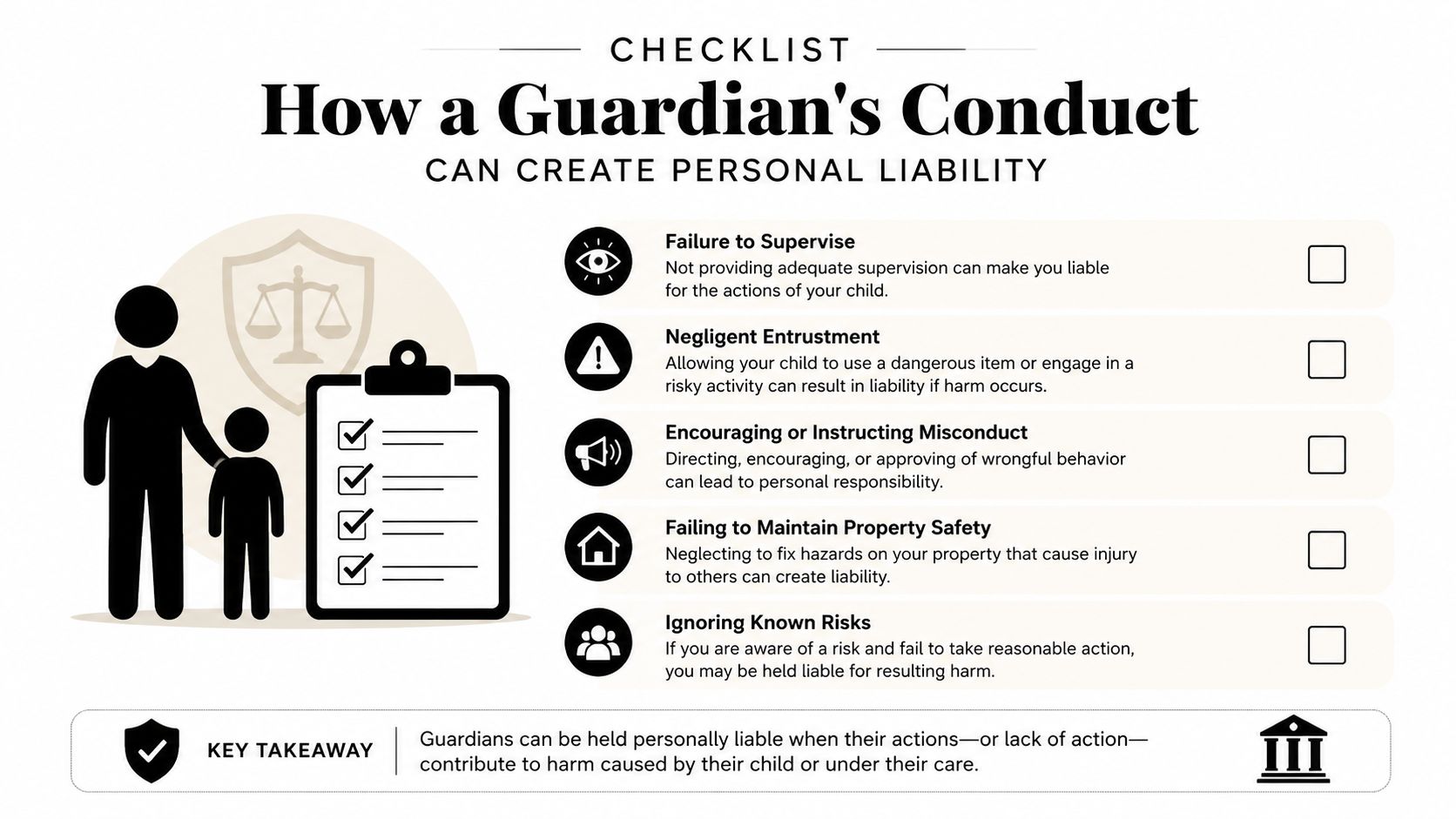
How a Guardian's Conduct Can Create Personal Liability
The protected role has boundaries. A guardian usually stays on the safe side when acting clearly for the ward, using estate property, and following court authority. Personal exposure becomes more likely when the guardian acts personally, mixes financial identities, or disregards an order.
Agreements signed in the guardian's own capacity
A creditor may ask a guardian to sign a nursing home agreement, payment plan, or loan document. The critical question is how the guardian signs. A signature that identifies the person only as guardian for the ward is different from a signature that promises payment personally, serves as a co-borrower, or provides a personal guarantee.
If the guardian agrees to pay from personal funds, that promise may create an ordinary contract obligation separate from the ward's debt. Good intentions don't erase the wording of the document. Before signing, the guardian should confirm the capacity shown beside the signature and ask whether court approval is needed.
For broader background on how fiduciaries can face individual exposure through their conduct, readers may also find this discussion of personal liability for company directors useful as a general comparison, although company-director law isn't Texas guardianship law.
Commingling estate and personal funds
A guardian should never treat the ward's account as a household account. Depositing the guardian's money into the ward's account, paying personal expenses from estate funds, or moving money without clear records can make it difficult to prove which funds belong to whom.
Commingling may also suggest a breach of fiduciary duty. The problem isn't only whether money was ultimately repaid. Poor separation can lead to disputes, court scrutiny, removal, or a claim for losses. Families should maintain a dedicated account for the ward and keep receipts, statements, and written explanations for unusual transactions. Texas guardianship fiduciary duty guidance addresses the importance of careful administration.
Claims paid without proper authority
A guardian may believe a creditor deserves payment and send money quickly to stop collection pressure. That decision can still create trouble if the claim is unjust, disputed, beyond the guardian's authority, or paid without required court approval. The guardian's personal exposure can arise from the act of mishandling estate administration, not from the original debt itself.
Court-ordered claims and the 5% monthly damages rule
Texas law creates a specific enforcement path when a guardian fails to pay a court-ordered claim while guardianship funds are available. Under Texas Estates Code Section 1157.108, the claimant may seek execution against guardianship property after demand. If payment still doesn't occur, the court may require the guardian and bond sureties to show cause.
If the guardian can't show good cause, the court may render judgment against the guardian and sureties for the unpaid amount, interest, and costs. The statute also provides damages at 5% per month, or fraction of a month, for each month payment is neglected after demand. Texas Estates Code Section 1157.108 contains that enforcement mechanism.
The lesson isn't that every unpaid bill threatens the guardian personally. The danger arises when available estate funds, a court order, demand, and noncompliance come together.
A Caregiver Scenario That Shows the Line in Practice
Maria becomes guardian of her father's estate after his declining capacity makes it unsafe for him to manage bills. She finds an old credit card balance and confirms that the account belongs to her father. If she pays a valid, authorized claim from his guardianship account, she's acting within the fiduciary role. The payment doesn't make the balance her personal debt.
A medical provider then offers a new payment plan. The provider asks Maria to co-sign because her father's income is limited. Maria wants to help, but the document says she'll be responsible if the account isn't paid. Signing as a co-borrower or personal guarantor could create an obligation that belongs to Maria, even though the medical care is for her father.
Before signing: Read the capacity language, identify the source of payment, and ask whether the document makes you personally responsible.
A collection agency later sends Maria a demand letter addressed to her as guardian. She shouldn't ignore it, but she also shouldn't assume the letter transforms her into the debtor. She can preserve the letter, identify the claim, compare it with estate records, and determine the proper court process for presenting or disputing the claim.
Later, the court orders payment of a specific claim. The guardianship account has enough money, but Maria delays because she's worried that paying one creditor will leave less for another. This is the point where she needs prompt legal guidance and careful compliance with the order. If she fails to pay after demand while funds are available, the enforcement process under Texas law may reach her and the bond sureties.
The same caregiver is protected in the first decision and potentially exposed in the later ones. The difference is capacity, authority, documentation, and compliance, not whether Maria cares about her father. Personal payment of a bill on her own card can also create confusion, especially if she expects reimbursement without court authority or clear records.
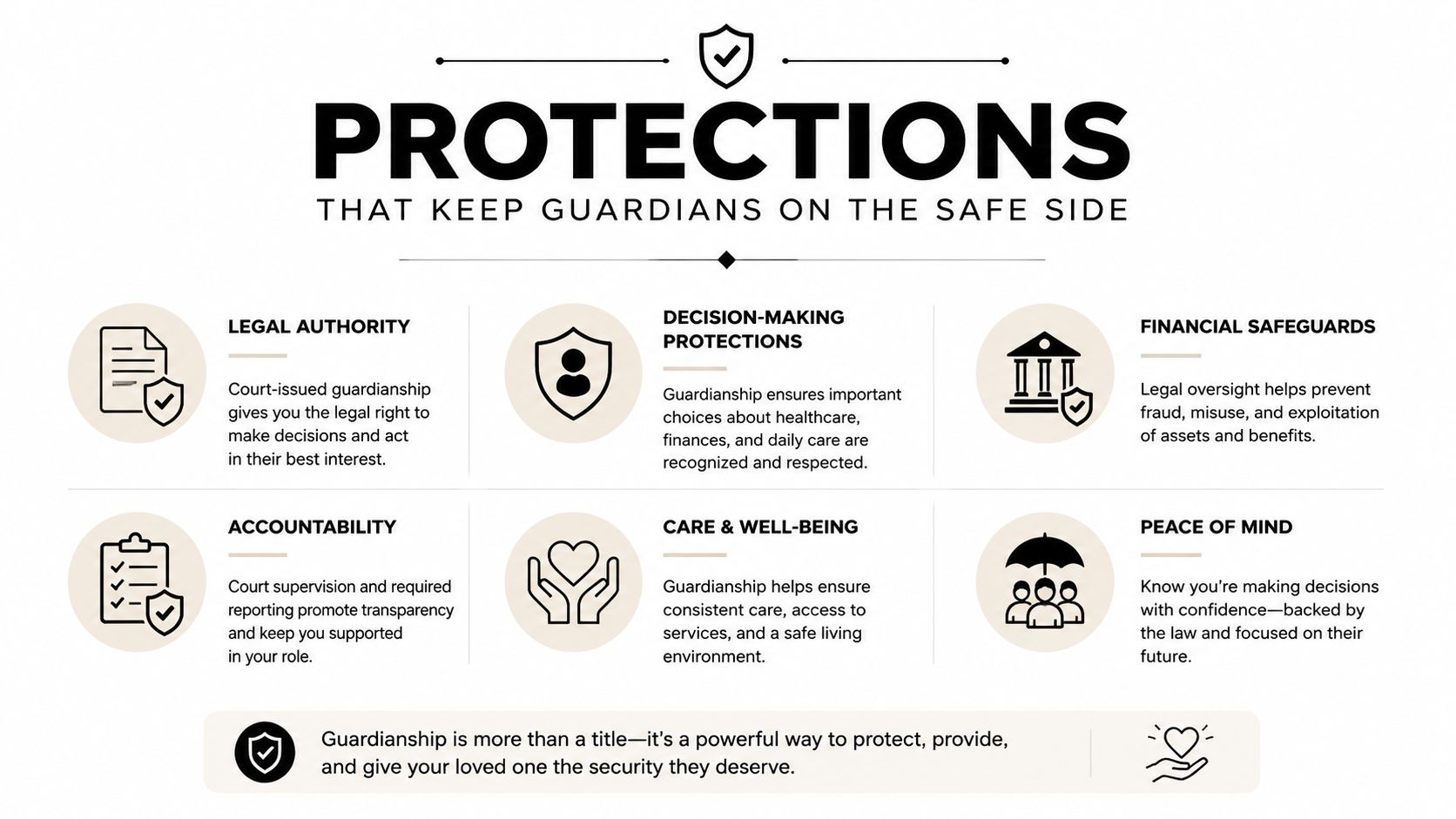
Protections That Keep Guardians on the Safe Side
Texas guardianship includes safeguards designed to protect both the ward and the guardian. These safeguards work best when the guardian treats them as daily operating rules rather than paperwork to complete only when the court asks questions.
Use court authority for major decisions
A guardian should identify transactions that require court approval before acting. Selling property, resolving a disputed claim, or making an unusual expenditure may need direction beyond routine bill payment. If the authority is unclear, asking the probate court before moving money is safer than trying to explain an unauthorized decision later.
Keep the bond and records current
A guardianship bond supports faithful performance of the guardian's official duties. It isn't a substitute for careful conduct, but it provides part of the court's accountability structure. The guardian should understand the bond requirements and avoid actions that could create a claim against the bond.
Separate accounts and complete records provide another layer of protection. Keep the ward's funds away from personal money, save invoices and receipts, and record why each unusual payment was made. A clear record can show that the guardian acted for the ward and within authorized limits.
Treat annual reporting as a protection
Accountings and reports give the court a continuing view of estate activity. They also give the guardian a chance to identify missing records, explain irregular transactions, and correct problems before they become larger disputes.
A practical record system might include:
- Income records: Keep statements showing benefits, deposits, rent, and other money received for the ward.
- Expense records: Match payments to invoices, care needs, court authority, or another documented purpose.
- Decision notes: Write down why a disputed or unusual transaction was made and what approval supported it.
- Separate correspondence: Save creditor letters, responses, settlement proposals, and court notices together.
These habits don't guarantee that every disagreement disappears. They do make it easier to demonstrate that the guardian respected the boundary between fiduciary administration and personal finances.
Practical Steps for Guardians and Concerned Creditors
Guardians and creditors often approach the same debt from opposite directions. The guardian wants to protect the ward's limited resources and avoid personal responsibility. The creditor wants a lawful path to payment. Both interests are easier to manage when the ward's estate is clearly identified.
For families before and after appointment
Before a guardianship hearing, gather creditor statements, bank records, benefit information, recurring bills, and a proposed asset list. Separate what belongs to the proposed ward from what belongs to the family member seeking appointment. This information can help the court understand the estate and can reduce confusion after appointment.
After appointment, work through this sequence:
- Open or confirm a dedicated ward account. Don't use a personal account for estate activity.
- Create an inventory of debts and assets. Include recurring care expenses, disputed bills, and claims owed to the ward.
- Review every signature. Make sure contracts identify you as guardian rather than personally liable.
- Document each payment. Save the bill, proof of payment, and reason for the transaction.
- Seek direction on disputed matters. Ask the court or a guardianship attorney before paying a claim that may be invalid or outside your authority.
- Respond to court orders promptly. If funds are available but payment isn't possible for a specific reason, obtain advice and document the issue immediately.
For creditors and family members
A creditor should generally pursue a valid ward debt against the guardianship estate through the applicable court process. A demand addressed to the guardian doesn't automatically make the guardian personally liable. If the guardian signed a personal guarantee or acted outside the fiduciary role, the analysis may be different.
A family member who suspects misuse should preserve bank statements, payment records, contracts, and court filings. Accusations made without records can intensify family conflict, while organized documentation gives the probate court something concrete to review.
Warning signs: Stop and seek legal advice before signing a guarantee, transferring estate money to yourself, paying a disputed claim, or ignoring a court-ordered payment.
The same caution applies when guardianship is being established. Texas courts can consider limited or less restrictive arrangements, and temporary guardianship under Title 3, Subtitle G, Chapter 1251 is reserved for urgent situations requiring immediate protection. A temporary guardian receives only the powers needed for the emergency and the appointment can last no more than 60 days. Texas guidance on alternatives and temporary guardianship provides useful context for families considering emergency relief, including those appearing in a county probate court such as Harris County Probate Court.
When the Right Answer Is a Conversation With an Attorney
A Texas guardian isn't personally liable for a ward's preexisting debts merely because of the appointment. The guardian's own conduct changes the analysis. Personal guarantees, co-borrowing, commingled accounts, unauthorized payments, negligence in estate transactions, and failure to honor a court-ordered claim when funds are available can create serious exposure.
That distinction can be hard to apply while caring for an aging parent, an adult child with a disability, or a minor who suddenly needs financial protection. A collector may sound urgent, a medical provider may present a document for immediate signature, and a family member may expect the guardian to solve everything personally. A short pause before acting can protect both the ward and the guardian.
Guardianship disputes also deserve early attention. A proposed ward or relative may challenge the need for guardianship, the scope of authority, or the choice of guardian. Families should consider alternatives when appropriate, including arrangements that preserve more of the ward's decision-making rights. If a guardianship is no longer needed, the court may also consider a request to modify or terminate it, supported by the appropriate evidence.
The Law Office of Bryan Fagan, PLLC serves families in Houston, Dallas, Austin, and San Antonio, with virtual consultations available statewide. The firm handles guardianship of the person and estate, temporary or emergency guardianships, contested matters, fiduciary compliance, and related probate and estate planning concerns.
The Law Office of Bryan Fagan, PLLC can review a proposed guarantee, creditor demand, court order, or estate transaction before it creates unnecessary personal risk. Schedule a free consultation to discuss how to keep the ward's debts in the guardianship estate while protecting your own finances.