
Yes, U.S. law lets you file bankruptcy more than once, with no statutory cap, but the issue is when you can get a new discharge. The usual waiting periods are 8 years between Chapter 7 discharges, 2 years between Chapter 13 discharges, and 4 to 6 years when switching chapters.
That's the part that tends to be overlooked. They ask, “Can I file again?” when the better question is, “Will the court let me get the relief I need this time?”
Filing Bankruptcy Again Is Allowed and More Common Than You Think
A second bankruptcy filing is not illegal, unusual, or a sign that you failed. Federal law does not put a lifetime cap on how many times a person can file, but it does control when a fresh discharge is available. That's the difference that matters in real life, because filing a case and getting debt wiped out are related, but they're not the same event.
A lot of people feel embarrassed asking can you file bankruptcy more than once, especially after they already tried once and life knocked them down again. Medical bills, job loss, divorce, a failed payment plan, or new debt can push a family right back to the edge. If you want a plain-English overview before talking with a lawyer, the guide on filing bankruptcy with LifeBack Law Firm gives a useful general discussion of repeat filings.
The numbers show that repeat filings happen often enough to matter. One nationwide study found that 16% of all bankruptcy filings from 1993 to 2002 were repeat filings, and 8% of consumer debtors were repeat filers. More recent research found that nearly 46% of consumer bankruptcy filings in 2023 came from people with a prior bankruptcy record, and most of those refilings happened after a discharged case rather than a dismissed one (Duke scholarship study).
Practical rule: a second filing is possible, but the court still checks whether a new discharge is available yet.
That is why the rest of the decision turns on timing, chapter choice, and what protection you need right now. In Texas, that question also has to fit local practice, local exemptions, and the county where the case is filed.
How the Waiting Periods Between Discharges Work
The waiting rules come from federal bankruptcy law, and they control when a person can receive another discharge. The key point is simple, the clock usually starts from the prior filing date, not from the date the court entered the discharge. That difference catches a lot of people off guard, because they assume the discharge date is the marker and build their next case around the wrong timeline.
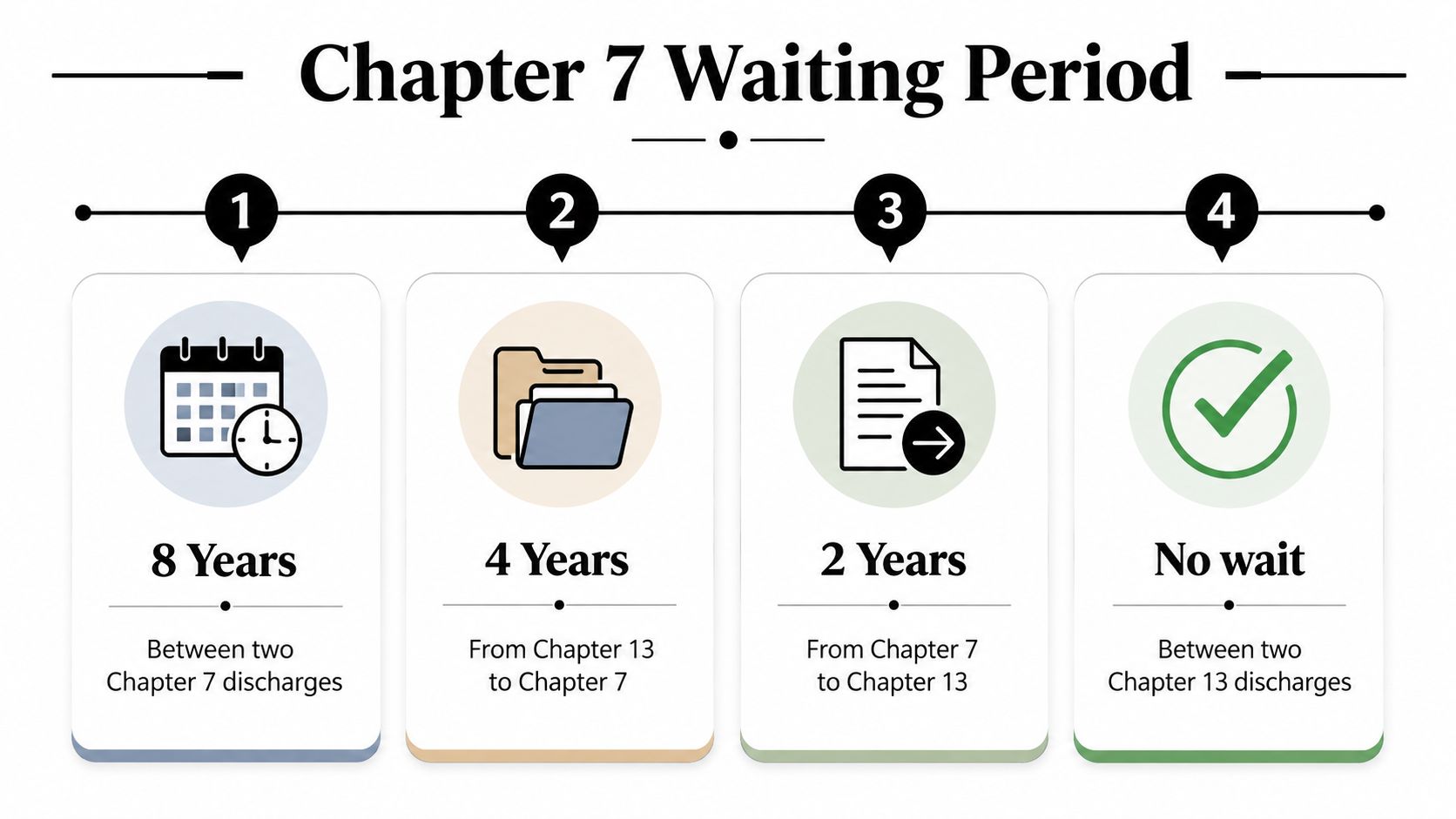
Once you separate the filing date from the discharge date, the timing rules make more sense. A new Chapter 7 discharge normally requires 8 years between Chapter 7 discharges. A Chapter 13 discharge generally requires 2 years between Chapter 13 cases, and a Chapter 13 case after Chapter 7 usually needs 4 years before a new discharge can be entered. A Chapter 7 after Chapter 13 is usually up to 6 years, unless the earlier Chapter 13 met certain repayment conditions (Debt.org overview, LendingTree explanation).
Dismissed cases follow a different track. If a prior case was dismissed, some refilings can happen right away, but a 180-day bar can apply depending on why the dismissal happened. Courts and lawyers look closely at the reason for the dismissal before deciding whether a new case can be filed now. A guide from Texas Law Help explains that the dismissal history can change the timing rules in a repeat filing.
A second case may be allowed even when a new discharge is still out of reach.
That is the part that confuses a lot of people. You may be able to file again to get immediate protection, while still having to wait for discharge eligibility to catch up.
Chapter 7 Versus Chapter 13 on a Second Filing
The chapter choice changes the whole strategy on a repeat case. Chapter 7 is usually the cleaner wipeout, while Chapter 13 is often the better tool when a person needs time to catch up on a home or vehicle and protect assets through a repayment plan. On a second filing, that difference gets even sharper because timing bars and stay limits can change what each chapter can do.
| Factor | Chapter 7 | Chapter 13 |
|---|---|---|
| Main goal | Eliminate eligible unsecured debt | Pay back part of debt through a plan |
| Repeat-filing timing | Often limited by the 8-year rule after a prior Chapter 7 discharge | Often available sooner in some chapter combinations, but discharge timing still controls |
| Assets | Nonexempt assets can matter more | More flexibility to deal with property and arrears |
| Mortgage or car arrears | Less suited for curing missed payments | Often used to catch up over time |
| Best fit | Cleaner fresh start when discharge is available | A structured fix when a homeowner needs breathing room |
If a prior case already used up the simpler route, Chapter 13 can become the practical choice. That is especially true when a Texas homeowner needs to stop a foreclosure, save a car, or spread arrears out through a court-approved plan.
A family member fighting over capacity or decision-making may also run into the same theme in a different legal setting, where Contesting a Guardianship in Texas shows how a proposed ward or relative can challenge a guardianship. Different field, same lesson, timing and procedure control the result.
Bottom line: if you can't get a fresh Chapter 7 discharge yet, Chapter 13 may still solve the immediate problem.
That's why repeat filers shouldn't start with the chapter label. They should start with the debt problem they're trying to solve, then match the chapter to the timing rules and the property they're trying to keep.
The Automatic Stay on a Second Case
The automatic stay is often the first protection people notice. Once a bankruptcy case is filed, collection calls, lawsuits, garnishments, and many foreclosure steps usually stop right away. In a second filing, that protection can still matter even if a new discharge is still months or years away.

The catch is that repeat filings can limit the stay. If a filer had prior cases dismissed within the relevant time frame, the stay can last only 30 days or be removed unless the court extends it. A dismissal within the past 180 days can also trigger a bar in some situations, so a second filing calls for a close look at the earlier case history.
That review matters because a second case can still buy time. If a foreclosure sale is close, or a creditor is moving on a bank levy, even a limited stay may slow the process long enough to regroup. A court can move quickly in family-law settings too, which is why readers comparing emergency relief often look at Temporary and Emergency Guardianship in Texas for a plain example of fast court action when harm is immediate.
If the question is whether the second filing will stop the bleeding, the stay can matter more than the discharge. An attorney has to check both at the same time, because a case that cannot erase debt yet may still slow collection enough to protect the family.
A Texas Scenario When Life Changes After a First Discharge
Maria lives in Houston. She filed Chapter 7 in 2018, got her discharge, and rebuilt as best she could. Then life changed again, with cancer-related medical debt and credit card balances growing while she tried to stay afloat. That is a real repeat filing question, not a hypothetical one.
If Maria asks whether she can file Chapter 7 again, the first issue is the 8-year clock from her prior Chapter 7 filing date. If that clock has not run, she may still be able to file, but she may not be able to receive a new discharge yet. The question then shifts from “Can I file?” to “What protection do I need now, and what can the court give me at this stage?”
What changes in a second case
Maria also has to look at income, household size, and whether Chapter 13 would help her organize the debt instead of hoping for a fresh wipeout. If she owns a home in Harris County and is behind on payments, Chapter 13 might give her room to protect the house and work on arrears. If her unsecured debt is the bigger problem and she is still inside the Chapter 7 timing bar, she may need to wait or consider another path.
A Texas bankruptcy lawyer would also look at exemptions and exemptions already used, because property protection can look different in a second case. For a family dealing with debt and aging loved ones at the same time, estate questions sometimes overlap with probate issues and what happens when someone dies with debt.
The right answer is rarely “file again immediately” or “wait forever.” It is usually a timing decision tied to the debt, the house, and the court's rules.
A lawyer's job becomes practical at that point. Maria needs someone to map the old case, the new debt, and the protection she needs most before she chooses a chapter.
Texas-Specific Considerations for Repeat Filers
Federal law sets the waiting periods, but the case still runs through a Texas bankruptcy court, and local practice matters. Texas has strong exemption rules, including the homestead protection and personal property allowances under the Texas Property Code, which can shape what a repeat filer can keep. If you want a deeper look at how the homestead rule fits into a Texas filing, the page on homestead exemption in Texas is a helpful companion.
The bankruptcy court you file in depends on your county. Texas cases are heard in the Northern, Southern, Eastern, or Western District of Texas, and repeat filers in places like Harris County, Dallas County, and Travis County can see different trustee habits and local standing practices. That does not change federal discharge timing, but it can change how the case feels day to day.

Before refiling, a Texas debtor should gather the prior bankruptcy petition, discharge order, dismissal order if there was one, recent pay stubs, tax returns, a current list of debts, and a current property inventory. If the person is also dealing with family incapacity or long-term care issues, Texas courts require families to think about less restrictive options before guardianship, which is why Less Restrictive Alternatives to Guardianship in Texas often comes up in the same planning conversation.
If you're in Texas, the safest approach is to treat the old case as part of the new one. The court will.
Strategic Options When You Cannot Get a New Discharge Yet
Sometimes the right answer is to file later, not right away. If the discharge clock has not opened yet, a Texas attorney may look at conversion, reaffirmation, dismissal strategy, or waiting while other debt tools do the work. The best path depends on what property you are trying to protect, what is exposed, and what the last case did to your options.
A Bexar County filer might find this out the hard way. Say someone filed Chapter 13, then dismissed it too early because the plan payment felt too tight. If that dismissal triggered the 180-day re-filing bar, the next move is not panic, it is careful planning.
Common paths a lawyer may weigh
- Convert the case: A Chapter 7 can sometimes be converted to Chapter 13 if the filer now needs time to catch up on a home or vehicle.
- Reaffirm a debt: If keeping collateral matters more than wiping out every debt, reaffirmation can preserve a specific obligation.
- Wait out the clock: Sometimes the safest move is to let the discharge period run while using budget changes or creditor negotiations in the meantime.
- Reset after dismissal: A voluntary dismissal may fit some situations, but it can also create a short-term filing bar.
A separate concern is asset protection. If you are trying to shield property before a second case, a lawyer may review the same kind of planning that families use in other legal settings, including Contesting a Guardianship in Texas when there is a dispute about who should control another person's affairs, or an asset protection attorney when the concern is how to structure and safeguard property before filing.
If the first case ended badly, the next move should be deliberate. A second filing can still help, but only if it fits the timing bar and the goal.
What a Second Filing Does to Credit, Assets, and Your Next Steps
A repeat bankruptcy shows up on credit reporting, and that's part of the trade-off. A Chapter 7 can remain on a credit report for 10 years, while Chapter 13 can remain for 7 years from the filing date, according to the reference material in the brief. That doesn't mean the case controls your financial life forever, but it does mean a second filing deserves a clear plan, not just relief in the moment.
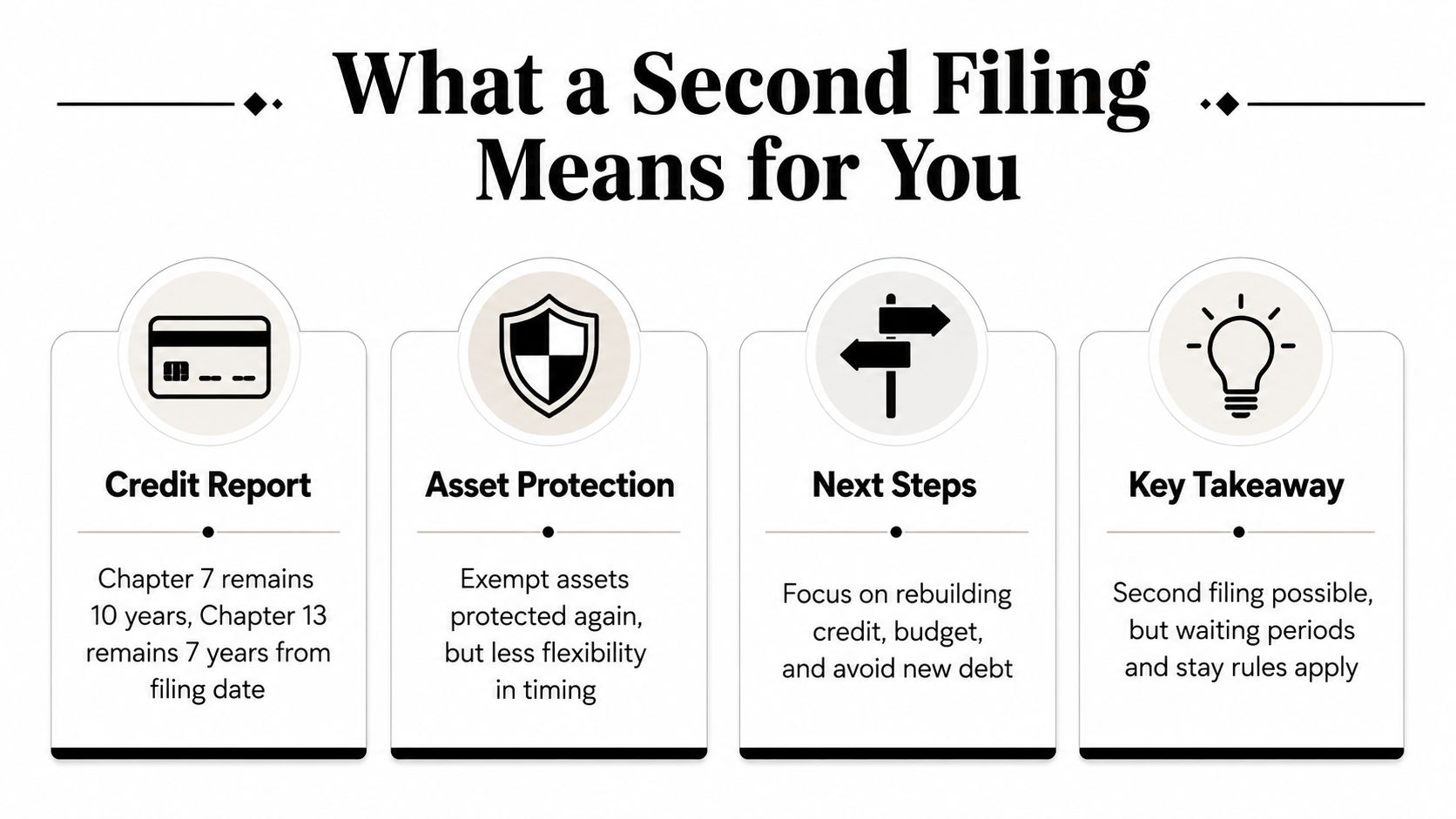
The second time around, asset protection still matters, but timing rules can make the case less flexible than the first one. Exempt property can still be protected, yet the court will pay close attention to whether the filing is mainly about the stay, the discharge, or both. For readers working on post-bankruptcy rebuilding, the credit cards and bad credit guide can help frame how lenders think about risk after a rough credit history.
What to do next
- Check the discharge clock: Find the filing date of your last case and compare it to the chapter you want now.
- Review the stay risk: If creditors are moving fast, the stay may matter more than discharge timing.
- Match the chapter to the problem: Choose the path that fits your house, car, medical debt, or unsecured balances.
- Bring the old paperwork: The prior petition, orders, and dismissal history tell the court what happened before.
- Get local advice: Texas filing districts and county practice can change the details.
For families who also handle probate and elder planning, debt questions often connect to later-life planning, especially around what happens when someone dies with debt. The right answer is usually a mix of bankruptcy timing, property protection, and household planning.
If you're dealing with a second filing in Texas, the Law Office of Bryan Fagan, PLLC can review your prior case, explain your discharge timing, and help you figure out whether Chapter 7, Chapter 13, or a different strategy makes sense for your county and your goals. Visit Law Office of Bryan Fagan, PLLC to schedule a free consultation and get clear guidance before you file again.