Skip to content
Realizing a loved one can no longer make their own decisions is an overwhelming, emotional moment. You know they need protection, and you're the one stepping up to provide it. Your first, and most important, move is finding the right legal partner. For most Texas families, that search starts with a simple phrase: “guardianship attorney near me.” That local focus is more than a convenience—it’s a critical strategy for navigating Texas's complex guardianship laws with clarity and care.
Why a Local Texas Guardianship Attorney is Essential
When you’re trying to help a family member who is incapacitated, the legal maze can feel isolating and confusing. The Texas Estates Code, especially Title 3, Subtitle G, lays out a very specific roadmap for establishing guardianship, but it’s not written for the average person to easily understand. A local attorney is more than just a legal navigator; they are your guide and advocate, helping your family through a system that can often feel cold and impersonal.
There are very real, practical advantages to hiring an attorney who is physically close. Guardianship cases are deeply personal, and you'll want to have face-to-face meetings to build trust and discuss sensitive family matters. A local lawyer is simply easier to meet with for those vital conversations.
Navigating Local Court Procedures
Here’s something many families don’t realize: every county in Texas has its own unique way of handling guardianship cases. The probate courts have their own specific procedures, filing preferences, and unwritten rules.
An attorney who is in the Harris County Probate Courts every week, or regularly handles cases in Fort Bend or Montgomery County, knows the landscape. They understand the judges, the court staff, and the specific filing quirks that could otherwise delay your case. This local knowledge is invaluable—it helps prevent frustrating setbacks and ensures your application moves forward as smoothly as possible during an already stressful time.
A guardianship, according to the Texas Estates Code, is a legal tool designed to protect an incapacitated person's well-being and manage their financial affairs. It is a protective shield for someone who can no longer do it for themselves, and the court's primary focus is always on the best interest of that individual.
Building a Relationship of Trust
The bond you form with your attorney in a guardianship case is incredibly personal. You are placing the future and well-being of someone you love in their hands. A local attorney can offer the hands-on, personalized attention these cases truly need, which can make a difficult time feel more manageable.
Let’s be clear: the need for this kind of specialized legal help is on the rise. As our population ages, the demand for elder law services, including guardianship, is growing. This makes it even more important to find a qualified professional you can count on to protect your family. You can find more industry research on this growing legal field if you’re interested.
The advantages of hiring local counsel are too significant to ignore. The right attorney provides familiarity with the courts, procedural efficiency, and a personal connection that builds trust.
Why a Local Texas Guardianship Attorney Matters
| Benefit | Why It's Important for Your Case |
|---|---|
| Courtroom Familiarity | Knows the specific judges, clerks, and procedures of your county's probate court. |
| Procedural Efficiency | Avoids common filing mistakes and administrative delays that can slow down your case. |
| Personal Accessibility | Allows for in-person meetings to discuss sensitive details and build a stronger relationship. |
| Community Reputation | Has an established reputation with the local legal community, which can be beneficial. |
| Cost-Effectiveness | Can reduce travel time and associated costs that might be billed by an out-of-town lawyer. |
Ultimately, choosing a local expert isn't just about legal precision; it's about giving your family peace of mind during a stressful period.
For a more detailed look at the specific rules that will shape your case, you can learn more about the guardianship laws in Texas in our detailed guide. At The Law Office of Bryan Fagan, we're here to provide the compassionate, local guidance your family deserves. Schedule a free consultation today to talk about your situation.
Your Search Strategy For Finding a Local Lawyer
Starting the hunt for a "guardianship attorney near me" can feel like another heavy weight on your shoulders, especially when you're already worried about a loved one. But having a clear strategy can turn a daunting task into a manageable, focused plan. It’s about moving beyond a simple online search and using a few different angles to build a reliable list of potential legal partners.
This visual guide shows the path most families take—from that first moment of concern to getting real, professional guidance.
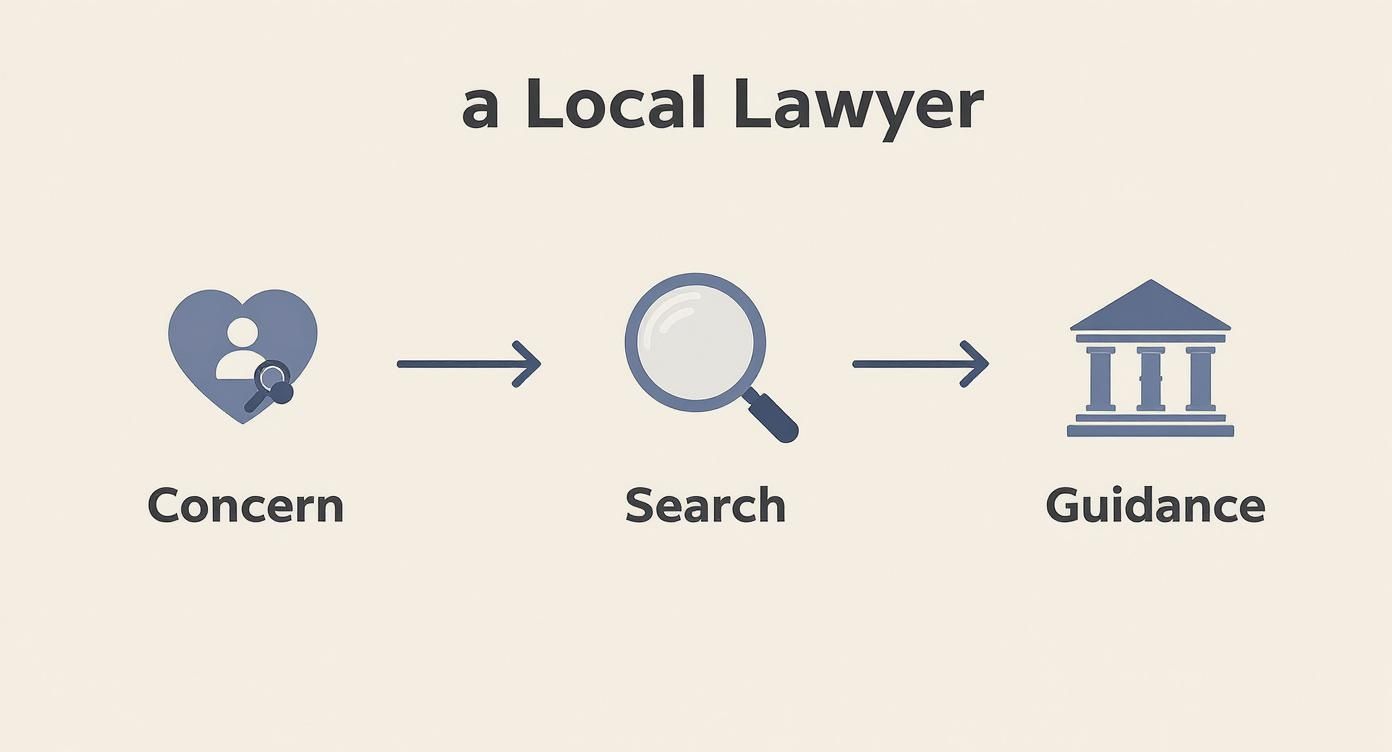
It almost always begins with a personal worry about someone you care for. That worry then turns into an active search for help, which hopefully ends with a consultation where you finally get clarity and a path forward.
Starting Your Search With Trusted Resources
While a quick Google search is a decent starting point, the most effective strategies tap into established networks and official resources. This is the best way to filter out general practitioners and hone in on attorneys who are true specialists in Texas guardianship law.
Here are some of the best places to begin building your list:
- State Bar of Texas: The official attorney search tool should be your first stop. You can filter by practice area—look for "Guardianship" or "Probate & Estate Administration"—and location to find licensed attorneys who are in good standing.
- Local Bar Associations: Groups like the Houston Bar Association or Dallas Bar Association often have referral services. These can connect you with members who have verified experience in guardianship cases right in your area.
- Trusted Professional Referrals: Don’t underestimate the power of a good recommendation. Ask for referrals from other professionals who already understand your family's situation, like your loved one's doctor, a financial advisor, or an elder care manager.
As you get deeper into your search, you might find that broader strategies for finding a local law firm can also be helpful. The core ideas—vetting credentials, checking reviews, and prioritizing local expertise—are universal.
Putting The Strategy Into Action
Let’s walk through a realistic scenario. Imagine a family in Houston is growing concerned about their aging father. He has dementia, has started wandering, and is making questionable financial decisions. They know they need to act, perhaps quickly.
Their search terms become more specific: "emergency guardianship attorney Houston" or "incapacity lawyer Harris County." Using the State Bar website, they find three local attorneys whose practices are heavily focused on guardianship. At the same time, their father's geriatric care manager gives them the name of a lawyer she’s worked with and trusts. Just like that, in a few focused steps, they’ve built a solid list of four qualified candidates to start calling.
A targeted search is so much more effective than a broad one. By zeroing in on your specific county—be it Brazoria, Montgomery, or Harris—you find attorneys who know the local probate court system, the judges, and the unique procedures inside and out.
At The Law Office of Bryan Fagan, we serve families all across Texas, bringing the localized expertise these sensitive cases demand. You can see the specific communities we work in by exploring the areas we serve. Contact us for a free, no-obligation consultation to discuss your family’s needs with a compassionate legal professional.
Evaluating an Attorney's Guardianship Experience
Once you have a shortlist of potential attorneys, it's time to shift gears. You're no longer just collecting names; you're vetting true expertise. In Texas law, guardianship is a highly specialized field. This isn't a job for a general practitioner. You need an attorney who dedicates a significant part of their practice to probate and guardianship matters.
A lawyer who handles these cases occasionally might know the basics, but a genuine specialist lives and breathes this area of law. They're intimately familiar with the nuances of the Texas Estates Code, especially Title 3, which governs the entire guardianship process. That specialized knowledge is your family’s single greatest asset.
Distinguishing a Specialist from a Generalist
Think of it like seeing a doctor. For a sprained ankle, your family physician is perfect. But for complex heart surgery, you’d want a cardiologist. The same logic applies here. A dedicated guardianship attorney understands the specific, often emotional, challenges your family could face, from presenting complex medical evidence to handling potential guardianship disputes among relatives.
Their focused experience means they have a track record of handling cases just like yours. Whether your situation seems straightforward or is already escalating into a contested guardianship, they’ve likely seen it before and know how to prepare for every possibility.
The Power of Local Court Experience
An attorney’s experience isn't just about knowing the law; it’s about knowing the local courts. A lawyer who frequently practices in the Harris County Probate Courts, for example, has a deep understanding of the specific procedures, preferences, and expectations of the judges there.
This local insight can be invaluable, preventing unnecessary delays and ensuring your case is presented in the most effective way possible.
The role of attorneys in guardianship is essential for protecting the rights of vulnerable people. Because this area of law is dominated by small and medium-sized firms rather than large corporations, attorneys must be highly skilled at managing detailed legal issues to stand out. Learn more about the market for estate lawyers on ibisworld.com.
This direct, local experience translates into a smoother, more efficient process for your family during what is already an incredibly stressful time.
Questions to Ask a Potential Attorney
During your initial consultations, remember that you are interviewing the attorney for a critical role in your family's life. Don't hesitate to ask direct questions about their specific experience. This is your chance to truly understand if they're the right fit.
Here is a practical checklist of questions to help you gauge their expertise:
- How much of your practice is dedicated to guardianship and probate law? You're looking for an answer that shows this is a primary focus, not just a service they offer on the side.
- How many guardianship cases have you handled in my specific county? This tells you about their familiarity with your local probate court system.
- Have you managed cases with family disputes or contested guardianships before? Even if you don't expect a fight, you want an attorney who is prepared for one.
- What is your experience with alternatives to guardianship? A great attorney will have explored less restrictive options first, showing they prioritize the proposed ward's autonomy.
To help you keep track during your calls and meetings, we've put together a quick checklist.
Key Attorney Qualities Checklist
This table is a handy reference to use as you speak with different lawyers. It will help you compare candidates and ensure you're covering all the important bases.
| Quality/Credential | What to Ask or Look For |
|---|---|
| Specialization | "What percentage of your cases are focused on guardianship and probate?" Look for attorneys who dedicate 50% or more to it. |
| Local Court Familiarity | "How often do you appear in the probate courts in [Your County]?" Frequent appearances indicate familiarity with local procedures. |
| Contested Case Experience | "Can you share a non-confidential example of a contested guardianship you handled?" Their answer reveals their strategic approach. |
| Knowledge of Alternatives | "When would you recommend a less restrictive alternative, like a power of attorney, over a guardianship?" |
| Clear Communication Style | Do they explain complex legal terms in a way you can understand? Do they listen patiently to your concerns? |
| Transparent Fee Structure | "Can you explain your billing process? What are the estimated total costs we should anticipate?" |
Finding the right legal partner is about more than just credentials; it's about finding an expert you can trust to guide you through this journey with both legal precision and genuine compassion.
Your search for a "guardianship attorney near me" should lead you to a professional partner who offers both. At The Law Office of Bryan Fagan, we pride ourselves on our focused experience and commitment to families. Schedule a free consultation today to discuss your family’s situation and learn how we can help protect your loved one.
How to Prepare for Your First Consultation
That first meeting with a potential guardianship attorney is your best chance to see if they're the right fit for your family. It's more than just a Q&A session; it's an interview. Walking in prepared can make all the difference, helping you feel confident and make a clear-headed decision for your loved one.

Remember, this is a two-way street. While the attorney is assessing your situation, you are evaluating them for a critical role. By getting your key documents and questions ready beforehand, you ensure the conversation stays focused and productive.
Gathering Your Essential Documents
Showing up with the right paperwork allows an attorney to give you specific, meaningful advice right from the start. It paints a much clearer picture of your case's urgency and complexity. Try to bring as much of the following as you can:
- Medical Records: A letter or report from a physician is crucial. This document needs to detail your loved one’s diagnosis and explain exactly why they are considered incapacitated and unable to manage their own health or financial affairs.
- List of Family Members: Put together a simple list of names and current contact information for all immediate relatives—spouse, children, parents, and siblings. Texas law requires that these family members be notified about the guardianship proceeding.
- Summary of Assets and Debts: A basic rundown of your loved one's property, sources of income, and major debts helps the attorney understand the scope of a potential "guardianship of the estate."
Having this information ready doesn't just save time; it shows you're organized and serious, which is a great way to start a professional relationship.
Asking Insightful Questions
Of course, you'll discuss fees, but your real goal is to get a feel for the attorney’s approach, philosophy, and experience. The right questions can reveal whether their style is a good match for your family's needs.
A productive consultation goes beyond legal facts. It should give you a sense of the attorney’s communication style, their compassion for your family's emotional challenges, and their strategic thinking for your specific case.
To get a deeper understanding, think about asking questions like these:
- What is your primary communication method? Do they prefer email, phone calls, or scheduled meetings? Knowing this sets clear expectations for how you'll receive updates.
- How would you handle a disagreement among our family members? An experienced attorney will have strategies for mediating disputes that often arise in these sensitive cases.
- What alternatives to guardianship should we consider? A good lawyer won't just push you into guardianship. They'll discuss less restrictive options first, like supported decision-making agreements or powers of attorney, to ensure this is truly the necessary path.
By asking these kinds of questions, you can better gauge their expertise and see if they are the compassionate guide your family needs. Preparation is everything. For a complete overview of the journey ahead, you can explore our detailed guide on how to file for guardianship in Texas. At The Law Office of Bryan Fagan, we're ready to answer all your questions. Schedule a free consultation to get personalized guidance for your family’s unique situation.
The Importance of Compassion and Communication
Legal skill is the price of entry. But in a deeply personal matter like guardianship, it’s only half the battle. Empathy and clear communication are just as vital, if not more so.
When you're searching for a "guardianship attorney near me," you aren't just hiring a legal technician. You're choosing a guide for what will likely be one of your family’s most difficult chapters.
Remember, this professional relationship could last for years, involving ongoing court filings, annual reports, and sensitive family discussions. Finding someone you genuinely trust and feel comfortable with is absolutely essential for your long-term peace of mind.
Gauging an Attorney’s Demeanor
That initial consultation is your best opportunity to assess the "human" side of a lawyer. Pay close attention to how they interact with you from the moment you meet.
A great guardianship lawyer has a knack for translating complex sections of the Texas Estates Code into plain English you can understand. They should be patient, encouraging you to ask questions—no matter how small—and making you feel heard. The emotional and financial weight of this process is immense, and you need a partner who understands that.
Watch for the subtle red flags. An attorney who seems rushed, constantly checks their watch, interrupts you, or dismisses your concerns with overly simplistic answers is not the right fit. These behaviors are strong indicators they won’t provide the supportive guidance your family needs down the road.
The best attorneys have honed these softer skills alongside their legal knowledge. As the legal market evolves, the focus is shifting to client-centric practices, which is critical when working with families in crisis. You can explore more about the skills modern lawyers need on clio.com.
Why Their Communication Style Matters
Clear, consistent communication is the bedrock of a good attorney-client relationship. In a guardianship case, you'll be getting important updates, making critical decisions, and needing straightforward explanations every step of the way.
Think about these key communication points:
- Clarity Over Jargon: Do they use analogies or simple terms to explain legal concepts? Or do they leave you feeling more confused than when you started?
- Responsiveness: Do they explain how their office communicates? A clear system for calls and emails prevents anxiety and ensures you’re always in the loop.
- Active Listening: Are they listening more than they talk? An attorney who truly hears your family’s story is far better equipped to represent your loved one’s best interests.
Choosing an attorney with the right mix of sharp legal expertise and genuine empathy can transform a stressful legal process into a supported journey.
At The Law Office of Bryan Fagan, we believe compassionate guidance is just as important as legal precision. If you're ready to speak with a team that understands, we invite you to schedule a free consultation for personalized guidance.
Answering Your Top Questions About Finding a Guardianship Attorney
When you start searching for a "guardianship attorney near me," a lot of practical questions are bound to pop up. This is unfamiliar territory for most families, so getting clear, straightforward answers is key to feeling confident about the path forward. Let's tackle some of the most common concerns we hear from families across Texas.
Our goal here is to give you direct, plain-English information to help you navigate a challenging time with more clarity.
How Much Does a Guardianship Attorney Cost in Texas?
This is almost always the first question on everyone's mind, and for good reason. The honest answer is: it varies. The single biggest factor is the complexity of your case.
An uncontested guardianship, where every family member is on the same page, will always be less expensive. The costs start to climb when relatives disagree on whether a guardian is needed or who that person should be.
Most experienced guardianship lawyers in Texas bill by the hour. A good attorney will be completely transparent about their fee structure right from the start, usually during your initial consultation. They should clearly explain:
- Their hourly rate, plus the rates for any paralegals or other staff who might work on your case.
- The required retainer, which is an upfront payment they hold in a trust account to bill against.
- A realistic, good-faith estimate of what the total cost could look like for your specific situation.
What if Our Family Can't Agree on Who the Guardian Should Be?
This is where things can get emotionally charged and legally complicated. It’s also precisely why having a seasoned guardianship lawyer in your corner becomes essential. When family members are at an impasse, the decision will go before a judge in what's called a contested guardianship hearing.
In these high-stakes situations, a skilled attorney is your most critical asset. They might first try to mediate the dispute and find common ground outside of the courtroom. But if that's not possible, their job is to build a powerful case for your position. The judge’s final decision hinges on one thing: the "best interest" of the person who needs protection, as defined by the Texas Estates Code. Your lawyer will present clear, convincing evidence to show why a specific person is the best choice to protect your loved one's well-being and assets.
Make it a point to ask any potential lawyer about their experience with contested guardianships. Their ability to navigate high-conflict family dynamics is a crucial skill that can protect not just your loved one, but your family's relationships, too.
Should We Talk About Alternatives to a Full Guardianship?
Absolutely. In fact, this should be one of the very first things you discuss with an attorney. A reputable lawyer's primary duty is to explore less restrictive options before recommending a full guardianship, which is a significant legal step that removes a person's fundamental rights.
Depending on your loved one’s capacity, other legal tools might be a much better fit and can often achieve your goals without the cost and complexity of a court process.
Some common alternatives include:
- A Durable Power of Attorney to handle financial decisions.
- A Medical Power of Attorney to make healthcare choices.
- A Supported Decision-Making Agreement, a great option that allows an individual to get help making their own choices without surrendering their rights.
An ethical attorney will always help you determine if one of these less invasive tools can work for your family first. And while you're vetting them, don't be shy about asking how they protect your family's sensitive information—inquire about their data security practices for law firms to ensure they take confidentiality seriously.
Finding your way through the guardianship process isn't just about hiring a legal expert; it's about finding a compassionate guide for your family. At The Law Office of Bryan Fagan, PLLC, we pride ourselves on being both. For personalized advice on your specific situation, we invite you to schedule a free, no-obligation consultation with our experienced team. Let us help you protect the people you love most.