Skip to content
When you're trying to protect a loved one who can no longer make their own decisions, the legal jargon can feel overwhelming. One of the most common points of confusion for Texas families is the difference between conservatorship vs guardianship. The truth is, it's simpler than you might think: Texas law primarily uses the term 'guardianship' to cover the legal responsibilities that other states might split into two separate roles.
Understanding this key distinction is the first step on the path to protecting your family member with clarity and confidence. We know this journey is emotional and challenging, and our goal is to provide the compassionate guidance you need.
Understanding Texas Law on Guardianship and Conservatorship
When a Texas family faces the difficult reality that a loved one has become incapacitated, the legal system provides a powerful protective tool called a guardianship. You may have heard the term "conservatorship" used for financial matters and "guardianship" for personal care, but Texas streamlines this. Our state consolidates these duties under the single umbrella of guardianship, a framework carefully detailed in the Texas Estates Code, specifically Title 3, Subtitle G.
This is a critical distinction. Instead of getting tangled in two separate legal concepts, your focus will be on determining the type of guardianship your loved one needs. It’s a more straightforward approach that lets families concentrate on what truly matters—the health, safety, and dignity of the person they're trying to help.

Guardianship of the Person vs. Guardianship of the Estate
The Texas legal system wisely splits guardianship into two main categories, depending on the specific needs of the individual, who is legally known as the "ward."
- Guardianship of the Person: This role is focused on the ward's personal and medical well-being. A guardian of the person makes decisions about healthcare, where the ward lives, their daily care, and other non-financial life choices. For example, they might be responsible for arranging in-home care for an elderly parent or consenting to a necessary medical procedure.
- Guardianship of the Estate: This is essentially what many other states call a conservatorship. A guardian of the estate is appointed to manage the ward’s financial life—their property, income, and investments—and to ensure their bills are paid on time. This could involve managing a pension, paying property taxes, or protecting assets from fraud.
It’s quite common for a probate court, whether in Harris County or Dallas County, to appoint one person to handle both roles. But that's not always the case. Sometimes it makes more sense to appoint two different people, especially if one family member is a natural caregiver and another has a stronger background in finance.
Texas Guardianship Roles At a Glance
To make the distinction crystal clear, here’s a simple breakdown of the two primary guardianship roles under the Texas Estates Code.
| Area of Authority | Guardianship of the Person | Guardianship of the Estate |
|---|---|---|
| Primary Focus | Personal and medical well-being | Financial and property management |
| Key Decisions | Healthcare, residence, daily care | Assets, investments, bill payments |
| Main Goal | Ensure the ward's safety and quality of life | Protect and manage the ward's assets |
| Governing Law | Texas Estates Code, Title 3, Subtitle G | Texas Estates Code, Title 3, Subtitle G |
This table helps visualize how the duties are separated to best serve the needs of the ward, ensuring all aspects of their life are managed with care and legal precision.
The responsibility involved is immense. Nationally, an estimated 1.3 million adults are under some form of guardianship or conservatorship, with courts overseeing a staggering $50 billion in assets. This number underscores the tremendous trust and ethical duty placed on anyone appointed as a guardian.
At The Law Office of Bryan Fagan, our first step is always to help families determine the precise level of support needed. We work with you to ensure your loved one is protected with the dignity and respect they deserve.
The Road to Guardianship in Texas: What to Expect
When you realize a loved one needs a guardian, the path forward can seem intimidating. It's an emotional and legally complex process, but understanding the steps laid out by the Texas Estates Code can help you feel more in control during a difficult time. The entire system is designed to ensure every decision is made with your loved one’s best interests at heart.
The process begins by filing an Application for Appointment of a Guardian. This isn't just paperwork; it's a formal legal document submitted to the probate court in the county where your loved one resides—whether that's the Harris County Probate Court or a smaller county court.
This application is the foundation of your case. It must clearly explain why a guardianship is the only appropriate solution, demonstrating that the person can no longer care for themselves or manage their finances. This is a significant legal step, and we break down the specifics in our detailed guide on how to apply for guardianship.
Why Medical Evidence is Non-Negotiable
One of the most crucial pieces of the puzzle is the Physician's Certificate of Medical Examination (CME). A doctor who has examined the proposed ward within the last 120 days must complete this form. Think of it as the medical proof that substantiates your legal claims.
The CME provides the judge with a professional, unbiased opinion on the person's physical and mental state. It specifically describes the nature and severity of their incapacity, pinpointing exactly what kinds of decisions they are no longer able to make. A detailed and thorough CME is often what makes or breaks a case, giving the court the objective evidence it needs to make an informed decision.
"A well-documented Physician's Certificate is not just procedural—it is the court’s window into the daily reality of the proposed ward. It translates medical conditions into legal incapacity, guiding the judge to make a protective and appropriate ruling."
The Court's Built-In Safeguards
Because establishing a guardianship involves taking away someone's fundamental rights, Texas law has multiple layers of protection built into the process. The moment an application is filed, the court appoints an attorney ad litem. This attorney's sole responsibility is to represent the proposed ward, acting as their advocate and voice.
The attorney ad litem will meet with your loved one, explain what is happening in simple terms, and then report their wishes back to the court. Their entire focus is on ensuring the ward's voice is heard and their rights are vigorously defended.
The court also brings in a court investigator. This person is a neutral party who launches an independent investigation. They will interview the proposed ward, you (the applicant), and possibly other family members or caregivers. They compile their findings into a report for the judge, offering an unbiased perspective on whether a guardianship is truly necessary and if you are the appropriate person for the role.
This two-part system—a dedicated legal advocate and a neutral investigator—gives the judge a complete, 360-degree view before making a decision that will profoundly change someone's life. These protections are there to prevent misuse of the system and confirm that guardianship is the least restrictive way to keep your loved one safe. The process culminates in a formal court hearing where the judge weighs all evidence and testimony before issuing a final order.
When Is Guardianship the Right Choice?
Deciding to pursue a guardianship for a loved one is one of the most difficult choices a family can make. It is an act of protection, but it also involves removing someone’s personal freedom—a step that no one takes lightly. So, how do you know if it’s the necessary path? The answer is found in real-world situations where less restrictive options are no longer sufficient.
This is not a decision that Texas courts, from Dallas County to Harris County, ever rubber-stamp. Guardianship is viewed as the absolute last resort. It is reserved for circumstances where an individual is legally found to be incapacitated and genuinely cannot manage their own affairs. Recognizing those signs is the first step toward making a compassionate, informed choice for your family member.
Common Scenarios Requiring Guardianship
Legal concepts can feel abstract until you see them in action. Let's walk through a few common scenarios Texas families face that highlight when different types of guardianship become essential.
An Aging Parent with Advancing Dementia: You've watched your mother, always sharp and independent, start to struggle with severe memory loss. Perhaps she's forgetting to pay bills, missing doctor's appointments, or worse, becoming a target for financial scams. When someone can no longer make sound decisions about their own health or finances, a Guardianship of the Person can authorize you to make medical choices, while a Guardianship of the Estate empowers you to manage her property and protect her from exploitation.
A Young Adult with a Lifelong Disability: Consider a young adult with a significant intellectual disability. They might have some independence, but they lack the capacity to understand a lease agreement, manage a budget, or consent to medical procedures on their own. In these cases, a full guardianship is often necessary to provide a lifelong safety net, ensuring their daily needs and long-term financial security are always handled.
A Minor Receiving a Large Settlement: What if a child is seriously injured in an accident and receives a large financial settlement? Since minors cannot legally manage funds, the court will require a Guardianship of the Estate. Usually, a parent is appointed as the guardian to manage, invest, and protect those funds until the child becomes an adult, making sure the money is used for their care and future.
This decision tree infographic can help you visualize the key questions to ask when you're trying to determine if guardianship is truly necessary.
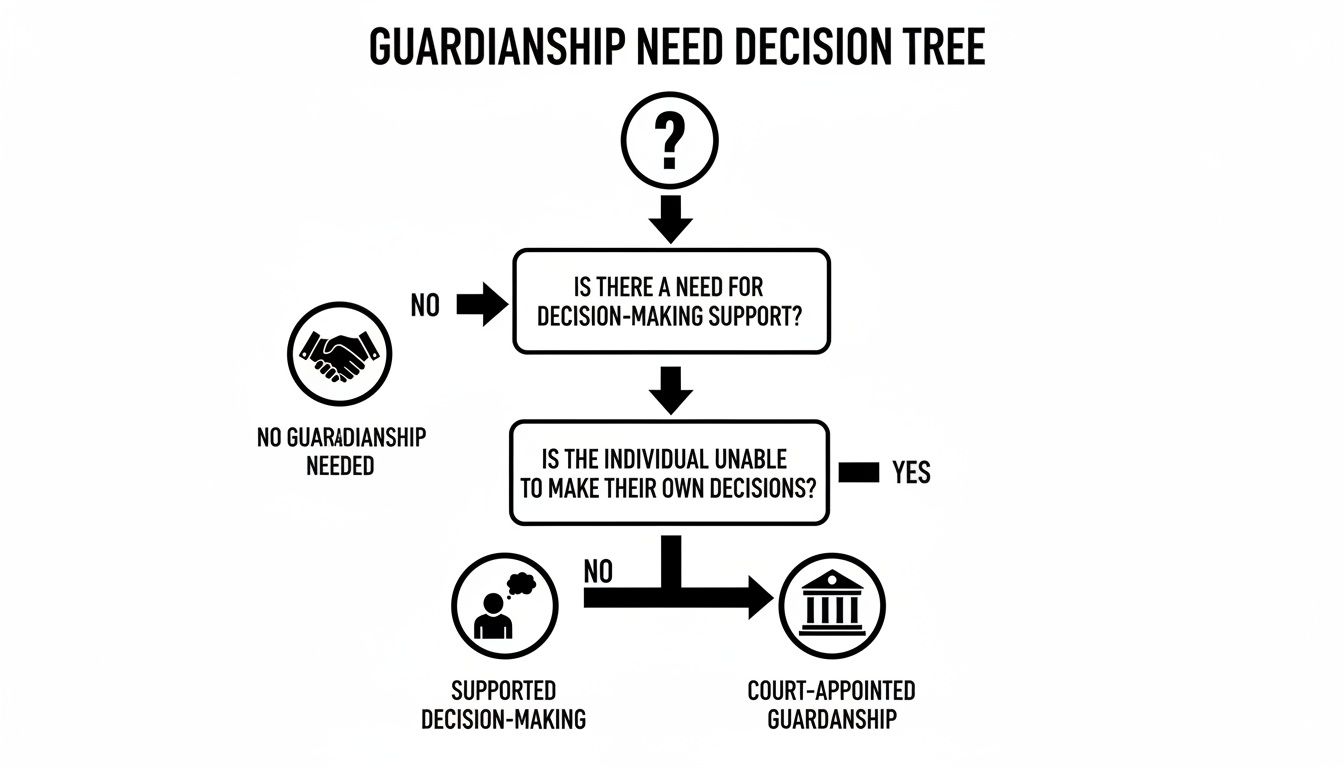
The flowchart breaks down a complex process, guiding you from the initial question of incapacity to the final determination of whether a court-ordered solution is the only option left.
The Impact on Autonomy
We must be honest about the gravity of this step. Across the country, there are about 1.3 million active adult guardianship cases, mostly involving individuals with intellectual disabilities, the elderly, or those with traumatic brain injuries. These arrangements have a profound impact on personal freedom. One national survey found that while 33% of individuals in full guardianships were employed, only 6% in limited ones were, which underscores how restrictive these orders can be. You can read the full analysis on autonomy in guardianships for more details.
Because guardianship removes fundamental rights, Texas law, specifically the Estates Code (Title 3, Subtitle G), demands clear and convincing evidence that no less restrictive alternative can adequately protect the proposed ward.
This means exploring alternatives like powers of attorney or supported decision-making isn't just a good idea—it's a required part of the process. If those tools aren't enough, or if your loved one no longer has the capacity to sign them, then guardianship becomes the most appropriate protective choice. Making that call requires a compassionate but clear-eyed assessment of the situation. If you see your family's circumstances in these scenarios, it might be time to seek guidance.
We understand the emotional weight of this decision. If you believe a guardianship is necessary to protect someone you love, our team is here to help. Schedule a free consultation to discuss your situation with an experienced Texas attorney who can provide clarity and support.
The Duties and Responsibilities of a Guardian
Accepting the role of a guardian is a profound commitment that extends far beyond a title. It's a legal and ethical promise to put the best interests of another person, known as the ward, above all else. Under Texas law, this role comes with serious fiduciary duties, meaning you must manage the ward's affairs with the highest degree of loyalty and care, as spelled out in the Texas Estates Code, Title 3, Subtitle G.
This is not a responsibility to take lightly. A guardian in Texas steps into a position of immense trust, whether they're handling personal and medical decisions or overseeing a complex financial estate. A judge in a Harris County probate court, for instance, will hold you accountable for every decision you make on the ward's behalf. Understanding these duties is the critical first step to serving effectively and honorably.
The Foundation of Guardianship: Fiduciary Duty
At its core, a guardian's primary job is to act solely in the best interest of the ward. This is a strict legal standard. It means every decision must prioritize the ward's well-being, safety, and financial security above all else—including your own convenience or personal preferences.
This requires a delicate balance of protection and autonomy. While you will have the legal authority to make critical decisions, you must also encourage the ward to participate in that process as much as they are able. The goal is always to respect their dignity and personal wishes whenever possible.
A guardian is far more than a decision-maker; they are a protector and an advocate. The Texas Estates Code requires a guardian to be a careful and prudent manager of the ward's affairs, just as they would manage their own.
Practical Responsibilities of a Texas Guardian
The specific tasks a guardian handles depend on whether they are appointed as a Guardian of the Person, a Guardian of the Estate, or both. Let's break down what each of those roles looks like day-to-day.
Before diving into the details, it's helpful to see a high-level overview of how these duties are divided. The following table summarizes the key responsibilities for both types of guardianship.
Core Duties for a Texas Guardian
| Duty Category | Guardianship of the Person | Guardianship of the Estate |
|---|---|---|
| Primary Responsibility | Ensure the ward's physical and emotional well-being. | Prudently manage and protect the ward's assets. |
| Initial Tasks | Determine and establish a safe living environment for the ward. | Locate and take control of all the ward's financial assets. |
| Ongoing Duties | Consent to medical treatments and coordinate healthcare. | Pay bills, manage investments, and collect income. |
| Court Reporting | Submit an Annual Report on the ward's condition and well-being. | File a detailed Inventory and an Annual Account of all financial activity. |
As you can see, the court reporting for a Guardian of the Estate is particularly demanding. Within 60 days of being appointed, you are required to file a detailed Inventory, Appraisement, and List of Claims. This document must list every single asset the ward owns, down to the last dollar. After that, you must submit an Annual Account that meticulously details every dollar that came in and every dollar that went out. Meticulous record-keeping isn't just a good practice; it's a legal command.
Failing to meet these responsibilities can lead to severe consequences, including removal as guardian and personal financial liability for any mismanagement. We help families understand these obligations from the start, ensuring they can fulfill their role with confidence and remain in full compliance with Texas law.
If you are considering becoming a guardian or have already been appointed and need guidance on your duties, don't navigate this complex area alone. Schedule a free consultation with our compassionate team to get the clear answers and support you need.
Exploring Effective Alternatives to Guardianship
Texas courts do not take guardianship lightly. It involves removing a person's fundamental legal rights, which is why it is always considered a last resort. Before any judge in Harris County or elsewhere in Texas will consider appointing a guardian, they must be convinced that no less restrictive alternative can adequately protect the individual. This principle is a cornerstone of Texas law, designed to protect personal autonomy as much as possible.
This means that before starting a guardianship proceeding, you are legally required to explore other options. Proactive planning can often sidestep the need for court intervention altogether, saving your family the immense emotional and financial toll of a formal legal battle. These alternatives empower you to protect your loved one while honoring their independence.

Powerful Estate Planning Tools
For many families, the answer lies in well-drafted legal documents created while a person still has the mental capacity to sign them. These are core components of our estate planning services.
Durable Power of Attorney: This is a vital document that allows your loved one (the principal) to appoint a trusted person (the agent) to handle their financial affairs. The key word here is "durable"—it remains in effect even if the principal later becomes incapacitated. This is an incredibly powerful tool for everything from paying bills and managing investments to protecting assets.
Medical Power of Attorney: This document lets an agent make healthcare decisions on the principal's behalf if they are unable to communicate their own wishes. It ensures medical choices align with their values and, critically, can prevent family disputes during a health crisis.
Living Will (Directive to Physicians): While it doesn't appoint a decision-maker, a living will is equally important. It clearly states a person's wishes regarding end-of-life medical care, giving straightforward instructions to doctors and family when they are needed most.
These documents are proactive, private, and far more affordable than a court-supervised guardianship. The critical requirement? They must be established before incapacity strikes.
Supported Decision-Making Agreements
Another excellent alternative, particularly for adults with disabilities, is a Supported Decision-Making Agreement. This is a formal arrangement where an individual chooses trusted advisors—family, friends, or mentors—to help them process information, understand their options, and communicate their own decisions.
A key difference between conservatorship vs guardianship and supported decision-making is that the individual retains all their legal rights to make the final choices. The supporters provide counsel and assistance, not control.
This model champions self-determination and is fully recognized under Texas law as a viable, less restrictive path than guardianship. It can be a wonderful way to provide support without taking away a person's independence. You can learn more about setting these up in our guide on supported decision-making agreements.
Exploring these alternatives is a critical first step. They can provide the exact protection your loved one needs while preserving their dignity and keeping your family out of the courtroom. If your loved one still has the capacity to sign legal documents, acting now can make all the difference.
If you’re unsure which path makes the most sense for your family, we're here to offer clear, compassionate guidance. Schedule a free consultation with our team at The Law Office of Bryan Fagan to explore all your options.
Your Next Steps to Protect Your Loved One
Understanding the key differences between conservatorship and guardianship in Texas is a huge first step. Now, you can begin building a clear, actionable plan to protect the person you care about. This journey involves careful preparation, open communication with family, and compassionate legal advice to ensure you're making the best possible decisions.
The road ahead means gathering key information and having honest, sometimes difficult, conversations. Doing this groundwork not only strengthens a potential guardianship application but also confirms that your actions truly align with your family member’s best interests. It's a delicate balance between meeting legal requirements and providing deep, personal care.
Your Initial Action Plan
Before filing any documents with the court, taking these first steps can make the entire process feel less overwhelming and more focused. This foundational work helps you approach the legal system with the evidence and clarity you need.
- Gather Medical Documentation: The physician’s report is the cornerstone of any guardianship case. Start collecting medical records, formal diagnoses, and any professional opinions that clearly demonstrate your loved one's inability to manage their personal or financial affairs.
- Compile Financial Information: If you believe a Guardianship of the Estate is needed, begin organizing all relevant financial paperwork. This includes bank statements, property deeds, investment account records, and a list of any known debts.
- Have Open Family Discussions: This is crucial. Talk with other close family members about your concerns. Building a consensus now can prevent painful and expensive guardianship disputes later, ensuring everyone is on the same page and focused on your loved one’s well-being.
Seeking Professional Legal Guidance
While those initial steps are vital, nothing replaces consulting with an experienced attorney. Navigating the Texas Estates Code and the specific local rules in courts like Harris County or Dallas County is not something you should do alone. Every family's situation is unique, and a one-size-fits-all approach simply won’t work.
Choosing to pursue guardianship is a profound act of love and protection. The right legal partner will honor the emotional weight of this decision while managing the complex legal details with precision and care.
An experienced guardianship attorney can evaluate your specific circumstances and confirm if guardianship is the right path. They can explain the practical differences between a guardianship of the person and the estate and help you explore less restrictive alternatives if they are a better fit. That personalized guidance is invaluable.
The Law Office of Bryan Fagan is here to provide that support. We understand the emotional and financial stress you're under. Our mission is to guide Texas families through guardianship law with clarity and compassion. We will listen to your story, answer your questions, and help you build a plan that protects your loved one’s dignity and secures their future.
Don't wait to get the help you need. Schedule a free, no-obligation consultation with our team today. You'll walk away with the confidence and direction you need to move forward.
Common Questions About Texas Guardianship
When considering guardianship, it's natural to have many questions. This isn't just a legal process; it's a deeply personal one with real-world emotional and financial implications for your family. Getting clear, straightforward answers is the first step toward feeling confident in your decisions. Here are some of the most practical concerns we hear from families every day.
How Much Does It Cost to Get a Guardianship in Texas?
The honest answer is: it varies. The total cost to establish a guardianship in Texas is not a single flat fee but is composed of several parts that can differ widely. You will have court filing fees that change from county to county, the fees for the court-appointed ad litem attorney who represents the proposed ward, and your own attorney's fees.
An uncontested case, where all family members agree that a guardianship is needed and who should serve, is always the most affordable path. However, if family members disagree and the case becomes contested, the legal process becomes longer and more expensive due to additional hearings and legal work. We provide a transparent breakdown of potential costs during our free consultations so you can plan accordingly.
Can I Get an Emergency Guardianship in Texas?
Yes, Texas law provides for what is known as a temporary or emergency guardianship. This is not a standard procedure; it is a fast-tracked process reserved for true crisis situations where there is a clear and immediate danger to a person's health or their financial estate is at risk of being lost or stolen.
The Texas Estates Code allows a temporary guardianship to be established very quickly to handle a crisis. This appointment is short-lived—typically limited to 60 days. This gives the court enough time to schedule a full hearing to determine a more permanent solution.
To obtain an emergency guardianship, you must present compelling evidence to a judge, perhaps in a Harris County court, proving that the need for intervention is urgent. Our attorneys have experience with these time-sensitive filings and know how to act quickly to protect your loved one when every second counts.
What Happens If I Disagree with a Guardianship?
If you are an interested party and you have good reason to believe a guardian is not acting in the ward's best interest, you have legal options. Perhaps you are concerned about how money is being managed, you suspect neglect, or you see the guardian making decisions that contradict what you know the ward would have wanted.
The Texas Estates Code gives you the right to take action. You can:
- File a motion asking the court to modify the terms of the guardianship.
- Request a detailed accounting of all finances from the Guardian of the Estate.
- Petition the court to remove the guardian and appoint someone else.
These guardianship disputes are challenging, both legally and emotionally. It is crucial to have legal counsel to ensure the ward’s rights and well-being remain the top priority. The system includes these checks and balances for a reason—to hold guardians accountable. Understanding the duties in the conservatorship vs guardianship context is key to knowing when someone is failing to meet their obligations.
Answering these questions requires more than just knowing the law; it requires a genuine understanding of what your family is going through. At the Law Office of Bryan Fagan, we're here to offer both legal expertise and compassionate guidance. Schedule a free, no-obligation consultation today to get clear, personalized answers and find the right path forward for your loved one.