Skip to content
When an elderly loved one can no longer make safe decisions on their own, the thought of involving the legal system can feel overwhelming. But in Texas, guardianship of the elderly isn't about taking away freedom. It’s a legal safety net, established by a court when an adult cannot manage their own affairs due to a physical or mental condition. This is a profound step, often taken out of pure necessity and love, and understanding the process can empower you to act with confidence and care.
What Guardianship for an Elderly Parent Really Means
It's heartbreaking to watch a parent or elderly family member struggle with daily tasks. Perhaps you've noticed they're forgetting to take vital medication, unpaid bills are piling up, or they're making choices that put their safety at risk. When this happens, Texas law provides a structured way to step in and protect them through a legal process called guardianship.
We understand the emotional weight of this decision. It helps to think of guardianship not as a takeover, but as a supportive framework. A Texas court—often a probate court like the Harris County Probate Court—can formally appoint a responsible person (the guardian) to help manage the personal and financial well-being of the incapacitated person, who is referred to in legal terms as the "Proposed Ward." You are essentially becoming a co-pilot for someone who can no longer navigate life's complexities safely on their own.
The Two Core Roles of a Guardian
Under the Texas Estates Code, guardianship is typically divided into two distinct roles. Depending on the family’s situation and the Proposed Ward's needs, a court might appoint one person for both roles or two different people. Understanding these responsibilities is the first step in demystifying the process.
- Guardian of the Person: This guardian is responsible for the Proposed Ward's physical well-being. They make crucial decisions about healthcare, living arrangements, medical treatments, and day-to-day personal care. Their primary duty is to ensure the ward is safe, comfortable, and receiving appropriate medical attention.
- Guardian of the Estate: This guardian manages the Proposed Ward's financial life. Their duties involve protecting assets, paying bills, managing bank accounts, and making sound financial decisions on the ward's behalf. This role demands meticulous record-keeping and regular financial reports to the court to ensure transparency and accountability.
According to the Texas Estates Code, Title 3, Subtitle G, a court must find by "clear and convincing evidence" that an individual is incapacitated and that a guardianship is necessary to protect them. This high legal standard ensures a person's rights are limited only when absolutely essential for their safety and well-being.
Deciding to pursue guardianship of the elderly is never simple. It comes with complex legal hurdles and a heavy emotional weight. But knowing the system is designed as a protective shield can bring clarity. The entire process is about ensuring your loved one receives the care and protection they deserve when they are most vulnerable.
If you're facing this tough situation, please know you don't have to figure it out alone. Our team at The Law Office of Bryan Fagan is here to help you make sense of your options. Schedule a free consultation to talk about your family’s needs and see how we can provide compassionate, clear guidance through every step of the Guardianship process.
Recognizing When Guardianship Becomes Necessary
Deciding to seek guardianship for an elderly parent is one of the most emotionally charged choices a family can face. It can feel like you're taking away their independence, but it's truly about building a legal safety net when they can no longer keep themselves safe. The core issue a Texas court examines isn't age or a specific diagnosis—it's incapacity.
Under the Texas Estates Code, Title 3, Subtitle G, a person is legally incapacitated if a physical or mental condition leaves them substantially unable to provide their own food, clothing, or shelter; care for their physical health; or manage their financial affairs. This isn't about occasional forgetfulness but a consistent, demonstrated inability to handle essential life tasks.
From Concern to Concrete Evidence
That nagging feeling that something is wrong is often the first sign. For the court, however, it's just a starting point. Moving from worrying about a parent to seeking guardianship requires a shift in mindset: you must observe and document specific behaviors that prove a clear need for legal intervention. This helps ground an emotional decision in objective facts.
For example, imagine your mother, who lives alone in Dallas, has started forgetting to pay her electricity bill, resulting in shut-off notices. She has also been found wandering her neighborhood, confused about how to get home. These are concrete examples of an inability to manage her finances and ensure her own safety, providing the type of evidence a court would consider.
Key Warning Signs of Incapacity
How do you know if guardianship is the right step? While every situation is unique, common patterns often emerge when someone can no longer manage on their own.
- Financial Difficulties: Are bills piling up? Have you noticed strange bank withdrawals, new credit cards you didn't know about, or a sudden vulnerability to scams and high-pressure sales calls?
- Neglect of Personal Care: Is your loved one forgetting to eat, bathe, or take critical medications? A noticeable decline in personal hygiene or the cleanliness of their home can be a major red flag.
- Safety and Judgment Lapses: Are they getting lost in familiar places, leaving the stove on, or having minor car accidents? Poor judgment can put them—and others—at serious risk.
- Medical Management Issues: Can they no longer follow a doctor's instructions, manage prescriptions, or make informed decisions about their healthcare? This is especially critical for anyone with a progressive condition like dementia.
For families navigating this difficult journey with a parent suffering from cognitive decline, understanding these specific signs is vital. You can get a more detailed look in our guide on how to get guardianship of a parent with dementia.
The Decisive Role of the Physician’s Certificate
While your observations are important, the single most critical piece of evidence in a Texas guardianship case is the Certificate of Medical Examination. This isn't just a doctor's note; it's a formal, sworn document where a physician provides the court with their professional medical opinion on the Proposed Ward's condition.
The Certificate of Medical Examination is the cornerstone of an incapacity case. It details the nature, degree, and severity of the person's condition and explicitly states whether they have the capacity to make responsible decisions about their health and finances.
This medical report turns a subjective family concern into a medically documented necessity. It gives a judge in a Harris County Probate Court the expert evidence needed to make a fair and informed ruling, ensuring that the profound decision to establish a guardianship is based on clear, professional evidence that protects your loved one’s rights.
Navigating The Texas Guardianship Court Process
The thought of going to court can be intimidating, but the Texas guardianship process is a well-defined path designed to protect your loved one with fairness and care. It’s best to view it as a series of checkpoints, each ensuring this significant decision is made thoughtfully.
The procedure is outlined in the Texas Estates Code, Title 3, Subtitle G. It begins when a concerned person (the "Applicant") files an Application for Appointment of Guardian. This formal document, submitted to a probate court, explains why the "Proposed Ward" needs a guardian and who is asking to fill that role. Filing this application officially sets the legal process in motion.
This infographic gives you a bird's-eye view of the foundational steps, from assessing the initial need to documenting evidence and, finally, bringing in legal counsel.
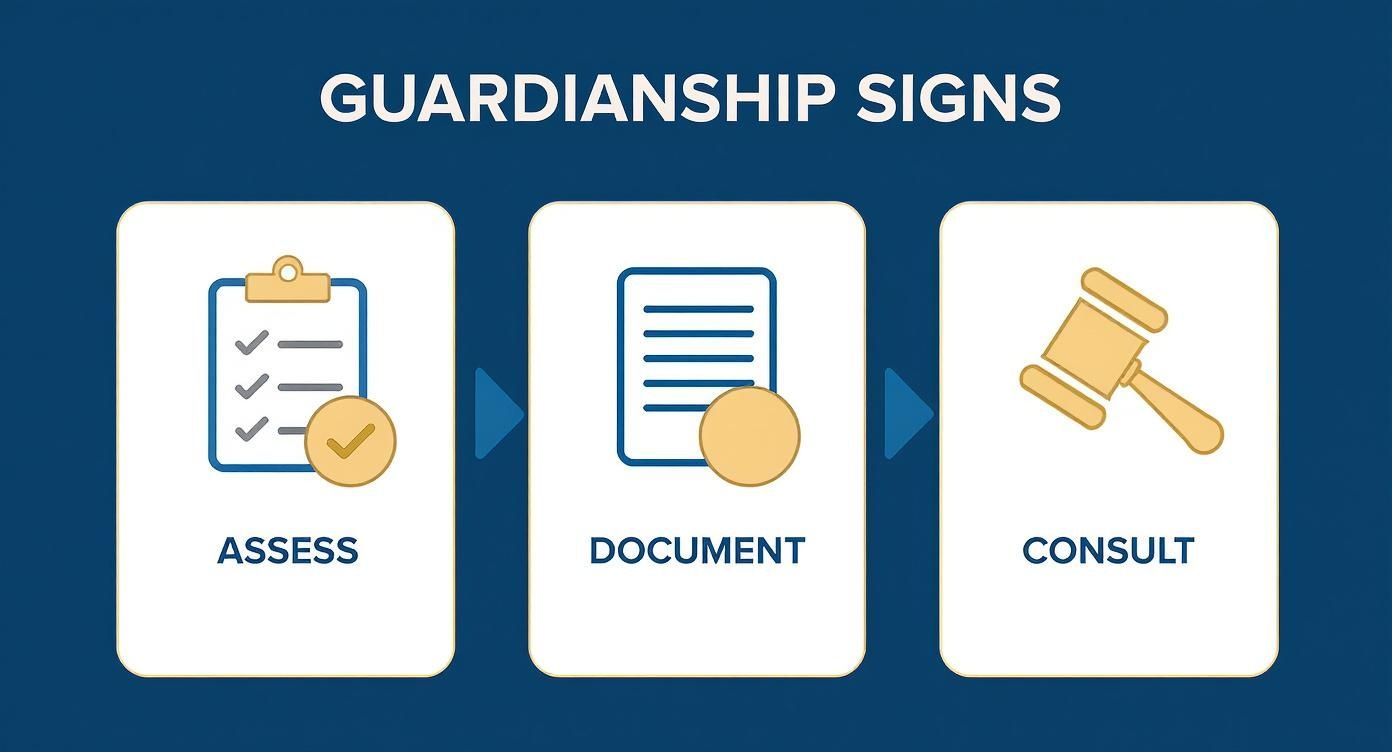
As the graphic shows, the path to guardianship is not a rush to the courthouse. It is a deliberate process that starts with careful observation and documentation and ends with professional legal action to ensure every step is taken with care.
The Role of the Attorney Ad Litem
Once the application is filed, the judge’s top priority is to protect the rights of the Proposed Ward. To do this, the court appoints an independent attorney known as an Attorney Ad Litem. This lawyer does not work for the family or the applicant. Their only client is the Proposed Ward.
The Ad Litem's job is to conduct a thorough, impartial investigation. They will:
- Meet with the Proposed Ward in person to understand their wishes and assess their condition firsthand.
- Review all medical evidence, including the critical Certificate of Medical Examination.
- Speak with family members, caregivers, doctors, and anyone else involved.
- Explain the legal process to the Proposed Ward in a way they can understand.
At the end of their investigation, the Attorney Ad Litem reports their findings and recommendations to the judge. This is a critical safeguard that guarantees the court hears an objective perspective focused solely on what's best for the Proposed Ward.
From Investigation to Court Hearing
While the Attorney Ad Litem conducts their review, your legal team prepares for the hearing. This involves gathering all necessary documents, coordinating with the physician who completed the medical certificate, and preparing testimony. The goal is to present a clear, compelling case to the judge that guardianship is the least restrictive and most appropriate way to keep your loved one safe.
The court hearing is where all this evidence is presented. The judge will hear from the applicant, the Proposed Ward (if able to attend), the Attorney Ad Litem, and any other witnesses. While formal, its purpose is compassionate—to determine what is truly in the best interest of the person at the center of it all. To get a better feel for this crucial step, you can learn more about what to expect at a Texas guardianship hearing in our detailed guide.
A common misconception is that guardianship hearings are always confrontational. While disputes can arise if the guardianship is contested, most hearings are about confirming the facts in the application and ensuring the proposed guardian is a trustworthy and suitable choice.
After hearing all the evidence, the judge makes a final decision. If they find clear and convincing evidence of incapacity and agree that guardianship is necessary, they will sign an Order Appointing Guardian. This court order grants the guardian legal authority. The final steps involve the appointed guardian taking an oath and posting a bond, which acts as an insurance policy to protect the ward's assets.
Here is a table summarizing the key stages you can expect during the guardianship proceedings in Texas.
| Stage | Key Action | Who is Involved | Typical Timeframe |
|---|---|---|---|
| Application Filing | An interested person files an Application for Appointment of Guardian with the probate court. | Applicant, Applicant's Attorney, Proposed Ward | 1-2 weeks |
| Court Appointments | The court appoints an Attorney Ad Litem to represent the Proposed Ward and may appoint a court investigator. | Judge, Attorney Ad Litem, Court Staff | 1-3 weeks |
| Investigation | The Attorney Ad Litem investigates the facts, interviews the Proposed Ward, and reviews medical records. | Attorney Ad Litem, Proposed Ward, Family, Doctors | 2-4 weeks |
| Court Hearing | Evidence is presented to the judge, who determines if guardianship is necessary. | Judge, Applicant, Proposed Ward, Attorneys, Witnesses | 4-8 weeks from filing |
| Final Orders & Qualification | If approved, the judge signs the order, and the guardian takes an oath and posts a bond. | Judge, Appointed Guardian | 1-2 weeks after hearing |
This timeline provides a general roadmap, though specifics can change depending on the case's complexity and the court's schedule.
Facing this process can feel overwhelming, but remember, each step is a safeguard. At The Law Office of Bryan Fagan, we guide Texas families through every stage with clarity and compassion. If you are considering guardianship of the elderly for someone you love, schedule a free consultation with us today. We can give you the personalized guidance you need to navigate this journey with confidence.
Exploring Powerful Alternatives to Guardianship
https://www.youtube.com/embed/O8pDt4d_BLI
Guardianship is a significant legal intervention, and because it removes a person’s fundamental rights, Texas courts consider it a last resort. The law requires judges to first look for less restrictive alternatives—options that provide support without completely removing an individual's independence. For most families, proactive planning can often avoid the need for court intervention altogether.
These alternatives are more than legal documents; they are acts of trust and foresight. By putting them in place before a crisis, you empower your loved one to decide who will speak for them when they cannot. This approach protects their dignity, keeps personal matters private, and avoids the public and often costly court process of guardianship.
Durable Power of Attorney for Finances
One of the most effective tools is a Durable Power of Attorney. This document allows your loved one (the “principal”) to choose a trusted person (the “agent”) to manage their financial affairs. The key word is “durable,” which means the agent’s authority continues even if the principal becomes incapacitated.
An agent can handle critical tasks, such as:
- Paying bills and managing bank accounts
- Filing tax returns and overseeing investments
- Handling real estate transactions
Imagine your father, who is in the early stages of Alzheimer's, signs a Durable Power of Attorney naming you as his agent while he still has full mental capacity. Years later, when he can no longer manage his finances, you can step in to pay his mortgage and medical bills without a court order, ensuring his life remains stable and avoiding the stress of a guardianship hearing.
Medical Power of Attorney for Healthcare
Similar to a financial power of attorney, a Medical Power of Attorney addresses healthcare decisions. This document lets your loved one name an agent to make medical decisions for them if they become unable to communicate their wishes.
This is crucial for ensuring their healthcare preferences are honored. The agent can approve treatments, select doctors or care facilities, and access medical records. Without one, doctors may need a court-appointed guardian to approve major medical procedures, potentially causing dangerous delays in care. To learn more, check out our article comparing guardianship vs. power of attorney.
Supported Decision-Making Agreements
A newer, less restrictive option in Texas is the Supported Decision-Making Agreement. This is an excellent tool for adults who can still make their own choices but need help understanding their options or communicating their decisions. It fosters collaboration, not a takeover.
A Supported Decision-Making Agreement allows an individual to choose trusted advisors—like family or friends—to help them gather information, weigh pros and cons, and make their own informed choices, keeping their legal rights and self-determination intact.
For instance, an elderly parent with mild cognitive decline could use this agreement to have their daughter help review bank statements or discuss treatment options with a doctor. The parent still makes the final call but with a trusted support system. This approach keeps them at the center of their own life.
Guardianship vs. Less Restrictive Alternatives
Choosing the right level of support is key. This table breaks down the main differences between full guardianship and these less restrictive options.
| Feature | Guardianship | Durable Power of Attorney | Supported Decision-Making |
|---|---|---|---|
| Who Makes the Decision? | The court-appointed guardian. | The chosen agent. | The individual, with help from their chosen supporters. |
| When Is It Created? | After a court determines the person is incapacitated. | While the person still has the capacity to sign legal documents. | While the person still has the capacity to make decisions. |
| Level of Autonomy | The individual loses most or all decision-making rights. | The individual delegates authority but can revoke it. | The individual retains all decision-making rights. |
| Court Involvement | Required. The court appoints, supervises, and must approve major actions. | Not required. It's a private agreement. | Not required. It's a private agreement. |
| Best For… | Individuals who are fully unable to care for themselves or their property. | Individuals who want to plan for future incapacity. | Individuals who can make decisions but need help doing so. |
Guardianship is clearly the most extreme measure, while tools like Powers of Attorney and Supported Decision-Making preserve a person's freedom and dignity. Unfortunately, not every family has these plans in place. Systemic issues can also create challenges, as data shows that older women, people of color, and those living in poverty are more likely to be placed under guardianship due to a lack of resources and unequal access to legal and healthcare services. You can read more about these challenges in guardianship data and reform.
Exploring these alternatives with a knowledgeable attorney can help you create a plan that protects your loved one while respecting their independence. If you're not sure which path is right for your family, schedule a free consultation with The Law Office of Bryan Fagan. We can help you find a solution that brings security and peace of mind.
Understanding Your Responsibilities as a Guardian
Becoming a guardian for an elderly parent is a profound commitment, born from love and care. It is also a formal legal appointment with serious duties. Once a Texas court appoints you, you are held to the highest standard of care—a fiduciary duty. This means every decision you make must be for the sole benefit of your loved one, now legally called the "Ward." There is no room for personal gain.

This isn't just a moral obligation; it's a legal requirement enforced by the court that appointed you. You are accountable not only to your loved one but also to the judge. These rules provide a framework to help you deliver the best, most ethical care possible.
With people living longer, more families are facing this situation. The global market for elder law services, including guardianship and Estate Planning, was valued at $3.6 billion in 2023 and is projected to more than double by 2033. This growth highlights how critical formal structures like guardianship are for protecting vulnerable seniors. You can dig deeper into the rising demand for elder law services on datahorizzonresearch.com.
Core Duties of a Guardian of the Person
If the court names you Guardian of the Person, your focus is the Ward's health, safety, and well-being. This hands-on role includes specific legal duties:
- Making Healthcare Decisions: You will consent to medical treatments, choose doctors, and ensure the Ward follows their prescribed care plan.
- Deciding on Living Arrangements: You will determine the best place for the Ward to live, whether at home with care, in an assisted living facility, or a nursing home. The guiding principle is always to choose the least restrictive environment that meets their needs.
- Ensuring Personal Care: You will oversee their daily quality of life, including proper nutrition, hygiene, and opportunities for social activities.
You must also file an "Annual Report on the Condition and Well-Being of the Ward" with the court. This yearly update on your loved one’s health and living situation ensures ongoing court oversight.
Core Duties of a Guardian of the Estate
As the Guardian of the Estate, you become the steward of the Ward's financial life. This role requires extreme organization and transparency, as you are managing someone else’s money under a legal microscope.
Your key financial duties include:
- Creating an Inventory: Within 30 days of appointment, you must file a sworn "Inventory, Appraisement, and List of Claims," detailing every asset the Ward owns.
- Managing Assets: You will take control of bank accounts, investments, and property. Your job is to pay bills, manage their portfolio wisely, and protect their assets from loss.
- Filing Annual Accountings: Each year, you must submit a detailed financial report to the court showing every dollar that came in and every dollar that went out. This is a strict requirement under the Texas Estates Code, Title 3, Subtitle G.
Meticulous record-keeping is your best friend. Keep every receipt, bank statement, and invoice organized. Mixing the Ward's funds with your own is strictly forbidden and can lead to serious legal consequences, including removal as guardian and personal liability for any financial losses.
Probate courts in counties like Tarrant and Travis are incredibly strict about these duties to prevent exploitation. The journey of guardianship of the elderly is demanding, but you don't have to walk it alone. The team at The Law Office of Bryan Fagan is here to help you navigate your responsibilities and stay compliant with Texas law. For clear, personalized guidance, schedule a free consultation with us today.
Common Questions About Texas Guardianship
When you start exploring guardianship of the elderly, the legal terms can feel confusing. But underneath it all are practical questions every family asks. You’re likely wondering about the cost, how long it takes, and if this decision is permanent. Let’s clear up some of that uncertainty.
How Much Does Guardianship Cost in Texas?
There’s no single price tag for establishing a guardianship; the cost depends on your family’s situation. An uncontested case, where everyone agrees, will be more affordable than one where family members disagree, which can lead to disputes.
Key expenses generally include:
- Attorney's Fees: This is typically the largest cost, covering your attorney (as the Applicant) and the court-appointed Attorney Ad Litem, who represents the best interests of your loved one (the Proposed Ward).
- Court Filing Fees: Every case begins with an application, and the county probate court (like the one in Harris County) charges administrative fees to start the process.
- Bond Premium: A guardian of the estate must be bonded. This is an insurance policy protecting the Ward’s assets. You’ll pay an annual premium for this bond based on the estate's value.
The total cost can range from a few thousand to several thousand dollars. It is important to know that these expenses are typically paid from the Ward’s estate, as the entire process is for their benefit.
How Long Does the Guardianship Process Take?
For a straightforward, uncontested guardianship in Texas, the process can often be finalized within 30 to 90 days after filing the application.
However, certain factors can cause delays:
- The court's schedule and caseload.
- The time it takes the Attorney Ad Litem to conduct their investigation.
- Disputes from other family members, which would require additional court hearings to resolve.
What if you can't wait? If your loved one is in immediate physical or financial danger, Texas law allows for a Temporary Guardianship. This is an emergency measure that can be put in place very quickly—sometimes in a matter of days—to address an urgent crisis while the permanent guardianship case is pending.
Under the Texas Estates Code, Title 3, Subtitle G, a court can terminate a guardianship if it finds the Ward has regained capacity or if a less restrictive alternative, like a power of attorney, becomes a better option. This ensures guardianship is not a life sentence if it is no longer needed.
Can a Guardianship Be Changed or Ended?
Yes, a guardianship is not set in stone. It is a flexible legal tool that the court actively supervises to ensure it continues to serve its purpose.
A guardianship can be terminated if a Ward’s health improves significantly. They—or anyone interested in their well-being—can ask the court to restore their legal rights. The court will review new medical evidence and decide if the person can once again manage their own affairs.
The guardianship can also be modified. For example, if a guardian can no longer serve due to health issues or a move, the court can appoint a successor guardian to take over. The system is designed to adapt to life’s changes, always keeping the Ward’s best interest at the forefront.
We know these practical questions are a huge part of your decision-making. At The Law Office of Bryan Fagan, we believe in giving you clear answers and compassionate guidance. To talk about your family’s specific needs and get real advice on Probate and guardianship, please schedule a free consultation with our team.
Find the Compassionate Guidance Your Family Needs
Making the decision to pursue guardianship is more than a legal step—it's a deeply personal journey of care. We've walked through what guardianship of the elderly means in Texas, when it becomes necessary, and how the court process works. But knowing the steps is one thing; taking them is another. You don't have to navigate this path alone.
We understand the emotional weight and financial stress that accompany this profound choice. The legal system can seem intimidating, but with the right partner, you can find clarity and confidence, moving forward knowing you are doing what's best to protect someone you love. Since every family’s situation is unique, a one-size-fits-all approach is not enough.
What to Do Next
At The Law Office of Bryan Fagan, our mission is to guide Texas families through guardianship law with both compassion and legal precision. We are here to handle everything—from the initial application and court hearings to the ongoing compliance and reporting requirements—so you feel supported at every turn. Our commitment is to make this process as straightforward and supportive as possible.
Protecting a vulnerable family member is one of the most important actions you will ever take. Having a compassionate legal partner by your side makes all the difference, ensuring their dignity is honored while their safety is secured.
If you’re ready to discuss your family’s specific needs, our experienced team is here to listen and provide the professional legal advice you deserve. Let us help you protect the people who matter most.
Ready to take the next step? For personalized guidance on your family's guardianship needs, schedule a free consultation with the Law Office of Bryan Fagan, PLLC today. Visit us at https://texasguardianshiplawyer.net.