Skip to content
It often starts with a nagging feeling that something just isn't right. Before you can report guardianship abuse in Texas, you first have to know what you're looking for. Recognizing the red flags—from suspicious financial activity to a loved one's sudden change in personality—is the most important step you can take to protect them.
We understand that facing this possibility is deeply emotional and stressful. At The Law Office of Bryan Fagan, our mission is to guide Texas families through the complexities of guardianship law with clarity and care, empowering you with the knowledge and support you need during this challenging time.
Recognizing the Warning Signs of Guardianship Abuse

When a Texas court, such as a Harris County Probate Court, appoints a guardian, it's placing an enormous amount of trust in that person to act solely in the best interest of the "ward." While this legal relationship is designed to protect vulnerable individuals, the power dynamic it creates can sometimes be exploited. All too often, it falls to concerned family and friends to spot the misconduct and take action.
Trust your gut. If a situation feels off, it's almost always worth a closer look. The key is to distinguish between an honest mistake and a consistent pattern of harmful behavior. A guardian might genuinely forget to pay a single bill. But if bills are constantly overdue, utilities are being shut off, or the ward’s financial situation is declining while the guardian’s is mysteriously improving, you may be seeing a serious breach of their fiduciary duties.
Financial Exploitation Red Flags
Financial abuse is one of the most common and devastating forms of exploitation we see in guardianship cases. Because the guardian has legal control over the ward's money and property, this abuse can be tough to spot without paying close attention. It isn't always about outright theft; it often starts small and escalates over time.
For example, a guardian might start by "borrowing" a small amount from the ward's account, intending to pay it back. But over time, this can evolve into using the ward's funds for personal expenses, selling assets without permission, or even changing estate documents for personal gain. To help you pinpoint potential problems, we've organized the most common warning signs into the table below.
Red Flags of Potential Guardianship Abuse
This table breaks down the warning signs of abuse by category, helping you identify specific behaviors that may require action.
| Type of Abuse | Warning Signs and Examples |
|---|---|
| Financial Abuse | Unusual Bank Activity: Large or frequent cash withdrawals, sudden transfers to the guardian's accounts. Changes to Estate Documents: A new will, trust, or power of attorney that suddenly benefits the guardian. Unpaid Bills: Shut-off notices or calls from collections agencies. Missing Property: Valuables, jewelry, or art that disappears without explanation. |
| Emotional Abuse | Isolation: The guardian prevents you from visiting or speaking to the ward alone. Fear or Anxiety: The ward seems afraid, withdrawn, or unusually agitated, especially around the guardian. Humiliation: The guardian belittles, yells at, or threatens the ward in front of others. |
| Physical Abuse | Unexplained Injuries: Bruises, welts, cuts, or broken bones that the guardian can't properly explain. Signs of Restraint: Marks on wrists or ankles. Medication Issues: Over-medicating or withholding necessary medication. |
| Neglect | Poor Hygiene: A decline in personal cleanliness or a messy, unsafe home. Lack of Medical Care: Untreated bed sores, infections, or missed doctor's appointments. Malnutrition: Unexplained weight loss or signs of dehydration. |
If you've noticed any of these signs, it's critical to start documenting them immediately.
A key responsibility of a guardian of the estate, as outlined in the Texas Estates Code, Title 3, Subtitle G, is to prudently manage the ward’s property. Any action that prioritizes the guardian's financial gain over the ward's well-being is a direct violation of this duty.
Emotional and Physical Abuse Indicators
Abuse isn't always about money. Emotional and physical harm can be just as damaging, if not more so. These forms of abuse are often about controlling the ward through fear, intimidation, and isolation, which makes it incredibly difficult for them to ask for help. We know how painful it is to see a loved one suffer in this way.
Sadly, this is a widespread problem. The World Health Organization reports that about 1 in 6 adults over age 60 experience some form of abuse each year. The data shows that 11.6% report psychological abuse and 6.8% face financial exploitation.
Look for these signs of non-financial abuse:
- Social Isolation: Is the guardian making excuses for why you can't visit? Do they refuse to let you speak with your loved one alone?
- Changes in Demeanor: Does your loved one seem fearful, depressed, withdrawn, or uncharacteristically agitated, particularly when the guardian is present?
- Unexplained Injuries: Any bruises, cuts, or broken bones that come with a flimsy or unbelievable explanation demand immediate attention.
- Poor Hygiene and Unsafe Conditions: A noticeable decline in personal cleanliness, a dirty or hazardous home environment, or a lack of necessary medical aids can all point to neglect.
Recognizing these behaviors is the first crucial step. If what you've read here sounds familiar, take a look at our detailed guide on the red flags of exploitation in Texas guardianship cases. Knowing exactly what constitutes abuse will give you the confidence to take the next step and report it.
How to Document and Gather Compelling Evidence
When you suspect a guardian is abusing their power, that gut feeling is your first warning sign. But to get a Texas court or agency to step in, you need more than a feeling—you need proof. Just saying abuse is happening won't be enough. You have to be ready to show it.
This might feel overwhelming, but a steady, organized approach is your best bet for building a case that can truly protect your loved one.
The goal here isn't to be confrontational; it's to be prepared. Courts in Texas, from Harris County to smaller rural probate courts, operate on facts and documentation, not just emotional pleas. Your first step? Get a dedicated binder or create a secure digital folder. This simple act of organization will become your most powerful tool.
Creating a Detailed Timeline of Events
Isolated incidents can be easily dismissed. A detailed timeline, however, turns those separate events into a clear pattern of concerning behavior.
Start a log, either in a notebook you keep with you or a simple digital document. Record every single event that worries you. For each entry, make sure you note:
- Date and Time: Get as specific as you possibly can.
- What Happened: Describe the event factually and objectively. Instead of writing, "the house was a mess," be specific: "I saw piles of trash in the kitchen, dirty dishes overflowing the sink, and Dad's bedding was soiled."
- Who Was Present: List anyone else who saw or heard what happened.
- The Ward's Reaction: How did your loved one seem? For example, "Mom seemed fearful and wouldn't make eye contact when the guardian was in the room."
This log creates a powerful chronological record. It can expose patterns of neglect, isolation, or financial red flags that might otherwise be explained away as one-time mistakes.
Gathering Tangible Proof
Your written log is the backbone of your case, but tangible proof adds the muscle. Different kinds of evidence work together to paint a complete picture for the authorities.
- Photographs and Videos: A photo of a bruised arm or a video of an unsafe living space speaks volumes. Take clear pictures of any signs of physical harm like bruises or bedsores, poor living conditions like a lack of food, or obvious neglect.
- Financial Records: This is often where you'll find the smoking gun in financial exploitation cases. If you can get access, gather bank statements, credit card bills, and receipts for any unusual purchases. Look for large cash withdrawals, checks written out to the guardian, or sudden, unexplained changes to an Estate Planning document like a will or trust.
- Medical Reports: If you're concerned about neglect or physical abuse, medical records are vital. These documents can provide hard evidence of malnutrition, dehydration, medication errors, or untreated health problems. As you pull everything together, keeping these records straight is critical. You might find this guide to organizing medical records at home helpful.
Under Texas Estates Code, Title 3, Subtitle G, a guardian of the estate has a fiduciary duty to manage the ward’s assets prudently. Any financial document that shows this duty was breached is essential for a court action to remove the guardian.
Keeping a Communications Log
On top of everything else, document every conversation you have about your loved one's care. This includes calls, texts, and in-person talks with the guardian, doctors, social workers, and even the ward. Note the date, time, and a quick summary of the conversation.
An entry might look like this:
Date: October 26, 2024
Time: 2:15 PM
Person: John Smith (Guardian)
Summary: Called to schedule a visit with Dad. John said Dad was "too tired" and that it wasn't a good time. This is the third time this month he has given a similar excuse.
This kind of log is incredibly effective at demonstrating patterns of isolation or evasiveness—both major red flags for emotional abuse and control.
When you're ready to take the next step, having this organized evidence is invaluable. It forms the foundation for any formal complaint and proves your concerns are based on a consistent, documented pattern of misconduct, not just a personal disagreement. The attorneys at The Law Office of Bryan Fagan are here to help you make sense of what you've found and advise you on the strongest course of action. Schedule a free consultation with us today to get the clarity and support you need.
Who to Report Guardianship Abuse to in Texas
When you’ve collected your evidence and you’re ready to take action, the next step can feel overwhelming. Where do you even begin? In Texas, you don't just report guardianship abuse to a single office. Instead, there are three main channels, and each one has a specific, vital job.
Choosing the right one from the start depends entirely on the kind of abuse your loved one is facing. Getting your report to the right people quickly is key—it prevents delays that could leave a vulnerable person in harm's way. Let's break down the roles of Adult Protective Services, local law enforcement, and the probate court.
For Neglect and Unsafe Conditions: Call Adult Protective Services (APS)
Think of Adult Protective Services (APS) as the frontline investigators for the well-being of vulnerable adults. If your main worries are about neglect, dangerously poor living conditions, or self-neglect, APS is where you should turn first.
We advise families that APS is the right call when they see things like:
- Poor Living Conditions: The home is just plain unsanitary or unsafe, maybe lacking basics like running water or heat.
- Malnutrition or Dehydration: You notice your loved one has lost a lot of weight or just looks unwell because they aren't getting enough food and water.
- Poor Personal Hygiene: There’s a sharp decline in cleanliness, a clear sign the guardian isn’t helping with basic personal care.
- Lack of Medical Care: You see untreated bedsores, infections, or find out they're constantly missing doctor’s appointments or not getting their required medications.
You can report to the Texas Department of Family and Protective Services (DFPS) 24/7 through their statewide hotline. You can even make a report anonymously. Their job is to investigate the situation to determine if the adult is at risk and to coordinate protective services.
For Immediate Danger and Criminal Acts: Call 911 or Local Law Enforcement
This one is simple: if you believe your loved one is in immediate physical danger or is the victim of a crime, don't wait. Call 911 or your local police department right away. This isn't the time to call APS or the courts—this is an emergency that needs a fast response.
Get law enforcement involved for situations like:
- Physical or Sexual Assault: You see any evidence of hitting, improper restraints, or any other form of physical or sexual harm.
- Theft: You have direct proof that the guardian is stealing cash, jewelry, or other property from the person they're supposed to be protecting.
- Obvious and Immediate Endangerment: The person has been abandoned or left in a situation that is clearly life-threatening.
The police have the power to step in immediately, ensure the person is safe, and launch a criminal investigation that could lead to charges against the guardian.
For Breach of Fiduciary Duty: Address the Probate Court
Ultimately, the probate court that appointed the guardian is the one with the final say. When the problem is financial exploitation or any other violation of the guardian's legal duties under the Texas Estates Code, Title 3, Subtitle G, you have to take the fight directly to the court.
This is the right avenue for tackling problems such as:
- Financial Exploitation: The guardian is dipping into the ward's funds for personal use, selling off assets without court approval, or making shady investments.
- Failure to Comply with Court Orders: The guardian isn't filing the required annual accountings or is simply ignoring other directives from the judge.
- Isolating the Ward: The guardian is blocking family and friends from visiting or speaking with the ward, a common tactic in emotional abuse.
To get the court's attention, you'll need to file a formal motion, like a "Motion to Remove Guardian." This is where things get technical. Because it involves specific legal filings and procedures, this is the point where having an experienced guardianship attorney on your side becomes absolutely critical. If you suspect theft, our article on what to do when a guardian steals money in Texas offers more focused steps.
This chart can help you map out your first moves when you suspect abuse and need to start gathering information.
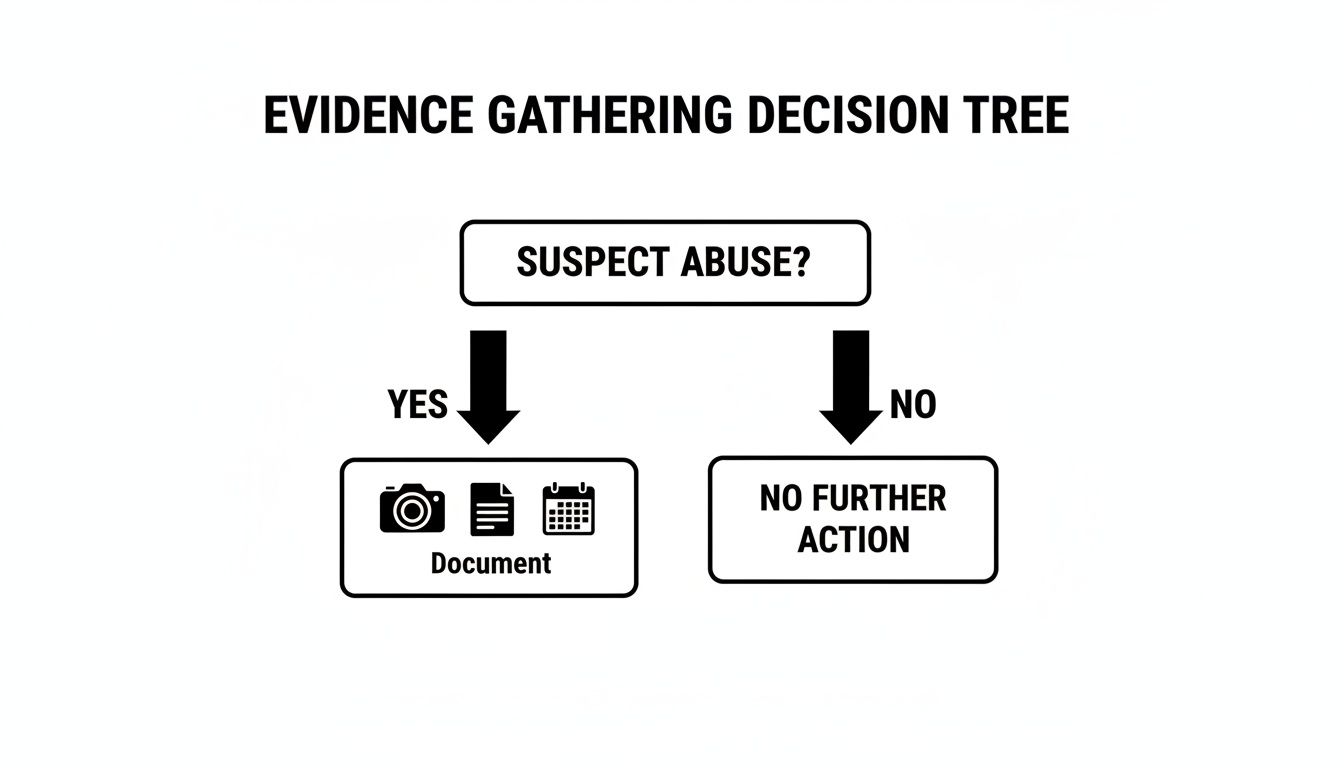
As the decision tree shows, your first crucial step after suspecting abuse is to start documenting everything. One of the biggest hurdles families face is the shocking lack of reliable data on guardianship abuse. The U.S. Department of Justice has highlighted that there's very little information on how often abuse occurs, and most states can't even say how many people are under guardianship. You can read more from the Department of Justice on the challenges this data gap creates.
A Practical Example
Let's say you visit your grandmother in Travis County. You find her refrigerator is empty, she looks unkempt, and she tells you her guardian hasn't stopped by in weeks. This screams neglect, so your first call is to APS. But if you found bruises on her arms and she seemed terrified of the guardian, you should call the Austin Police Department immediately. And if you found out the guardian sold her car with no explanation for where the money went, you would need to call an attorney to file a motion with the Travis County Probate Court.
Filing a Complaint with the Texas Probate Court
While reporting abuse to agencies like APS or local law enforcement is a vital first step, the real power to end a toxic guardianship rests with the Texas probate court. This is the very same court that granted the guardian their authority, and it's the only one that can legally strip them of it. Taking that step into the courtroom can feel daunting, but it’s often the most direct path to protecting your loved one.
This isn't just about voicing your concerns to a judge. It's a formal legal process that requires filing specific documents, known as motions, which must meet strict court rules. The key document here is a Motion to Remove Guardian, a formal request asking the court to revoke the guardianship based on evidence of misconduct or failure to perform their duties.
The Legal Grounds for Removing a Guardian
In Texas, you can't have a guardian removed simply because you disagree with their decisions or don't like them. You have to prove they’ve failed to meet their legal obligations as laid out in the Texas Estates Code. Specifically, Title 3, Subtitle G of the code details a guardian's duties and the reasons a court can remove them.
A judge may remove a guardian who has:
- Misapplied or embezzled assets: This is a legal way of saying they used the ward’s money for themselves or wasted it.
- Failed to file required reports: Guardians are required to submit annual accountings that track every dollar. A failure to file is a huge red flag for the court.
- Been guilty of gross misconduct or mismanagement: This is a broad but powerful category covering everything from severe neglect to making terrible financial choices with the ward’s money.
- Failed to obey a court order: If a judge has given the guardian specific instructions and they've been ignored, that’s grounds for removal.
- Become incapable of performing their duties: This could be due to the guardian's own health issues, a change in their living situation, or other personal problems.
Your motion must pinpoint which of these legal grounds you believe the guardian has violated and connect it directly to the evidence you’ve collected.
A Motion to Remove Guardian is far more than a simple complaint letter. It’s a formal legal argument. It needs to be crafted with precision, citing the specific parts of the Texas Estates Code the guardian violated and linking those violations directly to your documented proof.
Crafting and Filing Your Motion
As you get ready to file your motion, it can be incredibly helpful to understand how to draft a legal complaint in a way that’s clear and persuasive. The document you file with the probate court, whether it's in Harris County or Dallas County, must be packed with facts and legally sound. You’ll attach your evidence—like your call log, financial records, photos, and witness statements—as exhibits.
This is a step where precision is everything. A motion that’s poorly written or missing key information can be thrown out by the court on a technicality, which just wastes precious time and delays justice for your loved one. Once filed, the document has to be formally "served" on the guardian and their lawyer, which provides them with legal notice of the case against them.
For example, imagine you discover the guardian sold your father's classic car and used the money to pay off their own credit card debt. Your motion would cite this as a clear breach of their fiduciary duty. You would then attach the bill of sale, bank statements showing where the money went, and any emails or texts about the transaction as exhibits to prove it.
What Happens After You File the Motion
Once your motion is filed, the court will set a hearing date. This isn't an overnight process; Texas courts often take between 30 and 90 days to get these hearings on the calendar, depending on how busy they are. The guardian will have a chance to file a formal response to your allegations and prepare their own defense.
During this waiting period, the judge will likely take action to protect the person under guardianship (the "ward").
- Appoint an Attorney ad Litem: The court will almost certainly appoint an independent attorney whose only client is the ward. This attorney's job is to investigate the situation, interview everyone involved, and report back to the judge with a recommendation on what’s in the ward’s best interest.
- Order an Investigation: The judge can also order a court investigator to dig into the facts of your complaint.
- Schedule a Hearing: At the hearing, both sides will present their case. You’ll present your evidence, and you may be called to testify.
The judge’s decision can go a few different ways. They could remove the guardian immediately and appoint a successor, order the guardian to fix the problems, or deny your motion if there isn't enough evidence. Getting a guardian removed is a complex legal matter, and you can learn more about how to discharge a guardian in Texas in our in-depth guide.
Because the legal stakes are so high, this is where having an experienced guardianship attorney from The Law Office of Bryan Fagan can make all the difference. We know how to draft and file these motions correctly, present your evidence in the most compelling way, and make sure your family’s voice is heard loud and clear. Schedule a free consultation with us today to see how we can help.
Why You Need an Experienced Guardianship Attorney

While it's true that any concerned person in Texas can file a report with APS or a complaint with the probate court, there’s a world of difference between knowing you can do something and knowing how to do it effectively.
Taking on a legal battle alone, especially when you’re already overwhelmed by emotional and financial stress, can feel like an impossible climb. This is precisely where partnering with an experienced guardianship attorney becomes your family’s most powerful move in protecting your loved one.
Hiring a lawyer isn’t just about having someone fill out forms. A specialized attorney from The Law Office of Bryan Fagan steps in to lift that legal weight off your shoulders, freeing you up to focus on what matters most—your family.
Beyond Just Filing Paperwork
An experienced guardianship lawyer knows how to take your documented concerns and transform them into a compelling legal case that a judge can act on. We know what a probate judge in Bexar County or Tarrant County looks for and understand the specific rules of evidence and procedure that can make or break a motion to remove a guardian.
Our role involves much more than just paperwork. We are your strategic partners.
- Gathering Admissible Evidence: We’ll help you pinpoint and organize the kind of proof that stands up in court—from financial statements and medical records to powerful witness testimony.
- Navigating Complex Court Procedures: We manage all the filings, deadlines, and communications with the court, ensuring every single step is compliant with the Texas Estates Code.
- Arguing Effectively for Removal: We build a persuasive case that clearly demonstrates the guardian’s breach of their fiduciary duty, tying your evidence directly to the legal standard for removal.
Think of an attorney not as another bill to pay, but as a dedicated advocate who ensures your voice is heard and that the abusive guardian is held fully accountable for their actions.
The Advantage of Legal Representation in Guardianship Disputes
Probate courts operate under very strict legal protocols. Without a lawyer, you run the risk of having your case dismissed on a technicality, no matter how solid your evidence is. Remember, the guardian will almost certainly have their own legal counsel, and facing them without representation puts you at a severe disadvantage from the start.
An experienced guardianship attorney levels the playing field. We anticipate the other side's arguments, present your case with clarity and authority, and ensure the focus stays exactly where it should be: on the ward’s safety and best interests. That is the court's ultimate priority.
For instance, imagine you have bank statements showing suspicious withdrawals. An attorney knows how to subpoena further records directly from the bank, depose the guardian under oath to explain the transactions, and weave that information into a clear, undeniable narrative of financial exploitation for the judge. This methodical, professional approach is often what convinces a judge to take decisive action.
We understand that you are fighting for someone you love. This is a deeply personal and often painful process. Our goal at The Law Office of Bryan Fagan is to provide both the aggressive legal representation needed to win in court and the compassionate guidance your family deserves. For more information on your options, see our page on Guardianship.
The legal system can feel cold and impersonal, but your fight to protect a vulnerable family member is anything but. You don't have to face this alone. Schedule a free, confidential consultation with us today, and let us show you how we can help protect your loved one and restore their safety and dignity.
Frequently Asked Questions About Reporting Abuse
When you suspect a loved one is a victim of guardianship abuse, your mind is likely racing with questions. It’s a painful and confusing time, and the fear of taking a wrong step can be paralyzing. Here at The Law Office of Bryan Fagan, we've guided countless Texas families through this exact crisis, and we believe clear answers are the first step toward taking control.
We've compiled some of the most pressing questions we hear from families in your situation. Our goal is to cut through the uncertainty and give you the confidence you need to act.
What if the Abuse Is Hard to Prove?
This is, without a doubt, one of the biggest fears we see. Abusive guardians, especially those committing financial exploitation, are often masters at covering their tracks. It’s easy for them to explain away a single late bill or a questionable purchase as a simple mistake.
But here’s what we've learned from years in Texas probate courts: judges are not naive. They’ve seen these scenarios before. A judge in Harris County or Dallas County isn't looking for a single "gotcha" moment; they are trained to look for a pattern of behavior.
This is where circumstantial evidence becomes your most powerful tool. One forgotten bill is an oversight. A dozen late fees, a sudden and unexplainable drop in your loved one's bank account, and a simultaneous upgrade in the guardian's lifestyle? That tells a story. While you may not have a smoking-gun email, a well-documented collection of these smaller red flags paints a very compelling picture of neglect or breach of duty.
A probate court's primary responsibility is to protect the ward. They will absolutely consider a combination of bank statements, witness testimony about living conditions, and evidence of isolation to determine if a guardian has failed in their duties, even without a direct confession.
Can I Report Abuse Anonymously?
Yes, you can, but it’s crucial to understand the difference between the reporting channels. You can file an anonymous report with Adult Protective Services (APS). This is an excellent first step, especially if you fear for the ward's immediate safety, as it will trigger an official investigation.
However, if you want to challenge the guardian’s legal authority in court, you cannot do so anonymously. Filing a Motion to Remove Guardian with the probate court requires you to be a named party to the case. You are officially stepping into the ring to hold that guardian accountable.
While putting your name on a legal filing can feel intimidating, it often gives your complaint more credibility with the court. It shows the judge you are not just making a casual accusation; you are a deeply concerned party willing to stand behind your claims to protect your family member.
What Happens to My Loved One if the Guardian Is Removed?
This is a major source of anxiety, and it's completely understandable. The last thing you want is for your loved one to be left without care while the legal process plays out. Let me put your mind at ease: the court’s number one priority is the continuous safety and well-being of the ward. There will be no gap in care.
Under the Texas Estates Code, the moment a judge removes a guardian, they will immediately appoint a successor to take over. This isn't a chaotic handover; it's a planned transition. The court has a few options for who can step in:
- Another Qualified Family Member: If another trusted and capable family member is willing to serve, they are often the court's first choice.
- A Trusted Friend: A long-time, responsible friend of the ward can also be appointed if the court finds them suitable.
- A Professional Guardian: When family dynamics are complicated or no suitable relatives are available, the court can appoint a professional guardian. These are certified individuals who manage guardianships for a living and are held to very high professional and ethical standards.
The court is legally bound to act in the ward's best interests. The goal isn't just to remove someone who is causing harm but to replace them with a responsible, caring person who will properly fulfill their duties. Your loved one’s personal, medical, and financial needs will continue to be met without interruption.
Navigating the complexities of reporting guardianship abuse requires both courage and legal insight. The team at The Law Office of Bryan Fagan, PLLC has dedicated years to helping Texas families protect their most vulnerable members. You don't have to face this challenge alone. Schedule a free, confidential consultation with us today to get personalized guidance and take the first step toward restoring safety and peace of mind for your family. Visit us at https://texasguardianshiplawyer.net.