Skip to content
To become a court-appointed guardian in Texas, you must file a formal application with the court, prove that a loved one is incapacitated, and show that you are qualified to manage their personal or financial life. It's a process with precise legal steps, a court hearing, and a serious commitment to acting in that person's best interest. We understand this is a significant responsibility, and it all starts with understanding what the role truly requires.
What a Court Appointed Guardian Really Does
Before stepping into a courtroom, it’s critical to understand the profound responsibility of guardianship. This isn’t just a title; it’s a court-ordered duty to protect a vulnerable person, who the law calls a “ward.” We know how emotional this can be. In this process, a judge may remove some of the ward’s fundamental rights—like choosing where to live or how to spend their money—and place those decisions directly in your hands.
This legal step is reserved for difficult situations where someone can no longer make safe decisions for themselves. Consider a parent with advanced dementia who is forgetting to pay bills and becoming a target for financial scams. Or imagine a young adult with a severe developmental disability who needs lifelong help with medical choices and daily care. In these emotionally challenging scenarios, guardianship offers a legal framework for their protection.
Guardian of the Person vs Guardian of the Estate
Under the Texas Estates Code (Title 3, Subtitle G), guardianship isn't a one-size-fits-all solution. The court specifically tailors the guardian's powers to what the ward needs, often splitting the duties into two main types.
Knowing the difference between a Guardian of the Person and a Guardian of the Estate is key, as they handle completely separate areas of the ward's life.
| Responsibility Area | Guardian of the Person | Guardian of the Estate |
|---|---|---|
| Primary Focus | The ward's physical & emotional well-being | The ward's finances, property & assets |
| Key Duties | Making healthcare decisions, choosing a place to live, arranging daily care, ensuring personal safety | Paying bills, managing bank accounts, filing taxes, protecting property, making investments |
| Goal | To ensure a safe, supportive, and healthy living environment | To preserve and manage the ward's assets responsibly and prevent financial exploitation |
| Typical Scenario | Arranging doctor appointments and deciding on a long-term care facility for a parent in Harris County. | Selling a property to cover medical costs or managing a retirement fund for a loved one. |
This table clarifies that while both roles aim to protect the ward, they demand very different skill sets.
A person can be appointed as one, the other, or both. For example, one adult child might be appointed Guardian of the Person to manage their mom's medical care in Houston, while a sibling with a finance background is named Guardian of the Estate to handle her retirement accounts. Separating the duties like this can create a vital system of checks and balances.
This flowchart gives a great visual of how these responsibilities are divided.
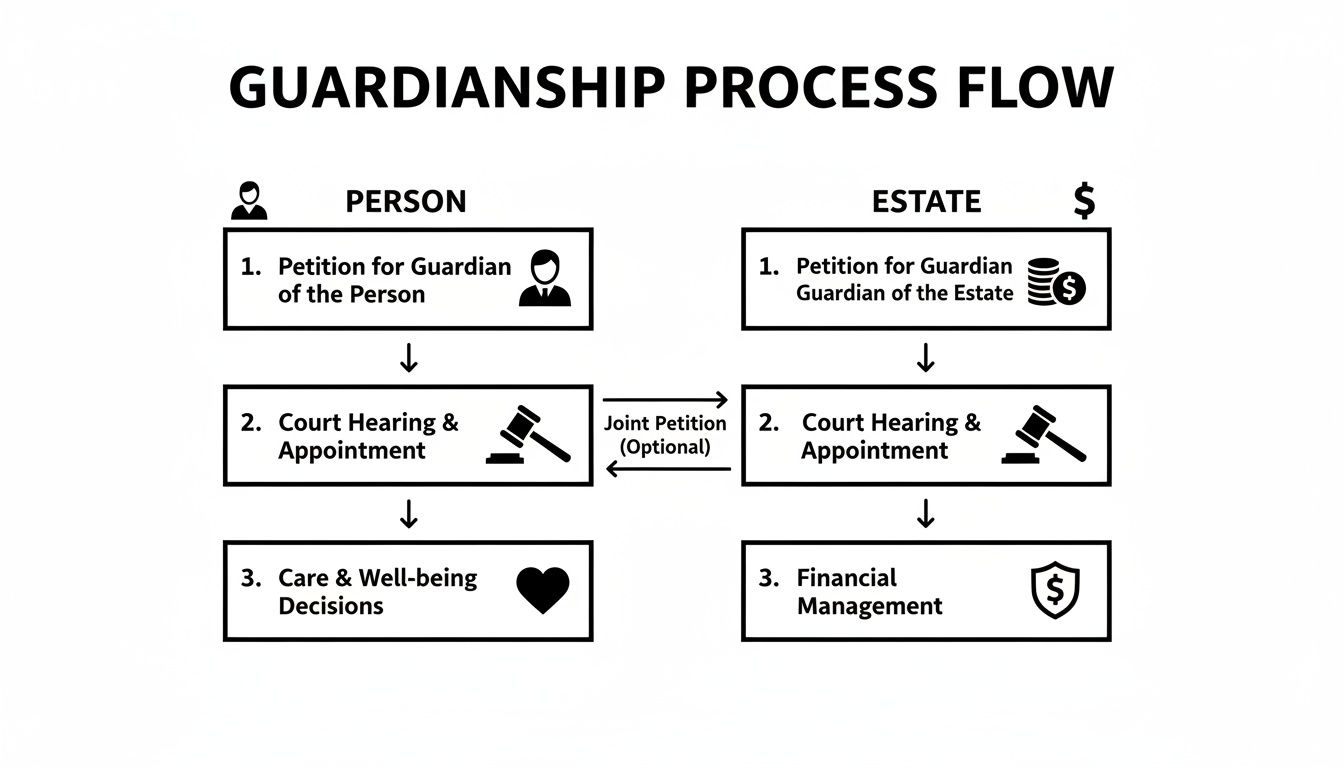
As you can see, while both roles come from the same need for protection, they tackle completely different aspects of a person's life.
The Gravity of the Commitment
The need for qualified, compassionate guardians isn't just a Texas issue; it's a global one. Take Scotland, for example, where a record 20,152 individuals were under welfare guardianship orders as of 2025. The most common reasons were learning disabilities (49%) and dementia (32%)—the very same challenges families face right here. This shows that guardians are often working with people experiencing significant cognitive decline, a role that takes immense patience and empathy. You can read more about these international guardianship trends and the call for law reform.
Acknowledging the emotional and financial toll is a critical first step. Guardianship is more than a legal process; it's a long-term commitment that profoundly reshapes family dynamics and personal responsibilities.
Deciding to pursue guardianship is a major step and often a very difficult choice. It requires a careful balancing act of love, duty, and legal understanding.
If you believe this is the necessary path forward to protect someone you care about, our team at The Law Office of Bryan Fagan is here to provide the clarity and support you need. Schedule a free consultation today to discuss your family’s unique situation and understand your options under Texas law.
Kicking Off the Texas Guardianship Application Process
Starting the legal journey to become a court-appointed guardian in Texas involves specific steps, but it doesn't have to feel intimidating. It begins by formally asking a court for the authority to protect a loved one by filing a legal document called an "Application for Appointment of Permanent Guardian."
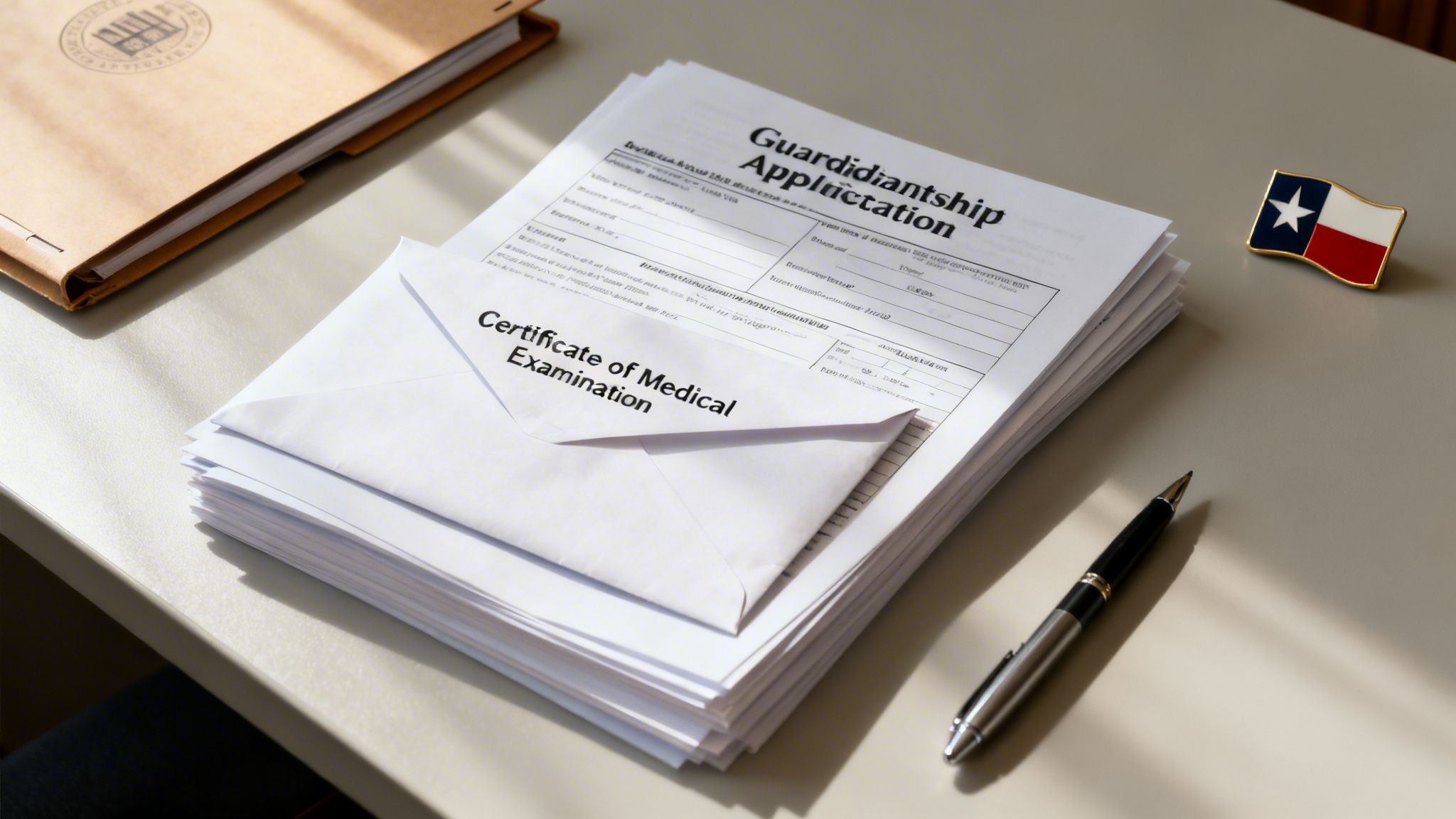
Think of this application as the story you present to the judge. It needs to clearly state who the proposed ward is, describe their condition, explain why they can't manage their own care or finances, and make the case for why you are the right person for this role.
The need for guardianship is a very real issue for families across the country. In fact, the U.S. guardianship system has grown by about 32 percent over the last decade and now oversees roughly 1.3 million active adult cases. These cases involve an estimated $50 billion in assets managed by guardians, a number that reflects our aging population and a growing need for this kind of protection. You can discover more insights about these national guardianship statistics to get a better sense of the big picture.
Filing the Application and Proving Incapacity
Once you file the application in the correct court—for example, the Harris County Probate Court if that's where your loved one lives—the legal process officially begins. One of the most critical pieces of evidence you'll need is a physician's letter, known legally as a “Certificate of Medical Examination.”
This isn't just any doctor's note. It must be dated within 120 days of filing your application and serves as the medical proof of incapacity. A doctor must examine the proposed ward and give the court a detailed report on their physical and mental state, explaining the nature of their condition and offering a professional opinion on their ability to make decisions.
This medical certificate is the foundation of your case. Without a clear, current medical assessment confirming that your loved one is incapacitated, the court simply has no basis to grant a guardianship and take away their civil rights.
This is a strict requirement under the Texas Estates Code. The law demands clear and convincing evidence that the person can't manage their own affairs, and this medical report is the cornerstone of that evidence.
The Role of the Attorney Ad Litem
After your application is filed, the judge will appoint an independent attorney called an "attorney ad litem." This attorney doesn't work for you or the judge. Their only client is the proposed ward, and their sole job is to represent that person's best interests.
Think of the attorney ad litem as the court's trusted investigator. Their duties typically include:
- Visiting the Proposed Ward: They will meet personally with your loved one to explain what's happening in simple terms.
- Conducting an Investigation: They'll interview you, other family members, doctors, and caregivers to get a full picture.
- Reviewing Medical Records: The ad litem will carefully examine the Certificate of Medical Examination and any other relevant health information.
- Making a Recommendation: Finally, they will submit a formal report to the judge with their findings and a recommendation on whether a guardianship is truly needed and if you are a suitable person to serve as guardian.
This independent review is a crucial safeguard that protects the proposed ward's rights throughout the entire process.
Providing Notice and Preparing for the Hearing
Texas law is very clear that certain people must receive formal legal notice that a guardianship application has been filed. This is called "serving notice," and it ensures that everyone with a direct interest in the proposed ward’s life has an opportunity to participate in the court hearing.
Notice usually needs to be served to:
- The proposed ward themselves
- Their parents, spouse, and children
- Anyone currently managing their finances or living with them
Some courts, like those in Dallas or Tarrant County, might also assign a court investigator to conduct a separate review. They will verify the information in your application and assess your loved one's living situation. Being completely transparent and cooperative with both the attorney ad litem and any court investigator is key. You can get more detail on what to expect by checking out our guide on how to apply for guardianship in Texas.
Facing these steps can be emotionally draining, but remember that each one exists to protect your loved one. If you're feeling overwhelmed, The Law Office of Bryan Fagan is here to provide the guidance you need. Schedule a free consultation with our team to get personalized legal advice.
Preparing for Your Day in Court
After the applications are filed and the investigations are complete, the entire process builds toward one critical event: the guardianship hearing. This is where a judge in a Texas probate court, whether in Tarrant County or Bexar County, makes a final, life-altering decision. We know walking into that courtroom can feel intimidating, but with proper preparation, you can present your case with confidence and clarity.

The hearing is a formal proceeding where the judge weighs evidence and testimony to determine two main things. First, they must be convinced by "clear and convincing evidence" that your loved one is genuinely incapacitated. Second, they must decide if appointing you as guardian truly serves the ward’s best interest.
Who Will Be in the Courtroom
Knowing who to expect can ease your anxiety. While no two hearings are exactly alike, you’ll generally see a few key players.
- The Judge: The person who listens to all the evidence and makes the final call.
- You (the Applicant) and Your Attorney: You’ll be there to present the case and answer questions.
- The Proposed Ward: Texas law requires the proposed ward to be present unless a doctor has stated in writing that attending would be harmful to their health.
- The Attorney Ad Litem: The court-appointed attorney representing the proposed ward's interests.
- Witnesses: Doctors, caregivers, or other family members may be asked to testify.
- Opposing Parties: If the guardianship is contested, other family members and their lawyers may be present.
The atmosphere is serious and respectful. Your job is to provide honest, straightforward information that helps the judge understand the reality of your loved one’s situation. Our team has put together a detailed guide to help you get a better sense of what to expect at a Texas guardianship hearing.
Navigating Contested Guardianships
Unfortunately, not every family agrees on the need for a guardianship or on who should be in charge. These disagreements often lead to a contested hearing, which can be emotionally and financially draining. A common scenario is when adult siblings fight over who should be appointed guardian for an aging parent.
Imagine a situation in Collin County where two brothers both file to become guardian of their mother, who has Alzheimer's. One brother lives with her and handles daily care, while the other manages her finances from another state. In their own minds, each believes he is the best person for the job. This is a guardianship dispute.
In a contested case like this, the judge’s focus gets much sharper. They have to look beyond basic qualifications and dig into the details of each person's relationship with the proposed ward, their motivations, and their ability to act without a conflict of interest.
In a family dispute, the court's sole priority is the well-being of the proposed ward. The judge will set aside family history and personal feelings to determine who can most capably and impartially serve the ward's best interests.
Evidence is everything in these situations. The judge will want to see proof of who has been the primary caregiver, who has managed money responsibly, and whether any conflicts of interest exist. Testimony from doctors or social workers can carry a lot of weight. If the family conflict is too severe, the court might even decide to appoint a neutral, professional guardian instead.
Preparing for a potential contest means you must be meticulous with your evidence. Organize financial records, document caregiving schedules, and keep a log of important medical events. Presenting a well-organized, fact-based case shows the court that you are a responsible and prepared candidate.
No matter what, the hearing is your chance to show your commitment to your loved one’s well-being. If you are facing a complex or contested guardianship, having an experienced attorney is vital. Schedule a free consultation with The Law Office of Bryan Fagan to discuss your case and build a strong strategy for your day in court.
The Responsibilities You Have After Appointment
Once the judge signs the order, your real work as a court-appointed guardian begins. This isn't just a title; it's a profound legal and ethical commitment known as a fiduciary duty. This means you are legally required to act in the absolute best interest of the ward, managing their affairs with the highest degree of care and honesty.

This role comes with serious court oversight to protect the ward from neglect or exploitation. The Texas Estates Code spells out exactly what you need to do to stay in good standing. Failing to meet these duties can lead to your removal as guardian, so it's critical to understand them from the start.
Your Immediate Post-Appointment Tasks
The court requires you to complete a few crucial, time-sensitive steps to officially qualify and activate your authority. These are non-negotiable requirements.
Your first moves must be:
- Take an Oath of Guardianship: You will sign a sworn statement before a court clerk or notary, promising to faithfully carry out all your duties.
- Post a Bond: For most guardians of the estate, the court will require you to purchase a surety bond. This is like an insurance policy that protects the ward's assets from any mismanagement. The judge sets the bond amount based on the estate's value.
- Receive Your Letters of Guardianship: After you've taken the oath and secured the bond, the court clerk will issue your “Letters of Guardianship.” This is the official proof of your legal authority to act for the ward.
Without those Letters, you cannot act. Banks, doctors, and other institutions won't recognize your authority to make decisions or manage accounts.
Creating a Financial Blueprint
One of your first major projects is to create a complete and accurate inventory of the ward’s estate. This isn't just a list; it's a formal report filed with the court.
Within 60 days of qualifying, you must file an “Inventory, Appraisement, and List of Claims.” This document catalogs every single asset the ward owns—from their checking account and house to personal belongings. It establishes the value of the estate on the day you took over, creating a clear baseline for all future accountings.
This inventory is the cornerstone of your financial accountability. It ensures total transparency and protects both you and the ward by creating an official record of the estate’s condition from day one.
Ongoing Compliance And Annual Reporting
Your duties don't stop once the initial paperwork is filed. The court demands regular updates to ensure the ward is receiving proper care and their finances are being managed responsibly. These yearly reports are a fundamental part of being a court-appointed guardian in Texas and are key to guardianship compliance.
Your two main annual filings are:
- Annual Report on the Condition and Well-Being of the Ward: This report focuses on the ward’s personal situation. You’ll detail their living arrangements, physical and mental health, and any major life changes from the past year.
- Annual Accounting: For guardians of the estate, this is a detailed financial report. You must show every dollar that came into the estate and every dollar that went out, backing it up with receipts and bank statements.
Keeping up with these duties requires diligence, especially for those serving multiple wards. Research from Florida's guardianship system, for example, found that while 71% of guardians manage ten or fewer cases, a staggering 40% of wards are cared for by guardians juggling caseloads of over 30. This data underscores the immense responsibility involved.
You may also need the court's permission for major decisions. For instance, authorizing a significant medical procedure or selling the ward’s home to cover care costs will likely require a specific court order. These checks and balances ensure every big decision serves the ward’s best interests.
This is a big responsibility, and there’s a lot to learn. For a deeper dive, check out our guide on the responsibilities of a legal guardian in Texas. Fulfilling these obligations with care is how you honor the court's trust.
A Guardian’s Annual Compliance Checklist
This table breaks down the essential yearly filings required by Texas courts to keep you in good standing. Staying on top of these deadlines is crucial for maintaining your appointment.
| Task | Required Filing | Typical Deadline | Purpose |
|---|---|---|---|
| Personal Well-Being Update | Annual Report on the Condition and Well-Being | Annually, within 60 days of the anniversary of your appointment. | To inform the court about the ward’s health, living situation, and overall welfare. |
| Financial Transparency | Annual Accounting | Annually, within 60 days of the anniversary of your appointment. | To provide a detailed breakdown of all income and expenses for the ward's estate. |
| Bond Renewal | Proof of Bond Premium Payment | Annually, before the current bond expires. | To ensure the ward’s assets remain protected against mismanagement. |
Think of this table as your annual roadmap. By planning for these filings ahead of time, you can avoid stress and meet all of the court's expectations.
If you ever feel overwhelmed or have questions about your duties, don't hesitate to seek guidance. The Law Office of Bryan Fagan offers a free consultation to help you navigate the reporting requirements and stay in full compliance.
Powerful Alternatives to Full Guardianship
When a loved one struggles to make decisions, your first instinct is to protect them. But jumping straight to a full guardianship in Texas should always be the absolute last resort.
The legal system makes it intentionally difficult because guardianship removes a person's most fundamental rights. A court never takes that step lightly.
Before considering that intensive legal road, Texas law requires you to look at less restrictive alternatives. These are powerful tools that can often provide the same level of protection without the cost, emotional toll, and loss of freedom that a court-ordered guardianship brings. Exploring these options first isn't just a good idea—it's a necessary step.
Powers of Attorney: The First Line of Defense
One of the most effective alternatives is having a solid set of Power of Attorney documents. These legal papers allow your loved one (the "principal") to choose a trusted person (the "agent") to make decisions for them if they become unable to.
The key is that these documents must be signed while the person still has the mental capacity to understand what they are authorizing.
There are two essential types:
- Durable Power of Attorney: This gives an agent control over financial matters—paying bills, managing bank accounts, or handling real estate. The "durable" part is key; it means the document stays valid even if the principal later becomes incapacitated.
- Medical Power of Attorney: This appoints a healthcare agent to make medical decisions if the principal can't communicate their wishes. This person can talk to doctors, approve treatments, and access medical records.
If these documents aren't created before incapacity hits, the window closes. It’s simply too late to sign a power of attorney once a person can no longer make sound decisions.
Supported Decision-Making Agreements
A newer option in Texas is the Supported Decision-Making Agreement. This is a perfect tool for adults, often those with disabilities, who can make their own choices but need help gathering information, understanding options, and communicating their final decision.
This is not guardianship. A supported decision-making agreement doesn't take away any rights. Instead, it formalizes a support system where a trusted advisor helps the individual think through issues so they can make their own informed choice.
A Supported Decision-Making Agreement empowers individuals by preserving their autonomy. It formalizes a collaborative relationship, ensuring they have the help they need without surrendering their legal right to choose.
This approach maintains respect and independence, keeping the person in the driver's seat of their own life.
Other Practical Alternatives to Consider
Beyond formal legal documents, several other practical strategies can offer support. Before thinking about full guardianship, less intrusive options like setting up a plan for comprehensive home care can make an enormous difference.
Other common alternatives include:
- Representative Payee: For someone receiving Social Security benefits, the Social Security Administration can appoint a trusted person to manage those specific funds.
- Joint Bank Accounts: Adding a trusted family member to a bank account can help with paying bills. However, this strategy has risks and needs to be thought through carefully.
- Trusts: A well-drafted Revocable Living Trust allows a successor trustee to step in and manage the trust's assets if the original trustee becomes incapacitated, often avoiding the need for a guardian of the estate.
The best way to avoid a crisis is through thoughtful Estate Planning done in advance. If you're trying to figure out how to protect a family member, let us help you understand all your options. Schedule a free consultation with The Law Office of Bryan Fagan to find the most compassionate and effective solution for your family.
Common Questions We Hear About Texas Guardianship
When you’re considering how to become a court-appointed guardian in Texas, it’s natural to have questions. Families often come to us worried about the costs, logistics, and what happens when you need to act fast. Here are straightforward answers to the questions we hear most often.
What's the Real Cost to Become a Guardian in Texas?
The honest answer? It varies. The final cost depends on how complex your family's situation is. You should plan for court filing fees, the cost of the attorney ad litem (appointed to represent your loved one), and your own attorney's fees.
If everyone agrees and the guardianship is uncontested, you might be looking at a few thousand dollars. But if the case is contested—for example, if family members disagree and it ends up in a Bexar County Probate Court—litigation can make the costs climb significantly. It’s essential to have a frank conversation about the potential financial commitment with your attorney right at the start.
Can I Be a Guardian if I Don't Live in Texas?
Yes, but there's an extra step. Texas law requires any guardian living out-of-state to appoint a resident agent. This is a person who lives in Texas and can officially accept legal notices or court documents for you.
The judge's number one priority is always what's in the best interest of the ward. They will look very closely at whether you can realistically manage someone's daily care and financial needs from hundreds of miles away. Expect long-distance arrangements to get extra scrutiny.
Having a resident agent is how the court ensures it can maintain jurisdiction and communicate effectively.
What if We Need a Guardian Right Now, in an Emergency?
Texas law has a specific process for crisis situations. If someone is facing an immediate and real risk of physical harm or major financial loss, you can petition the court for a Temporary Guardianship. This is also known as an emergency guardianship.
This is an accelerated process designed to get protections in place quickly. A judge can grant temporary powers, usually for up to 60 days, which is typically long enough to get the permanent guardianship case moving forward.
A temporary guardianship is a critical tool that allows you to:
- Authorize emergency medical care after a sudden accident.
- Stop financial exploitation if an elderly loved one is being targeted by scammers.
- Step in to manage critical affairs after an unexpected, severe decline in health.
It’s a vital safeguard for Texas families in crisis, providing immediate protection when waiting for the standard court process isn't an option.
Navigating the details of Texas guardianship is the first step toward protecting the person you care about. The team at The Law Office of Bryan Fagan, PLLC is here to answer all your questions with clarity and compassion. We can help you figure out the best path forward for your family's unique situation.
Schedule your free, no-obligation consultation today by visiting us at https://texasguardianshiplawyer.net.