Skip to content
Yes, you can absolutely initiate the legal process for removing a guardian in Texas. This is not a step anyone takes lightly, but when you have valid reasons to believe a guardian is failing to protect your loved one, Texas law provides a clear path forward. The Texas Estates Code outlines specific grounds for removal, from abuse and neglect to financial mismanagement, ensuring you can act to safeguard a vulnerable person.
We understand that reaching this point is often emotionally draining. At The Law Office of Bryan Fagan, our mission is to guide Texas families through these complex guardianship matters with clarity and care. This guide will walk you through the process, explain the legal requirements, and empower you with the knowledge needed to take the next step.
Knowing When Guardian Removal Is Necessary
The decision to seek the removal of a guardian is often a last resort. It usually follows weeks or months of growing concern, emotional turmoil, and the painful realization that the person appointed to protect your loved one might be causing them harm. We see families wrestling with this weight, and we want you to know you are not alone.
Texas law is designed to put the well-being of the person under guardianship—known as the "ward"—above all else. Making this choice means shifting from a private family concern to a formal legal one. It’s about taking your observations and translating them into the specific legal reasons a probate court, like the Harris County Probate Court, will recognize. This isn't about airing personal disagreements; it's about proving the guardian has failed in their legal duties.
Common Grounds for Removing a Guardian
The Texas Estates Code, Title 3, Subtitle G, lays out several valid reasons a court can remove a guardian. While the legal text can be dense, the principles are rooted in common sense and basic decency. Let's break down what these reasons look like in the real world.
To help you quickly identify if your concerns match what the law requires, here’s a table outlining the most common grounds for removal in Texas.
Valid Grounds for Guardian Removal in Texas
| Reason for Removal | Example Scenario | Relevant Texas Estates Code Section (Subtitle G) |
|---|---|---|
| Gross Misconduct or Mismanagement | The guardian uses the ward’s money for their own personal trips or fails to pay the ward's nursing home bills on time, putting them at risk of eviction. | § 1203.052(a)(1) |
| Failure to File Required Reports | The guardian consistently misses the deadline to file the annual accounting of finances or the annual report on the ward's condition, hiding their actions from the court. | § 1203.052(a)(2) |
| Neglect, Abuse, or Cruelty | The guardian fails to ensure the ward has adequate food, safe housing, or necessary medical care. They might also isolate the ward from family and friends. | § 1203.052(a)(3) |
| Guardian Becomes Incapacitated or Develops a Conflict of Interest | The guardian develops their own serious health issues, moves out of state without court approval, or is found to owe the ward a significant amount of money. | § 1203.052(a)(4), (5) |
These are just a few examples, but they cover the majority of cases we see. If a guardian's actions fall into one of these categories, the court has clear justification to step in.
When the Ward's Condition Improves
Sometimes, the need for removal isn't about misconduct at all. It's a positive development: the ward’s condition has improved so much that they may not need a guardian anymore. This is a moment to celebrate.
If someone who was previously incapacitated regains the ability to manage their own affairs—perhaps after recovering from a serious illness or completing a rehabilitation program—the guardianship itself may no longer be necessary. This process is called "termination and restoration."
In these situations, the ward or someone acting on their behalf can petition the court to end the guardianship and restore their legal rights. This almost always requires a new Certificate of Medical Examination from a physician confirming the person is now capacitated and can make their own decisions.
If your situation involves potential mistreatment, it's also critical to know how to report guardianship abuse in Texas.
A Real-World Scenario: Imagine an adult child, Sarah, who notices her elderly father’s guardian has stopped arranging physical therapy appointments and is slow to approve funds for needed home repairs. When Sarah asks for financial records, the guardian is evasive. This combination of potential neglect and financial secrecy is a classic red flag that justifies exploring the removal process.
Understanding these grounds is the very first step toward protecting your loved one. If any of these scenarios sound uncomfortably familiar, it may be time to discuss your options with a compassionate legal professional.
Navigating the Texas Guardian Removal Process
Starting the legal process to remove a guardian can feel daunting, but knowing what to expect can bring a great deal of clarity. While we recognize the emotional toll these cases take, the legal procedure itself is structured and logical. Let’s walk through the practical roadmap for removing a guardian in Texas so you can see what lies ahead.
The entire process plays out in the specific probate court that has jurisdiction over the original guardianship, such as the Harris County Probate Court or Dallas County Probate Court. Your goal is to present your concerns in a way the court understands. This isn't about winning a fight; it's about ensuring a vulnerable person is protected.
Kicking Off the Legal Process
The very first formal step is filing a “Motion to Remove Guardian” with the court. This is the legal document that officially tells the judge who you are (the “movant”), who the guardian and ward are, and—most importantly—the specific reasons you believe the guardian needs to be removed.
These reasons must align with the legal grounds laid out in the Texas Estates Code. It’s not enough to say you just disagree with the guardian. You must point to specific failures, such as mismanaging money or neglecting the ward’s basic needs.
Key Takeaway: The Motion to Remove is the absolute cornerstone of your case. It frames the entire legal argument and tells the judge exactly why you're asking the court to step in. A vague or poorly drafted motion can get dismissed, stopping the process before it even really starts.
Filing this motion sets the legal wheels in motion. It alerts the court to a serious problem in a guardianship it oversees and kicks off the next steps required to address your claims.
The Critical Step of Providing Notice
Once you've filed the motion, you can't just sit back and wait for a court date. Texas law is very clear: all interested parties must receive formal notice of the action. This is a basic element of due process, ensuring everyone involved has a fair chance to be heard.
Parties who must be "served" (formally notified) with the court papers typically include:
- The current guardian, who has a right to defend against the accusations.
- The ward, whose rights are the entire reason for the proceeding.
- Close family members who were involved in the original guardianship case.
- Any relevant agencies, such as Adult Protective Services, if they are involved.
"Serving" someone means delivering the court documents in a legally recognized way. This is usually done by a professional process server or through certified mail. This step is non-negotiable; it proves to the court that you followed the rules so the case can move forward.
The most common reasons families find themselves starting this process are usually tied to clear failures.
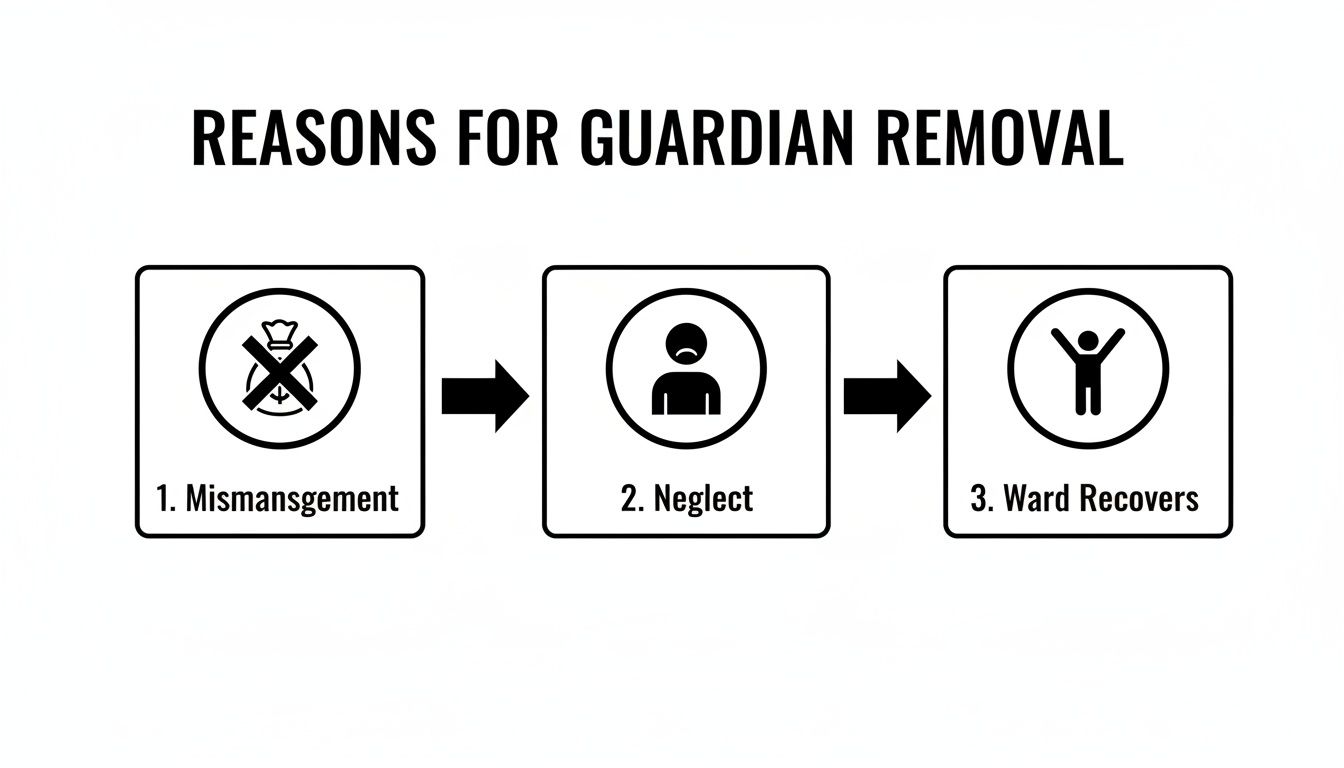
As you can see, removal actions are often triggered by serious issues like financial mismanagement and neglect, but they can also happen for positive reasons, like when a ward’s condition improves enough that a guardianship is no longer needed.
What to Expect in a Removal Hearing
After everyone has been properly notified, the court will set a hearing. This is your chance to present your case directly to the judge. It’s a formal event where you’ll present evidence and witnesses might testify.
During the hearing, you must prove the allegations you made in your motion. The guardian will get the same opportunity to present their own evidence and testimony to defend their actions. The judge listens to both sides, reviews the evidence, and makes a decision based on one single standard: the best interest of the ward.
For instance, if you alleged financial mismanagement, you would need to show the judge bank statements, suspicious receipts, or even bring in a financial expert to testify. If the issue was neglect, you might present medical records, photos of the living conditions, or testimony from caregivers who witnessed it.
This hearing is the climax of the removal process. All your preparation and evidence are laid out for the court to see. Knowing how to build a strong, compelling case is absolutely crucial, because the judge's final decision will rest entirely on the evidence presented.
At The Law Office of Bryan Fagan, we have guided countless Texas families through this exact process. If you are concerned about a loved one's well-being under a guardianship, we invite you to schedule a free consultation to discuss your specific situation with care and confidentiality.
Building a Strong Case for Removal
When it comes to removing a guardian in Texas, a probate court judge won’t act on suspicions or hurt feelings alone. Your success hangs entirely on the strength and quality of your evidence. It’s all about gathering the proof needed to show the court that the guardian has failed in their duties or, in some cases, is no longer needed at all.
This means turning your legitimate concerns into a structured, persuasive legal argument. You have to paint a clear picture for the judge, backed by documents and testimony, showing why a change is absolutely in your loved one’s best interest.

Gathering Your Evidence
Think of yourself as building a case file for your loved one. Your job is to collect concrete proof that supports the specific claims you made in your Motion to Remove. This is no time for vague statements; you need verifiable facts that directly connect to the reasons you're seeking removal, whether it's financial abuse, neglect, or something else.
Key Types of Evidence in a Removal Case
To build a case that stands up in court, you’ll want to focus on documentation that is hard to dispute. These are the types of evidence that carry the most weight with a judge:
- Financial Records: This is the bedrock of any case involving financial mismanagement or exploitation. You’ll need to request bank statements, credit card bills, investment account records, and receipts. Look for unauthorized withdrawals, strange purchases, or any payments made directly to the guardian.
- Medical and Care Records: If you're concerned about neglect, these documents are vital. Obtain records from doctors, hospitals, and care facilities. They can reveal missed appointments, untreated health issues, or a clear decline in the ward’s health that suggests a lack of proper care.
- Witness Testimony: Firsthand accounts from people who have seen what’s happening can be incredibly powerful. This could be testimony from family, friends, neighbors, or professional caregivers who have witnessed the guardian’s misconduct or the negative impact on the ward.
- Photos and Videos: Sometimes, a picture says it all. Photos of unsafe or unsanitary living conditions, visible signs of neglect like bedsores, or videos that document the ward’s condition can provide undeniable proof that something is wrong.
A Crucial Document for Termination: The Certificate of Medical Examination
If the ward has recovered and may no longer need a guardian, a Certificate of Medical Examination (CME) is absolutely essential. A physician completes this formal document, stating that the ward has regained the capacity to manage their own affairs. A positive CME is often the single most persuasive piece of evidence for terminating a guardianship.
The legal process for removing a guardian is complex, and success hinges on solid evidence. For instance, in 2022 alone, Harris County probate courts handled 1,248 guardianship contests, and a significant number led to removal after breaches like failing to file annual accountings were proven. This underscores the importance of well-documented proof.
Organizing Your Evidence into a Story
Once you’ve gathered your documents and lined up your witnesses, the next step is to weave it all into a coherent narrative. You need to connect the dots for the judge and show a clear pattern of behavior.
Let's imagine a family suspects their mother's guardian is stealing from her estate. They would start by getting her bank records and highlighting every questionable withdrawal. Next, they could match those dates with testimony from a caregiver who states the mother never received cash or the items supposedly purchased. This one-two punch of financial documents and witness statements creates a powerful, convincing story of exploitation. If you are facing a similar situation, you might find our guide on contesting a guardianship in Texas helpful.
Building a strong case is a detailed and often emotional process. The attorneys at The Law Office of Bryan Fagan have the experience needed to assemble evidence and protect vulnerable adults. If you need help turning your concerns into a persuasive legal argument, contact us for a free, compassionate consultation.
What to Expect After a Guardian Is Removed
The judge’s order to remove a guardian often brings an immediate sense of relief. But it’s important to understand that this court decision isn’t the final step. Instead, it marks the beginning of a crucial transition period. What happens next is vital for ensuring the long-term safety and stability of the person under guardianship, the ward.
Once a guardian is removed, the Texas probate court will typically follow one of two paths, always guided by the ward's best interests. The primary goal is to ensure a smooth transfer of responsibility and secure the ward's future.
Appointing a Successor Guardian
In most situations where a guardian is removed for cause, the ward still requires protection. The court’s immediate priority becomes appointing a successor guardian. This is a new, qualified person or entity ready to step in and assume all the duties and responsibilities the previous guardian held.
This successor could be a family member who initiated the removal, another relative, or even a professional guardian if no suitable family is available. The court will vet this new candidate just as it did the original, ensuring they are a good fit and truly have the ward’s best interests at heart.
A Real-World Scenario: Imagine a family successfully removed their elderly mother's guardian in Bexar County Probate Court due to financial mismanagement. Her adult son, Mark, who petitioned for the removal, has offered to take over. The judge will review Mark’s qualifications, and if he’s approved, appoint him as the successor guardian.
Once appointed, the successor guardian’s work begins right away. Their first tasks are often urgent, focused on securing the ward’s assets and personal well-being.
First Steps for a New Successor Guardian
If you've been appointed as a successor guardian, you need to act quickly to protect the ward. The transition can be chaotic, so having a clear plan is essential.
Your initial priorities will likely include:
- Securing Financial Assets: Immediately contact all banks and financial institutions. You need to transfer control of the ward’s accounts into your name as the guardian to prevent the removed guardian from accessing any more funds.
- Updating Medical Providers: Notify all doctors, hospitals, and care facilities that you are the new legal guardian. You’ll need to provide them with a copy of your court order (Letters of Guardianship) to ensure you can make medical decisions and access health records.
- Communicating with Caregivers: Arrange meetings with any in-home caregivers, nursing home staff, or therapists. Introduce yourself and establish yourself as the new point of contact.
- Reviewing the Ward’s Situation: Conduct a thorough assessment of the ward's health, living situation, and finances. This will help you understand their current needs and identify any immediate problems created by the previous guardian.
This is a significant amount of work, but it's absolutely necessary. You are now the primary protector for the ward, and these initial actions establish your authority and secure their well-being.
The Final Accounting and Closing the Chapter
Before the removed guardian is completely off the hook, the court will order them to file a final accounting. As required by the Texas Estates Code, this is a detailed financial report showing every dollar that came in and went out of the ward’s estate during their tenure. This is a mandatory step designed to ensure transparency and accountability.
The judge, the new successor guardian, and their attorney will scrutinize this report for any discrepancies or further signs of misconduct. If the accounting is approved, the outgoing guardian is released from their bond. If problems are discovered, the court can order the removed guardian to repay any missing funds to the ward's estate.
This final accounting provides closure and helps create a clean financial slate, allowing the new guardian to move forward with confidence. For guidance on related legal processes, our resources on Probate and Estate Planning can be very helpful.
Why You Need an Attorney for This Process
Trying to remove a guardian on your own is, to put it plainly, a legal battle you are not equipped to fight. While your desire to protect a loved one comes from the heart, the process itself is governed by the complex rules of the Texas probate court. This isn't a simple disagreement; it's a formal legal proceeding that requires precision and experience.
For families already under incredible stress, navigating the maze of court procedures, evidence standards, and emotionally charged hearings can feel impossible. It’s like being asked to perform surgery with no medical training.

Hiring an experienced guardianship attorney isn’t an aggressive move. It’s a strategic one. It ensures that your concerns are heard and that the vulnerable person is protected correctly and efficiently. Think of an attorney as your advocate, translator, and guide all in one.
Mastering the Legal Labyrinth
Texas probate courts, from Harris County to smaller rural jurisdictions, have their own specific rules and procedures. One small misstep—like improperly filing a motion, missing a deadline, or failing to notify a required party—can cause massive delays or, even worse, get your case dismissed entirely.
An attorney’s first job is to manage this complexity. They ensure every document is drafted with precision, filed on time, and served exactly according to the law.
Key Takeaway: An attorney's expertise transforms your valid concerns into a legally sound argument that a judge will take seriously. They handle the procedural burdens so you can focus on supporting your loved one.
This isn't just about dotting i's and crossing t's on paperwork. It's about building a case that meets the strict standards demanded by the Texas Estates Code.
Building an Evidence-Based Case
A judge won't make a decision based on your gut feeling or personal convictions, no matter how strong they are. The entire case will hinge on facts and admissible evidence. An attorney knows what kind of proof a court will consider and how to present it in a compelling way.
This includes knowing how to:
- Gather Critical Proof: An attorney can subpoena the specific financial records, medical charts, or caregiver logs that can reveal neglect, abuse, or mismanagement.
- Prepare Witnesses: They work with family members, doctors, or financial experts to make sure their testimony is clear, credible, and focused on the facts that matter to the judge.
- Challenge the Guardian: A skilled lawyer knows how to effectively cross-examine the current guardian, exposing inconsistencies and dismantling weak or fabricated defenses.
At the Law Office of Bryan Fagan, we have a strong track record of securing positive outcomes for our clients by building compelling, evidence-based cases.
Providing Objective Guidance and an Emotional Buffer
Confronting a guardian, especially if it’s a family member, is emotionally exhausting. An attorney provides a crucial buffer, handling the tense phone calls and difficult communications so you don’t have to. They offer calm, objective advice during a turbulent time, helping you make clear-headed decisions that are truly in the ward's best interest, free from the heat of the moment.
At The Law Office of Bryan Fagan, our attorneys have deep experience in Guardianship, Probate, and Estate Planning matters across Texas. We understand the delicate balance of compassion and legal strength required to succeed. If you believe a loved one is at risk, you don't have to face this fight alone.
Schedule a free, confidential consultation with us today to discuss your family's situation and learn how we can help protect those who matter most.
Common Questions About Removing a Guardian
Trying to remove a guardian in Texas is a path filled with questions. Families often find themselves caught between a sense of urgency to protect a loved one and deep uncertainty about the legal road ahead. To offer some initial clarity, we've pulled together answers to the questions we hear most often from clients facing this difficult process.
Our aim is to provide direct, practical information to help you understand what you might be up against.
How Long Does the Guardian Removal Process Take in Texas?
The timeline for removing a guardian can vary significantly. In an uncontested case, where the guardian agrees to step down, the matter might be resolved in just a few months. This is the fastest and least stressful route.
However, a contested case is a different matter. If the guardian fights the removal and a full hearing is needed to present evidence, the process can easily stretch from six months to over a year.
Several factors can affect this timeline:
- The Court's Schedule: Busy probate courts, especially in large counties like Harris or Dallas, have packed dockets. This can mean a long wait just to get a hearing date on the calendar.
- Case Complexity: A straightforward case of neglect is much quicker to resolve than one involving complex financial exploitation, which might require a forensic accountant to trace funds.
- Emergency Filings: If the situation is dire and you need to file for an emergency suspension of the guardian, it adds another legal layer but can offer immediate protection for the ward.
An experienced attorney can give you a more accurate time estimate after reviewing the specifics of your situation.
What Is the Cost of Removing a Guardian?
The financial reality of a removal action is a major concern for almost every family. Typically, the costs break down into court filing fees, fees for a process server to notify all involved parties, and attorney's fees, which usually make up the largest part of the expense.
If you suspect financial misconduct, you might also need to hire a forensic accountant to review financial records and testify as an expert witness. We know this is a significant financial investment, but it’s critical to weigh it against the ongoing emotional and financial devastation that neglect or exploitation can cause.
Can I Get a Guardian Removed in an Emergency?
Yes, Texas law provides a way to get a guardian suspended on an emergency, temporary basis. This is a powerful tool, but it's reserved for situations where you have clear and convincing evidence that the guardian poses an immediate risk of serious harm to the ward or their estate.
To do this, your attorney would file for a Temporary Restraining Order (TRO). A TRO can immediately freeze the guardian’s authority while the full motion for removal is being decided. This is a very high legal bar to clear and is generally only granted in severe cases, such as when there's documented abuse or clear evidence of theft.
What Happens if the Court Denies My Motion for Removal?
If the judge denies your motion to remove the guardian, they will remain in place. It's a disheartening outcome, but it’s crucial to understand why the judge ruled against you. Was the evidence not strong enough? Did the legal argument fail to meet the strict standards of the Texas Estates Code?
This is where having a seasoned attorney is absolutely vital. They can analyze the court’s decision and help you map out your next steps. Depending on the situation, you might consider appealing the ruling or, if new evidence of misconduct comes to light later, filing a completely new motion for removal. As a ward, you have specific rights, and it's important to know what they are. You can learn more about the rights of the ward in our detailed article.
Key Insight: A denial doesn't always mean it's over. It's an opportunity to step back, re-evaluate your evidence and strategy with legal counsel, and prepare to take future action to protect your loved one.