Skip to content
Navigating estate planning can often feel like piecing together a complex puzzle, but for many Texas homeowners, a Lady Bird Deed offers a surprisingly simple and powerful solution. This unique deed lets you pass your home directly to your loved ones when you die, completely sidestepping the probate court process, all while you keep full control over the property for as long as you live. For families facing the emotional and financial challenges of planning for the future, this tool can provide significant peace of mind.
What Is a Texas Lady Bird Deed?
When Texas families start thinking about estate planning, two big worries usually surface: losing control of their home and leaving their children with a drawn-out, complicated court battle. We understand these concerns. The Lady Bird Deed, also known legally as an enhanced life estate deed, tackles both of these fears head-on with empathy and legal precision.
Think of it like this: A regular deed that transfers property is like a final, irreversible decision. Once you give it away, you can't change your mind. A Lady Bird Deed, on the other hand, is like having a fully flexible plan for your own home. You remain in complete control. You can change the beneficiary, sell the house, or even revoke the deed whenever you want, without needing anyone's permission.
This legal instrument works by splitting ownership. You, the owner (or "grantor"), keep a life estate, meaning you own it for your lifetime. Your chosen loved one (the "beneficiary") gets what's called a remainder interest. But—and this is the key—your life estate is enhanced with special powers that traditional life estates just don't have, giving you ultimate flexibility.
Key Features of a Texas Lady Bird Deed at a Glance
This table breaks down the essential features of a Lady Bird Deed, giving you a quick and clear summary of how it works to protect your family.
| Feature | What This Means for You | Benefit for Your Family |
|---|---|---|
| Retained Control | You can sell, mortgage, lease, or gift the property without your beneficiary's consent. | No one can interfere with your decisions about your own home. |
| Probate Avoidance | The property automatically transfers to your beneficiary upon your death. | Your family avoids the time, expense, and publicity of probate court. |
| Beneficiary Flexibility | You can change or remove beneficiaries at any time by filing a new deed. | Your plan can adapt as your life and family relationships change. |
| Medicaid Planning | The property isn't considered a "countable asset" for eligibility purposes after the look-back period. | It helps protect your home from Medicaid Estate Recovery claims. |
| Tax Advantages | The beneficiary receives a "step-up in basis" to the property's value at your death. | This can significantly reduce or eliminate capital gains taxes if they sell. |
Ultimately, these features combine to create one of the most flexible and empowering estate planning tools available to Texas homeowners.
Retaining Full Control During Your Lifetime
The most empowering aspect of a Lady Bird Deed is the absolute control you retain. Unlike other deeds that might give your beneficiary an immediate stake in the property, this deed ensures your authority remains untouchable. We know how important it is for you to maintain your independence.
This means you are free to:
- Sell or Gift the Property: If your situation changes and you need to sell your home, you can do it without asking for your beneficiary’s signature or permission.
- Mortgage or Refinance: Need a home equity loan or want to refinance? You have the complete legal right to use your property as collateral.
- Change or Revoke the Beneficiary: You can file a new deed at any time to name someone else or cancel the plan altogether if you decide on a different strategy.
Hypothetical Scenario: A parent in Harris County names their child as a beneficiary on a Lady Bird Deed. Years later, the parent needs to sell the house to afford long-term medical care. With a Lady Bird Deed, that parent can sell the property without any legal roadblocks from the child, providing critical financial flexibility when it's needed most. This level of control is why it's so popular with Texas families.
How It Works Legally in Texas
It's important for families to know that the Lady Bird Deed, while widely used and accepted in Texas, gets its legal authority from common law and legal practice rather than a specific state statute. Its primary function is to ensure your property transfers automatically to your beneficiary when you pass away, keeping it out of the probate courts. The key is that you can do this while keeping the power to sell, mortgage, or even take back the deed without anyone's approval. You can learn more about how these deeds fit into a Texas estate plan.
This structure delivers a simple but profound benefit: your property goes to your loved one immediately and automatically upon your death. This bypasses the cost, time, and public record of the probate process in places like the Harris County Probate Court. For a family dealing with loss, this seamless transition is an incredible gift. It removes a huge legal burden, letting your loved ones focus on what matters. We can help you figure out if this powerful tool is the right fit for your family's Estate Planning needs.
The Main Benefits of a Lady Bird Deed for Your Family
When you're thinking about how to pass your home on to the next generation, a Lady Bird Deed stands out as a powerful tool for Texas families. It offers a unique blend of simplicity, control, and foresight that brings both financial relief and peace of mind during challenging times.
The biggest win for most families is avoiding the probate process. Probate is the court-supervised process of validating a will and distributing assets. It can be a long, expensive, and very public affair. For a family that's already grieving, the last thing they need is to get tangled up in the complexities of the court system.
A Lady Bird Deed cuts right through that red tape. The moment you pass away, ownership of your home transfers automatically to the person you named as your beneficiary. No court filings, no probate lawyer fees, no waiting for months on end. It’s a seamless transition that lets your loved ones focus on what really matters, not legal headaches.
Preserving Your Complete Control and Flexibility
Another huge advantage is the absolute control you keep over your property. Some estate planning tools force you to give up certain rights to your home, but a Lady Bird Deed ensures you stay in the driver's seat for as long as you live. You can sell it, mortgage it, lease it out, or even change who gets it—all without asking for anyone's permission.
This flexibility is essential because life happens.
- Financial Needs: If you ever need to take out a loan against your home's equity or decide to sell it to cover medical bills, you have the complete freedom to do so.
- Changing Relationships: Family situations can change over time. This deed lets you update your beneficiary simply by filing a new deed, making sure your home goes exactly where you want it to.
- Peace of Mind: You’ll never have to worry about a beneficiary trying to interfere with decisions about your own home.
This level of control makes the Lady Bird Deed a practical, empowering choice that can adapt to your life as it changes. Many people wonder how this compares to other options, and a good place to start is by understanding whether you should put your house in a trust.
Significant Tax Advantages for Your Heirs
Beyond dodging probate, a Lady Bird Deed comes with critical tax benefits for your family. Because the property doesn't officially transfer until your death, you sidestep any immediate gift tax issues that might pop up with other types of deeds.
Even better, your beneficiary receives what's known as a "stepped-up basis" on the property.
In simple terms, the property's value for tax purposes is reset to whatever it's worth on the date of your death. If your children later decide to sell the house, they will only owe capital gains taxes on any increase in value that happens after they inherit it—not on all the growth it accumulated while you owned it. With Texas real estate values soaring, this can save your family thousands of dollars.
Example: A couple in Fort Bend County bought their home for $50,000 years ago. When they pass, it's worth $400,000. Thanks to the Lady Bird Deed, their kids inherit it with a new tax basis of $400,000. If they turn around and sell it for that price, they owe zero capital gains tax.
When you combine this tax efficiency with probate avoidance and total control, it's easy to see why the Lady Bird Deed has become a go-to strategy for smart Estate Planning for so many homeowners in Texas.
Comparing Your Texas Property Transfer Options
Making the right choice for your family's future means you need to understand all the tools at your disposal. While a Lady Bird Deed is a powerful and popular option, it’s smart to see how it stacks up against other common ways to transfer property here in Texas. Each method has its own strengths and is really designed for different family situations and goals.
We get it—wading through legal documents can feel intimidating. That’s why we've broken down the key differences in plain English, focusing on the practical outcomes for families in counties like Fort Bend, Harris, and Travis. Our goal is to give you the clarity you need to choose the path that best protects your home and your loved ones.
Lady Bird Deed vs. Transfer on Death Deed (TODD)
At first glance, the Texas Lady Bird Deed and the Transfer on Death Deed (TODD) seem almost identical. Both are designed to help your property bypass the often lengthy and expensive probate process, transferring ownership directly to your beneficiary when you pass away.
But there's a critical distinction, and it all comes down to control and flexibility.
A TODD, which is governed by Texas Estates Code, Chapter 114, is a solid tool, but it can be less flexible. While you’re alive, you might find it difficult to sell or mortgage the property because of the beneficiary's future interest. Title companies can get nervous, creating potential roadblocks.
In contrast, a Lady Bird Deed gives you what's called an enhanced life estate. This means you can sell, lease, or mortgage your home at any time, for any reason, without your beneficiary's consent or even their knowledge. This makes it a far superior option for anyone who wants maximum flexibility for whatever life throws their way.
Lady Bird Deed vs. Revocable Living Trust
A Revocable Living Trust is another go-to estate planning tool for many Texans. It involves transferring your property into a trust that you control during your lifetime. Just like a Lady Bird Deed, a properly funded trust avoids probate, which is a major plus.
However, trusts are generally more complex and more expensive to set up and maintain. They require ongoing administration and careful management of assets to work correctly, which can be a burden for some families.
A Lady Bird Deed, on the other hand, is a single, straightforward document. It's typically much more cost-effective to create and file. For many families whose main goal is simply to transfer their home while avoiding probate, a Lady Bird Deed provides the key benefits of a trust without the added complexity and cost.
This diagram highlights the primary benefits of a Lady Bird Deed, showing why it is such a popular choice for Texas homeowners.
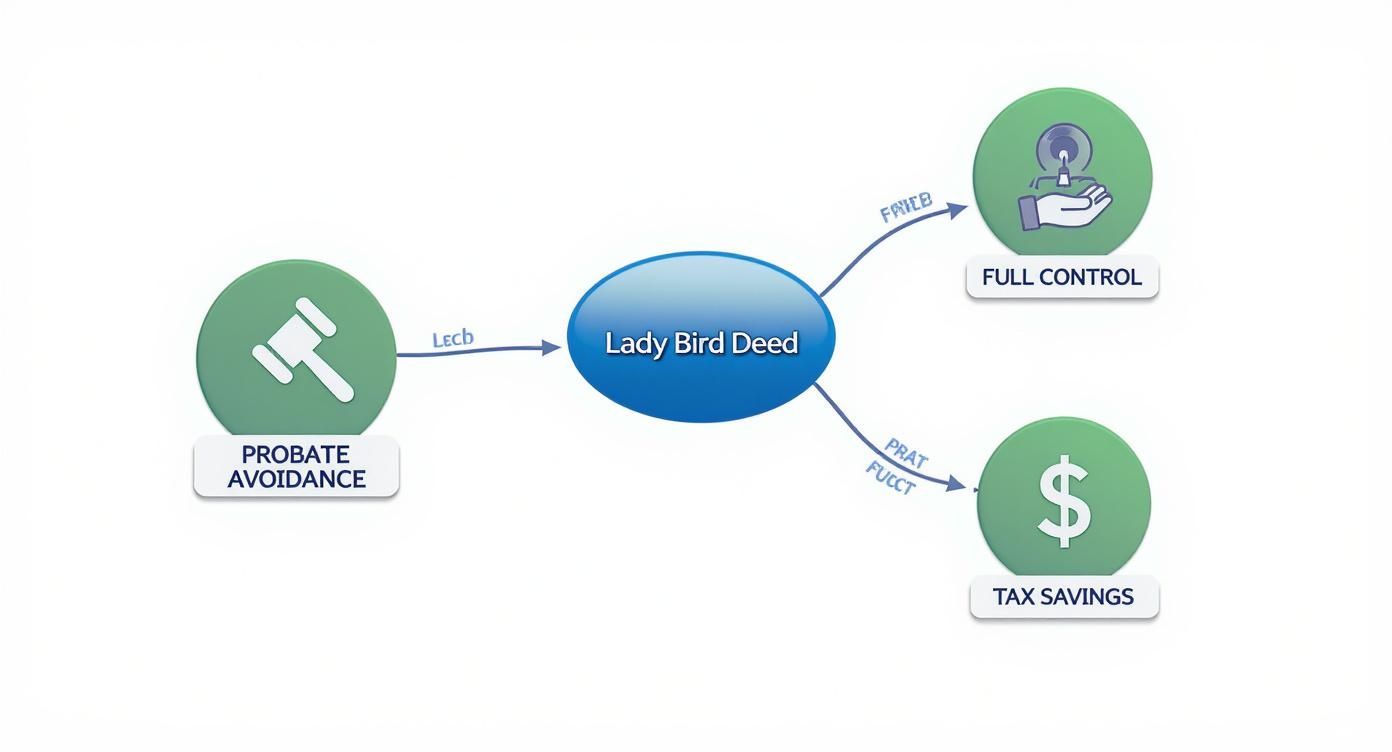
As you can see, the key advantages center on maintaining total control, avoiding the courthouse, and creating tax efficiencies for your heirs down the road.
Lady Bird Deed vs Other Tools: A Comparison
To make the decision even clearer, we’ve put together this comparison table. It shows how a Lady Bird Deed stacks up against other popular estate planning options for Texas homeowners, focusing on the issues that matter most to families.
| Feature | Lady Bird Deed | Transfer on Death Deed (TODD) | Revocable Living Trust |
|---|---|---|---|
| Probate Avoidance | Yes, the property transfers automatically. | Yes, the property transfers automatically. | Yes, assets inside the trust avoid probate. |
| Retained Control | Full control; you can sell or mortgage without beneficiary consent. | Limited control; selling can be complicated by beneficiary's interest. | Full control as the trustee of your own trust. |
| Medicaid Planning | Strong; not a countable asset and protected from estate recovery. | Weaker; the property is exempt, but a TODD may not protect it from MERP. | Yes, but requires more complex trust provisions. |
| Cost & Simplicity | Low cost and simple to create and record. | Low cost and simple to create and record. | Higher cost and more complex to set up and maintain. |
Ultimately, choosing the right tool comes down to your specific family situation and financial goals. You can learn more about how property is handled after death by reviewing the differences between https://texasguardianshiplawyer.net/probate-and-non-probate-assets/. To fully understand your options, it's also helpful to compare these tools with others, like a Texas quitclaim deed.
Every family’s situation is unique, and there is no one-size-fits-all answer. The compassionate attorneys at The Law Office of Bryan Fagan are here to help you weigh these options. We invite you to schedule a free consultation to discuss your circumstances and create a plan that provides security and peace of mind for years to come.
How to Create a Valid Lady Bird Deed in Texas

Putting a Lady Bird Deed in place can feel like a major step toward securing your family’s future, and it helps to know exactly what the process involves. While the steps might seem straightforward, the details are absolutely critical.
Even a small mistake in the legal wording or the filing process can unfortunately render the deed invalid. This could send your family straight to the probate court you were trying so hard to avoid, causing the very stress you hoped to prevent.
That’s why we’ve laid out a clear, step-by-step roadmap. Following these actions carefully—ideally with an experienced attorney—ensures your wishes are honored and your property is protected.
Step 1: Gather Key Information
Before a single word is written, you need to pull together some essential details. Getting this right from the start prevents major headaches down the road.
You'll need:
- The Full Legal Property Description: This is more than just the street address. It’s the specific description found on your current deed, often listing the lot, block, and subdivision name.
- The Grantor’s Information: This is you, the current property owner. Your full legal name must be written exactly as it appears on the existing deed.
- The Beneficiary’s Information: This is the person (or people) you want to inherit the property. You must have their full, correct legal names.
Having this information ready and accurate makes the actual drafting process go much more smoothly.
Step 2: Draft the Deed with Precise Language
This is where professional legal help becomes invaluable. A Lady Bird Deed is not a standard form you can download off the internet; it demands very specific legal language to create the "enhanced life estate" that guarantees you keep full control.
The deed must include clear wording that:
- Transfers the property to yourself for your lifetime, which creates the basic life estate.
- Names your chosen beneficiary to receive the property automatically when you pass away.
- Crucially, reserves your enhanced powers to sell, mortgage, gift, or otherwise control the property without needing the beneficiary's permission.
A common mistake we see is people using language from a standard life estate deed. That would strip you of the power to sell your home without your beneficiary’s signature. An attorney makes sure the right "magic words" are included to protect your complete authority over your property.
Step 3: Sign and Notarize the Document
Once the deed is drafted, it has to be signed correctly to be legally binding in Texas. As the grantor, you must sign the deed in the physical presence of a notary public.
The notary will verify your identity, witness you signing the document, and then apply their official seal. This is a non-negotiable requirement under the Texas Property Code that confirms your signature is authentic. Do not sign it ahead of time—it must be done in front of the notary.
Step 4: Record the Deed with the County Clerk
A signed deed doesn't do anything until it's officially filed. The last step is taking the original, signed, and notarized Lady Bird Deed to the county clerk’s office in the county where the property is located. For a house in Houston, for example, you’d go to the Harris County Clerk’s office.
The clerk will record the deed in the official public records, which is what makes the transfer legally effective. You will pay a small filing fee, and they will give you a copy stamped with all the filing information. This final action makes your plan official. If you ever decide to make changes later, our firm can help, and you can learn more about the general process of how to change a deed on a house.
Common Myths and Mistakes to Avoid
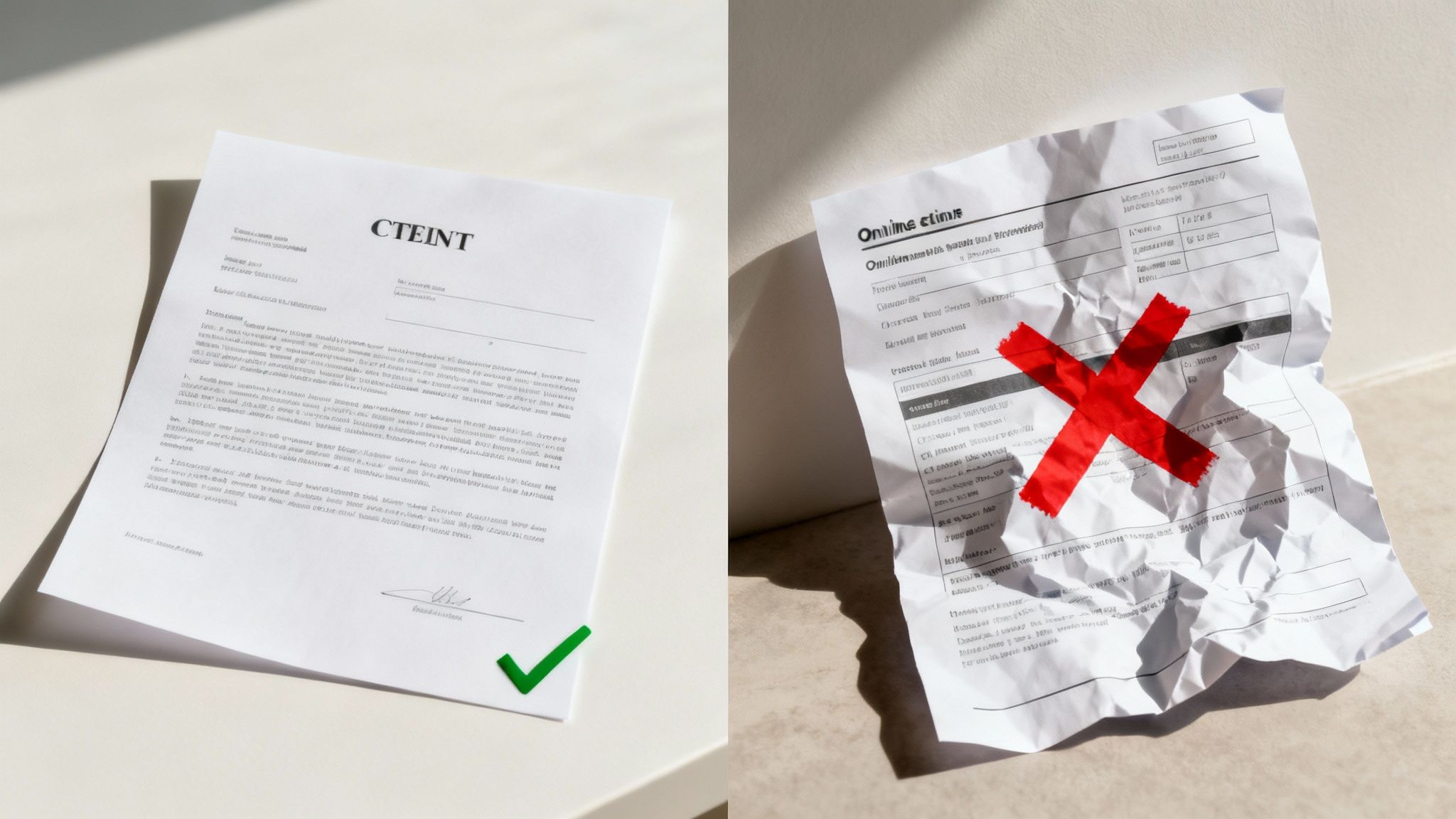
When you start looking into estate planning tools, it's easy to run into misinformation. Unfortunately, bad information can lead Texas families down the wrong path, resulting in costly and heartbreaking mistakes. A Lady Bird Deed is an excellent strategy for many people, but it’s surrounded by myths that need clearing up.
Understanding these common errors is the first step toward making a truly informed decision that protects your home and your loved ones.
One of the biggest myths is that a Lady Bird Deed provides absolute protection from all creditors. While it is a powerful tool for avoiding Medicaid Estate Recovery, it doesn't create an impenetrable shield around your property. Other legitimate debts, like a mortgage, tax liens, or other secured claims, will still need to be addressed.
Another common belief is that this deed is a one-size-fits-all solution for every Texas homeowner. The reality is that it’s a specialized tool best suited for specific goals, mainly avoiding probate for a primary residence. It may not be the right choice for complex estates, properties with multiple owners, or families with complicated dynamics.
The Dangers of Do-It-Yourself Forms
In an effort to save money, it's tempting to use generic, fill-in-the-blank forms found online. This is one of the most critical pitfalls you can encounter. A Lady Bird Deed requires precise legal language to grant the "enhanced" powers that allow you to keep full control over your property.
Even a small mistake in the wording can have disastrous consequences. For example, accidentally using language from a standard life estate deed could strip you of your right to sell or mortgage the property without your beneficiary's consent. This one error could completely undermine your intentions, creating the very legal headache you were trying to prevent.
Scenario: A widow in Dallas drafts her own Lady Bird Deed to leave her home to her two children. Unknowingly, she uses unclear language about how they should inherit the property. After she passes, a title company flags the deed as defective. This forces her children into a costly court action to clear the title before they can sell the home—exactly the probate-like process she wanted to avoid.
Navigating Beneficiary and Title Insurance Issues
Naming multiple beneficiaries can also create unexpected problems if not handled correctly. The deed must clearly specify how the beneficiaries will own the property together. For example, using language like "joint tenants with right of survivorship" can help prevent future ownership disputes or unintended probate issues down the line.
Furthermore, some title insurance companies can be hesitant to insure a property's title when a Lady Bird Deed has been used. This is because they are based on common law rather than a specific Texas statute. While the Texas legal community has worked hard to educate legal professionals about the Lady Bird Deed's utility, issues can still pop up.
This reluctance highlights why it’s so important to have an attorney draft a clear, defensible deed that title companies will recognize and accept.
Navigating these potential mistakes is why working with an experienced attorney isn't just a recommendation—it's a necessity. We can help you create a valid, effective Lady Bird Deed in Texas that truly protects your family. Schedule a free consultation with The Law Office of Bryan Fagan to ensure your Estate Planning is done right.
Your Path to Peace of Mind
You have taken the first step by learning what a powerful and flexible tool a Lady Bird Deed can be for Texas homeowners. We’ve walked through how this unique document helps families bypass the public, often stressful probate court system, all while keeping you, the owner, firmly in the driver's seat of your most valuable asset. The peace of mind that comes with that kind of control is invaluable.
But knowledge is only the beginning. The next step is turning that knowledge into meaningful action. This is your chance to create a clear, well-crafted plan that protects your family’s future and ensures your home passes to your loved ones as smoothly and privately as possible.
Taking that next step is much simpler than you might imagine. It starts with a conversation about your goals and your unique family situation. The key benefits we’ve discussed are well within your reach:
- Avoiding Probate Court: You can make sure your property goes directly to your heirs without the delays and expenses of court proceedings in places like the Harris County Probate Courts.
- Maintaining Full Control: Keep the complete freedom to sell, mortgage, or even change your mind about beneficiaries without ever needing someone else's permission.
- Gaining Medicaid Advantages: You can position your home to be shielded from a Medicaid Estate Recovery claim, preserving your legacy for the people who matter most.
Protecting your home is one of the most significant acts of care you can provide for your loved ones. A well-executed Lady Bird Deed ensures that your wishes are honored, your property is safe, and your family is shielded from unnecessary legal burdens during an already difficult time.
The compassionate attorneys at The Law Office of Bryan Fagan understand the emotional and financial weight that comes with these decisions. We are here to guide you with clarity and care, answering your questions and helping you figure out if a Lady Bird Deed in Texas is the right choice for your family.
We invite you to schedule a compassionate, no-obligation consultation with our team. Let us help you put together an Estate Planning strategy that safeguards your home and brings you the real peace of mind you deserve. Give us a call today.
Frequently Asked Questions About Lady Bird Deeds
When you start digging into any estate planning tool, specific, real-world questions always pop up. To help clear things up, we’ve put together answers to some of the most common questions Texas families ask us about Lady Bird Deeds.
Think of this as a practical guide to help you see how this flexible deed might fit into your own family’s plan. Every situation is different, of course, so while this is a great overview, it’s not a substitute for legal advice tailored to you.
Can I Name Multiple Beneficiaries on a Texas Lady Bird Deed?
Yes, absolutely. It's very common for parents to want to leave their home to all of their children, and a Lady Bird Deed allows for that.
The key, however, is making sure the deed is drafted correctly. You need to clearly state how the beneficiaries will own the property together. For instance, you can specify that they inherit as "joint tenants with right of survivorship." This is critical language—it means if one child passes away, their share automatically goes to the surviving children, keeping the property out of the courts. If you skip this step, they might inherit as "tenants in common," which could create exactly the kind of legal mess you're trying to avoid.
What Happens If My Beneficiary Dies Before I Do?
This is a great question, and it highlights why you should review your estate plan every few years. If a beneficiary named on your Lady Bird Deed passes away before you do, what happens next is entirely dependent on the specific wording in the deed.
If you planned ahead and named alternate (or contingent) beneficiaries, or if you named multiple beneficiaries with survivorship rights, the deed might still work as you intended. But if not, the property could unfortunately get tangled up in the very probate process you wanted to sidestep. The cleanest solution is to simply file a new Lady Bird Deed naming a new beneficiary. This keeps your wishes crystal clear and legally enforceable.
How Does a Mortgage Affect a Lady Bird Deed?
Having a mortgage doesn't stop you from creating a Lady Bird Deed. Your mortgage is a contract between you and your lender, and signing this deed doesn't change that at all. The responsibility for the payments remains squarely on your shoulders for as long as you own the home.
When your beneficiaries inherit the property after your death, they don't just get the house—they also get the mortgage debt attached to it. They'll need to take over the payments to keep the house. Usually, this means they will either need to refinance the loan into their own name or pay off the remaining balance.
Does a Lady Bird Deed Protect My Home From Creditors?
This is a point of frequent confusion, so let's break it down. A Lady Bird Deed does not create a magic shield that protects your home from your own creditors. If you have debts like a mortgage, an IRS lien, or other claims against you, those debts are still attached to your property.
Where the protection comes in is with your beneficiary's creditors—at least, during your lifetime. Since your beneficiary has no legal ownership interest in the home while you're alive (only an expectation of inheriting it), their creditors can't put a lien on your property to settle their debts. Once you pass away and the home becomes their asset, it’s then fair game for their creditors. It’s a crucial distinction to understand.
Navigating the world of estate planning can feel overwhelming, but you don’t have to do it alone. At The Law Office of Bryan Fagan, PLLC, our goal is to give Texas families clear, compassionate guidance.
If you’re wondering whether a Lady Bird Deed is the right move to protect your home and your family, we’re here to help. We invite you to schedule a free, no-obligation consultation with our experienced team. Let’s work together to build a secure plan that brings you peace of mind.
Contact us today to take the next step: https://texasguardianshiplawyer.net