Skip to content
When a loved one needs long-term care, the options can feel overwhelming. Many Texas families find a vital lifeline in Medicaid waiver programs, which offer a way to use Medicaid funds for care at home or in the community instead of in a nursing facility. In short, the state waives certain Medicaid rules to pay for these more personalized services. We understand this journey is not just a legal process but an emotional one, and our goal is to provide the clarity and compassionate guidance your family deserves.
Understanding How Waivers Provide At-Home Care
For many Texas families, the idea of placing a loved one in a nursing home is a difficult one. It often feels like a last resort, far removed from the comfort and familiarity of home. This is the exact problem that Medicaid waiver programs were created to solve. They operate on the principle that people with disabilities or chronic health conditions should be able to live with dignity in the most supportive, least restrictive environment possible.
Here's a simple way to think about it: traditional Medicaid might cover a room and care in a large facility. A waiver program essentially reroutes those funds. Instead, the money can pay for a caregiver to come to your loved one’s home, for necessary modifications like a wheelchair ramp, or for respite care to give family caregivers a break. These services are known as Home and Community-Based Services (HCBS).
The main goal is to help people stay connected to their communities and families while getting the professional support they need. This approach doesn't just improve quality of life; it can also be more cost-effective for the state.
Bridging the Gap Between Needing Care and Staying Home
The path to securing long-term care is often filled with tough questions and emotional stress. Families across Harris County, Dallas County, and the rest of Texas worry about affording quality care without draining their life savings. Waiver programs offer a structured, government-funded solution that honors a person's desire for independence.
These programs are designed to support a wide range of needs, including:
- Personal Care Assistance: Help with daily activities like bathing, dressing, and making meals.
- Skilled Nursing: Medical care from licensed nurses, provided right in the home.
- Therapies: Access to physical, occupational, and speech therapy outside of a hospital setting.
- Adaptive Aids: Funding for medical equipment and supplies that make daily life easier.
This infographic helps visualize how state support flows directly to individuals, allowing them to get the care they need in a familiar, comfortable setting.
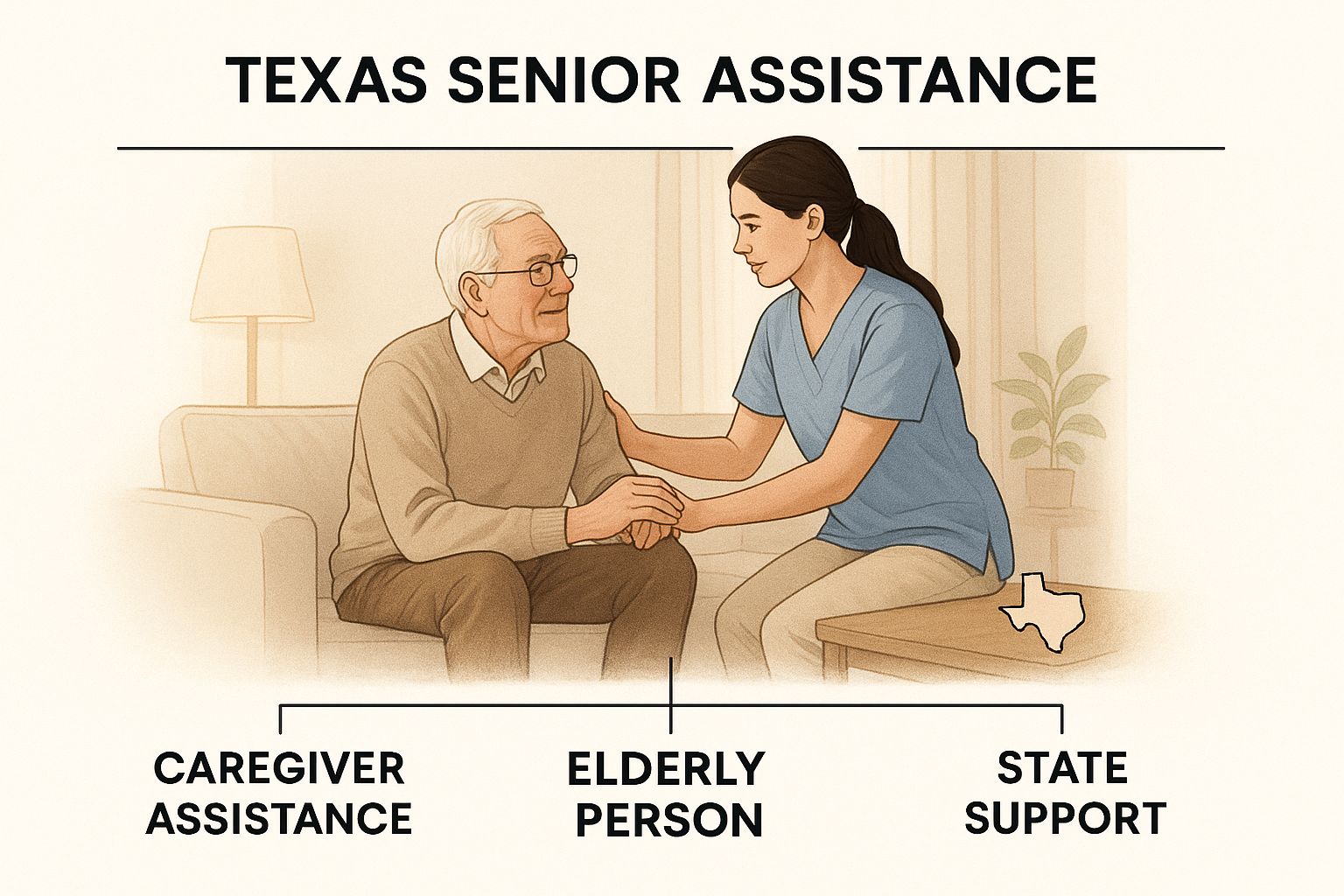
As you can see, the entire focus is on centering care around the person's life and community, not an institution.
The Connection to Guardianship and Legal Planning
Trying to navigate these programs can get complicated, especially if the person needing care is incapacitated and can't manage their own affairs. This is where the need for a Guardianship often comes into play. Under the Texas Estates Code, Title 3, Subtitle G, a court-appointed guardian has the legal authority to make decisions for their loved one (the "ward"), which includes applying for critical benefits like Medicaid waivers.
For example, a guardian can manage finances, sign the necessary legal documents for the application, and make sure all requirements are met. It’s a serious responsibility that ensures a vulnerable person’s needs don't fall through the cracks. Many waiver programs support specific groups, such as those needing elderly care, sometimes using modern tools like an elderly care mobile application to help coordinate services.
Understanding how these benefits and legal authority work together is crucial. For families just starting to explore their options, it's also helpful to look into the details of guardianship for individuals in long-term care facilities in Texas, as many of the same legal principles apply.
At The Law Office of Bryan Fagan, we understand the emotional and financial weight you're carrying. Our job is to guide you with clarity and compassion. If you are exploring long-term care options for someone you love, schedule a free consultation with us to talk about how we can help protect their future.
A Look at the Major Texas Medicaid Waivers
When you start digging into Texas Medicaid waiver programs, it can feel like you're trying to learn a new language. Each program is built for a specific purpose, designed to support different groups of people with very different needs. The main goal is always the same, though: to offer a more personal alternative to institutional care, allowing your loved one to stay in their home or community.
Think of these programs less as a one-size-fits-all solution and more like a specialized set of tools. Just as a mechanic has different wrenches for different bolts, the Texas Health and Human Services Commission (HHSC) uses specific waivers to tackle unique challenges, from the needs of aging adults to those of individuals with intellectual disabilities. For families like yours, the key is finding the program that’s the perfect match for your loved one’s situation.
Let's break down some of the most important Medicaid waiver programs in Texas. We'll explain them in plain English so you can see how they work for real families.

STAR+PLUS Home and Community Based Services (HCBS)
The STAR+PLUS HCBS program is one of the most widely used waivers for seniors and adults with disabilities. It’s for people who medically need a nursing home level of care but would much rather get that support in their own home or an assisted living facility.
Imagine a family in Harris County whose elderly mother is struggling to handle daily tasks like cooking, bathing, or managing her medications. It might seem like a nursing home is the only path forward, but the STAR+PLUS waiver opens up a world of other options.
Through this program, she could get access to:
- Personal Attendant Services: Hands-on help with daily living activities.
- Home Modifications: Small but vital changes like installing grab bars or a wheelchair ramp.
- Respite Care: A service that gives family caregivers a much-needed break.
- Adaptive Aids: Medical equipment that makes life at home safer and more manageable.
At its core, STAR+PLUS HCBS is all about building the right support structure to help someone live safely and independently outside of an institution.
Home and Community-based Services (HCS)
While the name sounds similar to the STAR+PLUS program, the HCS waiver is for a completely different group: people with an intellectual disability (ID) or a related condition. This program is an absolute lifeline for families whose loved one needs specialized, lifelong support.
For instance, think of a family in Dallas with an adult son who has an intellectual disability. He wants to live as independently as he can, but he needs a structured support system to do it. The HCS waiver is designed to make that possible by funding a variety of services tailored to his specific needs.
Key Insight: The HCS program is laser-focused on helping people with intellectual disabilities become more independent and integrated into their communities. It offers a truly comprehensive support system that goes well beyond basic care to include things like behavioral support and job assistance.
Services available under the HCS waiver often include:
- Residential Assistance: Support in a group home or even in the individual's own home.
- Day Habilitation: Programs that help build skills for daily living and community involvement.
- Employment Assistance: Help with finding and keeping a job.
- Behavioral Support: Specialized services to help manage challenging behaviors.
This waiver is crucial for helping individuals with ID live full, meaningful lives right in their own communities.
Community Living Assistance and Support Services (CLASS)
The CLASS waiver is geared toward people with "related conditions"—disabilities other than an intellectual disability that started before age 22 and impact their ability to function day-to-day. The program helps these individuals avoid being placed in an institution and instead live out in the community.
The CLASS waiver has actually been around since 1991, making it one of the state's longest-running programs. It really highlights Texas's long-term commitment to community-based care, letting people get the support they need in a familiar setting. You can explore more about this long-standing commitment at Medicaid.gov.
Youth Empowerment Services (YES)
Mental health is a huge piece of the puzzle, and the YES waiver is specifically for children and adolescents with severe emotional disturbances. The entire goal is to prevent them from needing to live in a residential treatment center or psychiatric hospital. It does this by providing intensive, coordinated services right in their homes and communities.
Picture a family in Fort Bend County whose child is dealing with severe mental health challenges. The YES waiver could bring in a whole team of professionals to work directly with the family, offering therapy, skills training, and crisis support to help the child succeed at home and in school.
Each of these Medicaid waiver programs in Texas serves a unique purpose, but they all share the same compassionate goal: to empower people to live with dignity and independence. However, figuring out which program is the right fit, understanding the specific eligibility rules, and getting through the application process can be a huge undertaking—especially when you’re already busy caring for a loved one.
If you're looking at these options and feeling overwhelmed, you are definitely not alone. The Law Office of Bryan Fagan is here to bring clarity to the process. We help Texas families understand what’s available and can assist with the legal steps, like establishing a guardianship, that are often needed to secure these vital benefits. Schedule a free consultation today to talk about your family's needs.
Cracking the Code: How to Qualify for Texas Waiver Programs
Getting approved for a Texas Medicaid waiver program is often the biggest hurdle families face. The rules can feel like a complex puzzle, but understanding them is the first step. To get the green light from the Texas Health and Human Services Commission (HHSC), your loved one has to clear two distinct hurdles: proving they have a medical need and meeting strict financial limits.
Think of it as a two-part test. You can't pass one and fail the other; you have to satisfy both. This journey requires careful preparation and, especially when a guardian is involved, a bit of legal foresight.
The First Hurdle: Proving Medical Need
Before the state even looks at a bank account, your loved one must be assessed and found to have a genuine medical need for a specific level of care. For many popular waiver programs, like the STAR+PLUS HCBS waiver, this means an official HHSC assessment must conclude they require a "nursing facility level of care."
Now, this doesn't mean they're destined for a nursing home. Far from it. It’s simply the state's yardstick for measuring whether someone needs significant, ongoing help to get through their day. The assessment is a deep dive into their ability to handle activities of daily living (ADLs)—things like bathing, dressing, and eating—along with a review of their medical conditions and cognitive state.
A court-appointed guardian, acting under the authority of the Texas Estates Code, is often the one who coordinates this evaluation. Their job is to provide all the necessary medical history to ensure HHSC gets a complete and accurate picture of the applicant's day-to-day challenges.
The Second Hurdle: Meeting Strict Financial Limits
Once medical need is established, the spotlight turns to finances. This is where many families, whether in Bexar County or Travis County, find themselves stuck. Medicaid is a needs-based program, and that comes with some very firm income and asset caps.
For 2024, an individual applicant generally must have:
- Monthly income below a certain threshold. This number is updated annually, but for many programs, it's around $2,829 per month.
- Countable assets of less than $2,000. This includes money in the bank, stocks, and bonds. The good news is that it typically excludes a primary home and one car.
These numbers can feel impossibly low. Many families look at them and think there's no way their loved one can qualify without first becoming completely impoverished. But that's not always the case. Texas law provides a powerful tool designed to solve this exact problem.
It's a common myth that having an income just slightly over the limit is an automatic disqualifier. With the right legal planning, even those with higher incomes can often meet the financial requirements and get the care they desperately need.
Using a Miller Trust to Bridge the Gap
So, what happens if your loved one’s Social Security or pension pushes their income just over that monthly limit? This is a very common scenario, and thankfully, there’s a solution: a Qualified Income Trust (QIT), more commonly known as a Miller Trust.
A Miller Trust is a special type of legal bank account set up specifically to hold the applicant's excess income. Here’s how it works: each month, any income over the Medicaid limit gets deposited directly into the Miller Trust. The funds in that trust can then be used to pay for approved expenses, like the patient's share of their medical costs, health insurance premiums, or a small personal needs allowance.
By funneling the extra income through the trust, it's no longer counted against the applicant for eligibility purposes. This is the key that unlocks waiver services for many, allowing them to qualify while still using their own money to contribute to their care.
For a person who is incapacitated, setting up and managing a Miller Trust becomes a critical responsibility for their court-appointed guardian. The guardian is legally required to establish the trust correctly, manage the money according to very strict rules, and ensure everything stays in compliance with Medicaid regulations. A single mistake in setting up or managing a Miller Trust can lead to a denial of benefits, which is why proper legal guidance is so important.
Navigating these medical and financial rules is where having a professional in your corner makes all the difference. The Law Office of Bryan Fagan helps families make sense of these complex requirements and can assist with the legal steps, like establishing a Guardianship, needed to manage these critical affairs. If you're facing these challenges, schedule a free consultation to see how we can help.
Your Step-By-Step Guide to the Application Process
Applying for a Medicaid waiver in Texas isn't a sprint; it's a marathon. The entire process demands patience, detailed organization, and a clear-eyed view of the road ahead. We know this can be emotionally taxing, and our aim is to provide practical steps to make it more manageable. The most critical takeaway is this: the wait times for many of these programs can stretch for years, so starting the application as soon as possible is paramount.
The journey kicks off with a crucial first step: getting your loved one’s name on the correct interest list. Think of this as the official waiting list managed by the Texas Health and Human Services Commission (HHSC). Each waiver program has its own separate list, and you have to apply to each one individually. This isn't just paperwork—it's the first real move you can make to secure future care.

Getting on the Interest List
Today, the single most important action you can take is to get on the right list. For many programs, this means calling HHSC directly or, in some cases, submitting an online form. Whatever you do, make sure you get confirmation that your loved one has been successfully added.
Here are some practical steps to take:
- Identify the Right Programs: Look at your loved one’s age, specific diagnosis, and daily needs to figure out which waivers are the best potential fit.
- Contact HHSC: Call the specific intake number for each waiver program you've identified to add their name. Have their personal information ready, including their Social Security number and diagnosis.
- Document Everything: This is non-negotiable. Write down the date you called, the name of the representative you spoke with, and any reference or confirmation number they give you. That paper trail can be a lifesaver down the road.
We've seen the heartbreaking reality for families who wait for years, only to find out they were on the wrong list or a typo derailed their application. Being organized and proactive from day one is your best defense against these kinds of devastating delays. This process involves navigating multiple approval gates, similar to how prior authorization processes in healthcare work.
The Long Wait and Staying Current
Once you’re on the list, the waiting game begins. For popular programs like the HCS waiver, the wait can easily be longer than a decade. During this time, the responsibility is on you to keep your contact information current with HHSC. If they can’t reach you when a spot finally opens up, your loved one will lose their place. It’s that simple.
Consider a hypothetical scenario: a family in the Harris County Probate Court system puts their son, who has an intellectual disability, on the HCS interest list when he is eight. For the next 12 years, they make an annual call to confirm his spot and update their address once when they moved. When their son turns 20, the letter offering him a slot finally arrives. Because they were so diligent, they were ready to proceed with the formal eligibility assessment without a hitch.
This long-term mindset is essential. Getting on an interest list isn't about getting immediate help. It’s about making a crucial investment in your loved one’s future security and well-being.
When Crisis Strikes: Emergency Guardianship
Sometimes, life doesn’t wait for a list. A sudden medical crisis could leave a loved one incapacitated and in desperate need of care, long before their name is called for a waiver. In these urgent situations, an emergency or temporary guardianship might be the answer.
While guardianship won't let you jump the line on an interest list, it does give you the legal authority to manage the crisis. As a guardian, you can make critical medical decisions, protect their assets from being depleted, and ensure they are safe while you figure out other care options. It also puts you in a position to act immediately once that waiver slot does become available. Depending on your situation, it can be useful to learn more about public guardianship programs in Texas to understand every resource at your disposal.
The application process is complex and can be emotionally draining. The Law Office of Bryan Fagan is here to offer the clear, compassionate guidance your family needs. Schedule a free consultation with us, and let's map out a clear path forward together.
How a Guardianship Attorney Can Secure Long-Term Care
Trying to get a Texas Medicaid waiver for a loved one is complicated enough. But what happens when they can no longer manage their own affairs? This is the moment when a guardianship attorney stops being a helpful resource and becomes an essential part of your family’s team.
When an adult can no longer make sound decisions for themselves due to incapacity, a lawyer is your strongest advocate for getting them the long-term care they need.
Through a court-approved guardianship, a responsible person—the guardian—is given the legal authority to act on behalf of the incapacitated person, who is called the ward. This power is clearly spelled out in the Texas Estates Code, Title 3, Subtitle G. It gives the guardian the green light to take charge of the entire waiver application, from signing legal documents to communicating with state agencies and managing finances.
From Legal Authority to Long-Term Security
An attorney does much more than just file guardianship paperwork. We build the legal framework that empowers you to manage your loved one's care effectively. For families we work with in Bexar County, Travis County, and beyond, this usually involves a clear, step-by-step strategy.
- First, we establish the guardianship to give you the legal standing you need to act on their behalf.
- Next, if their income is too high to qualify for Medicaid, we can set up a Miller Trust (QIT). This is a crucial tool that ensures they meet the strict financial rules without having to give up their income.
- Finally, we walk you through the entire complex application process, helping you avoid common mistakes that can lead to frustrating denials or long delays.
The Texas Medicaid waiver system, especially the STAR+PLUS HCBS waiver, has proven to be a game-changer for managing certain chronic health issues. Studies show that its managed care approach has improved outcomes for acute events like heart attacks and COPD, though challenges still exist for conditions like diabetes. You can read more about these program outcomes in this healthcare study.
A Guardian’s Role in Managing Benefits
Getting the waiver approved is a huge milestone, but it’s not the end of the road. As a guardian, you have an ongoing legal duty to manage your ward's benefits responsibly. This means making sure funds are used correctly, filing annual reports with the court, and ensuring all care services are truly in your loved one’s best interests.
This fiduciary duty is a serious responsibility. Our firm provides ongoing support to guardians, helping them stay in full compliance with the court while ethically managing these vital public benefits. We take a closer look at these duties in our guide on the ethical management of public benefits in a Texas guardianship.
At The Law Office of Bryan Fagan, we see ourselves as your partner on this journey. We handle the complex legal details so you can focus on what really matters—caring for your loved one with confidence and peace of mind.
Whether you're just starting to explore your options or facing an urgent need for care, our team is here to help with your Guardianship, Probate, and Estate Planning needs. You don't have to navigate this system alone. Schedule a free consultation with us today for personalized guidance on your family’s unique situation.
Common Questions About Texas Medicaid Waivers
Trying to understand Medicaid waiver programs in Texas can feel like you're learning a new language. It's completely normal to have questions, and we find that families often share the same worries about wait times, income rules, and what to do if things don't go as planned. Let's walk through some of the most common questions we hear, giving you clear, straightforward answers to help you feel more confident.
This process is complicated, but knowing the basics is the first step in becoming a powerful advocate for your loved one.
How Long Are the Waitlists for Texas Waiver Programs?
This is usually the first question on everyone's mind, and the answer requires a dose of reality. For many Texas Medicaid waiver programs, the wait times can be incredibly long—often spanning many years. The most in-demand programs, like the Home and Community-based Services (HCS) waiver, can have waitlists that stretch well over a decade.
This is exactly why it's critical to get your loved one on the right "interest lists" as soon as you recognize a potential need. If you wait until there's a crisis, it’s usually too late to get into these specific programs. An attorney can help confirm you’re registered for the most fitting programs, getting that clock started as early as possible.
What if Our Income Is Too High to Qualify?
It’s a common myth that being even slightly over the income limit is an automatic "no." If an individual’s income is too high, a legal tool called a Qualified Income Trust (QIT)—also known as a Miller Trust—can often solve the problem.
A QIT is a special trust that an individual's income is funneled into. The trust then pays for their medical care and other approved expenses, allowing them to meet Medicaid's strict financial rules without having to lose all their income. Setting up a QIT correctly is a complex legal task, so working with an experienced guardianship attorney is crucial to ensure it complies with Texas law.
A Miller Trust is one of the most powerful legal strategies for helping individuals access the long-term care they need. It bridges the gap between having too much income for Medicaid but not enough to afford private care.
Can We Choose Our Own Caregivers with a Waiver?
Yes, you absolutely can. Many Texas waiver programs offer a Consumer Directed Services (CDS) option, which is designed to give families more control. This model essentially lets you or the legal guardian act as the employer for the person providing care.
This means you can recruit, interview, hire, and manage your own service providers. You can often hire trusted friends or even certain family members (though spouses and legal guardians are typically excluded from being paid). The CDS option provides incredible flexibility and ensures your loved one receives personal, hands-on care from someone you know and trust. An attorney can help you understand the responsibilities that come with being an employer under this model.
What Should We Do if Our Application Is Denied?
Getting a denial letter in the mail can feel like a punch to the gut, but it is not the end of the road. If your waiver application is denied, you have the right to appeal that decision. The denial letter from HHSC will explain why it was denied and outline the specific steps for requesting a fair hearing.
You have to act fast, as there are strict deadlines for filing an appeal. This is a moment where a knowledgeable attorney becomes a powerful ally. They can help you gather the necessary evidence, build a strong case for the hearing, and fight for your loved one's right to receive the care they need.
The flexibility of these programs is also notable, especially in emergencies. For instance, the 'TexKat' waiver was rapidly implemented after Hurricane Katrina to provide short-term Medicaid coverage to nearly 60,000 evacuees, showing how responsive the system can be. Discover more insights about this emergency response.
Navigating the complexities of medicaid waiver programs in texas is a heavy lift, but you don't have to carry that weight alone. At The Law Office of Bryan Fagan, PLLC, our experienced attorneys are dedicated to guiding Texas families through every step of the guardianship and long-term care planning process with clarity and compassion. We can help you understand your options, establish legal authority, and secure the vital benefits your loved one deserves. Schedule your free, no-obligation consultation today by visiting us at https://texasguardianshiplawyer.net.