Skip to content
When a loved one in Texas receives a dementia diagnosis, your world shifts. Their safety and care become your absolute top priority. This is where guardianship, a formal legal process, can step in to help when someone is no longer able to make sound decisions about their own health or finances. We understand this is a path filled with emotional and financial challenges. Our goal is to provide a court-supervised safety net to protect a vulnerable adult, who is called the "ward," while preserving their well-being and dignity.
Understanding Guardianship for a Loved One With Dementia

Watching a family member’s memory and cognitive abilities decline is a deeply emotional experience, and it comes with tough questions. Maybe you've noticed unpaid bills piling up, missed doctor's visits, or a concerning vulnerability to phone scams. These aren't just simple memory lapses; they are red flags indicating your loved one may no longer be able to manage their affairs safely. In these moments, a Texas guardianship can offer crucial protection.
The reality is that Alzheimer's and other forms of dementia are making guardianship a critical conversation for more families. Nearly 500,000 Texans are living with the condition, and another 1 million are serving as their unpaid caregivers. These numbers show just how immense the burden on families can be and highlight the growing need for clear, compassionate legal solutions.
The Two Pillars of Guardianship in Texas
In Texas, guardianship isn't a one-size-fits-all solution. The law, found in Title 3, Subtitle G of the Texas Estates Code, recognizes that a person might need help in one area of their life but not another. This is why it allows for two main types of guardianship.
Let's break them down in plain English.
| Area of Responsibility | Guardian of the Person | Guardian of the Estate |
|---|---|---|
| Primary Focus | Personal and medical well-being | Financial and property management |
| Key Duties | – Making healthcare decisions – Deciding on living arrangements – Arranging for personal care and daily needs | – Paying bills – Managing bank accounts and investments – Protecting real estate and other assets |
| Think of them as… | The "captain" of the ward's daily life | The "trustee" of the ward's financial life |
A Texas probate court, like those in Harris County or Travis County, will often appoint one person to handle both roles, creating a "full" guardianship. However, if the situation is complex or different family members have different skills—one is a nurse, another an accountant, for example—the court might appoint two separate people.
A Protective Measure of Last Resort
It's critical to understand that Texas courts see guardianship as a very serious step. Why? Because it involves removing a person’s fundamental right to make their own choices. For this reason, guardianship is considered a measure of last resort. It is only appropriate when an individual is legally found to be "incapacitated" and no less restrictive alternatives, like a Durable Power of Attorney or a Probate, can adequately protect them.
Guardianship provides a structured, court-monitored safety net. It ensures that all decisions made on behalf of your loved one are truly in their best interest, offering peace of mind to families facing the challenges of dementia.
Deciding to pursue guardianship is a profound act of love and protection. While the legal path can feel intimidating, understanding the fundamentals is the first step toward securing your loved one's future. If you're just beginning to explore this path, getting personalized advice is essential. The Law Office of Bryan Fagan offers a free consultation to help you understand Texas Guardianship law and how it applies to your family's unique situation.
Recognizing the Legal Threshold for Guardianship

Many families we work with understandably believe that a dementia diagnosis is all that’s needed to establish guardianship in Texas. But the law requires more than a medical label. A Texas court needs to see "clear and convincing evidence" that your loved one is legally incapacitated. This is the key legal hurdle you’ll have to clear to get a guardianship approved.
So what does “incapacitated” actually mean in a courtroom? Under the Texas Estates Code, Title 3, Subtitle G, an adult is considered incapacitated if, because of a physical or mental condition, they are substantially unable to provide their own food, clothing, or shelter, care for their physical health, or manage their own financial affairs. The crucial part is proving this inability to handle these basic tasks. A judge in a Harris County Probate Court, for instance, is looking for concrete proof, not just a diagnosis on a chart.
From Diagnosis to Demonstrable Inability: A Hypothetical Scenario
To really understand this, let’s walk through a common scenario. Imagine your father, a proud Houston resident, was diagnosed with early-stage dementia about a year ago. For a while, he managed well with simple reminders. Now, things have taken a sharp turn.
- Medical Care: He forgets to take his vital heart medication, often arguing that he already did. You’ve found a week’s worth of pills untouched in the dispenser.
- Financial Management: He recently fell victim to a phone scam and sent $2,000 to a stranger who promised lottery winnings. Meanwhile, unopened bills for the mortgage and utilities are piling up.
- Daily Safety: He has wandered from home twice in the last month. The last time, a neighbor found him several blocks away, completely disoriented and unable to find his way back.
These aren't just forgetful moments. They are specific, dangerous examples of an inability to manage health, finances, and personal safety—exactly the kind of evidence a judge needs to see when considering a guardianship for a dementia patient in Texas.
The legal question is not whether a person has dementia, but whether the effects of that dementia have rendered them incapable of meeting their own basic needs.
The Cornerstone of Evidence: The Certificate of Medical Examination
This is where your loved one’s doctor becomes central to the legal process. The single most important piece of medical evidence the court will consider is the Certificate of Medical Examination (CME). This isn't just a doctor’s note; it's a specific, standardized form that gives the court a physician's professional assessment of incapacity.
The CME must be filled out by a Texas-licensed physician and, in most cases, must be dated within 120 days of filing the guardianship application. It provides the judge with critical, objective information, including:
- Nature and Degree of Incapacity: The doctor will detail the specific mental or physical conditions causing the incapacity.
- Functional Assessment: The CME will describe which activities of daily living the person can and cannot perform—like managing money, making medical decisions, or driving safely.
- Prognosis: The doctor gives an opinion on whether the condition is expected to improve or if the incapacity is likely permanent.
- Recommendations for Guardianship: The physician will state whether they believe a guardianship is necessary and, if so, whether it should be a full or a more limited guardianship.
This medical certificate translates the real-world effects of dementia into the legal language the court needs to hear. It turns your personal observations into the objective, medical evidence required to meet the legal standard for incapacity. Without a solid, supportive CME, obtaining a guardianship is nearly impossible.
This step is foundational to protecting your loved one. If you’re seeing these warning signs, our firm can help you coordinate with medical professionals and build the necessary legal case. Please contact the Law Office of Bryan Fagan for a free, confidential consultation to discuss your family’s situation and how to secure a safe future, whether through Estate Planning or guardianship.
Exploring Simpler Alternatives Before Court
In Texas, guardianship is a very serious step. Because it involves taking away a person's fundamental rights, courts view it as an absolute last resort. Before a judge will even consider a guardianship, they’ll want to be sure every other option—what the law calls "less restrictive alternatives"—has been explored.
For many families navigating a loved one's dementia, these alternatives are more than just a legal hurdle. They can provide all the protection needed without the cost, time, and emotional weight of a full-blown court proceeding.
The catch? These tools only work if they are put in place before a crisis hits. Your loved one must still have legal capacity, meaning they can understand the document they are signing and what it does. If you wait too long and their dementia progresses, this window closes, and guardianship may be the only path left.
Powerful Proactive Planning Tools
Think of these legal documents as appointing trusted co-pilots for different parts of your loved one's life. They let your loved one decide, while they are still able, who they want making decisions for them later. This preserves their autonomy and ensures their wishes are respected.
Here are the most common and effective alternatives to guardianship:
Durable Power of Attorney: This is the financial workhorse. It lets your loved one (the "principal") name a trusted person (the "agent") to handle their financial life—things like paying bills, managing bank accounts, or selling property. The "durable" part is key; it means the document stays in effect even if your loved one later becomes incapacitated.
Medical Power of Attorney: This document is for healthcare. It allows your loved one to appoint an agent to make medical decisions for them if they can't communicate their own wishes. This is the person who will talk to doctors and consent to treatments, making sure your loved one gets the care they would have wanted.
HIPAA Release: Often overlooked but incredibly important, a HIPAA release gives doctors permission to share your loved one's medical information with you. Without it, federal privacy laws can block you from getting critical updates on their condition.
These tools are the bedrock of good elder law and Estate Planning. They empower you to prepare for the future with a clear plan instead of being forced to react in an emergency.
Why Early Action Is So Important
The road to a guardianship for a dementia patient in Texas is often long and winding. The timelines and costs can be unpredictable, changing based on the county and the specifics of your case. Much of this is because the Texas Estates Code demands a strict process, including detailed doctor's evaluations and court oversight, to confirm that no other options—like the powers of attorney we just discussed—will work.
The kindest and most effective way to prepare for a loved one’s cognitive decline is to have these conversations and sign these documents early. It's a gift of clarity for your loved one and your entire family.
Another valuable tool is supported decision-making. This is a formal agreement where a person with a disability chooses trusted advisors to help them understand their options, but they still make the final call themselves. You can learn more about how supported decision-making agreements can preserve autonomy.
Ultimately, putting these alternatives in place is about honoring your loved one’s dignity. By planning ahead with an experienced attorney, you can build a strong framework that respects their wishes and may help you avoid the courtroom altogether.
If you aren't sure which tools are right for your family, or if you're worried the window for these alternatives has already closed, we're here to help. Schedule a free consultation with the Law Office of Bryan Fagan to get personalized guidance on protecting your loved one.
Your Step-by-Step Guide to the Texas Guardianship Process
When you’ve made the difficult decision to pursue guardianship for a loved one with dementia, the court system can seem like a confusing maze. Let’s walk through that journey together, step by step, so you know exactly what to expect. Think of it as a formal process of proving the need for protection. Each step is a building block, giving the judge the necessary information to make a compassionate, informed decision.
Before You File: Practical Steps to Take
Before initiating the court process, taking a few preparatory steps can make the journey smoother and less stressful for your family.
- Gather Key Documents: Collect your loved one's birth certificate, social security information, and a list of their assets (bank accounts, property deeds) and debts.
- Identify a Doctor: You will need a physician to complete a medical evaluation. Identify their primary doctor or a specialist who can provide a thorough assessment.
- Talk to Family: Open communication with siblings and other close relatives can prevent misunderstandings and potential disputes later on.
In most Texas counties, the entire process takes somewhere between 30 and 90 days, though a complex or contested case can certainly take longer.
Step 1: Filing the Application for Guardianship
The process officially kicks off when your attorney files an "Application for Appointment of Permanent Guardian" with the correct court. This is almost always a statutory probate court in the county where your loved one lives, such as one of the Harris County Probate Courts.
This application is a detailed legal filing that lays out the essential facts for the judge, including:
- The name, age, and address of your loved one (the "proposed ward").
- A clear explanation of why guardianship is necessary.
- The name of the person seeking to become guardian.
- A list of all close family members who must be legally notified.
Step 2: The Court Appoints an Attorney Ad Litem
As soon as the application is filed, the court appoints an attorney ad litem. This is an independent, neutral attorney whose only client is your loved one. Their sole mission is to represent the proposed ward’s best interests.
The ad litem will meet with your loved one, explain what a guardianship means in simple terms, and act as an investigator for the court. At the end of their investigation, they will write a formal report to the judge with their findings and a recommendation.
Step 3: Formal Notices and the Physician's Examination
Texas law is very clear that all "interested persons"—usually the spouse, parents, and adult children—must receive formal legal notice of the guardianship case. This ensures everyone in the immediate family has a chance to participate.
At the same time, you’ll be working on getting the most critical piece of evidence: the Certificate of Medical Examination (CME). This official court form is the primary medical proof of incapacity and must be filed with the court before the hearing.
The Certificate of Medical Examination is the bridge between your loved one’s medical condition and the legal requirements for guardianship. A clear, thorough, and supportive CME is essential for a successful outcome.
Step 4: The Court Hearing
The hearing is where the judge will hear testimony, review all the evidence, and make a final ruling. You will likely testify about why you believe your loved one needs a guardian, giving real-world examples of their inability to manage their health or finances. The attorney ad litem will also present their findings. The judge’s entire focus is to determine if there is "clear and convincing evidence" that your loved one is incapacitated and that appointing a guardian is in their best interest.
Step 5: After the Hearing – Finalizing Your Authority
If the judge approves the guardianship, a few final administrative tasks must be completed before you receive your "Letters of Guardianship." These steps are mandated by the Texas Estates Code to protect the ward.
- Sign the Oath: You will sign a formal oath, swearing to faithfully carry out your duties as guardian.
- Post a Bond: In almost every case involving finances, the court will require you to post a bond. Think of this as an insurance policy that protects the ward's assets from mismanagement.
- Receive Letters of Guardianship: Once your oath is signed and the bond is filed, the court clerk issues your "Letters of Guardianship." This is the official court order that proves you have the legal authority to make decisions.
This step-by-step process, while detailed, is built to ensure a fair and just outcome. If you are ready to take the first step, please contact the Law Office of Bryan Fagan for a free consultation. We can help you prepare with clarity and confidence.
Understanding the Duties of a Guardian in Texas
When a Texas court appoints you as a guardian, you're taking on a profound legal and ethical promise. This role comes with what the law calls a fiduciary duty—the absolute highest standard of care. In simple terms, it means you must always, without exception, act in the best interest of your loved one (the "ward"). Their needs must come before your own.
This isn't a responsibility the courts take lightly. You will be held accountable for every decision you make. Truly understanding these ongoing duties is the only way to protect your loved one and stay on the right side of Texas law.
The path to guardianship follows a clear, court-mandated structure. It starts with filing an application, moves to a court hearing, and, if granted, concludes with a judge's official order. This chart gives you a simplified look at those major steps.
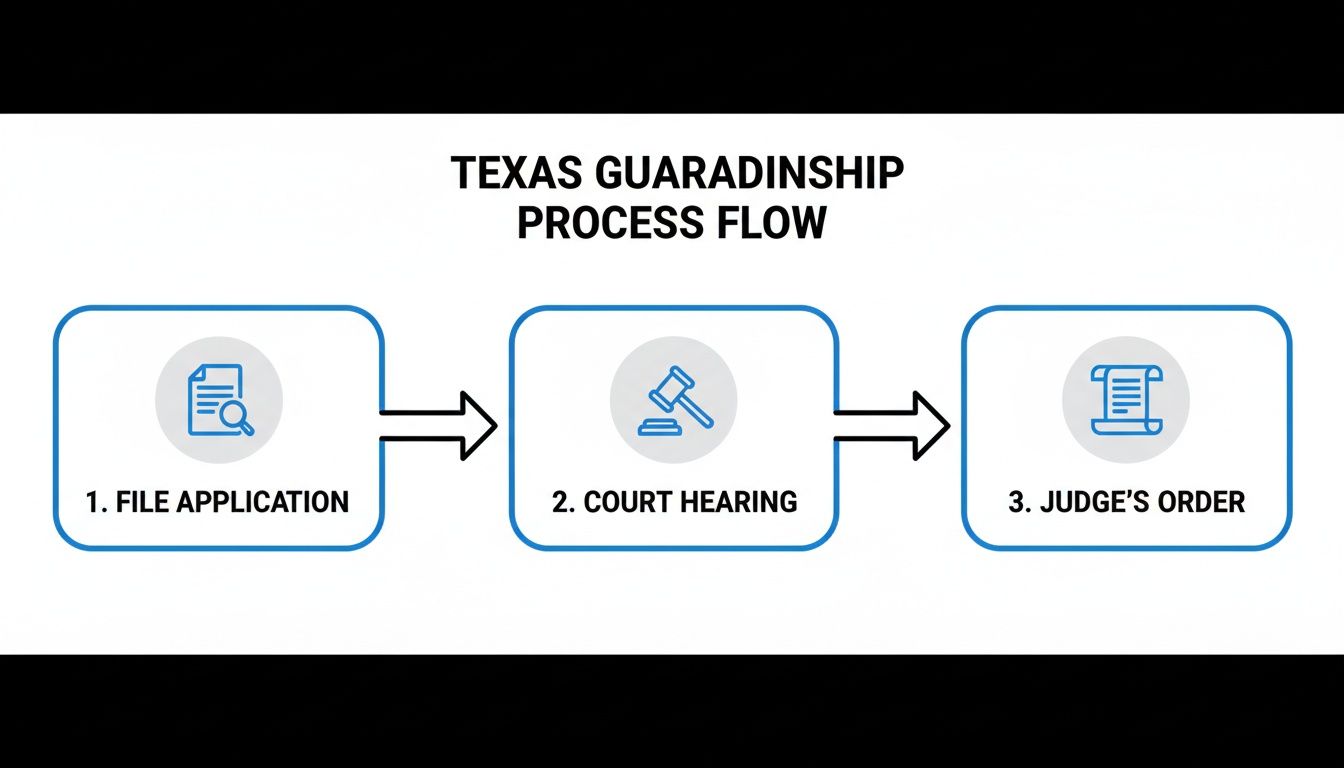
As you can see, this isn't a casual arrangement. It’s a structured process designed to make sure every decision is handled correctly, with the ward's well-being as the top priority.
Rights and Duties of a Guardian of the Person
As the Guardian of the Person, your world revolves around your loved one’s personal and medical well-being. This is a hands-on role that demands compassion and organization.
Your main responsibilities will include:
- Making Healthcare Decisions: You'll have the authority to consent to medical care, choose doctors, and review medical records, always aiming to honor any wishes they expressed before becoming incapacitated.
- Deciding on Living Arrangements: You are tasked with choosing where the ward will live, prioritizing their safety, comfort, and quality of life.
- Managing Daily Care: You’re responsible for ensuring they have proper food, clothing, and personal care, whether by coordinating in-home help or working with a care facility.
Rights and Duties of a Guardian of the Estate
If appointed as Guardian of the Estate, you become the careful steward of your loved one’s financial world. Your job is to manage their assets prudently and shield them from waste, fraud, or exploitation.
Your core financial duties involve:
- Managing Finances: This means you'll be paying bills, collecting any income they receive, and managing their bank accounts.
- Protecting Assets: You must safeguard all of their property, which includes practical steps like paying property taxes and keeping assets properly insured.
- Investing Wisely: You have a duty to invest the ward’s money carefully, handling their funds with the same caution a prudent person would use for their own.
Under Texas Estates Code, Title 3, Subtitle G, a guardian serves as a fiduciary. This legal standard means you must manage the ward’s person or property with the diligence and care that a prudent person would apply to their own affairs.
Guardianship Termination and Compliance: The Duty of Court Reporting
One of the most important duties of a guardian is ongoing compliance through reporting back to the court. This is how the judge supervises your actions and confirms you are fulfilling your fiduciary role. Missing these reporting deadlines can have serious legal consequences, including removal as guardian.
The court requires several key reports:
- Inventory, Appraisement, and List of Claims: Within 30 days of qualifying, you must file a complete inventory of all the ward’s property.
- Annual Report on the Well-Being of the Ward: A Guardian of the Person files a report each year that covers the ward's health, living situation, and any major changes.
- Annual Accounting: A Guardian of the Estate must file a meticulous annual accounting, documenting every dollar that came into and went out of the estate.
These reports aren't just bureaucratic paperwork; they are the backbone of accountability in a guardianship for a dementia patient in Texas. They create transparency, proving that you are acting in your loved one’s best interest. You can find a deeper dive on our page covering the responsibilities of a legal guardian.
Mastering these duties is how you serve your loved one effectively. If you have questions about these responsibilities, please call The Law Office of Bryan Fagan for a free consultation.
Handling Family Disagreements and Contested Guardianships
Deciding to pursue guardianship for a parent with dementia is one of the toughest calls a family can make. When family members don't agree, an already painful situation can quickly become a battleground. These guardianship disputes add significant emotional and financial stress right when your family can least afford it.
Common Sources of Guardianship Disputes
When a family is under the strain of a loved one's decline, old tensions often boil over. Pinpointing these flashpoints is the first step toward managing them.
Most contested guardianships in Texas boil down to a few key issues:
- Disputes Over Incapacity: One sibling who lives out of state might not see the day-to-day decline. From their perspective, their parent sounds fine on the phone, leading them to believe guardianship is an overreaction.
- Choosing the Guardian: Disagreements about who should be in charge are incredibly common. Siblings may question each other's motives, financial stability, or ability to handle the responsibility.
- Financial Fears: Money is often at the heart of the conflict. A contested guardianship can be driven by suspicion that one person is trying to control the estate for personal gain.
- Lack of Communication: When one adult child takes the initiative without looping everyone else in, it can breed resentment. The other family members may feel shut out and object in court simply because they weren't part of the conversation.
Navigating Disputes with a Clear Strategy
When a guardianship becomes contested, the court's focus can get sidetracked from your loved one’s needs to the family's infighting. Your best defense is a calm, evidence-based strategy, guided by an experienced attorney. The mission is to prove to the judge that your actions are about protecting your parent, not winning a family squabble.
Start by prioritizing clear, factual communication. While emotions will undoubtedly run high, stick to the hard evidence. The doctor's findings in the Certificate of Medical Examination, for example, are much more powerful than personal opinions. Grounding the conversation in medical reality can help de-escalate emotional arguments.
In a contested case, the judge’s primary duty remains the same: to determine what is in the best interest of the proposed ward. Your ability to present clear, objective evidence is far more powerful than emotional arguments.
A skilled guardianship attorney becomes your most important asset here. They can serve as a buffer between feuding family members, handle legal challenges, and ensure your court filings are airtight. They also help you sidestep common mistakes, like failing to notify all required parties correctly.
If your family is heading toward a dispute, understanding all your options is critical. You can learn more in our detailed article about how to contest or terminate guardianship in Texas.
If you're facing a disagreement over a loved one's care, don't try to navigate it alone. The Law Office of Bryan Fagan offers a free consultation to provide the compassionate, clear-headed guidance you need to move forward.
Answering Your Top Questions About Guardianship and Dementia
When you’re facing the possibility of guardianship for a loved one with dementia, the questions can feel overwhelming. Here, we’ll tackle some of the most common questions we hear from Texas families in your exact situation, providing the straightforward answers you need.
How Long Does the Guardianship Process Take in Texas?
In a best-case scenario where everyone is in agreement, a straightforward guardianship in Texas usually takes between 30 and 90 days from start to finish.
This timeline really depends on a few moving parts. The court's own schedule in busy counties like Bexar or Dallas can cause delays, as can the time it takes to get the required medical examinations done. If a family member decides to contest the guardianship, however, the process can stretch out significantly, becoming much more involved and lengthy.
What Is the Difference Between Emergency and Permanent Guardianship?
An emergency or temporary guardianship is exactly what it sounds like: a short-term, emergency fix. A court can grant it quickly when a person faces an immediate and substantial risk of serious harm. This type of guardianship typically lasts for only 60 days and requires strong evidence that a crisis is happening.
On the other hand, a permanent guardianship is designed for long-term care. It’s established only after a full court hearing where it’s been proven by clear and convincing evidence that the person is incapacitated and needs ongoing help.
Who Can Be Appointed as a Guardian?
The court’s number one priority is finding someone who will genuinely act in the best interests of the person needing help (the "ward"). The Texas Estates Code lays out a preference list for who should be considered.
This list starts with anyone named in a "Declaration of Guardian," a document the person may have signed when they were well. If that doesn't exist, the court looks to the spouse, and then to other close family members. If no family is able or willing to serve, the court can appoint a private professional guardian or a public guardianship program.
In Texas, any person appointed as a guardian must be a trustworthy adult who is fully capable of handling the legal duties involved. The court doesn't take this lightly—it will run a criminal history background check to ensure the person nominated is a suitable and safe choice to protect a vulnerable individual.
Can Guardianship Be Avoided if We Have a Power of Attorney?
Yes, in many cases, it absolutely can. A well-drafted Durable Power of Attorney (for financial matters) and a Medical Power of Attorney (for healthcare) are powerful tools that can often eliminate the need for guardianship. They are far less restrictive and keep the decisions within the family.
The key is that these documents must be signed while the person still has the legal capacity to fully understand what they are signing. If a person no longer has that capacity, or if the agent named in a Power of Attorney is abusing their authority, guardianship may be the only remaining option to protect your loved one. Our attorneys can help you explore all of these possibilities through solid Estate Planning.
Navigating the path of guardianship requires a guide who is not only experienced in the law but also understands the human side of these difficult decisions. The attorneys at The Law Office of Bryan Fagan, PLLC are committed to helping Texas families protect their loved ones with the dignity and respect they deserve. If you're facing these tough choices, let's talk. Schedule a free, confidential consultation with us today for personalized guidance. You can reach us at https://texasguardianshiplawyer.net.