Skip to content
A family in Plano can spend months adapting to an aging parent's memory loss, then face a sudden problem that can't wait. A parent may miss medications, sign confusing documents, or lose access to a bank account after a financial institution questions who has authority to help. When a medical crisis or suspected exploitation follows, relatives often search for a guardianship lawyer in Plano without knowing whether guardianship is necessary, what type fits, or what duties continue after the judge signs an order.
Texas guardianship is a court-supervised process, not a single form. The right path may involve a guardian of the person, a guardian of the estate, both roles, a temporary appointment, or a less restrictive option such as a durable power of attorney. Texas law also requires continuing reports, accountings, and judicial oversight after appointment. This guide explains the decision points, the Collin County process, disputes, minor guardianships, alternatives, compliance, and how to prepare for a conversation with counsel. Families can also review when you need a guardianship attorney and when you don't before taking the first step.
Why Plano Families Reach Out to a Guardianship Lawyer
Marissa lives in Plano and has started helping her mother with groceries, medications, and bills. Her mother has early dementia, but she still insists she can manage everything herself. One morning, Marissa discovers unopened prescriptions, unusual withdrawals, and a notice that a Wells Fargo account may be frozen while the bank verifies authority. That evening, an emergency-room visit forces the family to answer questions about treatment, living arrangements, and who can make decisions.
This situation is painful because the family isn't only solving a legal problem. They're trying to protect someone they love while respecting that person's dignity. In Collin County nursing homes, hospital rooms, and family homes, relatives may reach the point where informal help no longer protects an adult's safety or property.
Texas courts reported 8,600 guardianship cases filed in 2023, and the vast majority involved adults. New guardianship cases rose 8% from the prior year, while active guardianships increased 2% year over year, according to the Texas judiciary's fiscal year 2023 statistical report. Those figures help explain why adult incapacity cases form such an important part of a Plano guardianship practice.
Practical rule: Don't wait for a crisis to identify the documents, medical records, and family members who may matter in court.
Timing can affect whether a family has time to evaluate alternatives, obtain a capacity assessment, and prepare a careful application. Waiting may leave relatives seeking emergency authority after a fall, suspected exploitation, lost benefits, or a dispute over medical care. The sections below explain how Texas organizes guardianships, how a Collin County hearing works, and what families must do after appointment.
The Three Types of Guardianship in Texas
Texas Estates Code Title 3 separates guardianship rules by the person's needs and the authority the court must provide. Think of the decision as choosing keys for different parts of a person's life, rather than automatically taking every key.
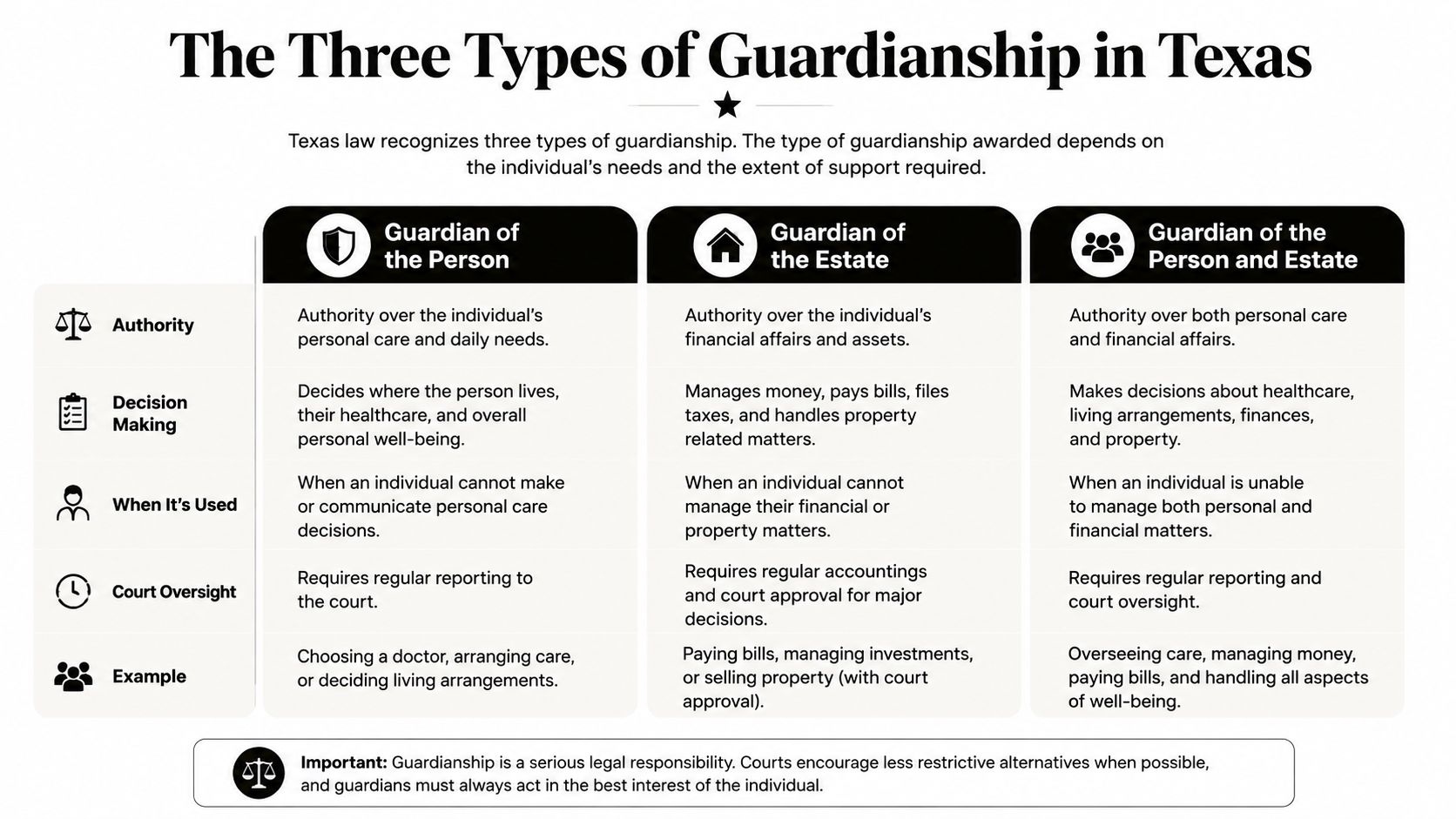
Guardian of the person
A guardian of the person handles personal and care-related decisions when an adult can't safely make them. Depending on the court's order, that can involve living arrangements, medical care, daily support, and protection from unsafe conditions.
For example, a parent may understand simple choices but be unable to evaluate whether a caregiver is exploiting them or whether returning home is safe. The court may limit the appointment to personal decisions if financial management remains possible through another arrangement.
Guardian of the estate
A guardian of the estate acts more like a court-appointed household financial manager. This role may involve bank accounts, income, investments, real property, debts, and records showing how money is used. The guardian must follow fiduciary rules and provide the court with the financial information required by law.
A guardian of the estate isn't free to treat the protected person's money as family money. The guardian must separate funds, preserve records, and obtain court approval for transactions that require it.
Both roles, or a minor guardianship
Some cases require both a guardian of the person and a guardian of the estate. Other cases involve a minor, such as a child who receives settlement proceeds or needs a court-appointed adult because a parent can't manage the child's interests. A minor guardianship doesn't mean the child is incapacitated. It addresses legal responsibility, property, care, or protection while the person is underage.
Texas courts focus on the least restrictive arrangement that protects the individual. The appointment might cover the person, the estate, or both. Families comparing court appointment with private authority can review Types of Guardianship in Texas. They may also consider Guardianship vs. Power of Attorney in Texas to understand why a power of attorney can sometimes prevent a court case.
How the Texas Guardianship Process Actually Works
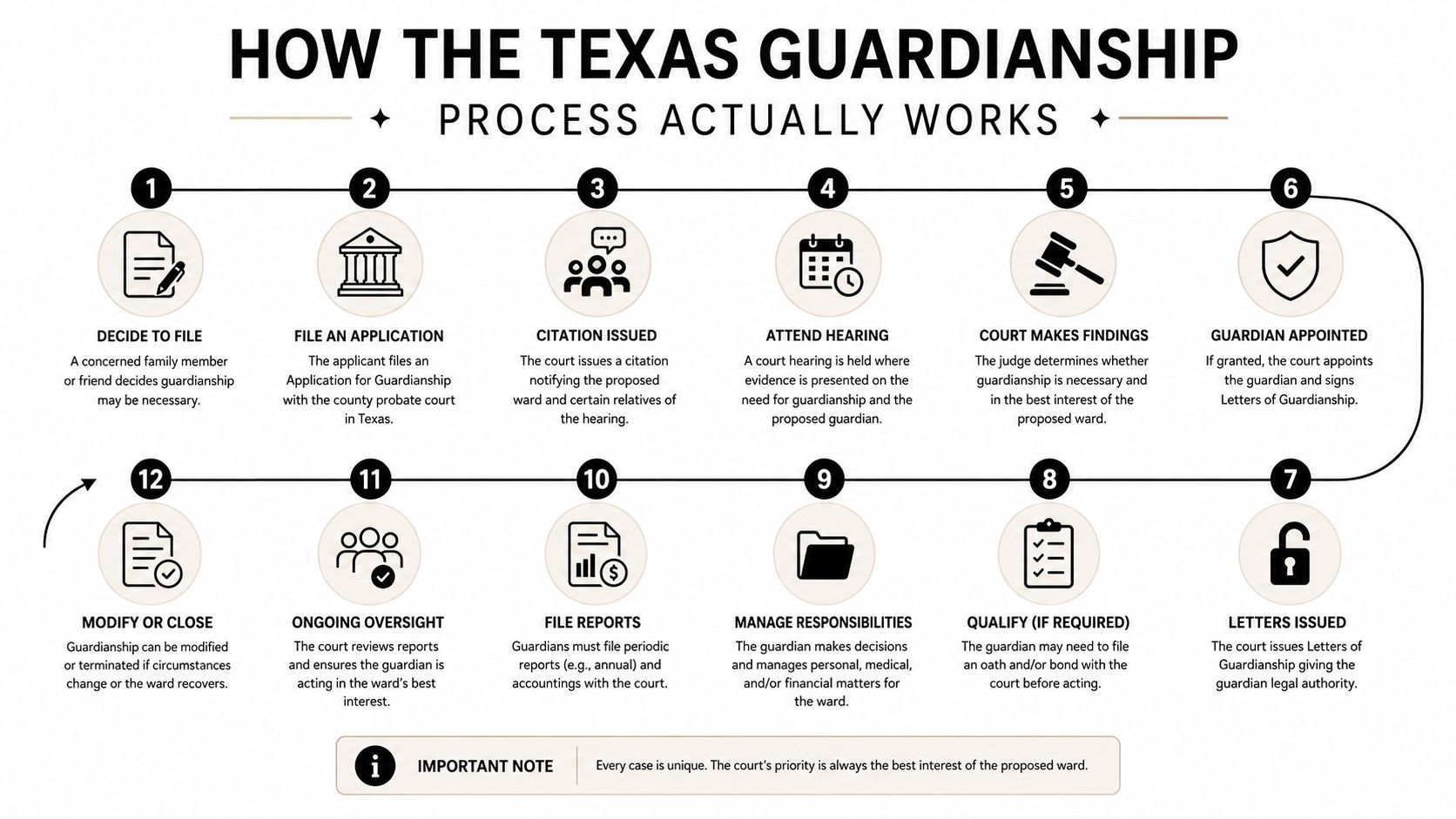
A guardianship application should begin with facts, not assumptions. The family needs to identify what the proposed ward can and can't do, what immediate risks exist, and which authority is needed. Title 3 of the Texas Estates Code supplies the framework, while the Collin County court handling the matter controls local filing and hearing details.
Prepare before filing
A family commonly gathers a physician's certificate of medical examination, including Form GC-09, information identifying the proposed ward, and disclosures about the proposed guardian. Medical evidence should address functional needs, not merely use a diagnosis as a shortcut. The lawyer also reviews interested relatives, assets, current living conditions, and whether a less restrictive option could work.
The application then goes to the appropriate probate court or county court handling guardianship matters. The court issues citation and notice, and the citation must be posted for 10 days before the hearing. The proposed ward and other interested people may have rights to notice, participation, and legal representation.
Attend the hearing
At an uncontested hearing, the judge still needs legally sufficient evidence. The court may consider medical information, testimony, investigator materials, the proposed care plan, and proof that guardianship is needed. A contested matter can involve objections about incapacity, the proposed guardian's qualifications, conflicts among relatives, or whether a narrower option would protect the person.
Collin County families should ask which court will hear the case, what documents that court expects, and whether a court investigator or attorney ad litem has been appointed. A Harris County Probate Court case follows the same Texas statutory foundation, but local scheduling and filing practices can differ.
Receive authority and plan for continuing work
If the judge grants the application, the order identifies the guardian's authority. After required qualification steps, the clerk issues letters of guardianship. Banks, doctors, benefit agencies, and other institutions commonly rely on those letters to confirm the guardian's authority.
A case may take several months, especially if medical information is missing, relatives disagree, or service is difficult. The practical cost depends on attorney work, court costs, evaluations, notices, bonds, and other case-specific expenses. The Texas guardianship application guide can help a family organize questions before filing.
The court process doesn't end with the hearing. Texas courts reported that compliance specialists reviewed 7,590 guardianship cases in fiscal year 2025, which shows the continuing scale of court oversight in Texas guardianship compliance reporting. Families should treat the appointment as the start of a legal responsibility, not the finish line.
The hearing process is also available in video form for readers who learn better by watching:
When Guardianship May Not Be the Right Answer
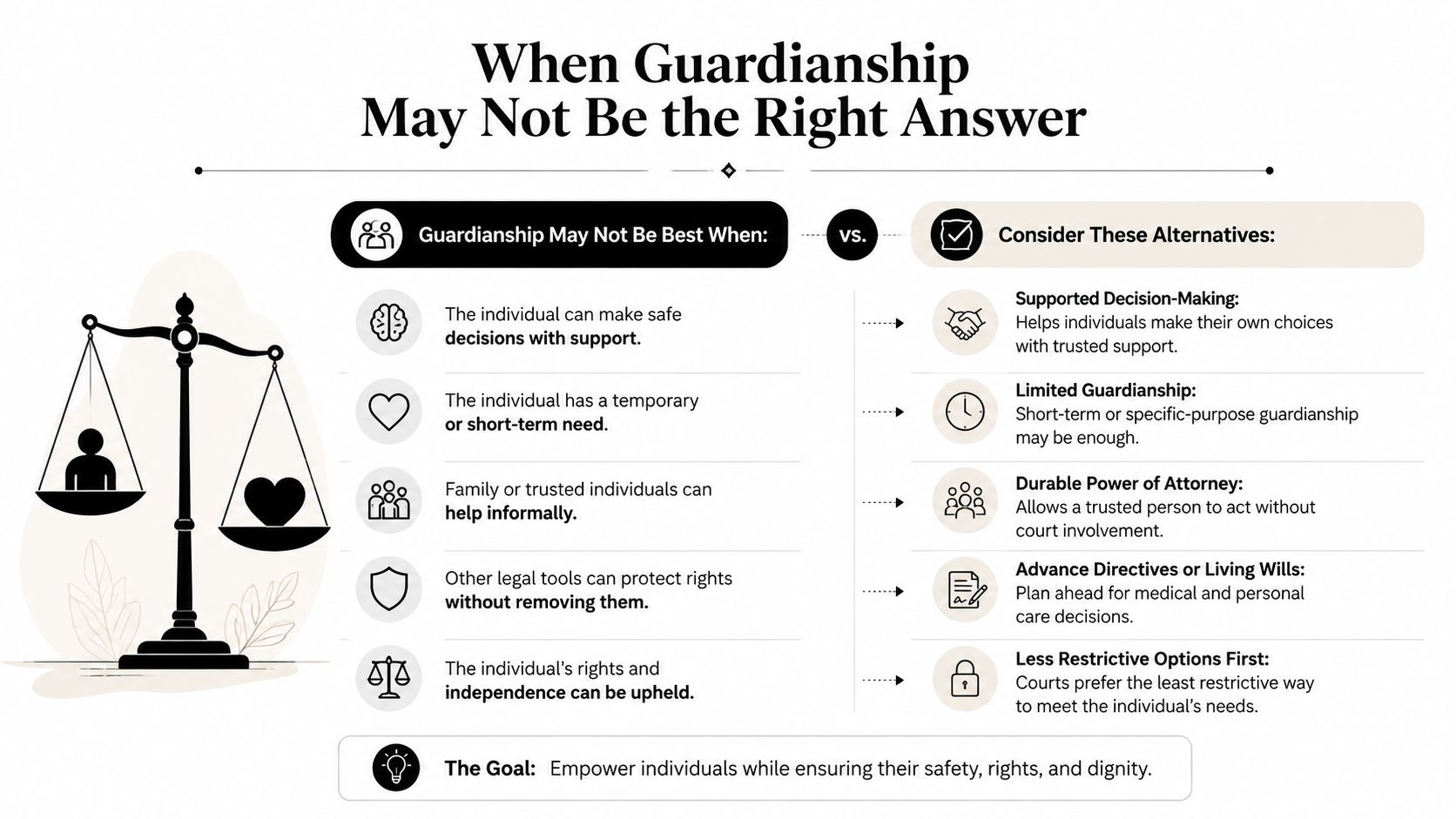
A Plano family may notice that an adult relative is struggling with bills and appointments, then immediately assume guardianship is the only solution. That assumption can lead to unnecessary court involvement. Texas court guidance identifies alternatives including durable powers of attorney, medical powers of attorney, protective orders, and trusts, and Dallas County also encourages families to consider those tools alongside guardianship. The Texas guardianship registration and resource guidance discusses these alternatives.
A durable power of attorney lets an adult choose an agent while the adult has the capacity to understand the document. The agent may help pay bills, communicate with banks, and handle financial tasks according to the document's terms. A medical power of attorney can address health-care decision-making. A trust may help manage property, but only assets transferred into the trust are controlled by it.
Use the least restrictive decision tree
Ask these questions:
- Capacity: Can the adult understand and voluntarily sign a planning document?
- Scope: Is help needed with money, health care, daily decisions, or several areas?
- Reliability: Will banks, hospitals, and other institutions honor the existing document?
- Coverage: Are the relevant accounts and property included in the plan?
- Support: Could a supportive decision-making agreement under Texas Estates Code Chapter 1357 help the adult understand choices while retaining decision-making authority?
A power of attorney may not solve the problem if an institution refuses to honor it or if the adult no longer had capacity when signing. A trust won't control property that was never moved into it. When private tools fail, or when the adult can't safely consent, court-supervised guardianship may become necessary.
Guardianship of a Minor After Injury or Loss
Suppose a Collin County teenager receives a $185,000 insurance settlement after a car accident that killed a parent. The surviving parent wants to protect the money and use it for the teenager's care, education, and recovery. Even though the parent may be caring for the child every day, the settlement creates a separate legal issue involving the child's property.
Under Texas Estates Code Section 1104.053, money owed to a minor generally can't be paid directly to the parent. The court may require a guardianship of the estate so a judge can supervise how the funds are held and used. The parent may seek appointment in the appropriate court, which could include a district court serving as a probate court, such as the 416th District Court when it has jurisdiction over the matter.
What the filing may include
A Plano guardianship lawyer commonly helps prepare:
- The application: This identifies the child, proposed guardian, family relationships, property, and reason for appointment.
- A guardian ad litem request: The court may appoint a guardian ad litem to represent the minor's interests in the proceeding.
- Financial and medical exhibits: These materials explain the settlement, anticipated needs, and relevant expenses.
- Evidence for the hearing: The judge must review the proposed arrangement before issuing an appointment order.
The surviving parent may feel that court oversight suggests distrust. It doesn't necessarily mean that. The court's purpose is to separate the child's money from ordinary household funds and create safeguards around property that belongs to the minor.
After appointment, the judge may require a surety bond, placement of funds in a restricted depository or structured annuity, and a sworn inventory. The inventory is due within 30 days of appointment under the applicable Texas guardianship requirements. The guardian must preserve settlement documents, deposit records, receipts, and court orders.
A minor guardianship can also arise when a parent is unavailable, a child needs special-needs caregiving, or a child's property requires formal management. The child's needs should guide the requested authority. A parent may need personal authority, estate authority, or both, depending on the facts.
Ongoing Duties After the Court Appointment
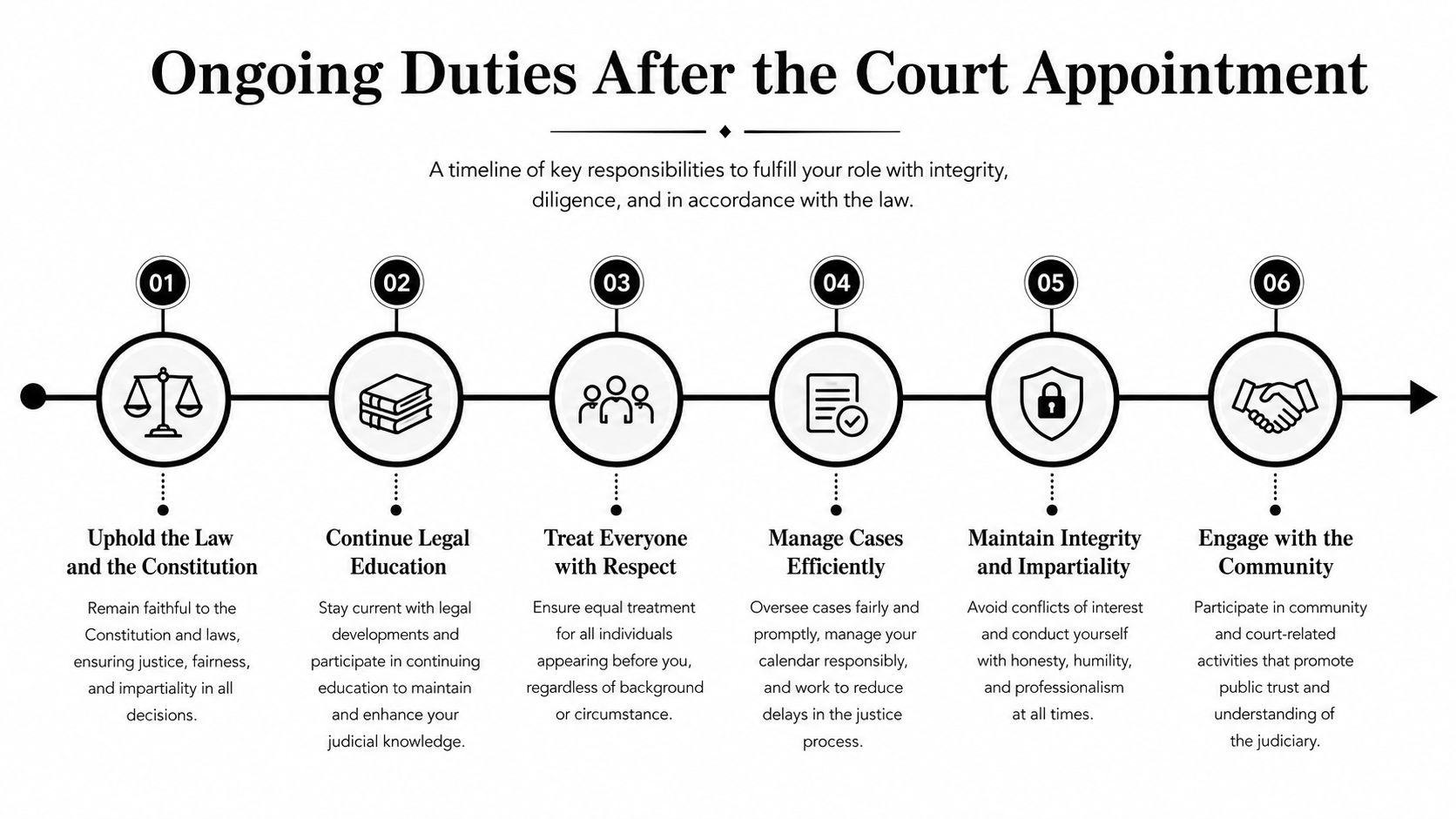
A guardian may leave court relieved that the appointment is complete, then discover that the order starts a new set of responsibilities. The role is a continuing fiduciary relationship. The guardian must protect the person, manage property carefully, stay within the court's authority, and keep records that explain each important decision.
Statewide oversight findings show why these duties matter. A fiscal year 2024 review covered 6,038 cases and identified 707 guardianships out of compliance, according to the Texas courts' guardianship compliance report. A later review also found guardianships out of compliance with reporting requirements. The problems included missing annual reports, annual accounts, and inventories. Compliance is not a one-time filing task. It is more like maintaining a financial and care file that the court can understand months or years later.
Build the calendar around the appointment
Start with the qualification date. The guardian's oath and bond must be filed within 10 days under Texas Estates Code Section 1103.104. Track the inventory as well, particularly when the guardianship includes an estate. Personal reports follow the qualification date and its anniversary, rather than the ordinary calendar year.
A guardian of the person must file a sworn annual report once every year. The report covers the 12-month period beginning on the qualification date or its anniversary and is due no later than the 60th day after that period ends, as explained in Texas Estates Code Chapter 1163 guidance. It describes the protected person's mental and physical condition, social and intellectual functioning, living situation, and related receipts and disbursements for support and care.
A guardian of the estate files an annual account with the county clerk. The account remains on file for 10 days before judicial consideration. The court also requires proof concerning cash, securities, and other court-controlled property before approval under Texas Estates Code Section 1201.053.
Avoid preventable problems
Keep the ward's money in separate accounts. Save receipts, statements, contracts, and court orders together. Before paying a personal expense from estate funds, giving away property, selling real estate, or taking compensation, determine whether court approval or a formal application is required.
Recordkeeping advice: If you cannot explain a payment months later with a receipt, a bank entry, and a clear connection to the ward's needs, the payment may cause difficulty during review.
A Plano guardianship lawyer can prepare these filings, review them each year, or respond to a compliance notice. The court may examine reports and accounts when deciding whether the guardianship should continue, change, or end. Court-investigator or court-visitor reports may also inform review every three years, unless the judge orders more frequent review. Clear records give the court a reliable basis for continuation, modification, or termination.
Choosing the Right Guardianship Attorney in Plano
The right attorney should do more than complete forms. Guardianship affects medical decisions, housing, money, family relationships, and the protected person's legal rights. A lawyer who handles only the initial application may not be the right fit if the case is likely to involve annual accountings, a minor settlement, a dispute, or later termination.
Compare experience and case fit
Ask whether the attorney regularly handles:
- Adult incapacity cases: These may require medical evidence, personal-care planning, and careful attention to the proposed ward's rights.
- Minor settlement guardianships: These involve restricted funds, inventories, bonds, and court approval.
- Estate administration: The lawyer should understand fiduciary records, property, accounts, and court-controlled assets.
- Contested proceedings: Ask how objections, competing applicants, capacity disputes, and allegations of misuse are addressed.
- Post-appointment work: Confirm whether the firm prepares or reviews reports, accountings, modifications, and termination requests.
Local familiarity matters because a Plano family may appear in a Collin County court with its own scheduling practices and expectations. Experience in another Texas venue, such as a Harris County Probate Court, can help, but it doesn't replace asking how often the lawyer handles Collin County guardianship matters.
Ask direct questions about communication and fees
Before retaining counsel, ask who returns calls, whether a paralegal handles routine updates, how medical records are gathered, and what happens if relatives object. Request a written explanation of the proposed fee structure and likely third-party expenses. The initial application, physician evaluation, court appearances, attorney ad litem or guardian ad litem work, bond, annual reports, accountings, and later modification or termination proceedings may not all be included in one quoted scope.
Families can make the first meeting more productive by building a client intake form with names, addresses, medical providers, assets, debts, relatives, and the immediate safety concern. Clear information helps the lawyer identify conflicts, missing records, and whether a less restrictive alternative deserves attention.
The Law Office of Bryan Fagan, PLLC can discuss adult and minor guardianships, temporary appointments, disputes, estate planning, probate, and ongoing reporting. The firm's guardianship work includes coordinating capacity evaluations, preparing filings, representing clients at hearings, and addressing compliance obligations under the Texas Estates Code. A consultation should leave you understanding the likely options and the work each option requires, without a promise about the outcome.
Frequently Asked Questions From Texas Families
How long does a Texas guardianship case take?
An uncontested adult case may take several weeks to a few months. Missing medical information, difficult service, contested evidence, or family objections can extend the process. Ask the lawyer what must happen before filing and which events could affect scheduling in Collin County.
Does the proposed ward receive notice?
The proposed ward generally must receive notice, and the court requires an evaluation from a physician or qualified professional addressing capacity. The person's rights and participation matter even when the family agrees that protection is needed.
Can a family member serve as guardian?
Often, yes. The proposed guardian must be an adult who qualifies under Texas law, completes required training when applicable, and receives court approval. The judge may examine conflicts, the person's relationship with the proposed ward, financial responsibility, and ability to perform the role.
Is guardianship permanent?
Not always. The court can review whether the need continues, and a guardian or interested person may seek modification or termination when circumstances change. A person's capacity, living situation, medical condition, or financial needs may support a different order.
What does guardianship cost?
Expenses vary. Attorney fees, court costs, medical evaluations, notices, bonds, accountings, and disputes can all affect the total. A written scope of representation is more useful than relying on a general estimate.
What should we bring to a consultation?
Gather identification, medical records, financial information, a proposed-care plan, names of interested relatives, property information, existing powers of attorney, trusts, wills, and any evidence of immediate danger. Also write down what decisions the family believes require authority.
A durable power of attorney, supported decision-making agreement, or trust may be less restrictive, but each depends on the person's capacity and the facts. The Law Office of Bryan Fagan, PLLC offers consultations to help families evaluate those choices, prepare guardianship filings, address disputes, and plan for compliance.
The Law Office of Bryan Fagan, PLLC helps Texas families evaluate alternatives, establish or contest guardianships, handle temporary appointments, and manage the reporting and accounting duties that follow appointment. Visit Law Office of Bryan Fagan, PLLC to schedule a free consultation and discuss the medical, financial, and family facts affecting your Plano guardianship matter.