Skip to content
Creating a will in Texas is more than just paperwork. It’s a profound act of care for your family’s future, a way to ensure they are supported and your wishes are honored. Using Texas will forms provides a clear, legally recognized path to protect your loved ones. This guide is designed to walk you through that process with clarity and compassion, helping you navigate these important decisions with confidence.
Understanding Your Texas Last Will and Testament

Before searching for a form, it’s important to understand what a Texas Last Will and Testament actually does. A will is your legally binding voice after you’re gone. It clearly states how your assets—your home, savings, and personal belongings—should be distributed.
More importantly, a will allows you to choose who inherits your property, who will manage your estate as the executor, and—for parents—who will become the guardian of your minor children. This last point is one of the most critical decisions a parent can make.
Imagine a young couple in Harris County with two small children. If they were to pass away unexpectedly without a will, a Texas court would have to decide who raises their kids and who inherits their home. This process, known as intestate succession, can be long, costly, and emotionally devastating for the family. A valid will puts those crucial decisions firmly in your hands, providing peace of mind and preventing painful disputes.
The Foundation of a Valid Will in Texas
Texas law lays out specific rules to ensure every will is authentic and can be enforced in court. These requirements, found in Title 3 of the Texas Estates Code, are designed to protect your final wishes. For a will to be legally valid, it must be:
- In writing.
- Signed by you (the “testator”).
- Attested by at least two credible witnesses who are 14 years or older and who sign the will in your presence.
To make the process more accessible, the Supreme Court of Texas has approved will forms for common situations—such as for single people, married couples, or those who are divorced.
For those interested in the legal reasoning behind these requirements, it can be empowering to master legal research methods to better understand the documents that protect your legacy.
Key Elements of a Valid Texas Will
Here is a simple overview of what the Texas Estates Code requires to make your will legally binding.
| Requirement | What It Means for You | Why It’s Critical |
|---|---|---|
| In Writing | Your will cannot be a verbal promise; it must be a physical document. | This prevents disputes over verbal agreements and provides clear proof of your intentions. |
| Signed by Testator | You must sign the will, or have someone else sign on your behalf in your presence and under your direction. | Your signature confirms that you have reviewed and approved the document’s contents. |
| Attested by Witnesses | Two credible, disinterested witnesses must sign the will in your presence. | This step validates that you signed the will freely and were of sound mind, protecting it from challenges. |
Getting these foundational elements right is the first step to ensuring your final wishes are honored. A will is a key component of a complete protective strategy, which you can learn more about in our guide on guardianship and estate planning. We are here to help you navigate these important decisions with confidence.
Choosing the Right Will Form for Your Situation
Not all will forms are the same, and choosing the wrong one can create significant challenges for your loved ones. The right choice for your will forms Texas document depends entirely on your unique family and financial circumstances. A generic template might seem easy, but it often fails to address the complexities many families face.
Consider a recently divorced parent in Fort Bend County with minor children. A simple, outdated form might not properly nominate a guardian for the kids or account for assets divided during the divorce. Such an oversight can lead to confusion and legal battles, adding immense stress to an already difficult time for the family. Choosing the correct form is an act of care that prevents future hardship.
State-Approved Forms vs. Other Options
To assist Texans, the Supreme Court of Texas has approved several standard will forms. These are designed to cover common scenarios and provide a reliable, legally sound starting point.
These official forms include versions for:
- A single, widowed, or divorced person with children.
- A married person with children.
- A single, widowed, or divorced person who does not have children.
- A married person who does not have children.
While these state-approved documents are a fantastic resource, they are designed for straightforward estates. If you own a business, have a blended family, or need to create a special needs trust for a child, a basic form will likely be insufficient. These situations often require more comprehensive estate planning to ensure your wishes are fully met and your loved ones are protected.
A will is more than just a document; it’s a foundational part of your family’s protection plan. Taking the time to choose the right one ensures your intentions are clear and legally enforceable, preventing unintended consequences for those you care about most.
Making an Informed Decision
Beyond the official state forms, you will find countless DIY kits and online legal services. Their low cost and convenience can be appealing, and you may also encounter emerging AI tools for will drafting. However, the risk with any DIY approach is that a small mistake—like improper wording or witness selection—can invalidate the entire document or parts of it.
The surest way to protect your family’s future is to consult with an experienced estate planning attorney. A lawyer can draft a custom will that precisely reflects your wishes and fully complies with Texas law. They can also advise on related matters, such as trusts and powers of attorney. You can learn more in our guide to planning for incapacity with powers of attorney and advanced directives in Texas.
This is a deeply personal choice. To discuss your specific needs and determine the best path forward for your family, we invite you to schedule a free consultation with The Law Office of Bryan Fagan.
How to Fill Out Your Will Form Correctly
Once you have the right form, the next step is to translate your intentions into the proper legal language required for will forms Texas documents. While this can feel intimidating, thinking of it as a clear instruction manual for your family can make the process more manageable. Each section of the will has a specific, crucial job to do, ensuring there’s no confusion about your wishes.
This infographic captures a key moment in the process—the thoughtful act of naming a beneficiary.
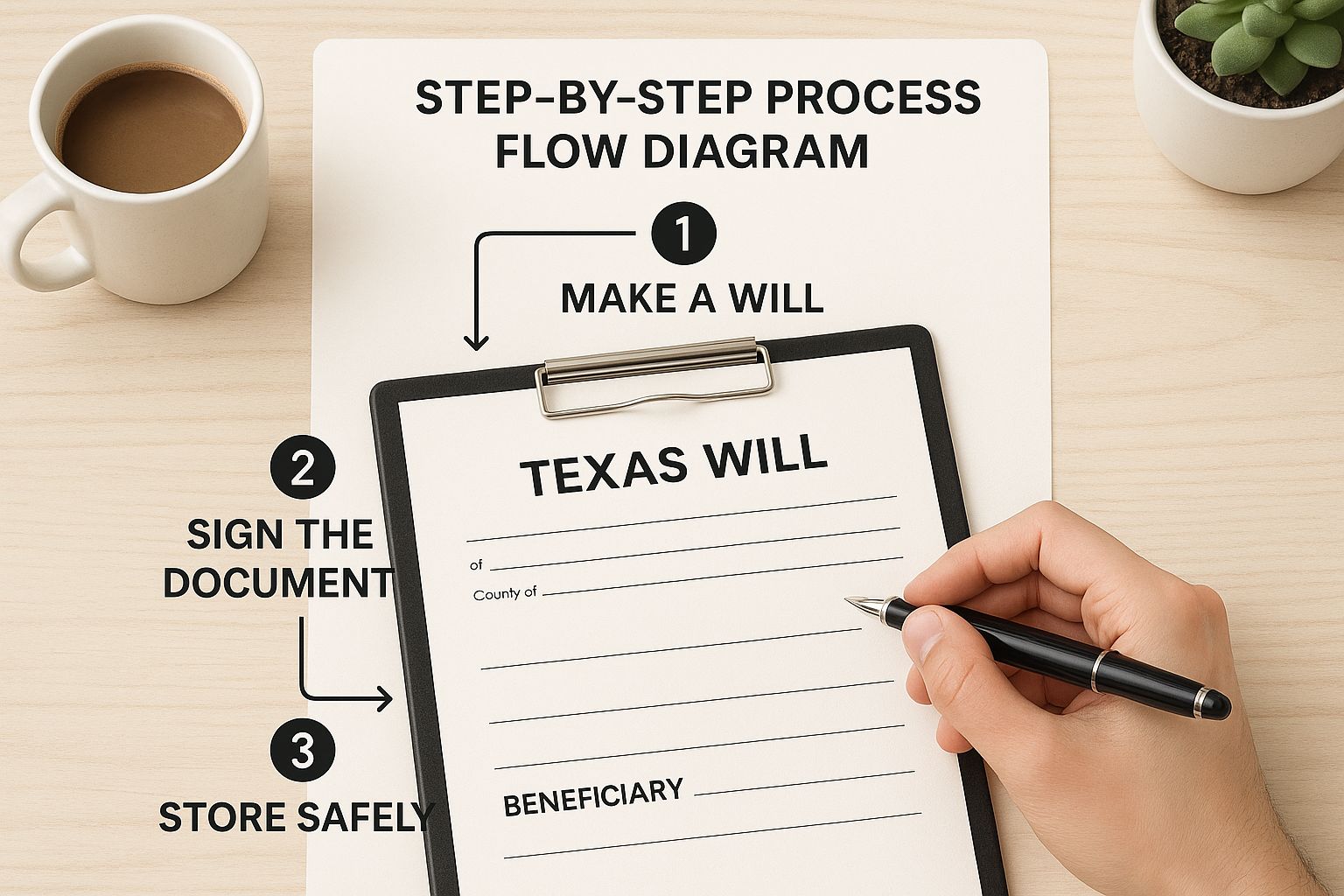
It’s a personal and deliberate step, a true act of care that highlights the importance of getting these details right.
Declaring Your Identity and Intent
The first part of the will establishes who you are and confirms that this document is your final testament. You will state your full legal name and county of residence (e.g., “I, Jane Doe, a resident of Dallas County, Texas…”). You will also include a declaration that you are of sound mind and not under any duress.
This section also contains a critical sentence that revokes all previous wills and codicils (amendments to wills). This is vital because it wipes the slate clean, preventing confusion over which document reflects your final wishes.
Appointing Your Executor
This is one of the most important decisions in your will. Your executor is the person or institution you trust to carry out your instructions. They are responsible for gathering your assets, paying any debts, and distributing your property to your beneficiaries.
It is wise to name a primary executor and at least one alternate. Your first choice may be unable or unwilling to serve when the time comes. Be sure to speak with your chosen executor beforehand to ensure they are comfortable with this important responsibility.
Naming Beneficiaries and Distributing Assets
This is the heart of your will—where you detail who gets what. Texas law provides flexibility, so you can be as specific as you need to be.
- Specific Bequests: These are gifts of particular items. For example, “I leave my 1967 Ford Mustang to my nephew, John Smith.” The more specific the description, the less room there is for ambiguity.
- General Bequests: These are typically gifts of money, such as, “I give the sum of $10,000 to my dear friend, Mary Jones.”
- Residuary Estate: This “everything else” clause covers all property not specifically gifted. A typical phrase is, “I give the remainder of my estate to my spouse, Robert Doe. If my spouse does not survive me, I give the remainder of my estate to my children, in equal shares.”
Your residuary clause is an essential safety net. Without it, any asset not specifically mentioned could be distributed according to state intestate laws, which may not align with your wishes. It ensures all your property is accounted for.
Nominating a Guardian for Minor Children
For parents of children under 18, this section is non-negotiable. Your will is the legal document where you name the person you want to raise your children if you and their other parent pass away. This is arguably the most important decision a parent can make in a will.
As with your executor, you should always name an alternate guardian. We understand this can be an emotional and difficult decision, but making it now provides incredible security for your children’s future. If you need support with this, a conversation with an experienced Guardianship attorney can offer clarity and peace of mind.
Including a Self-Proving Affidavit
Finally, many Texas will forms include a “self-proving affidavit.” This is a separate statement that you and your witnesses sign in front of a notary public.
While not strictly required for the will to be valid, this affidavit can make the Probate process much smoother. It allows a court, like a Harris County Probate Court, to accept the will as valid without needing to locate your original witnesses to testify. It’s a simple step that can save your family significant time and stress during an already difficult period.
If you have questions about any part of this process or want to ensure your will is perfectly aligned with your family’s needs, schedule a free consultation with The Law Office of Bryan Fagan.
Signing and Witnessing Your Will The Right Way
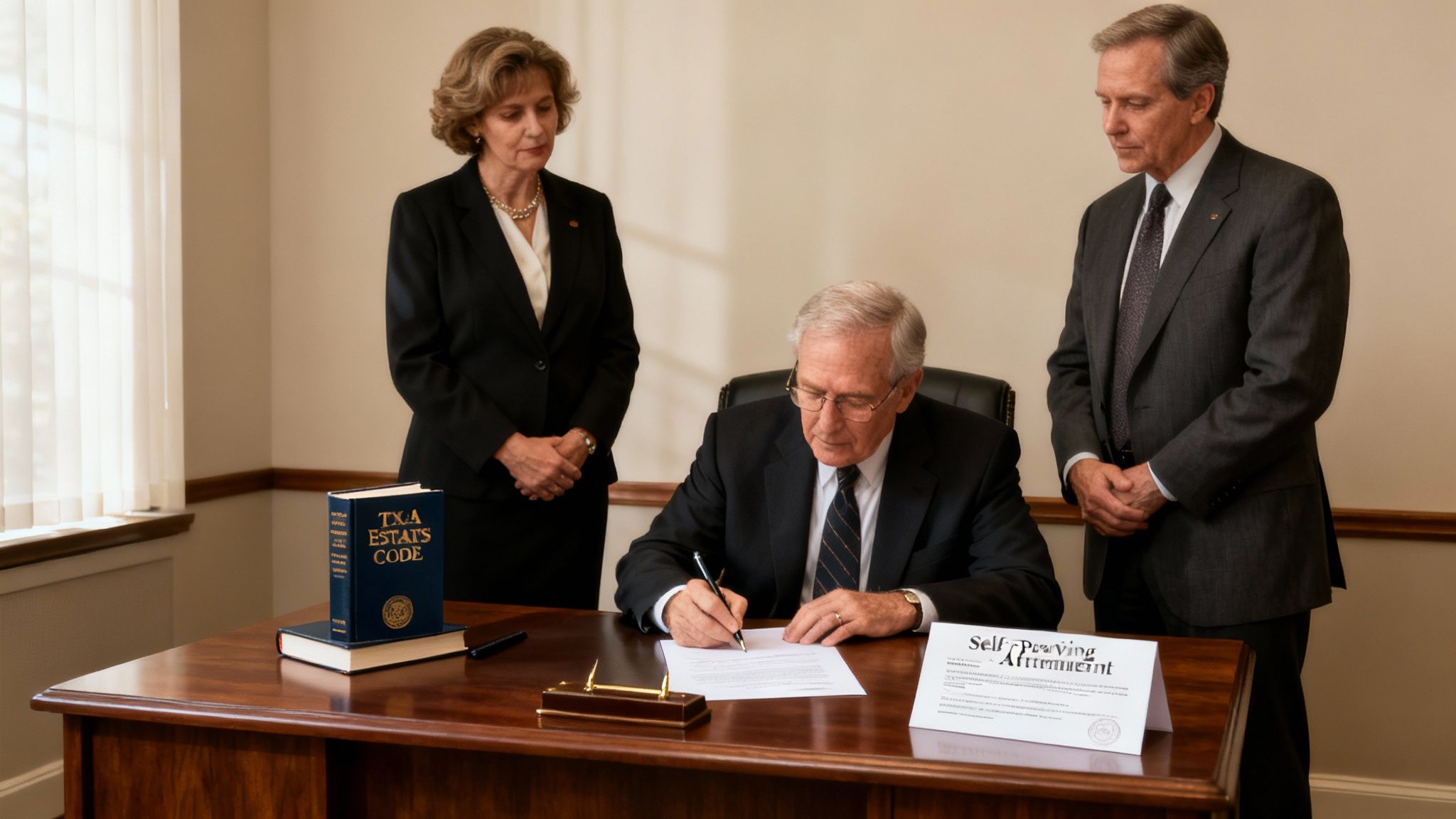
You’ve thoughtfully filled out your will form, selected your executor, and laid out how your assets should be passed on. But without the right signatures, the document has no legal weight. The signing ceremony, or execution, is the single most important step in making your will legally binding in Texas. The Texas Estates Code has very specific rules for this, and getting them right is non-negotiable. A small error at this stage can put the entire document at risk, potentially undoing all of your careful planning.
The Core Requirements for a Valid Signing
To properly execute your will, you must follow a precise procedure. This formal but straightforward process solidifies your decisions and makes them legally enforceable.
Here’s exactly what the law demands:
- You need at least two credible witnesses. These witnesses must be 14 years of age or older.
- Crucially, your witnesses must sign the will in your presence. This means everyone should be in the same room, watching each other sign the document.
This requirement is a powerful safeguard against fraud or undue influence. It helps confirm that you were of sound mind and not pressured into signing. It is there to protect you and your family.
Choosing Your Witnesses Carefully
Who you choose as a witness matters greatly. A witness must be “credible,” which means they are competent and, most importantly, not a beneficiary in your will. They should be “disinterested parties.”
Let’s walk through a common mistake. If you leave your house to your daughter, it might seem natural to ask her to witness your signature. However, this creates a conflict of interest. While it might not invalidate the entire will, a Texas court could void the gift to her. To avoid this, always choose disinterested witnesses—such as neighbors, friends, or coworkers who will not inherit anything from you.
Many people believe a will must be notarized to be valid in Texas, but that is a common misconception. A notary is not required for the will itself. However, a notary is essential for the self-proving affidavit, a step we highly recommend.
The Power of a Self-Proving Affidavit
A self-proving affidavit is a separate statement attached to your will that you and your witnesses sign in front of a notary public. This simple extra step can save your family an enormous amount of grief during the Probate process.
Without this affidavit, the probate court—for instance, in Bexar County—may require your executor to locate your original witnesses. They would need to come to court and testify under oath that they watched you sign the will. Imagine the difficulty if years have passed and your witnesses have moved, passed away, or cannot be found.
With a self-proving affidavit, the court can accept the will as valid on its face. This one small action can dramatically streamline the probate process, saving your loved ones precious time, money, and emotional stress.
Ensuring your will is properly signed and witnessed is the final, critical step in protecting your family’s future. If you need guidance on this process or any aspect of your Estate Planning, The Law Office of Bryan Fagan is here to help. Schedule a free consultation with us today.
What to Do After Your Will Is Signed
Completing your will forms Texas document is a massive step. It’s a genuine act of love and responsibility. However, the work isn’t quite finished. A few more steps are critical to ensure your wishes are carried out smoothly.
The first is deciding where to keep the original will. This document is irreplaceable. When the time comes, a court will almost always demand the original to begin the Probate process. Copies are generally not accepted. You must store it somewhere safe from fire, flood, theft, or simply being lost.
Secure Storage and Executor Access
You’ve named an executor to handle your estate, but they can’t do their job if they can’t find your will. It is absolutely essential that your executor knows exactly where the original document is and how to access it.
Here are a few solid options for safekeeping:
- A Fireproof Safe at Home: This is a popular choice because it keeps the will protected yet accessible.
- A Safe Deposit Box: While incredibly secure, accessing a safe deposit box after someone has passed away can be complicated and may require a court order, causing delays.
- With Your Attorney: An Estate Planning lawyer often provides secure storage for clients’ original documents. This is a professional and reliable option.
Whichever option you choose, ensure your executor has the key, combination, or specific instructions to access it. A will that cannot be found is no better than having no will at all.
Understanding the Role of Probate
After you pass away, your will is filed with a county court, such as the Harris County Probate Court. This begins the Texas probate process, which validates your will and oversees the distribution of your assets.
Every Texas county has a probate clerk who maintains these records, creating an organized system for these crucial legal documents. This process ensures your property goes exactly where you intended. You can learn more about how Texas probate records are managed through public resources.
Plan to Review Your Will Regularly
Life changes, and your will should change with it. Think of it as a living document, not something set in stone. It’s wise to review it every few years or after any major life event.
These events should trigger a will review:
- Getting married or divorced
- The birth or adoption of a child
- A significant change in your finances
- The death of someone named in your will, like a beneficiary or executor
Keeping your will current ensures it always reflects your family’s situation and your true wishes. If you have questions about storing or updating your will, reach out to The Law Office of Bryan Fagan for a free consultation to get personalized advice.
Common Questions About Texas Will Forms
Putting a will together naturally brings up many questions. It’s completely normal to want clarity when making decisions that will protect your family’s future. Let’s walk through some of the most common concerns we hear from Texas families.
Do I Need a Lawyer to Make a Will in Texas?
Technically, Texas law does not require you to hire a lawyer to create a will. But the more important question is, should you?
While a simple, state-approved will form for Texas may work for someone with a very straightforward estate, seeking professional guidance is almost always a good idea. This is especially true if you have a blended family, own a business, wish to disinherit a relative, or have other complexities.
An estate planning lawyer does more than just fill out a form; they provide counsel to ensure your will is legally solid and accomplishes your goals. That peace of mind is priceless.
What Is a Holographic Will and Is It Valid?
A holographic will is one written entirely in your own handwriting. In Texas, these wills are recognized as legally valid, even without witness signatures.
However, just because they are valid does not make them a good idea. Holographic wills are frequently challenged in court. Family members may dispute the handwriting’s authenticity or argue over the meaning of a particular phrase.
To ensure your wishes are carried out without conflict, a formal, typed will that is properly signed and witnessed is always the safer, more reliable option.
The whole point of a will is to create clarity and prevent conflict after you’re gone. A holographic will, while legally permissible, often opens the door to the very family disputes you were trying to avoid.
What Happens if I Die Without a Will in Texas?
If you pass away without a will, you are considered to have died “intestate.” When this happens, Texas intestate succession laws dictate how your property is divided among your relatives based on a rigid legal formula.
This formula likely will not match your personal wishes. For example, your spouse might be forced to share property with your children from a previous marriage. A devoted, long-term partner to whom you weren’t married could be left with nothing.
Creating a will ensures you—not the state—have the final say. Understanding how a will compares to other directives is also critical. You can learn more about these distinctions by exploring guardianship vs. living wills in Texas. Having the right documents in place is the only way to guarantee your specific wishes are honored.
Navigating the specifics of creating a will can feel overwhelming, but you don’t have to figure it all out on your own. The experienced team at The Law Office of Bryan Fagan, PLLC is here to provide the compassionate, clear guidance you need. For personalized advice on your unique situation, schedule a free consultation with us today at https://texasguardianshiplawyer.net.